

A tub-to-shower conversion removes an existing bathtub and replaces the bathing area with a shower. It may suit a household that rarely uses the tub, wants a different layout, or needs a bathing setup that better fits its routines. Published cost estimates vary widely: sources in the research range from about $1,200 to $12,000, while several report an average near $3,000. Those figures are broad reference points, not a guaranteed price for your home. The final estimate depends on materials, labor, plumbing changes, project scope, and what installers find once the tub is removed. Before choosing a design, decide whether you still need a tub, compare repair and replacement options, and ask providers to itemize demolition, disposal, plumbing, wall and base work, permits if applicable, and cleanup. The key takeaway: compare complete written scopes, not just headline prices, and confirm local requirements before work starts.
What a tub-to-shower conversion includes
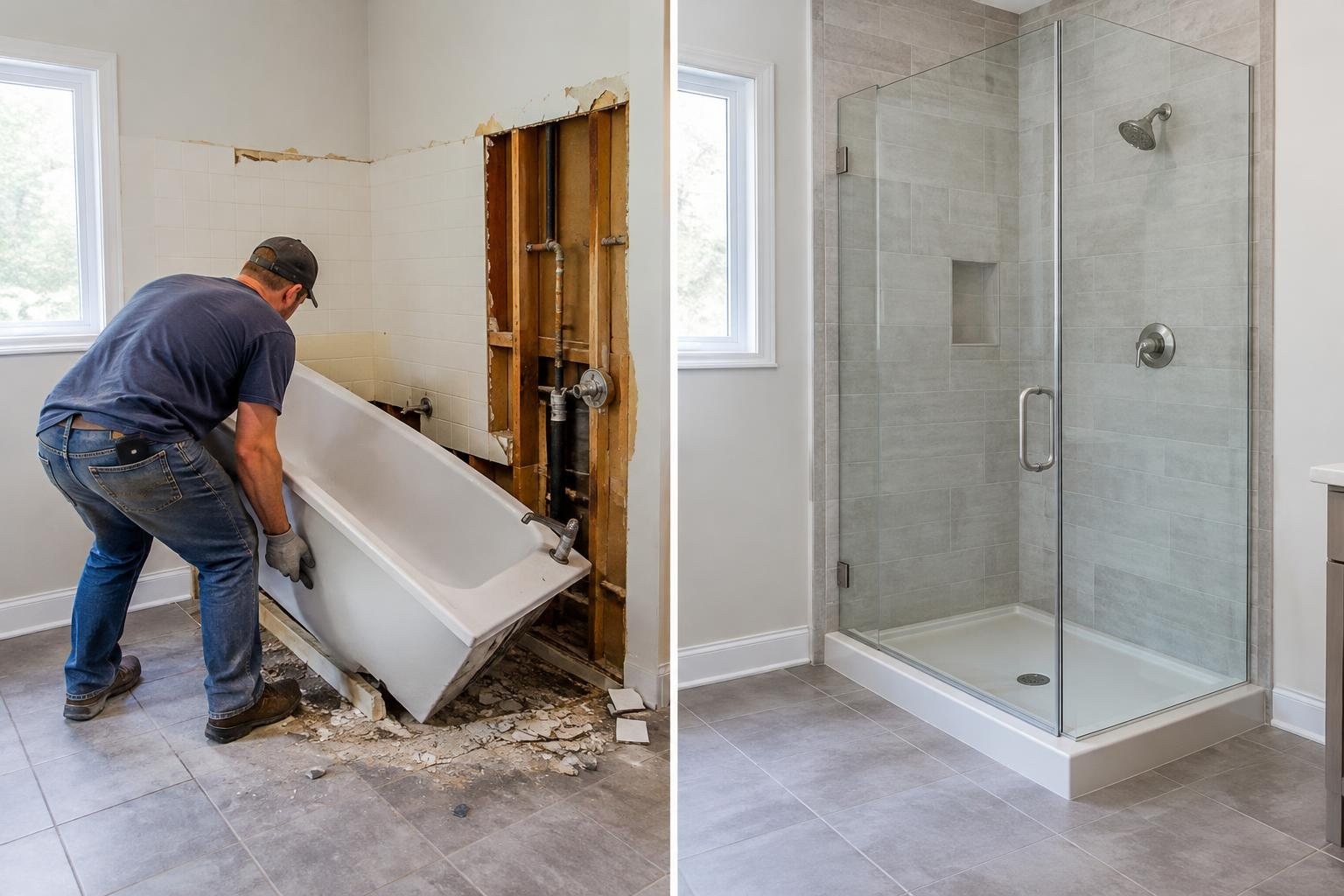
A tub-to-shower conversion changes the bathtub area into a shower. Depending on the design, the job can involve removing the tub, preparing the space, installing a shower base and wall finish, fitting controls and fixtures, and finishing the edges and surrounding surfaces. The estimate should make clear whether it also covers disposal, plumbing adjustments, and repairs discovered during demolition.
Homeowners consider this renovation for practical reasons: they may prefer showers, want a different bathing arrangement, or be updating an older bathroom. The main decision is not simply which shower looks best. Consider how the space is used, whether anyone relies on the tub, the condition of the existing area, and the total cost of the proposed work. Published guides describe several possible scopes and report markedly different prices, so a single national figure cannot replace an itemized estimate.
How the project works
Most conversions follow a sequence: assess the existing bathroom, choose the shower footprint and finishes, protect the work area, remove the tub, prepare the space, install the shower components, connect and test fixtures, finish edges, and clean up. The details vary by project. Have the provider identify which tasks are included and how concealed problems or requested changes will be priced and approved.
Ask how the proposed base, wall system, and plumbing relate to what is already in the room. The estimate should say whether the shower will stay near the existing tub plumbing or require modifications. It should also identify the finish products and the work required at the floor, walls, and transitions.
Do not treat a verbal description such as “complete conversion” as a full scope. Request a written list of demolition, disposal, preparation, installation, testing, cleanup, and any exclusions. This gives you a basis for comparing bids and discussing changes before work begins.
Tub-to-shower conversion cost and estimates
Published estimates are not consistent: supplied sources report costs from roughly $1,200 to $12,000, and several cite an average around $3,000. One source describes about $6,000 to $10,000 for wet-area renovations. These figures reflect different sources and project descriptions; they are not a quote, a guaranteed range for every market, or a like-for-like price comparison. Use them as broad planning context and gather current local bids.
For an apples-to-apples comparison, ask each provider to price the same material selections and work. Separate the base project from optional upgrades and identify possible charges for:
- Removing and disposing of the old tub and related materials.
- Shower base, wall surfaces, doors or other enclosure choices, and fixtures.
- Plumbing changes and work outside the existing footprint.
- Preparation or repairs found after removal.
- Permits or inspections if required locally, and project cleanup.
Ask whether the quote is fixed or based on assumptions about concealed conditions. A written change-order process helps clarify who approves extra work and how the price changes. Explore your options and find providers at Estimate.org.
What affects the final price, and how to save carefully
The main price drivers are the project scope and the products included. Research sources specifically identify shower type, materials, and plumbing modifications as factors behind differences in conversion estimates. The existing bathroom can also affect what a contractor proposes after inspecting the area; ask the provider to explain any condition-based assumptions rather than accepting a vague contingency.
What can make the project cost more?
- Changing plumbing locations or taking on work beyond the tub's existing area.
- Choosing custom or upgraded finishes instead of the products priced in a basic estimate.
- Adding work that was not included in the initial scope.
- Needing repairs or additional preparation after removal.
- Complicated access or a design that requires more installation work.
What can help control cost?
- Keep the shower in the existing bathing area when that suits the design and the provider confirms it is workable.
- Choose products after reviewing their installed price, not just the material price.
- Compare itemized estimates with identical scope and product assumptions.
- Decide on fixtures and finishes before work begins to reduce last-minute changes.
- Ask about repair options before replacing components that remain serviceable.
Cost control should not mean skipping necessary preparation or approving an unclear installation plan. Ask what the price includes and how the provider will handle unexpected conditions.
Shower types and material options
Shower options differ in material, appearance, scope, and price. One published cost source describes a mid-range combination of an acrylic shower pan and ceramic tile walls. That example can help you frame questions, but it does not establish that one material is right for every home or provide comparable maintenance or lifespan data for all products.
| Option to compare | Questions to ask | Tradeoff to consider |
|---|---|---|
| Preformed shower base and wall system | What products are included, how are seams finished, and what is covered by warranty? | Compare the complete installed system and appearance with other proposed finishes. |
| Shower base with tile walls | What tile, base, preparation, and finishing work are included? | Confirm the scope and product specifications rather than assuming all tile bids are equivalent. |
| Walk-in or lower-entry design | What are the finished entry height, usable space, and water-containment details? | Check that the design meets the household's needs and the provider's proposed scope. |
Ask every bidder to identify the actual products, not just labels such as “standard” or “premium.” Compare installed cost, finish appearance, cleaning guidance, warranty terms, and replacement availability when information is provided by the manufacturer or installer. Avoid selecting a design based only on a rendering or a low starting price.
Repair the tub or replace it with a shower?
Conversion may make sense when the household prefers a shower and the tub is no longer important to daily use. Keeping or repairing the tub may be the better choice if it still serves a household need, the problem is limited and repairable, or the conversion estimate includes more work than the bathroom requires.
Before deciding, compare these questions:
- Is the tub damaged, or is the concern mainly about its appearance or convenience?
- Would a repair address the problem without replacing the bathing area?
- Does someone in the household need or strongly prefer a bathtub?
- Does the conversion solve the functional issue, or would a broader bathroom plan be needed?
- How does the full written conversion estimate compare with the repair alternative?
Research sources put conversion costs across a broad range, which makes a scope-specific comparison especially important. Ask a provider to separate work that is essential from optional upgrades.
Signs you may need a conversion or a different solution
Possible reasons to seek an assessment include a tub or surrounding area that no longer suits household routines, a planned bathroom renovation, or a desire to replace the current bathing arrangement. These are decision signals, not proof that the tub must be removed. First establish whether the issue is functional, cosmetic, or related to a specific repair.
Make a short list before requesting estimates: what is not working, what you want to change, what should stay, and who uses the bathroom. Show providers any visible damage or recurring concern and ask them to explain what they can assess before demolition versus what cannot be confirmed until materials are removed.
Do not accept a conversion proposal as a substitute for diagnosing a suspected underlying problem. Request a written explanation of the planned work and any conditions that could change the scope. If the concern involves a safety issue or damage beyond the bathing area, have the appropriate qualified professional evaluate it before deciding on finishes.
Timeline and what to expect during the renovation
A supplied project guide reports a timeline of two days to two weeks. Treat that as a broad published estimate, not a promise for every conversion. The schedule depends on the work being proposed and what the contractor finds during the project. Ask for expected start and completion dates, workdays on site, and the point at which the shower will be ready for use.
Before the start date, confirm access arrangements, protection of nearby areas, where materials will be stored, and how debris will be removed. Ask who will contact you if concealed conditions or a delay changes the plan. If additional work is proposed, request its price and schedule impact in writing and approve it before the work proceeds.
At the final walkthrough, check that the completed work matches the agreed product and scope, ask how to operate and care for the installed components, and obtain relevant warranty documents. Report concerns promptly and keep the contract, change orders, and completion records together.
How to choose a qualified provider
For a tub removal and shower installation, get estimates from providers who can explain the full scope, materials, and plumbing plan. Ask who will perform each part of the work and whether subcontractors are involved.
Use these questions to compare providers:
- What exact work is included in the written price?
- Which products and models are included?
- Will plumbing remain in place or be modified?
- What preparation and water-management details are included?
- How are demolition debris and disposal handled?
- What conditions could add cost, and how will changes be approved?
- Who will obtain permits if the local jurisdiction requires them?
- Who performs the work, including any subcontractors?
- What is the expected schedule, and what could delay it?
- What labor or workmanship coverage is provided in writing?
- What manufacturer warranties apply, and who handles claims?
- What payment schedule and cancellation or dispute terms apply?
- What cleanup and final inspection are included?
Compare bids only after checking that their scope and product assumptions match. A lower bid may exclude work another provider has included, so request clarification before choosing.
Permits, credentials, safety, and warranties
Permit and credential requirements differ by location and by the work involved. Contact the local building department before signing to ask whether the proposed conversion needs a permit or inspection. Ask the provider to identify who is responsible for applications and approvals, and have that responsibility stated in the contract. Do not assume a bathroom project is exempt or that a contractor's general assurance settles the local rule.
Review the written contract for the scope, product details, total price, payment schedule, estimated timeline, change-order process, cleanup, and warranty terms. Ask for proof of applicable insurance and verify licenses or other required credentials through the relevant local authority. Avoid starting work on the basis of verbal assurances alone.
Warranties can differ by product and installer. Request the actual manufacturer warranty and separate written labor or workmanship terms. Check coverage limits, exclusions, registration steps, transfer rules, and what maintenance is required. The research provided for this guide does not specify any product warranty, local code, or permit rule, so confirm those details for the exact project and location.
Mistakes and contractor red flags
Several avoidable decisions can make a conversion harder to budget or evaluate. Watch for these common mistakes:
- Choosing from a starting price without checking what it includes.
- Comparing bids with different materials or work scopes.
- Forgetting to ask whether plumbing will move.
- Assuming demolition and disposal are included.
- Leaving product choices and design decisions until installation is underway.
- Approving extra work verbally without a written price and schedule change.
- Skipping local permit checks or leaving responsibility unclear.
- Failing to confirm who will complete the work and what coverage applies.
- Removing the only bathtub without considering household needs.
- Accepting a vague “complete conversion” description instead of a task-by-task scope.
Be cautious if a provider refuses to give a written estimate, pressures you to decide immediately, avoids explaining exclusions, or will not clarify who handles permits and changes. Ask for time to compare the documents. Published sources show how widely estimates can vary, which is another reason not to let a headline figure alone determine the choice.
Related bathroom projects to evaluate
A tub-to-shower conversion is one part of a bathroom renovation. Before scheduling, decide whether the floor, nearby walls, lighting, ventilation, storage, or other fixtures also need attention. Related work can affect the order of construction and the final finish, but the supplied cost research does not quantify savings from bundling projects. Ask providers to price added work separately and explain which tasks should happen first.
- Bathroom flooring: Evaluate it before demolition if it may need repair or replacement. Coordinate floor work with the shower installation so transitions can be planned.
- Paint and wall finishes: Check whether the conversion changes adjacent surfaces. Finish surrounding areas after dusty demolition and installation work is complete.
- Lighting and ventilation: If the broader bathroom needs updates, ask qualified providers how those tasks fit the schedule and whether separate trades are needed.
- Other fixtures or storage: Decide whether the layout should change before finalizing the shower footprint. Include any associated plumbing or electrical scope in a separate written estimate.
Bundling may reduce repeated disruption when the work overlaps, but it is not automatically cheaper. Compare a combined estimate with separately itemized scopes, and have the providers state the sequence and responsibility for each part.
Is a tub-to-shower conversion worth it?
A conversion can be worthwhile when the shower better matches the household's needs and the estimated work is proportionate to the desired improvement. The advantages may include a bathing area designed around shower use and a refreshed bathroom. The tradeoffs include project cost, temporary disruption, and losing a bathtub that some household members may still value.
There is no one answer for every home. Consider the tub's condition, the reason for changing it, the full cost after plumbing and finish choices, the expected time you will use the bathroom, and whether repair is a viable alternative. Make the decision based on your use and a written, comparable scope.
Frequently asked questions
How much does a tub-to-shower conversion cost?
Published cost guides report a wide spread rather than one dependable price. Estimates in the supplied research range from about $1,200 to $12,000, with several sources placing a typical or average project near $3,000. These are broad reported figures, not a quote for a particular bathroom. Materials, plumbing changes, repairs, and project scope can shift the final price substantially.
What is included in a tub-to-shower conversion?
The project commonly involves removing the tub, preparing the bathing area, fitting a shower base and wall finish, installing shower fixtures, and completing seals and trim. The exact scope depends on the existing bathroom and the chosen system. Ask the contractor to list removal, disposal, plumbing, wall work, waterproofing, finish materials, and cleanup separately so you can see what is included.
How long does it take to convert a tub to a shower?
A published project guide says the work can take from two days to two weeks. That range is broad because projects differ in scope and can involve more than replacing the tub with a shower. Ask for a written schedule that identifies demolition, installation, inspections if applicable, and the point at which the shower can be used. Get any likely delay conditions in writing.
Is converting a tub to a shower worth it?
A shower conversion may be worth considering when the tub is rarely used, the current bathing setup does not fit household needs, or a renovation is already planned. Compare the complete conversion price with a repair or keeping the tub. Consider whether the household needs a tub, how long you expect to stay, and whether the proposed work addresses underlying problems rather than only changing the visible finish.
How do I choose a contractor for a tub-to-shower conversion?
Request itemized written estimates from qualified providers and compare the same scope, not just the bottom-line amount. Ask about removal, disposal, plumbing work, wall and base materials, waterproofing, repairs, permits, schedule, cleanup, and warranties. Verify relevant local credentials and insurance, ask who will perform the work, and do not rely on verbal promises about exclusions or changes.
Can a tub-to-shower conversion make a bathroom more accessible?
A walk-in shower can have a low or nearly level entry, but whether it is accessible depends on the finished design and the user's needs. Discuss entry height, usable space, seating, grab-bar support, controls, and water containment before selecting materials. Have the contractor explain what structural or plumbing work the design requires, and confirm the final dimensions in writing.
People Also Ask
What is the average cost to replace a bathtub with a shower?
Published figures in the research span roughly $1,200 to $12,000. The range reflects different project scopes and estimate methods, so use it only as an early planning reference. Ask local providers to price the same written scope, including removal, plumbing, materials, repairs, and disposal.
What makes a tub-to-shower conversion more expensive?
It depends on the bathroom and design. A basic replacement in the same general footprint may avoid some changes, while relocating plumbing, selecting custom finishes, or repairing concealed damage can add work. Request an estimate that explains assumptions and lists possible extra charges.
What is the best material for a shower conversion?
Some published guides describe mid-range projects using an acrylic shower pan and ceramic tile walls. That is one material combination, not a requirement. Ask providers to compare the complete installed price, cleaning and upkeep expectations, appearance, and warranty terms for the specific products they propose.
Can a tub-to-shower conversion be completed in one day?
A project guide reports a timeline ranging from two days to two weeks. The actual schedule depends on scope and site conditions. Ask the contractor for a project calendar and a clear explanation of what must be completed before the shower can be used.
Does removing a bathtub hurt home resale value?
Removing the tub changes the room's function, so consider whether anyone in the household or a future occupant may need a bathtub. Weigh expected use, household needs, the condition of the current bathroom, and the project price instead of assuming conversion will increase value.
Do I need a permit to convert a tub into a shower?
A conversion may include plumbing work, demolition, and installation, so do not assume it is a simple surface-level project. Verify permit requirements with the local building department and ask the contractor who will obtain any required approvals. Requirements vary by location and the work being performed.
A tub-to-shower conversion can make a bathroom work better, but the right budget depends on more than the new shower itself. Compare itemized estimates, confirm what happens to plumbing and the waterproofing behind the walls, and check local permit requirements before work begins. Keep the tub if it still serves an important household need or a repair can solve the problem; convert when the shower better fits how you use the room and the full project cost makes sense. Explore your options and find providers at Estimate.org.
Your next step
Explore your options and find providers at Estimate.org.
Reviewed and maintained by the Staff at Estimate.org.
Last reviewed and updated October 19, 2026 by the Estimate.org Editorial Team.
Sources
- How Much Does Tub to Shower Conversion Cost? [2025 Data]
- How Much Does a Tub to Shower Conversion Cost? – The TubcuT™
- What Is the Average Cost of a Tub-to-Shower Conversion? – Express Bath
- Tub to Shower Conversion: Types, Costs, and Finding the Best Contractor
- Tub-to-Shower Conversion Cost Guide | Kitchen & Bath Center
- How Much Does Tub-to-Shower Conversion Cost? (2026 Guide)
- Cost for Tub to Shower Conversion – The Home Depot
