

A bathroom vanity combines a cabinet, countertop, and one or more sinks into a central work and storage area. Choosing the right one means balancing the room’s dimensions, plumbing locations, storage needs, style, and installation plan. A single-sink cabinet may suit a compact bathroom, while a double vanity needs enough width and usable clearance to avoid crowding. A floating model can leave the floor visible beneath it, but it requires careful wall mounting. Project cost depends on more than the cabinet: include the top, sink, faucet, delivery, removal, installation, and any related work in your comparison. Measure the space first, confirm what can stay in place, and compare complete written scopes before selecting a product.
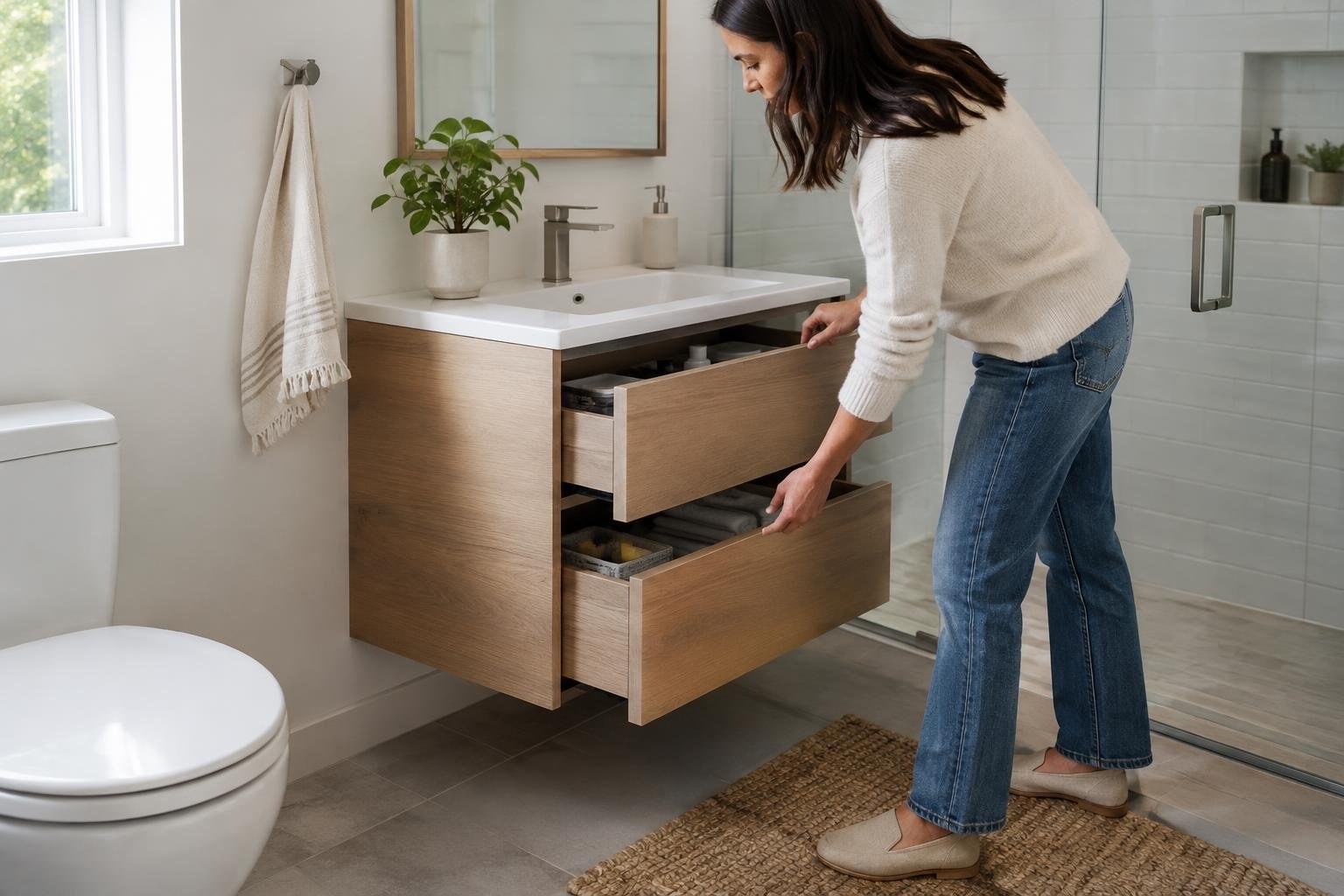
What Is a Bathroom Vanity and Why Does It Matter?
A bathroom vanity is the cabinet-and-sink area used for washing, grooming, and storing bathroom essentials. It may be a standalone cabinet with a countertop and sink, a wall-mounted unit, or a larger double-sink arrangement. The right choice affects how much counter and storage space you have and how open the room feels.
Think of the vanity as both furniture and part of a renovation system. The cabinet must fit the room and work with the sink, faucet, plumbing, and nearby finishes. Changing its size or mounting style can also change the installation work. Decide whether you are replacing a product in the same footprint or changing the bathroom layout before comparing styles.
How a Vanity Fits Into a Bathroom
Most vanities combine a cabinet, a top, and a sink or sink cutout. The cabinet supplies enclosed storage; the top provides a work surface; and the sink connects to the room’s water and drain lines. Faucets may be installed through the top or, in some designs, on the wall. The product’s layout determines how those pieces fit together.
Before ordering, compare the vanity’s stated dimensions and plumbing layout with the room. Note the location of the drain and water connections, the direction cabinet doors and drawers open, and any obstacles nearby. A replacement that keeps the existing arrangement can have a different scope from a project that changes sink position, faucet type, or cabinet mounting.
Bathroom Vanity Types and Their Tradeoffs
| Type | What to consider | May suit |
|---|---|---|
| Freestanding | Rests on the floor and has a visible cabinet base. Check the footprint and door or drawer clearance. | Readers who want a conventional cabinet form or are replacing a similar unit. |
| Floating or wall-mounted | Attaches to the wall, leaving floor visible underneath. Confirm mounting needs and installation scope. | Rooms where an open floor line or easier access beneath the cabinet is a priority. |
| Single sink | Uses one sink position; cabinet widths vary. A cabinet-type model can be as narrow as 18 inches, according to the cited overview. | Compact layouts or households that do not need two sink positions. |
| Double sink | Uses more width for two sink positions; some cabinet-type models reach 72 inches or more. | Bathrooms with sufficient room and a genuine need for two sinks. |
| Corner or compact format | Designed for a constrained or unusual footprint; assess usable storage and access, not just its outline. | Bathrooms where a standard rectangular cabinet would obstruct movement. |
These are broad categories, not guarantees of a particular fit or quality. Measure the actual product and check the manufacturer’s installation details. A floating cabinet can create a cleaner sightline under the unit, but that appearance comes with wall-mount work that should be considered before purchase.
Materials, Storage, and Product Quality
Vanities vary in cabinet construction, finish, top, sink configuration, storage, and hardware. A simple silhouette may emphasize appearance but offer less built-in storage; a cabinet with more drawers or enclosed space may better serve people who want to reduce counter clutter. The sources describe examples of both minimalist designs and storage-focused products, but do not establish a universally superior brand or construction specification.
Compare the full product rather than a brand name alone. Review the included countertop and sink, finish, drawer arrangement, hardware, assembly needs, and care instructions. Confirm whether the faucet is included and whether its configuration matches the sink and top. For any material or finish, use the product documentation to check cleaning and maintenance guidance; do not assume two similar-looking products have identical specifications.
Bathroom Vanity Cost: What to Compare
Vanity prices are not comparable unless the products and project scopes are alike. A product listing may cover only the cabinet or may bundle a top and sink; installation, delivery, removal, and related work may be separate.
Items to include in a project comparison
- Vanity cabinet, top, sink, faucet, and hardware, identifying what is included.
- Delivery, assembly, removal of the old unit, and disposal.
- Installation labor and any plumbing or faucet changes.
- Wall preparation and mounting requirements for a floating design.
- Changes to flooring, trim, backsplash, paint, or other finishes affected by the new footprint.
- Any required approvals or inspections, confirmed for the project location.
What can raise the total?
A custom or larger arrangement, a change in sink location, additional finish work, or a floating unit with mounting needs can add tasks beyond a straightforward replacement. An estimate that omits removal, installation details, or repair of surrounding finishes may appear lower while covering less work.
How to keep spending under control
Keep the existing footprint and plumbing arrangement when they suit the new design, compare models with the same included components, and ask for a written breakdown before approving work. Avoid choosing a unit solely because its advertised price is low; verify dimensions, completeness, delivery terms, and installation scope first.
How to Choose a Vanity That Fits
Start with a tape measure and a sketch of the existing layout. Record the available width, depth, and height; mark the sink and plumbing positions; and note nearby doors, drawers, walls, and fixtures. Compare those measurements with the exact cabinet and top dimensions, not a general label such as “small” or “double.”
Next, decide how you use the room. Consider how many people need sink access, whether counter space or enclosed storage matters more, and what must remain within reach. In a compact bathroom, prioritize a proportionate footprint and useful storage rather than filling the room with the largest cabinet that will physically fit. Floating models can make floor space more visually continuous, but confirm the mounting plan before treating them as an easy substitution.
Finally, check the complete product specification and installation instructions. Confirm the sink and faucet arrangement, what components are included, and how the unit is secured. If the replacement changes plumbing, mounting, or nearby finishes, include those changes in the project scope before purchase.
Warning Signs, Renovation Triggers, and Common Mistakes
Vanity work may be needed when the existing unit no longer provides the storage, counter, or sink arrangement you want, or when you are planning a broader bathroom update. A new style can also be considered when the current footprint is awkward for the room or the cabinet does not meet your household’s needs. These are reasons to evaluate options, not proof that the entire bathroom must be remodeled.
Before replacing a unit, check whether a product swap can solve the problem without changing the layout. If the cabinet is difficult to access, the sink arrangement does not suit the room, or the desired design requires a new mounting approach, compare the added scope against a simpler replacement. Do not order until you have confirmed measurements, included components, and installation needs.
Common planning mistakes
- Measuring wall width but not depth, height, or door and drawer clearance.
- Assuming a product includes the sink, top, faucet, or hardware without checking.
- Choosing a double sink without confirming that the room can accommodate its width.
- Selecting a floating vanity for appearance without planning for wall mounting.
- Prioritizing the cabinet’s look while overlooking storage and daily use.
- Comparing an item-only price with a quote that includes installation and removal.
- Ordering before checking plumbing locations and product instructions.
What to Expect During Vanity Installation
The precise schedule depends on the product, the work included, delivery, and whether the layout or finishes change. The research provided does not establish a reliable standard installation duration. Ask the installer to give a project-specific schedule and identify what could delay ordering, preparation, installation, or completion.
- Assess and measure: Document the existing layout and confirm the replacement dimensions.
- Choose the product: Verify included components, sink and faucet compatibility, and mounting instructions.
- Set the scope: Agree whether removal, disposal, plumbing work, wall preparation, and finish repairs are included.
- Prepare the room: Confirm who clears the area and protects nearby surfaces.
- Install and check: Have the work completed to the product instructions and agreed scope, then review operation and finish details.
- Close out: Confirm cleanup, documentation, warranty information, and any outstanding items.
For a floating vanity, ask specifically how the unit will be mounted and who is responsible for the installation. Wall-mount models can require substantial installation work, so include that in the schedule and estimate.
Choosing an Installer and Comparing Estimates
A simple product selection and a project involving a changed layout are different undertakings. You may be able to compare products and take measurements yourself, but installation decisions should follow the product instructions and the work actually required. A wall-mounted vanity in particular calls for careful mounting; do not assume that its installation is equivalent to placing a floor-standing cabinet.
When professional help is appropriate, compare written estimates with a matching scope. Ask who will do the work, what installation tasks are included, whether plumbing or finish work is part of the quote, how changes are handled, and what product or workmanship coverage applies. Verify any locally required qualifications or approvals with the relevant local authority rather than assuming rules are the same everywhere.
Questions to ask a provider
- Have you installed this type of vanity and mounting style?
- Who will perform each part of the work?
- Does the estimate include removal and disposal of the existing unit?
- Which cabinet, top, sink, faucet, and hardware are included?
- Does the price include assembly and installation?
- Will the current plumbing arrangement work with this product?
- What wall preparation or mounting work is included?
- Are nearby flooring, trim, backsplash, or paint repairs included?
- How will you protect the bathroom and handle cleanup?
- What is the expected schedule, including ordering and installation?
- How will additional work or changes be priced and approved?
- What product and workmanship warranties apply, and who handles a claim?
- Are permits, inspections, or other approvals relevant to this scope and location?
Permits, Safety, and Warranties
Do not treat a vanity as a product-only decision if the project includes plumbing changes or wall mounting. Check the manufacturer’s instructions, the installer’s proposed method, and any local requirements that apply to the actual work.
Before paying a deposit, request a written scope that states what is being installed, what is excluded, the anticipated schedule, payment milestones, and how changes are approved. Review product and labor coverage separately. Check whether registration, specific care, or other conditions affect the manufacturer’s warranty. Keep the receipt, product documentation, and installation records together.
Be cautious about a provider who will not explain the scope, avoids putting commitments in writing, or cannot clarify who is responsible for mounting and plumbing tasks. Compare more than the bottom line: an estimate is only useful when you can see which tasks and materials it covers.
Pros, Cons, and Is a New Vanity Worth It?
Potential value is personal and depends on the bathroom, the product, and the renovation scope. A vanity can change storage, counter space, appearance, and how the room is used. A floating design may create a more open sightline beneath the cabinet, while a storage-focused cabinet may help address clutter. Neither appearance nor a brand label guarantees that a particular model is the best choice for every home.
To decide whether the project is worthwhile, compare the cost and disruption of the proposed work with the benefit you expect from better fit, storage, or function. If the existing unit meets your needs, a full replacement may not be necessary. If you are already changing nearby finishes or layout, evaluate the vanity as part of the complete plan so that the product and surrounding work are coordinated.
Related Bathroom Projects to Evaluate
Related work can affect both the appearance and scope of a vanity project. Consider these items before ordering:
- Sink and faucet: They must match the vanity top and installation arrangement. Choose and confirm them before the estimate is finalized; resolve compatibility before the cabinet arrives.
- Plumbing: Compare existing connections with the new sink and cabinet layout. Evaluate this before choosing a unit; settle any required changes before installation.
- Flooring and trim: A different cabinet footprint may expose or cover different areas. Check this while comparing dimensions; complete any necessary finish work in coordination with the vanity installation.
- Wall finish and mounting: A floating unit changes what is visible below and around the cabinet. Evaluate wall condition and mounting needs before selecting the model; prepare the mounting plan before installation.
- Mirror, lighting, and backsplash: A new vanity can change the relationship between the counter and surrounding finishes. Review these together during design; plan their work in the sequence agreed with the installer.
Ask providers to price the combined scope and individual tasks so you can compare the tradeoff.
Bathroom Vanity Planning Checklist
Use this checklist before placing an order or approving installation:
- Measure the available space and verify the exact product dimensions.
- Check door, drawer, and walkway clearances.
- Mark plumbing locations and compare them with the sink and cabinet layout.
- Choose single or double sinks based on room fit and household use.
- Compare storage, counter space, product components, and care instructions.
- Include delivery, removal, disposal, installation, and related finish work in cost comparisons.
- Ask for a written estimate and confirm exclusions, schedule, and change-order process.
- Check local requirements for the work being proposed.
- Review product and workmanship warranty terms and retain the documents.
- Agree on protection, cleanup, final checks, and completion details.
When the scope includes wall mounting or a change to plumbing, settle those details before selecting a final product. To explore provider options, use the Estimate.org services page.
Factors That Affect the Project
Several choices shape how a vanity fits the room and what installation may involve. Compare the exact product dimensions and design with your space before choosing:
- Room dimensions and sink count: Cabinet widths vary. One cited overview describes single-sink models as narrow as 18 inches and double-sink models as 72 inches or more. Measure the available space and clearances, and choose a compact option when a larger unit would crowd the room.
- Mounting style: A floor-standing vanity rests on the floor; a floating model mounts to the wall and leaves the floor visible beneath it. Wall-mounted models can involve substantial installation work, so confirm the mounting plan before purchase.
- Storage and design priorities: Minimalist designs may sacrifice built-in storage, while some designs emphasize storage for bathroom clutter. Consider which tradeoff better suits your needs.
- Product details: Review the exact product specifications and installation information. Confirm the dimensions, sink arrangement, and mounting style before comparing options.
- Project scope: If a chosen model changes the mounting approach or sink arrangement, ask providers to explain how that affects the work and include the details in written estimates.
Compare products by fit, storage, and installation needs rather than appearance alone. Verify measurements and specifications before ordering.
Frequently asked questions
How do I choose the right bathroom vanity?
Start with the available width, depth, and height, then check door and drawer clearances and the location of existing plumbing. Decide how much storage and counter space you need, and whether you prefer a floor-standing or wall-mounted cabinet. A vanity that looks appealing but blocks movement or requires unplanned plumbing work may not be the right fit.
How much does a bathroom vanity renovation cost?
There is no single price that applies to every vanity project. The total depends on the cabinet and top, sink and faucet choices, delivery, removal, installation, and whether plumbing, wall support, flooring, or other finishes need work. Compare written estimates with the same scope and ask which items are included before deciding.
Are floating bathroom vanities a good choice?
A floating vanity is fixed to the wall rather than resting on the floor. It creates an open area beneath the cabinet and can make floor cleaning easier. Before choosing one, confirm the wall can support the installation and account for the mounting work; some wall-mounted designs require substantial installation effort.
Is a single or double bathroom vanity better?
A double vanity can provide two sink positions and a wider shared counter, but it takes more room than a single-sink model. Check the actual cabinet dimensions, sink spacing, storage layout, and clearance for doors and drawers. A wider cabinet is not automatically the better choice if it crowds the room or leaves little usable counter space.
What size vanity fits a small bathroom?
Measure the intended space, including width, depth, and height, and note nearby doors, drawers, toilets, and shower enclosures. Check where the existing drain and water connections sit, and compare those locations with the vanity’s sink and cabinet layout. Confirm the product’s actual dimensions rather than relying on a general size category.
What is the difference between a freestanding and floating vanity?
A freestanding vanity generally rests on the floor, while a floating vanity mounts to the wall. The first gives the room a cabinet base; the second leaves an open strip of floor beneath it. Consider storage, the look you want, floor cleaning, and the wall-mount installation requirements before choosing.
Can I replace a bathroom vanity without remodeling the whole bathroom?
Replacing only the vanity may be a manageable update when the existing plumbing locations, surrounding finishes, and cabinet footprint suit the new unit. A broader renovation may make sense if you want to change the layout, countertop, faucet placement, or nearby finishes. Compare the full scope and disruption of each option before ordering.
What should I ask a bathroom vanity installer?
Ask who will perform the work, whether the quote includes removal and disposal, what installation and plumbing tasks are included, and how changes are priced. Also ask about the schedule, protection of nearby finishes, cleanup, product and workmanship coverage, and any approvals or inspections that may apply to your project location.
People Also Ask
How do I measure for a new bathroom vanity?
Measure the available width, depth, and height, then check door, drawer, and walkway clearances. Compare the vanity’s sink and plumbing layout with the connections already in the room. Product dimensions vary, so verify the specifications of the exact model before ordering.
What are the benefits of a floating bathroom vanity?
Floating models expose the floor beneath the cabinet, which can create a more open sightline and make the floor easier to clean. The tradeoff is that the cabinet must be securely mounted to the wall. Include wall-mount installation in the project plan rather than treating it as a simple swap.
When should I choose a double-sink vanity?
A double vanity is useful when two sink positions and a wider counter suit the household and the room has enough space. It is not automatically the best choice for a small bathroom: assess the full cabinet width, clearance, and storage layout before committing.
What should I look for when buying a bathroom vanity?
Check the vanity’s width, depth, and height; sink count and position; cabinet and drawer arrangement; top material; and faucet compatibility. Then compare installation requirements and the return, delivery, and warranty terms for the exact product. Product photos alone do not show whether it will fit your room or plumbing.
Are floating vanities more expensive than freestanding vanities?
Not necessarily. A wall-mounted design leaves an open area under the cabinet, but the product itself and its installation needs vary. Compare the full product and installation quotes, including any preparation or plumbing work, rather than assuming that one mounting style always costs more.
What type of vanity works best in a small bathroom?
A smaller footprint can help preserve usable floor area, but a compact vanity may offer less counter or cabinet space. Check both its outside dimensions and the way its storage is arranged. A shallow or narrow design only works well if it still accommodates the sink and daily-use items you need.
The best bathroom vanity is the one that fits the room, supports your daily routine, and suits the renovation you actually plan to do. Measure carefully, compare storage and installation requirements, and look beyond the product’s appearance to the full project scope. If the work involves moving plumbing or mounting a floating unit, include those tasks in your planning before choosing a model. Explore your options and find providers at Estimate.org.
Your next step
Explore your options and find providers at Estimate.org.
Reviewed and maintained by the Staff at Estimate.org.
Last reviewed and updated October 19, 2026 by the Estimate.org Editorial Team.
Sources
- How to Choose the Best Luxury Bathroom Vanities for Your Home – Modland
- 10 Best Bathroom Vanities for Storage and Style – Bob Vila
- Top 5 Bathroom Vanity Brands: A Comprehensive Buyer's Guide
- 2025 Top 10 Best Bathroom Vanity Brands in USA
- 16 Best Bathroom Vanities That Make a Splash (2026) | Architectural Digest
- Expert Tested & Reviewed – Best Bathroom Vanities of 2026
- Bathroom Vanity Designs: Top Choices for 2026 and Beyond
- 35 Best Bathroom Vanities for Every Style and Space
