

A shower remodel can mean replacing a worn enclosure, updating fixtures, changing the shower’s layout, or rebuilding the area from the framing out. The right budget depends on which of those tasks you need, the materials you choose, local labor and permit requirements, and what demolition reveals. Published estimates differ: one puts a full shower renovation around $3,100 to $10,000, with a reported average of roughly $6,000 to $7,500, while broader estimates include lower-cost kits and higher-end projects. These figures are useful for early planning, not a substitute for written local quotes. Before choosing finishes, decide whether the project is cosmetic or involves plumbing, waterproofing, or layout changes. Then compare proposals with the same scope and set aside a contingency for concealed damage.
What a shower remodel includes
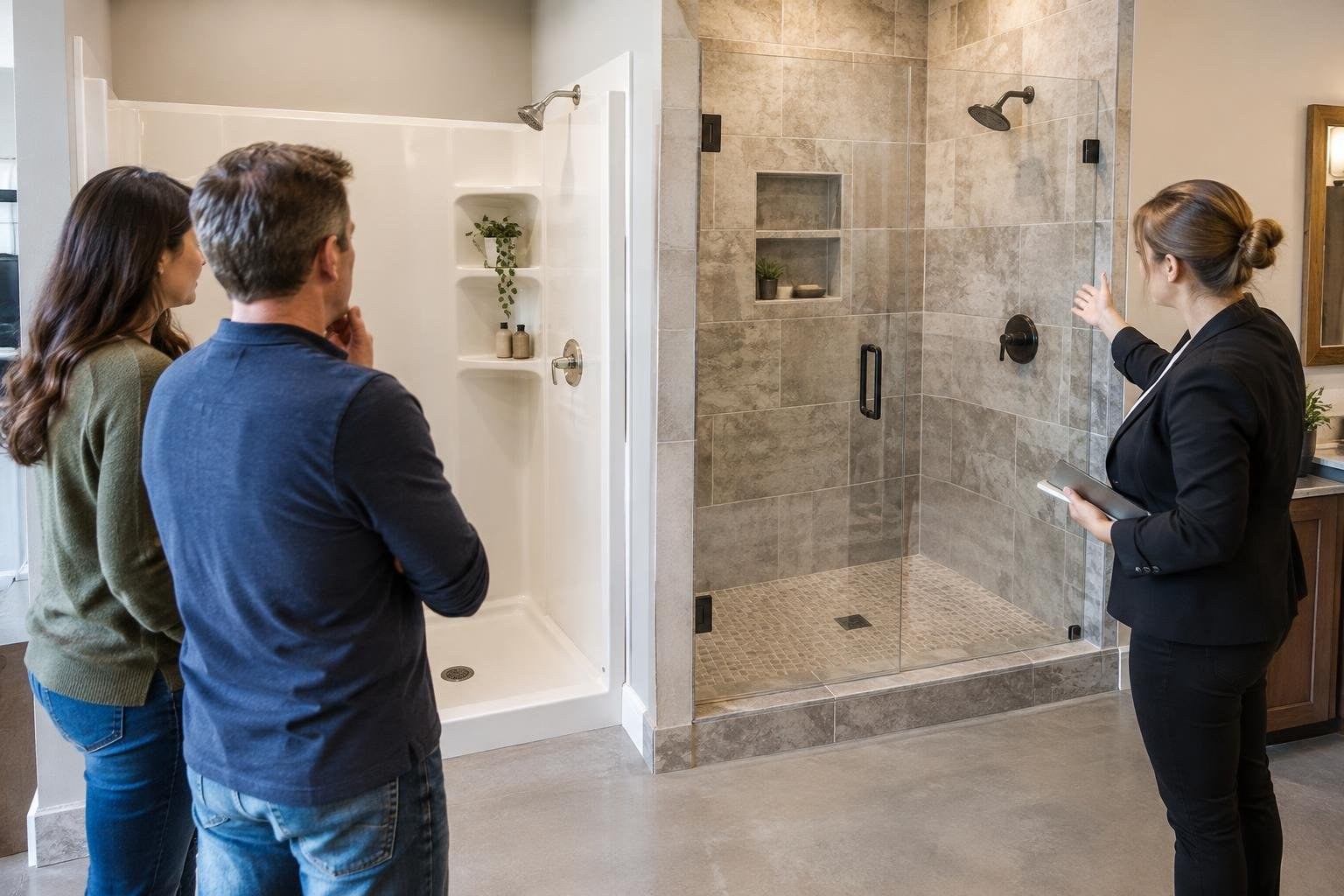
A shower remodel updates some or all of the shower enclosure and its surrounding components. A limited project might replace a prefabricated unit, base, door, or fixtures. A more extensive renovation can remove the enclosure, change plumbing or layout, repair the substrate, install waterproofing, and add new wall and floor finishes.
The distinction matters when estimating cost. A quote for a new kit is not directly comparable to one that includes demolition, plumbing changes, waterproofing, finish materials, and disposal. Before requesting bids, write down what you want to change and what should remain in place.
Think about how the shower is used: who needs to enter it, what storage is useful, whether the current layout works, and how much cleaning and maintenance you are willing to do. A remodel can improve function and appearance, but the best value comes from matching the scope to an actual problem rather than adding features by default.
How the project works
Most remodels follow a sequence: inspect and measure the existing shower, select a design and products, protect the work area, remove the old enclosure, address any exposed damage, install the new base or pan and wall system, connect fixtures, finish edges, and test the completed work. The specific sequence depends on the products and whether plumbing or the footprint changes.
Waterproofing is an important part of the assembly, not a decorative finish. Ask what system the installer plans to use, how it will be applied, and how the connection between the walls and shower base will be handled. The proposal should identify the actual products or system, rather than simply promising a “waterproof shower.”
Before work starts, confirm where materials will be stored, how the bathroom will be protected, whether water will need to be shut off, and how debris will be removed. Agree on how the contractor will document hidden conditions and get approval for added work before proceeding.
Signs a shower may need repair or remodeling
Remodeling may be worth considering when the shower no longer suits the household or when a repair requires more than a simple fixture replacement. Look for recurring leaks, water staining outside the enclosure, loose or damaged finishes, a cracked base, or persistent moisture problems. These symptoms can have different causes; a surface patch may not fix a leak behind a wall or at a plumbing connection.
Some issues call for prompt attention. If water is actively escaping or damaging nearby surfaces, stop using the shower if practical and arrange an inspection. Do not assume that a discolored joint or musty smell identifies the exact source. Have a qualified professional investigate before choosing a cosmetic update.
Not every worn finish calls for a full remodel. If the base, surrounding structure, and waterproofing are in serviceable condition, a smaller repair or fixture update may be sufficient. Ask for a diagnosis and a repair-versus-replacement explanation before committing to demolition.
Shower remodel cost: what published estimates show
Published cost estimates are not fully comparable because they describe different scopes. One source estimates a full shower renovation at $3,100 to $10,000, with a reported average of approximately $6,000 to $7,500. Other published figures cover a wider range, including economical prefabricated kits and higher-end projects. A separate estimate notes that an entry-level price point may involve a shower kit, with installation performed by the homeowner or hired out.
Use these numbers as broad planning context, not a guaranteed national price or a quote for your home. Local labor, product selection, project size, and the work included can change the total. A whole-bathroom remodel is also a different scope from a shower-only renovation.
Ask each contractor for an itemized estimate that separates labor, products, demolition and disposal, plumbing, permit fees if applicable, and any allowances. Request written unit or change-order pricing for concealed damage. Compare totals only after confirming that the proposals describe the same work.
Factors that affect the total price
The biggest cost differences often come from scope rather than a single finish choice. A project that keeps the shower in place may avoid some of the work involved in changing its footprint or plumbing. Custom dimensions, premium finishes, additional fixtures, and more involved demolition can also affect labor and materials. Ask the contractor to identify which choices are optional and which are necessary to complete the work.
Possible added costs
- Removal and disposal of the old enclosure and debris.
- Plumbing changes or repairs revealed during demolition.
- Water damage, mold remediation, or substrate repairs.
- Waterproofing work, permits, and inspections where required.
- Access challenges, custom details, and upgraded products.
Demolition can reveal conditions that were not visible during an initial estimate. A home-improvement source reports that unexpected conditions can push projects beyond budget and identifies permits, water damage, mold remediation, waterproofing, and debris removal as costs to plan for. Set a contingency you can afford and agree that added work requires a written price and your approval.
Prefabricated shower vs. custom tile
Two common approaches are a prefabricated shower system and a custom tiled shower. A prefabricated kit can simplify the product package and may suit a standard layout. Custom tile provides more control over appearance and dimensions, but a more tailored finish can involve additional material and installation choices. Neither option is automatically right for every bathroom.
| Consideration | Prefabricated system | Custom tile |
|---|---|---|
| Design | Set sizes and coordinated components | More flexibility in layout and finish |
| Budget planning | Can be a lower-cost approach, depending on scope | Cost depends on tile, detailing, and labor |
| Key questions | Fit, threshold, base, and included components | Waterproofing system, substrate, and maintenance |
Get the complete installed price for each option, including the base or pan, wall finish, fixtures, waterproofing, and labor. A source on shower remodeling identifies a prefabricated pan and porcelain tile as potential ways to control material costs. Verify the products and installation details in your own proposal rather than assuming that a material alone guarantees performance or savings.
Repair or replace the shower?
Repair is often the first option to evaluate when the problem is limited and the surrounding shower remains sound. Replacement may make more sense when damage is extensive, the same failure keeps returning, or a repair would leave an unsuitable layout or deteriorated enclosure in place. The right answer depends on an inspection; a low initial repair price does not tell you whether the underlying cause will be resolved.
Ask the provider to describe the cause, the proposed fix, and the expected limits of the repair. If replacement is recommended, request an explanation of why a smaller repair is not appropriate. Compare the near-term price with the scope and likely follow-up work, not simply with the price of a new shower kit.
Do not conceal active leakage with a new finish before determining where water is entering or escaping. If demolition is needed to inspect the assembly, ask how the contractor will stop work, document the condition, price the repair, and obtain your approval before expanding the project.
What to expect and how long it may take
Plan for several stages: inspection and measurements, product selection and ordering, any required permit steps, site preparation, removal, installation, testing, and cleanup. A published source estimates that a professional shower remodel may take two to four weeks; that is a general planning figure, not a promise for every project. Confirm whether the contractor means active work days or the full time from start through completion.
Ask for a written schedule with anticipated start and finish windows, delivery assumptions, inspection points, and the process for delays. Materials, the extent of demolition, plumbing changes, concealed damage, and local approvals can affect the timeline. Establish what the household should expect if the bathroom cannot be used during parts of the work.
At the final walkthrough, check the visible finish, doors and controls, drainage, cleanup, and any items listed as incomplete. Ask for care instructions, warranty documents, and copies of permits or inspection records when applicable. Report concerns promptly and keep a copy of the signed scope and change orders.
How to choose a qualified shower remodeler
Choose a provider based on the clarity of the proposed work as well as price. Seek multiple written estimates for the same scope, check applicable licensing and insurance, and ask for references or examples of comparable shower projects. Verify credentials with the relevant local or state agency when such verification is available.
Questions to ask before signing
- What work is included, and what is excluded?
- Who will perform plumbing and other specialized work?
- What waterproofing products and installation steps are specified?
- Who obtains permits and arranges inspections?
- Are demolition and debris removal included?
- How will concealed damage be documented and priced?
- What products, brands, and allowances are in the estimate?
- What is the expected schedule and what could delay it?
- Who supervises the work and communicates changes?
- What workmanship and manufacturer warranties apply?
- What are the payment milestones and change-order terms?
- What cleanup and final testing are included?
Get promises, product selections, price changes, and warranty terms in writing. A proposal that is unusually low or vague may omit work that another estimate includes.
Permits, credentials, safety, and warranties
Permit rules vary by jurisdiction and project scope. Some municipalities require permits for bathroom work, particularly when plumbing or structural changes are involved. Before signing, ask the contractor to identify which approvals may apply and who will obtain them. Confirm requirements with your local building department rather than relying on a general statement about what is required everywhere.
Ask for evidence of applicable licensing and insurance, and confirm the contractor’s responsibility for subcontractors. The written agreement should identify the work, products, payment schedule, start and completion expectations, change-order process, cleanup, and dispute steps. Keep a copy of permits, inspection results, and receipts.
Read warranty terms separately for products and workmanship. Check what is covered, how long coverage lasts, exclusions, registration deadlines, and what maintenance or installation conditions apply. Do not assume a manufacturer’s product warranty also covers labor or water damage caused by installation problems. Resolve unclear terms before work begins.
Ways to save without cutting critical corners
Control cost by defining the scope before shopping, keeping the layout where practical, and comparing materials at more than one price point. Ask for samples and a written product list so a lower allowance does not lead to unexpected upgrades later.
Demolition may appear to be a way to save, and one source lists homeowner-performed demolition as a possible cost-saving measure. However, demolition can expose water damage or other conditions and may affect the contractor’s responsibility for the work. Do it only if the contractor agrees in writing on the boundaries, safety precautions, disposal, and how the work will affect the schedule and warranty.
Other safe planning steps include avoiding unneeded layout changes, selecting readily available products, and comparing bids with matching scopes. Do not reduce cost by skipping waterproofing, required permits, qualified plumbing work, or inspection. Ask contractors to distinguish true necessities from optional upgrades, then make tradeoffs that preserve the quality of the underlying installation.
Common mistakes and contractor red flags
- Choosing the lowest quote without checking whether it includes demolition, disposal, waterproofing, and plumbing.
- Comparing a kit price with a full installed renovation price.
- Selecting finishes before confirming measurements and product fit.
- Changing the layout without asking how it affects scope and schedule.
- Assuming a visible leak or stain is only a surface problem.
- Starting demolition without a plan for concealed damage and added costs.
- Accepting verbal changes instead of written change orders.
- Assuming permits are unnecessary without checking local requirements.
- Failing to read product and labor warranty terms.
- Attempting plumbing or waterproofing work without the appropriate skill and agreement.
One common budget problem is the gap between the expected project and conditions found during demolition. Reduce that risk by asking how concealed damage will be handled, setting aside a contingency, and requiring written approval for added work. A clear scope and documented decisions make it easier to compare proposals and resolve misunderstandings.
Related bathroom projects to consider
A shower project may affect other bathroom work. If the floor, paint, trim, ventilation, or plumbing fixtures also need attention, evaluate them while defining the shower scope. Coordinating work may reduce repeated disruption, but only if the sequencing and responsibilities are clear in the contract.
For example, discuss adjacent wall finishes and bathroom flooring before finalizing demolition and installation details. Confirm whether the shower remodel includes only the enclosure or also nearby finish repairs. If a broader bathroom renovation is under consideration, request separate pricing for the shower and remaining work so you can compare a phased project with a combined project.
Do not bundle unrelated upgrades just because a crew is already present. The useful question is whether the related work shares access, demolition, plumbing, or finish steps. Agree on which project comes first and who is responsible for protecting completed surfaces. Keep each part of the scope visible in the estimate.
Final homeowner checklist
- Describe the problem and decide whether you want a repair, a shower-only remodel, or broader bathroom work.
- Set a budget that includes products, labor, removal, permits if applicable, and a contingency for hidden conditions.
- Compare prefabricated and custom options by complete installed scope.
- Request written, itemized estimates for the same work.
- Verify applicable credentials and insurance, and confirm local permit requirements.
- Review product specifications, waterproofing details, warranty terms, schedule, and payment milestones.
- Document changes and approve additional work in writing.
- At completion, inspect the work, collect care and warranty documents, and keep permit records when applicable.
When you are ready to explore providers, use Estimate.org to find service providers and compare your next steps.
Frequently asked questions
How much does a shower remodel cost?
Published estimates vary by project scope. One source estimates a full shower renovation at $3,100 to $10,000, with a reported average of about $6,000 to $7,500. Other estimates span a wider range because they include different project types, from basic kits to more extensive or luxury work. Treat these as planning references, not a local quote.
How long does a shower remodel take?
A straightforward shower remodel may take two to four weeks with a professional contractor, according to one published estimate. This is a project-duration estimate, not a guarantee. Material availability, the amount of demolition, plumbing changes, permit steps, and concealed water damage can affect the schedule.
Is a prefabricated shower or custom tile cheaper?
A prefabricated shower kit can be a lower-cost way to update an enclosure, while a custom tiled shower offers more flexibility in size and appearance. Compare the full installed scope, including the base, waterproofing, fixtures, labor, and any plumbing changes, rather than comparing the visible finish alone.
Can I save money by doing some of the shower remodel myself?
It may be possible to save on selected finish materials or use a prefabricated shower pan, but the right choice depends on the design and installation plan. Demolition can expose hidden damage, and work involving plumbing, waterproofing, or structural changes can create costly problems if done incorrectly. Ask the contractor to identify safe homeowner tasks in writing.
Do I need a permit to remodel a shower?
Permit requirements depend on local rules and the work being done. Plumbing or structural changes may require permits in some municipalities. Ask the contractor who will check requirements, submit applications, schedule inspections, and provide permit records; verify the answer with your local building department.
How do I choose a shower remodeling contractor?
Get at least three written proposals with the same project scope so you can compare what each includes. Ask about waterproofing, plumbing changes, demolition and disposal, permits, schedule, payment milestones, cleanup, and how hidden damage will be priced. Verify relevant credentials and insurance, and avoid relying on a verbal promise for scope or warranty terms.
People Also Ask
Should I repair or replace my shower?
Repair may be appropriate when the problem is limited and the surrounding shower remains sound. Replacement may make more sense when damage is extensive, failures recur, or a repair would leave a deteriorated enclosure or unsuitable layout. Ask for an inspection, the cause, the proposed fix, and why a smaller repair would not address it.
What makes a shower renovation more expensive?
Changing the shower footprint or moving plumbing can add work compared with replacing an enclosure in its existing location. Ask contractors to show the cost and schedule implications of each proposed change in their written estimates.
What should I do if demolition uncovers water damage?
Demolition can reveal water damage or other conditions that were not visible in an initial estimate. Ask the contractor to document the finding, provide a written price for added work, and get your approval before proceeding. Set a contingency you can afford.
How should I prepare for a shower remodel?
Before work starts, confirm where materials will be stored, how the bathroom will be protected, whether water needs to be shut off, and how debris will be removed. Agree on how concealed conditions will be documented and priced, and get approval before added work proceeds.
What should I check in a shower remodel warranty?
Read product and workmanship warranty terms separately. Check coverage, exclusions, registration deadlines, and any maintenance or installation conditions. A manufacturer's product warranty may not cover labor or water damage caused by installation problems; clarify unclear terms before work begins.
What should a shower remodel estimate include?
Compare at least three proposals that describe the same work. Check the listed materials, demolition, disposal, waterproofing, plumbing, permit responsibilities, schedule, payment terms, and how concealed damage will be handled. Verify applicable credentials and insurance before signing.
A successful shower remodel starts with a clear scope, a realistic budget, and a plan for what may be uncovered behind the old enclosure. Compare complete written proposals, confirm who handles permits and plumbing, and choose materials and features that suit your household and maintenance preferences.
Your next step
Explore your options and find providers at Estimate.org.
Reviewed and maintained by the Staff at Estimate.org.
Last reviewed and updated November 2, 2026 by the Estimate.org Editorial Team.
Sources
- Cost To Remodel a Bathroom – The Home Depot
- How Much Does a Walk-In Shower Cost? A Look at 2026 National Averages
- How Much Does Shower Remodeling Cost in 2025?
- Give Your Bathroom A Makeover: Shower Remodeling Cost Breakdown 2026
- How Much a Shower Remodel Costs in 2026, from Prefab to Custom Walk-Ins
- How Much Does a Shower Remodel Cost? (2026 Pricing)
- Shower Remodel Cost Calculator: Estimate How Much You'll Pay
- Shower Replacement Cost: What to Budget for a Bathroom Renovation
