

If you are comparing replacement windows and new-construction windows in New Jersey, the key question is not simply which product is better. It is whether the existing frame and surrounding opening can stay. A replacement window is typically fitted into a suitable existing frame. A new-construction or full-frame installation removes more of the assembly and may be a better fit when the opening is new or the frame is damaged. That difference affects the work, disruption, and total project price. Here is how to evaluate the options and what to ask before signing a quote.
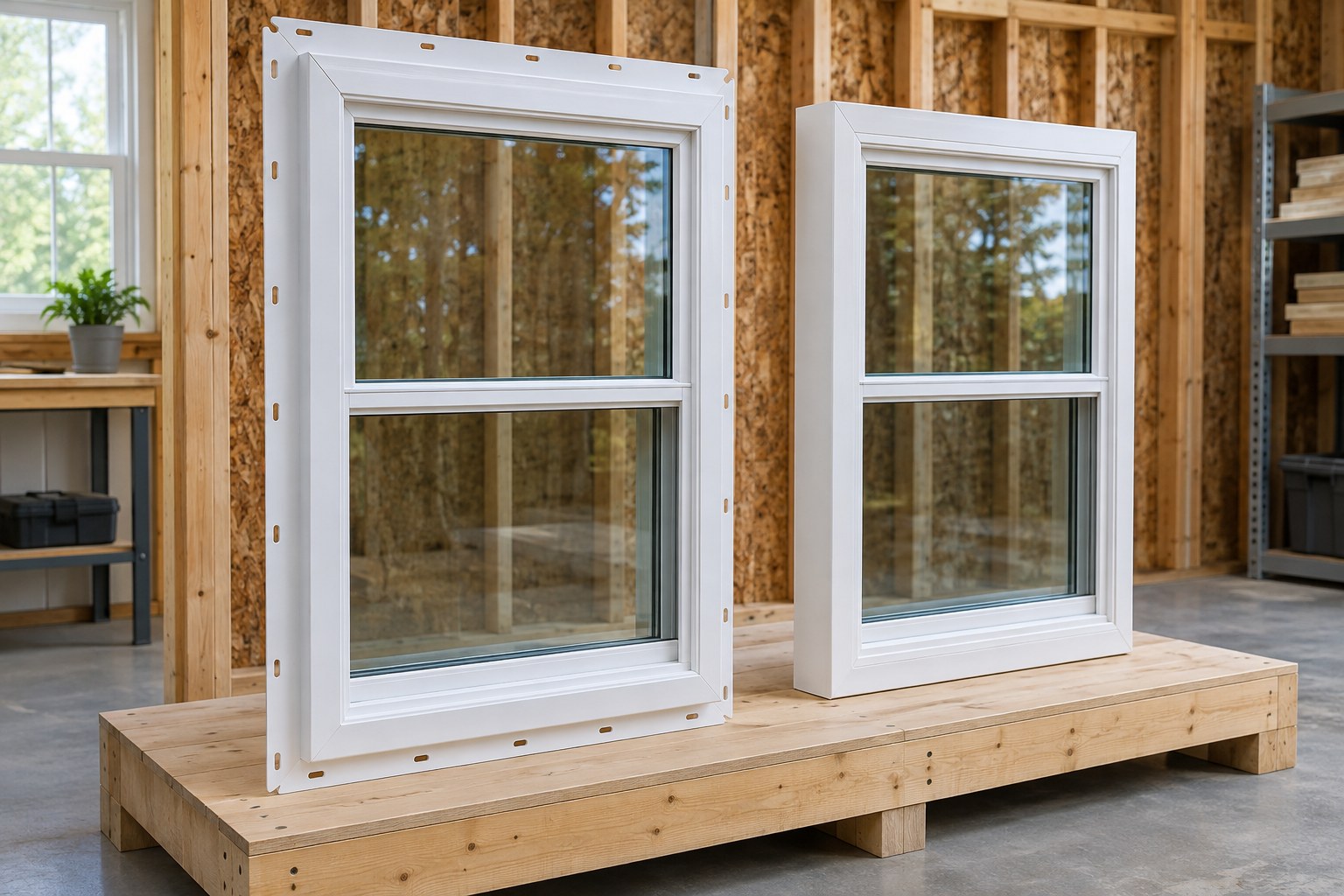
Replacement vs. new-construction windows: the basic difference
These terms describe different installation approaches, not just different window products. A replacement or insert window is fitted into an existing frame the installer plans to keep. The work can be less invasive when that frame is in suitable condition.
New-construction windows are commonly installed in new openings. A full-frame approach can also remove the existing window frame and more of the surrounding assembly during a replacement project. This makes it possible to inspect areas that would otherwise remain covered, but it can mean more labor and work on insulation, flashing, or trim.
For a New Jersey project, ask providers to state exactly what they mean by “replacement,” “insert,” “new construction,” and “full frame.” Terminology can vary. The proposal should identify what stays, what comes out, and how the new unit connects to the opening.
What the service includes and how installation works
The installation choice starts with an assessment of the opening. For an insert-style replacement, the installer measures the existing frame and fits the new unit within it. The frame remains part of the finished installation, so the approach depends on that frame being suitable to keep.
For a full-frame or new-construction installation, more of the existing assembly is removed. The installer may need to address the opening, insulation, flashing, and interior or exterior trim. When a window is being added where there was no opening, the project also involves creating the opening and integrating the new unit with the surrounding wall.
Before work begins, ask for a plain-language description of the sequence: what will be removed, what will be inspected, how the new window will be secured, and what finish work is included. If the crew uncovers conditions that change the scope, ask how the provider will document the issue and get your approval for added work.
Signs you may need more than an insert replacement
A window that no longer works as intended may need attention, but the symptom alone does not tell you which installation method to choose. A provider should inspect both the window and the parts of the opening that will remain.
- Moisture or deterioration near the frame: Ask whether the visible condition could extend into the framing. If moisture damage reaches the frame or studs, ask whether a fuller removal is needed to inspect and address it rather than covering the area with an insert.
- A window that is falling apart: Ask the provider to inspect the frame and surrounding area, not only the sash or glass.
- A new opening or major alteration: A new-construction approach may be relevant where no window existed or the opening is being rebuilt.
- A sound frame with a window that needs replacement: An insert may be a less invasive option if the existing frame is appropriate to retain.
Do not assume that every draft, leak, or operating problem requires full-frame work. Ask for the inspection findings and the reason the recommended scope addresses them.
Cost and pricing: compare the whole project
There is no reliable price comparison based only on “replacement” versus “new construction.” A replacement installation is often more cost-effective when the existing frame can remain. Full-frame work can cost more because it may require additional labor and work on insulation, flashing, trim, or the surrounding assembly. Actual quotes depend on the project scope and window selected.
Ask each provider to separate or clearly describe:
- The window unit, including its size and configuration.
- Whether the work is insert replacement or full-frame removal.
- Removal and disposal of the old unit.
- Insulation, flashing, and interior or exterior trim work.
- Any repair to the opening that is included, excluded, or priced only if discovered.
- Changes that could affect the price after work starts.
Compare the same scope across estimates. A lower quote may not cover the same removal, finish work, or response to damaged framing. Request an explanation in writing before using price alone to choose an installer.
Factors that affect the project and estimate
Several decisions can change the work and the final estimate. Frame condition is central: keeping a sound frame can limit removal, while addressing damage may require a broader installation. The size and shape of the opening also matter. A standard stock size is not automatically a fit for an existing opening, and the window itself is only one part of the project cost.
Other factors to discuss include the number of windows, the selected style, how much existing trim must be removed or replaced, and whether the project creates a new opening or alters an existing one. More involved installation can bring added labor, including work on insulation, flashing, and trim.
Ask providers to explain which factors are confirmed from their inspection and which are allowances or possibilities. If they recommend a custom size, ask what issue it solves and whether a standard size can fit without creating additional work. Avoid comparing estimates until you understand those assumptions.
Options and tradeoffs: insert versus full-frame
Use the condition of the opening and the amount of change you want to guide the comparison.
| Approach | Often a fit when | Tradeoff to consider |
|---|---|---|
| Insert or replacement window | The existing frame is suitable to keep and the opening does not need major changes. | Less of the surrounding assembly is replaced, which limits the scope of work and potential design changes. |
| Full-frame or new-construction window | You are creating an opening, rebuilding one, or addressing a frame or surrounding-area concern. | More removal and labor may be involved, including work on insulation, flashing, and trim. |
These are general comparisons, not a substitute for inspection. Ask each provider to show which parts of your current opening they expect to retain. If one quote proposes insert installation and another full-frame work, ask both to explain the frame condition they observed and why their scopes differ.
When you want to change the appearance or configuration, ask whether the proposed method allows that change and what extra work it would require. A product choice cannot be separated from the opening and installation plan.
Compare window styles and sizes after choosing an approach
Installation method and window style are separate decisions. First determine whether the existing frame can remain or whether the project calls for more complete removal. Then compare styles that fit the opening and your priorities.
For example, an awning-style replacement window has a sash attached to the frame by hinges along the top, allowing it to open outward. If you are considering a different style, ask the provider how it fits the existing opening and whether the chosen installation method limits the available configuration.
Standard and custom sizes also need a project-specific comparison. A stock unit may not match the opening, and the total cost includes more than the window. Ask for measurements and a quote that accounts for any needed changes rather than assuming a low-cost standard unit will reduce the overall project price.
What to expect: timing, disruption, and finish work
Expect the installation experience to depend on how much of the old assembly will be removed. Replacement installation is generally quicker and less invasive when the frame stays. Full-frame or new-construction work can take more labor because it may include removal and work on insulation, flashing, and trim.
Do not rely on a generic number of hours or days. Ask for a project-specific schedule that explains the planned work, whether the estimate covers interior and exterior finish work, and what could change if removal reveals damage. Confirm how the provider will handle any added work and whether it requires your approval.
Before the crew arrives, clarify access to the work area, who moves or protects nearby items, and how the provider will leave the opening if work cannot be completed as planned. These are practical questions to settle with the contractor, not assumptions to make from the window type alone.
How to choose a qualified window provider
Choose a provider who can explain the installation recommendation in terms of the actual frame and opening, rather than steering you toward a product before inspecting the project. Ask each company to identify what stays, what is removed, and what happens if the crew finds concealed deterioration.
- Request a written scope that names the installation method and includes the relevant removal and finish work.
- Ask how measurements were taken and how the selected size fits the opening.
- Ask the provider to explain differences between its estimate and other quotes.
- Request a written process for approving additional work if the scope changes.
- Check references and relevant business information as part of your own evaluation.
Be cautious if a provider cannot explain why an insert or full-frame method is appropriate, gives a price without defining the work, or dismisses visible moisture concerns without describing an inspection. A clear explanation is more useful than a broad promise that one installation type is always best.
Permits, credentials, warranties, and safety questions
Before hiring, ask what permits or approvals may apply to your specific project and who is responsible for confirming them. Requirements can depend on the work being proposed, so do not assume a simple replacement and a new or altered opening are treated the same. Get the provider’s answer in writing and verify it with the relevant local authority when needed.
Ask for the provider’s applicable credentials and proof of insurance, and confirm what warranty coverage applies to the product and installation. Request the actual written terms, including how to report a problem and whether the coverage differs for the window unit and the labor.
Safety also means understanding the work area and the plan for unexpected conditions. If removal exposes moisture or damage in the frame or surrounding structure, ask the crew to document it, explain the proposed response, and obtain approval for a changed scope before proceeding. Do not treat a warranty or verbal assurance as a substitute for a clear installation plan.
Ways to manage cost without cutting corners
Saving safely starts with a scope that solves the actual problem. If inspection confirms that the existing frame is suitable to keep, ask whether an insert installation can meet your needs. It may reduce removal and labor compared with a broader project. Do not choose it solely because the quote is lower if it leaves a known moisture or frame concern unaddressed.
Get more than one written estimate when practical, and compare matching details: window size and style, installation method, removal, trim, and how the provider handles concealed damage. Ask whether a standard size fits the measured opening before assuming stock windows will cost less overall. The product price alone does not capture all project costs.
Keep any requested design changes separate from necessary repairs so you can see their effect on the estimate. A useful cost-saving decision is an informed one: understand what work can safely be limited, and what should not be omitted to make a quote appear cheaper.
Mistakes, red flags, and a pre-contract checklist
Common mistakes can make quotes difficult to compare or leave important work unclear. Use this checklist before you approve a project:
- Do not compare only the window price. Confirm labor, removal, trim, and other stated work.
- Do not assume a stock size will fit. Ask for the measured opening and a size-specific proposal.
- Do not accept a method without an explanation. Ask why the existing frame can or cannot remain.
- Do not ignore moisture or deterioration. Ask whether the surrounding framing needs inspection.
- Do not rely on undefined terms. Have the proposal say whether the job is insert replacement or full frame.
- Do not leave changes to a verbal conversation. Agree on how added work and price changes will be documented and approved.
Pause if a quote omits the installation approach, excludes finish work without saying so, or gives no process for conditions found during removal. A detailed proposal helps you understand the tradeoffs before work begins.
A New Jersey project: make the recommendation specific
For New Jersey readers, the practical decision remains project-specific: inspect the condition of the existing frame, define how much of the assembly should be replaced, and compare written scopes. No single installation approach fits every home; costs and schedules depend on the project scope and window selected.
Ask providers to evaluate the opening in person and explain whether any visible moisture has affected the frame or studs. If they recommend a full-frame approach, ask which parts need removal and why. If they recommend an insert, ask how they confirmed the existing frame is suitable to retain.
Also ask the provider to identify any local approvals that may apply to the specific scope and confirm the answer before work begins. Keep the estimate, installation description, warranty terms, and any approved changes together so you can refer back to the agreed plan.
Frequently asked questions
What is the difference between replacement and new-construction windows?
A replacement window is generally installed into an existing frame that is suitable to keep. A new-construction window is commonly used for a new opening or when the existing frame and surrounding assembly need to be removed and rebuilt. The condition of the opening helps determine which approach makes sense.
Are replacement windows quicker to install?
A replacement installation can be quicker and less invasive when the existing frame is in good condition. A full-frame or new-construction project may involve more labor because the installer removes more of the existing assembly and addresses the opening, insulation, flashing, or trim.
Are stock-size windows less expensive than custom windows?
Not always. A stock size may not suit the existing opening, and the project price includes more than the window itself. Ask providers to measure the opening and explain any differences in product, labor, trim, and installation scope before comparing quotes.
How do I know if my window frame needs full replacement?
Ask the provider to inspect the frame and explain whether it can remain. If moisture or deterioration may extend into the frame or surrounding structure, ask how the proposed scope will expose and address that condition before approving an insert-style installation.
People Also Ask
Can you install a new-construction window in an existing house?
Yes. A new-construction window can be installed in an existing house when the project removes and rebuilds more of the existing assembly. This may be appropriate when the frame or surrounding area needs attention; the installer should explain the scope based on the condition of the opening.
Which costs more, replacement windows or new-construction windows?
Full-frame or new-construction installation often costs more when it requires more removal, labor, and work on insulation, flashing, or trim. An insert replacement may cost less when the existing frame is sound, but actual quotes depend on the project scope and window selected.
Can replacement windows change the size of an opening?
An insert replacement generally keeps the existing frame, so it usually does not change the opening’s size. Changing the opening may require altering or rebuilding it, which can involve full-frame work; ask the installer to explain the scope for your project.
What should I check before replacing a window?
Ask the installer to check the frame and surrounding area, describe what will be removed, and explain how the proposed installation addresses any moisture or deterioration they find.
How long does full-frame window replacement take?
There is no single timeline that applies to every project. Replacement installation is generally quicker and less invasive, while new-construction or full-frame work can involve more labor, including work on insulation, flashing, and trim.
What should a window replacement quote include?
Compare written estimates that describe the window, installation method, removal and disposal, trim work, and how the installer will address the frame. A low product price alone does not show the full project cost.
The right choice depends less on the label of the window than on the condition of the opening and how much of the existing assembly should remain. When the frame is sound and a similar configuration works, a replacement window may limit disruption. When moisture or damage reaches the frame, or the opening is being created or substantially rebuilt, a new-construction or full-frame approach may be more appropriate. Ask providers to explain the proposed installation, the condition they found, and what their price includes before you decide.
Your next step
Explore your options and find providers at Estimate.org.
Search Qualified providersWant our help with selecting a provider
Reviewed and maintained by the Staff at Estimate.org.
Last reviewed and updated November 2, 2026 by the Estimate.org Editorial Team.
Sources
- Choosing between replacement windows and new construction windows – George J Keller & Sons, LLC
- When to Use Replacement vs. New Construction Windows
- Custom Replacement Windows Versus Stock New Construction Window Sizes – Renewal by Andersen
- New Construction Windows vs Replacement Windows
- 7 Replacement Window Style Comparisons for New Jersey & New York – Renewal by Andersen
- Replacement Windovs vs. new construction windows
- 3 Things You Should Know When Comparing New Jersey Replacement Windows & New Construction Windows – Renewal by Andersen
- Replacement vs. New Window Installation NJ | RJW Exteriors
- Types of Replacement Windows: A Complete Homeowner Guide
