

A new roof can come with more than one warranty, and each may protect against a different kind of problem. A manufacturer’s warranty generally covers defects in roofing materials. A contractor’s workmanship warranty generally addresses installation defects. Neither label tells you the full story: exclusions, claim steps, and eligibility rules determine what happens when something goes wrong. For New Jersey homeowners, where storm damage may be excluded, understanding those boundaries before work begins can prevent costly assumptions later. Here is how to compare the documents and ask better questions.
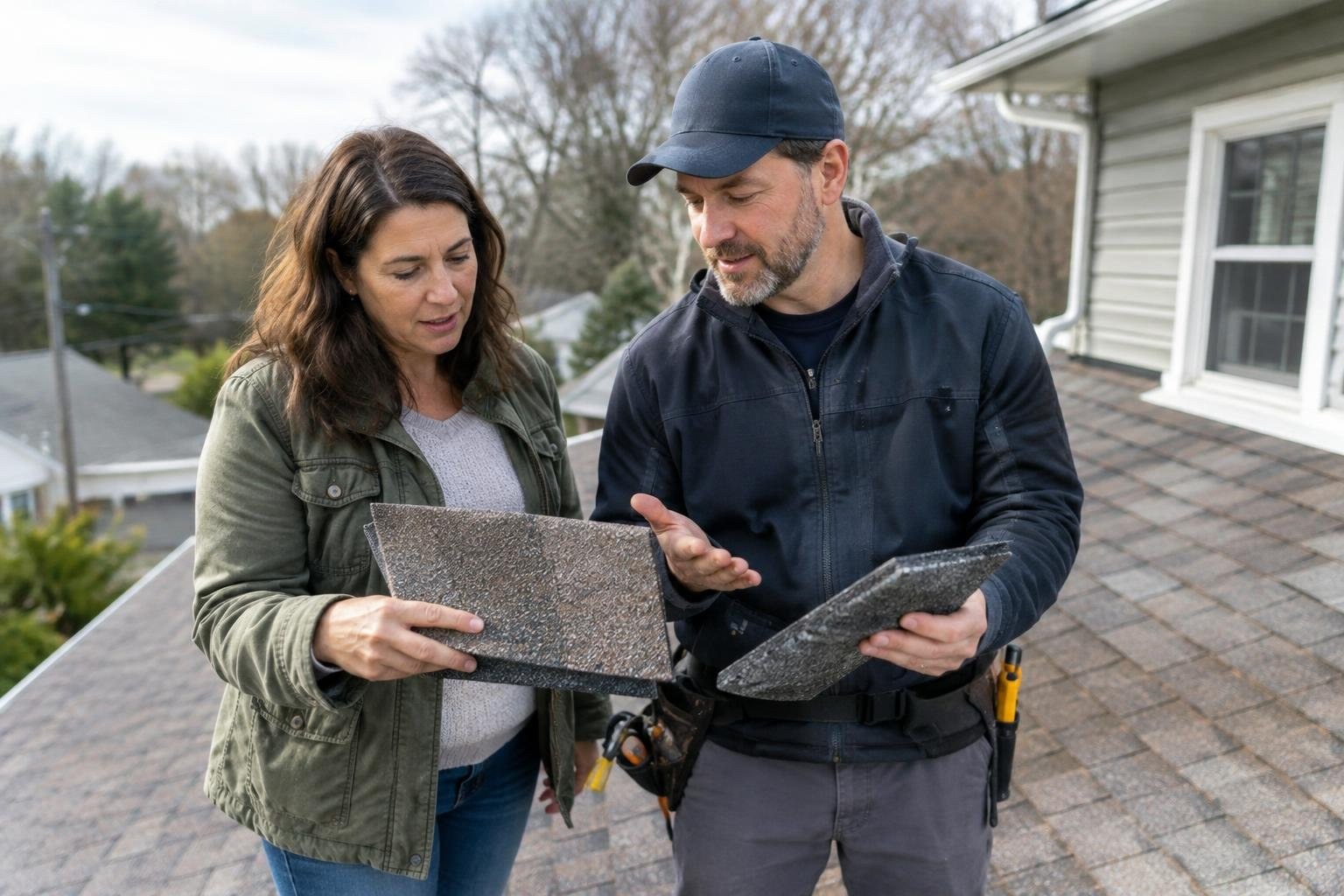
What a roof warranty does and does not promise
A roof warranty is a written promise that may limit what you pay if a covered defect or failure occurs. It is not blanket protection for every leak, repair, or roof problem. In practice, homeowners may receive two separate documents: one from the manufacturer and another from the contractor. Each has a different job, so one warranty should not be treated as a substitute for the other.
The manufacturer warranty generally concerns defects in roofing materials, such as shingles, underlayment, and sometimes other system components. The contractor’s workmanship warranty generally concerns problems caused by installation. The documents control the actual protection: check the covered parts, exclusions, length of coverage, claim instructions, and any conditions.
Think of the warranty as one part of the roofing decision, alongside the materials and the work itself. A broad-sounding label is not enough. The useful question is: if a specific problem appears, which document applies, who responds, and what will it pay for?
Manufacturer warranty vs. contractor workmanship warranty
Manufacturer coverage
A manufacturer warranty generally addresses material defects. Some warranties may include more than shingles, such as underlayment or other system components, but the exact scope depends on the written terms. If the material itself fails, the warranty may specify what remedy is available. Do not assume that a material warranty includes labor, removal, or every related expense unless the document says so.
Workmanship coverage
A workmanship warranty comes from the contractor and generally addresses installation defects, including problems involving flashing, nailing, or underlayment. A manufacturer’s material warranty does not automatically resolve a workmanship issue, just as a contractor warranty may not cover a defective product.
Ask for both documents before work starts. Match each promise to the party responsible for honoring it, and keep a copy of the signed contract, product information, and warranty terms together.
Why warranty details matter for New Jersey homeowners
A warranty becomes important when a material fails or a roof problem appears after installation. For example, a homeowner might notice a leak and wonder whether the cause is a defective product, an installation issue, or damage outside the warranty’s scope. The distinction matters because different parties may handle different causes, and some conditions may be excluded altogether.
New Jersey homeowners should be especially careful not to assume that every weather-related problem is covered. Storm damage is often excluded, and contractor warranties may exclude weather-event damage. A roof warranty should not be confused with protection against every kind of storm loss.
Before choosing coverage, picture a few possible claims: a suspected material defect, a leak near flashing, and damage after a storm. Ask which warranty applies to each, who evaluates the problem, and what the documents say about the remedy. Clear answers now can help you avoid relying on a promise that does not fit the situation later.
Signs you may need to review or use a warranty
Consider reviewing warranty coverage when you are comparing roof proposals, arranging a roof replacement, or trying to understand a problem with existing roofing work. The key is not simply whether someone says “the roof is under warranty.” Find out which warranty applies and whether the issue you are concerned about is within its scope.
If a roof problem appears, first identify whether the concern seems related to a roofing material, installation, or an outside event. That initial description does not prove the cause, but it helps you ask the right party for the right document. A manufacturer warranty may address a product defect; a contractor warranty may address installation work. Storm-related damage may fall outside either warranty.
Do not treat a leak as automatic proof of a covered defect. Gather the warranty paperwork and contract, record when you noticed the issue, and follow the claim instructions. Ask the responsible party what information or inspection is required before arranging work that could complicate a coverage review.
Roof warranty cost and pricing considerations
Roof-warranty pricing varies by provider and coverage. Standard material warranties and contractor workmanship warranties are often part of different offers, while extended manufacturer coverage may be available for an added premium. Ask the provider to show whether a quoted amount includes standard coverage, an optional upgrade, or a separate charge.
Compare price with the written protection, not with the warranty term alone. An upgrade may offer longer or more inclusive coverage, but it is worthwhile only if its extra terms matter to you. Look for what failures are covered, which components are included, whether labor is covered, what exclusions apply, and how a claim is handled.
Ask for an itemized proposal that separates roofing work from any warranty upgrade. If two quotes differ, check whether they offer the same materials and warranty scope before deciding that one is more expensive. Avoid paying for an upgrade based only on a verbal description or a headline promise.
Factors that affect the value of your warranty
Several details can change how useful a warranty is for a particular roof. First, the cause of a problem matters: a material defect and an installation defect point to different coverage. Second, the specific components included matter. Some manufacturer warranties cover roofing materials such as shingles and underlayment, and some may include additional system components, but coverage varies by document.
Third, exclusions can narrow a promise. Weather damage is a notable example in New Jersey. Fourth, the provider and the warranty type affect who is responsible for a claim. A contractor warranty generally addresses labor or installation, while manufacturer coverage generally focuses on materials.
Finally, duration is only one factor. Material and workmanship warranty terms vary, and a longer period does not tell you whether a particular failure is included. Compare the exact terms and the steps required to keep, transfer, or use the coverage. Do not rank warranties by years alone.
Compare the main roof warranty options
| Coverage type | Usually concerns | Questions to ask |
|---|---|---|
| Manufacturer warranty | Defects in roofing materials; sometimes other system components | Which products and components are included? What remedy is specified? |
| Contractor workmanship warranty | Installation defects, such as issues involving flashing, nailing, or underlayment | Which labor or installation problems are covered? What exclusions apply? |
| Extended manufacturer warranty | Potentially longer or more inclusive manufacturer protection | What extra coverage is provided, and what does the upgrade cost? |
Use this comparison as a starting point, not as a replacement for the documents. A warranty’s title does not establish what it covers. Read the specific terms and ask the provider to explain differences in writing.
These options may complement one another rather than compete. Material coverage and workmanship coverage address different possible causes. An extended manufacturer warranty is an optional enhancement to investigate, not a guarantee that every repair or storm-related problem will be covered.
What to expect during the process and afterward
Warranty discussions usually happen alongside a roofing proposal and the documents that describe materials and installation responsibilities. Before agreeing to the work, ask when each warranty begins, who issues it, how you receive the final paperwork, and what information is needed to make a claim.
When the work is complete, check that you have the signed contract and the applicable manufacturer and contractor warranty documents. Confirm that the product names and coverage described in the paperwork match what you agreed to buy. Keep the records where you can find them if a problem arises or you later need to review transfer terms.
If you are making a claim, follow the instructions in the relevant document. Ask the manufacturer or contractor to explain the next step and any required inspection or records. Do not assume the claim process, response time, or remedy is the same for every warranty.
How to choose a roofing provider using warranty terms
Choose a provider who can explain the difference between material and workmanship coverage without treating one as a substitute for the other. Ask for the warranty documents before signing, not just a summary in a sales conversation. You should be able to identify who issues each warranty, what type of failure it addresses, and which exclusions apply.
Use specific questions: Does the manufacturer warranty cover only the named material or additional components? Does the contractor warranty cover installation issues such as flashing or underlayment? Are labor and materials handled differently? How are storm-related problems treated? What steps do you take to start a claim?
Compare proposals on both the roof work and the warranty language. If a provider promises broader or longer protection, ask for the exact written term and any conditions. A clear, complete answer is more useful than an impressive-sounding warranty label. Keep the answers with the final agreement so you can check them against the documents later.
Coverage limits, local requirements, and paperwork
Warranty documents are a central part of the coverage decision, but they are not the same as a general promise that every repair will be paid for. Read the manufacturer’s terms and the contractor’s written workmanship warranty separately. Contractor warranties may exclude weather-event damage, and storm damage is often excluded from roofing warranties. Do not assume weather-related coverage exists unless the relevant document states it.
If those questions apply to your property or proposed work, ask the provider what requirements apply and verify them with the appropriate local authority. Do not treat a warranty as proof that a project meets all other requirements.
For coverage, focus on the responsible party, covered failure, exclusions, claim steps, duration, and transferability. Request a copy of every applicable document and keep it with the contract. If a verbal explanation conflicts with the written terms, ask for the discrepancy to be resolved in writing before you rely on it.
Ways to compare coverage and save safely
You can compare warranty value without automatically choosing the most expensive option. Start by requesting the standard material and workmanship documents, then identify the protections that matter for the roof and the work being proposed. If an extended manufacturer warranty costs extra, ask the provider to explain exactly what it adds and what conditions apply.
- Compare written coverage across proposals, including exclusions and claim procedures.
- Ask whether a quoted upgrade is optional and what the added charge covers.
- Check whether the materials and warranty scope are comparable before judging bids by price.
- Keep the manufacturer warranty and contractor warranty together so you can find the right document if a problem appears.
Saving safely means avoiding a false economy. A lower price may come with different coverage or terms, while a premium option is not automatically better for every homeowner. Make the comparison about the actual work and protection in writing, not the largest advertised number of years.
Common mistakes and a practical warranty checklist
Avoid these common missteps when evaluating roof warranties:
- Assuming one warranty covers everything. Manufacturer coverage and workmanship coverage generally address different causes.
- Treating storm damage as automatically covered. Storm-related damage is often excluded, so check the written terms.
- Choosing by duration alone. A longer term does not explain the exclusions, covered components, or claim remedy.
- Relying on a verbal promise. Ask for the warranty and any upgrade terms in writing.
- Comparing unlike proposals. Check whether the materials, warranty types, and coverage scope match before comparing prices.
- Ignoring transfer rules. Review the document before assuming coverage can move to a new owner.
Before you sign: confirm who issues each warranty, what failures it covers, what it excludes, how long it lasts, what it costs, how to make a claim, and whether it can be transferred. Save the signed agreement and final warranty documents. If an answer is unclear, pause and request a written explanation.
Frequently asked questions
What is the difference between a manufacturer warranty and a workmanship warranty?
A manufacturer warranty generally addresses defects in roofing materials. A contractor’s workmanship warranty generally addresses installation problems, such as issues with flashing, nailing, or underlayment. Read both documents to confirm the actual coverage and exclusions.
Does a roof warranty cover storm damage in New Jersey?
Not necessarily. Storm damage is often excluded from roofing warranties, and contractor warranties may also exclude weather-related damage. Check the specific documents and ask how storm damage is handled before relying on coverage.
Is an extended roof warranty worth the extra cost?
An extended manufacturer warranty may be available for an additional cost and may offer longer or broader protection. Compare its written coverage, eligibility conditions, and exclusions with the standard warranty before deciding whether the added expense makes sense.
How long do roof warranties usually last?
Workmanship warranty terms may range from 5 to 25 years, while standard material warranty terms are commonly reported as 10 to 30 years. These are general ranges, not a promise about a particular roof. Confirm the exact start date and term in your documents.
Can I transfer my roof warranty when I sell my home?
Do not assume coverage transfers automatically. Review the warranty terms for transferability, any deadlines, and required steps, and ask the provider to confirm the process in writing before a sale or ownership change.
What should I do if I think my roof warranty claim was denied unfairly?
Contact the party responsible for the relevant coverage, following the written claim instructions. Gather your warranty documents and records about the roof work, describe the problem, and ask what inspection or documentation is required before authorizing repairs.
People Also Ask
What does a manufacturer roof warranty cover?
A manufacturer warranty generally covers defects in the roofing material itself. Depending on the written terms, it may include other roofing system components, but do not assume every component or repair is included.
What does a roofing contractor workmanship warranty cover?
A workmanship warranty is issued by the roofing contractor and generally covers installation defects, including possible problems involving flashing, nailing, and underlayment. Check the contract for the exact scope.
Is a longer roof warranty always better?
Not necessarily. A longer stated term does not, by itself, show that coverage is broader or easier to claim. Compare the covered failures, exclusions, claim requirements, and any conditions attached to the longer term.
Do extended roof warranties cost more?
Some extended manufacturer warranties are available for a premium and may offer longer or more inclusive protection. Review the added coverage and conditions in writing, rather than deciding based only on the word “extended.”
Does a manufacturer roof warranty cover labor?
A manufacturer warranty generally addresses defects in roofing materials. Do not assume it includes labor, removal, or related expenses unless the written terms say so; check whether the contractor’s workmanship warranty addresses installation work.
What questions should I ask before signing a roofing contract?
Ask the contractor and manufacturer which party handles each type of issue, what the warranty excludes, how to start a claim, and whether the warranty can be transferred. Request written answers that match the contract and warranty documents.
A roofing warranty is useful only when you know which failures it addresses, who is responsible, and what steps you must take to keep coverage in force. For a New Jersey roof, review the manufacturer’s terms and the contractor’s workmanship warranty separately, then compare exclusions, claim procedures, transfer rules, and any added cost before you sign. Keep the documents with your roof records and ask for written answers whenever a proposal is unclear.
Your next step
Explore your options and find providers at Estimate.org.
Search Qualified providersWant our help with selecting a provider
Reviewed and maintained by the Staff at Estimate.org.
Last reviewed and updated November 2, 2026 by the Estimate.org Editorial Team.
Sources
- Roofing Warranties in New Jersey Explained | Tetti Roofing
- Roofing Warranties Explained: Material vs Workmanship | T.A. Hughes
- NJ Roofing Warranties: Smart 2026 Coverage Guide
- Commercial Roof Warranties Explained: What NJ Building Owners Need to Know Before Repairs or Replacement – Cipollini Roofing
- Understanding NJ Roof Warranties – 4 Seasons Roofing Company
- Understanding Roofing Warranties in New Jersey: What Homeowners Should Know
- NJ Roof Warranty Guide: What Every Homeowner Should Know (2026) | R&E Roofing
- New Jersey Roofing Warranties Explained
