

A bathroom faucet is both a daily-use fixture and a visible design choice. The best option for a renovation is not simply the trendiest finish: it must fit the sink or countertop, suit the room’s style, feel comfortable to use, and work with the installation you are planning. Popular directions include compact single-hole faucets, wall-mounted designs, vintage-inspired cross handles, matte black, and warm brass or gold finishes. Sensor-activated models are another option for hands-free use. Before shopping, identify the sink’s existing faucet holes, set a realistic project scope, and compare the faucet’s dimensions and installation requirements with the vanity. Costs depend on the fixture and the work needed, so use itemized local estimates rather than assuming every replacement is a simple swap. The central takeaway: choose the faucet and basin as a pair, and make style, usability, fit, and installation compatibility part of the same decision.
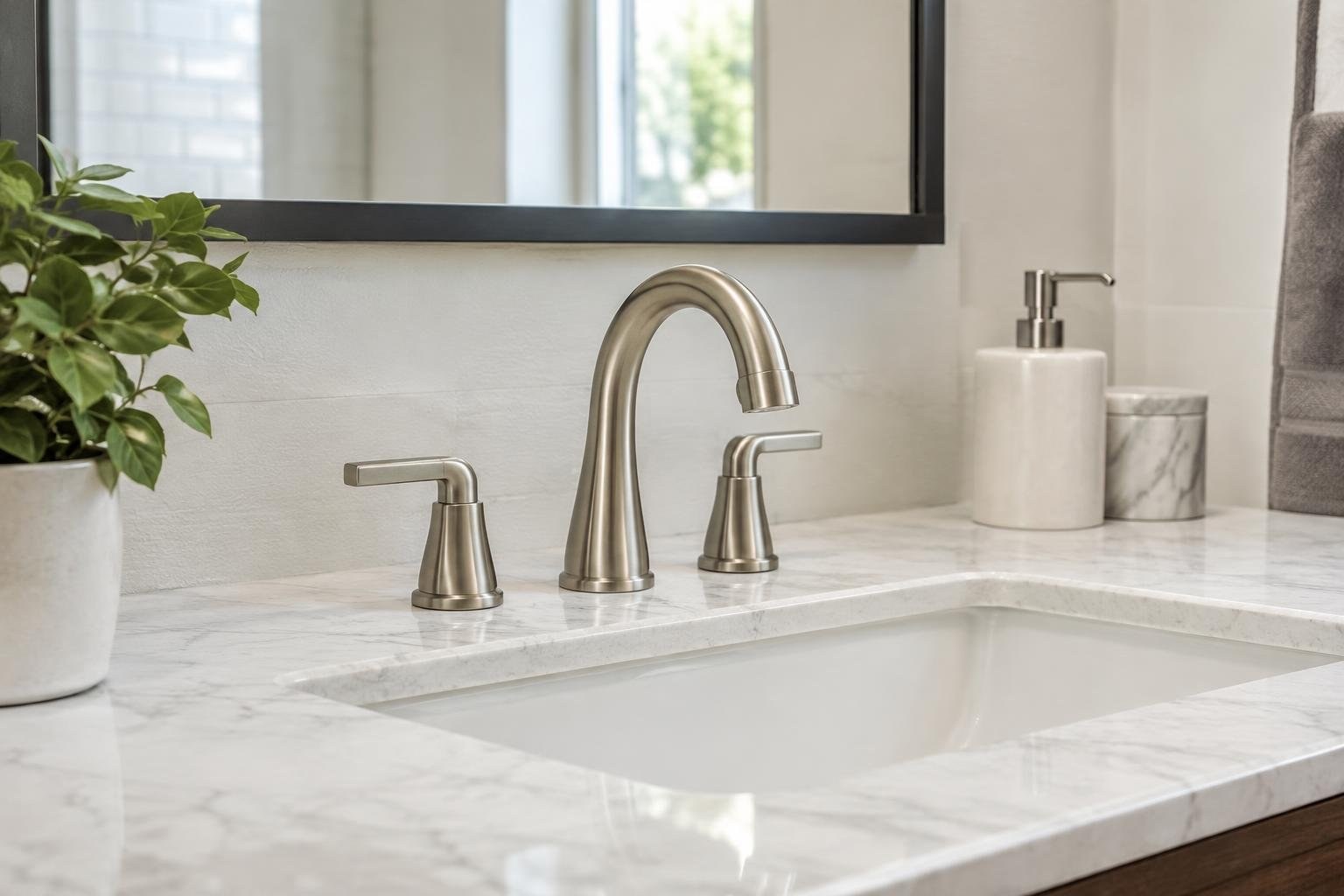
Bathroom Faucet Ideas: Start With Fit and Function
A bathroom faucet controls the water at the sink and is one of the fixtures people interact with every day. During a renovation, it can also help establish the room’s visual character. The decision links three things: the sink or basin, the faucet’s installation configuration, and the style and finish.
Design ideas range from wall-mounted taps and vintage cross handles to matte black finishes and low-flow aerators. Other options include compact single-hole faucets, brass or gold finishes, nature-inspired forms, and sensor-activated models. These are design directions, not a universal ranking. A choice that looks striking in a large bathroom may feel oversized or be impractical in a smaller vanity area.
Think of the faucet as part of a coordinated sink area, rather than a standalone decoration. Establish the basin and countertop constraints first, then choose a design that works visually and functionally.
What a Faucet Update Can Include
A faucet renovation can mean anything from replacing a fixture with a compatible model to rethinking the sink area as part of a larger bathroom update. The first step is to describe the project accurately: are you keeping the vanity, sink, and faucet location, or changing one or more of them?
That distinction affects the decisions to make before purchase. A fixture intended for a different mounting arrangement may not suit the existing sink. A wall-mounted faucet calls for coordination with the wall and basin; a single-hole faucet has a compact combined spout-and-handle arrangement. Decide whether the faucet is a focused refresh or part of a broader renovation before you settle on a model.
Write down the existing setup and take clear measurements or photographs to discuss with a provider. This gives you a more useful starting point for product research and estimates.
Signs You May Need a Faucet Repair or Replacement
There is no single warning sign that automatically means a faucet must be replaced. Instead, treat changes in how it works or looks as prompts to inspect the fixture and define the problem before choosing a new design.
- Water around the faucet or below the sink: identify where the water is coming from before deciding whether a new faucet will solve it.
- A loose handle or spout: check whether the issue is limited to the fixture or involves its mounting.
- Controls that are inconvenient to use: consider a different handle arrangement, including a single-handle design if one-control adjustment would suit the household.
- A faucet that feels out of place after other updates: compare its scale, finish, and style with the basin and surrounding hardware.
- A planned change to the sink or vanity: use the renovation as a chance to evaluate faucet placement and compatibility before surfaces are finalized.
If water is actively leaking or damage is visible, address the source promptly and seek qualified help rather than treating a cosmetic replacement as the diagnosis.
Bathroom Faucet Cost: What to Compare in an Estimate
Faucet costs vary with the product chosen and the scope of work. A written, itemized estimate based on your bathroom is more useful.
Ask the provider to separate the faucet, labor, removal, and any additional work. Confirm whether the estimate assumes the new fixture will use the existing mounting arrangement and whether it includes any adjustments needed for the actual sink or counter. If the project changes the faucet location or includes a new sink or vanity, request those items as distinct parts of the scope.
What can affect the estimate?
- The faucet’s design and features, including a wall-mounted or sensor-activated model.
- Whether the selected faucet fits the existing basin and mounting layout.
- Whether the sink, countertop, or wall is also being changed.
- The work required to remove the old fixture and complete the agreed installation.
- Local labor and project conditions, which should be reflected in local quotes.
Compare what each bid includes, not just the bottom line. A quote that leaves out removal or additional work may not be comparable to one that spells out the complete scope.
Faucet Types and Design Options Compared
Faucet styles differ in appearance, control layout, and how they fit into the sink area. Compare the options against your existing holes, desired look, and the scope of renovation.
| Option | Design and use | Consider before choosing |
|---|---|---|
| Single-hole | Spout and handle form one compact fixture; a fit for minimal designs and smaller vanities. | Confirm the sink or counter opening is compatible. |
| Wall-mounted | A visually distinctive arrangement that can work with a vessel sink or spacious bathroom. | Coordinate wall position, basin, faucet reach, and plumbing before work. |
| Vintage cross handles | A traditional detail that can make the faucet a more decorative feature. | Check handle clearance and whether the style fits the rest of the room. |
| Sensor-activated | Offers hands-free operation as an alternative to conventional controls. | Review installation needs and whether the feature suits the household. |
These options are not mutually exclusive with finish choices. A faucet’s configuration and its finish are separate decisions, although a specific product may limit which combinations are available.
Choosing a Faucet Finish and Style
Finish changes the impression of a faucet, but it should be chosen in relation to the rest of the bathroom. Matte black can give a sink area a crisp contrast. Brass or burnished gold can bring warmth and a more decorative, luxe quality. A polished traditional fixture or a nature-inspired design may suit a different palette and room character.
Before ordering, compare the faucet with nearby cabinet hardware, shower trim, lighting, and other visible finishes. If possible, view a physical sample or product display in the bathroom’s lighting. A product photo alone may not show how a finish looks beside your existing materials.
Also read the manufacturer’s care instructions. Do not assume that every finish can be cleaned with the same products or handled in the same way. If the project includes a new vanity, tile, or lighting, select those elements as a coordinated group rather than making each decision in isolation.
How to Match a Faucet to Your Bathroom
Use the faucet’s product information and the existing sink to test whether a design is a real fit. Compare mounting arrangement, overall dimensions, spout reach, handle placement, and clearance around the basin. For a wall-mounted fixture, plan its position in relation to the sink instead of choosing the wall location on appearance alone.
Consider who uses the bathroom. A single-handle faucet offers one control for adjusting water temperature and flow, while touchless models provide hands-free operation. These features may be useful in some households, but a more elaborate product is not automatically a better fit. Make sure every regular user can operate the chosen controls comfortably.
Some faucet models include low-flow aerators. Check the specific product’s flow-rate specifications rather than relying on a general label or assuming every faucet performs identically.
What to Expect During a Faucet Project
A simple replacement and a more involved sink-area renovation do not have the same timeline. Ask the provider for a schedule based on the specific fixture, existing installation, and any other work included.
A useful project sequence is:
- Document the existing sink, faucet layout, and any concerns.
- Choose the basin and faucet arrangement before ordering products.
- Have the selected model and project scope reviewed by the installer.
- Confirm the written estimate, schedule, responsibilities, and any applicable local requirements.
- Agree on how the work area will be protected and what cleanup is included.
- At completion, review the installation, operate the controls, and ask how to care for the finish and use any product warranty.
Before setting a completion date, ask what could change the schedule and how the provider will communicate if additional work is identified.
Repair or Replace: How to Decide
Whether to repair or replace depends on the actual problem, the condition of the faucet, and the renovation plan. Do not order a new fixture until you know whether the issue is with the faucet itself or another part of the sink area.
Repair may be worth investigating when the faucet otherwise suits the bathroom and the problem appears limited. Replacement may make more sense when the fixture no longer fits the renovation, the controls are inconvenient, or you want a different mounting arrangement or design. If the sink or vanity is already being replaced, decide on the faucet as part of that coordinated plan.
Ask a qualified provider to explain the diagnosis and compare the proposed repair with replacement, including what each option covers. A low-cost repair is not useful if it leaves the underlying issue unaddressed, and a new faucet is not a solution to a problem elsewhere in the plumbing.
DIY or Hire a Professional?
A faucet-only update can be straightforward when the new fixture suits the current sink and the project does not change the surrounding layout. A broader renovation can involve more coordination, especially when the plan includes a wall-mounted faucet, a different sink, or changes to the vanity area.
DIY is most appropriate only when you understand the existing setup, have the needed tools, and can complete the work without damaging the sink, counter, or plumbing. If you are uncertain about the connections, encounter a leak, or plan to relocate plumbing, hire a qualified plumbing professional. Do not treat unfamiliar plumbing work as a cosmetic task.
Before work begins, clarify who is responsible for obtaining any required approvals, protecting the bathroom, disposing of the old fixture, and checking the finished work. Ask the installer to explain the operation of the controls and provide product and labor warranty information in writing.
How to Choose a Qualified Faucet Installer
Choose a provider who can explain how the proposed faucet fits the sink and what the quoted work includes. Verify credentials and insurance appropriate to the work and your location. Because local requirements vary, ask the provider and your local building department whether permits or inspections apply, particularly if the project changes plumbing or the faucet location.
Request a written estimate with the fixture model, labor, removal, additional work, cleanup, schedule, payment terms, and warranty responsibilities clearly described. Ask who will perform the work, whether subcontractors are involved, and how changes to the scope will be approved. Check references or reviews and compare more than one detailed estimate when practical.
Questions to ask before hiring
- Have you installed this faucet configuration before?
- Will the selected model fit my sink and existing mounting layout?
- What work is included in the written estimate?
- Does the price include removal and cleanup?
- What additional work could be needed if the existing setup differs from expectations?
- Who will perform the installation?
- What credentials and insurance apply to this work?
- Do local permits or inspections apply to this scope?
- What is the expected schedule, and what could delay it?
- How will changes and additional charges be approved?
- What product and workmanship warranties apply?
- What care instructions should I follow for the faucet finish?
Be cautious if a provider avoids written terms, cannot explain the fit, pressures you to buy immediately, or refuses to clarify permits and warranties.
Is a Bathroom Faucet Upgrade Worth It?
Faucet selection is primarily a product and installation decision, not a promise of a particular return on investment. A coordinated fixture can support the bathroom’s appearance and daily usability, but the value of a renovation depends on the home, the project scope, and what buyers or occupants care about. Do not assume a fashionable finish will increase resale value by a specific amount.
The Rbrohant article “Top Bathroom Sink Faucet Trends and Ideas for Home Renovation” recommends keeping the faucet relatively timeless while allowing other elements to carry changing trends. That is a useful approach if you want flexibility: choose a faucet you expect to live with and use accessories, lighting, or other easier-to-change details for stronger trends.
Consider whether a faucet upgrade solves a real need, complements planned work, and fits your expected use of the bathroom. If the existing faucet functions well and suits the sink, a purely cosmetic replacement may be less important than other renovation priorities.
Related Bathroom Projects to Plan Together
Faucet decisions are easier when they are coordinated with related bathroom work. Evaluate the sink or vessel basin first because its shape and position affect faucet selection. If replacing the vanity or countertop, decide on the faucet mounting arrangement before those surfaces are finalized. Wall-mounted options need to be planned with the wall and plumbing rather than added as a late styling decision.
Consider nearby hardware, shower trim, lighting, mirrors, and tile when choosing a finish. If multiple elements are changing, group product decisions so that colors and proportions can be compared together. Ask the contractor whether combining work would reduce repeated disruption, but require a clear estimate rather than assuming bundling automatically saves money.
For a small refresh, keep the scope focused: identify what will remain, confirm compatibility, then replace only what the plan calls for. For a larger renovation, establish the sink, faucet position, and other fixed elements before selecting decorative details.
Faucet Renovation Mistakes and Ways to Save
Common mistakes are often preventable with a few checks before purchase:
- Choosing a faucet by finish alone without confirming that it fits the sink.
- Selecting a wall-mounted design after the wall or plumbing plan is already fixed.
- Ignoring spout reach, handle clearance, or the space available around the basin.
- Assuming a product photo accurately represents its finish in your bathroom.
- Choosing a sensor feature or decorative style without considering daily use.
- Comparing estimates that cover different amounts of work.
- Failing to ask who handles removal, cleanup, permits, or added work.
- Assuming replacement will fix a leak without identifying its source.
- Skipping written warranty and care information.
To reduce cost safely, keep the existing layout when it meets your needs, confirm compatibility before buying, and compare itemized estimates. Avoid saving money by accepting unclear work, skipping required local approvals, or choosing a product before checking its installation requirements.
Factors That Affect the Project
The project scope depends on the faucet configuration you choose and how it relates to the existing sink and bathroom layout. A compact single-hole faucet combines the spout and handle in one fixture, while a wall-mounted model needs to be planned with the wall and basin. These choices can affect how much coordination is needed before installation.
- Sink and mounting compatibility: Check the sink or countertop opening against the faucet’s mounting arrangement before ordering.
- Faucet location: A wall-mounted design requires planning its position in relation to the basin and the room’s layout.
- Project scope: Replacing only the faucet is different from changing the sink, vanity, or faucet location. Identify what will stay and what will change before requesting an estimate.
- Controls and features: Single-handle and sensor-activated models offer different ways to operate the faucet. Consider which controls suit the people using the bathroom and review the selected model’s installation requirements.
- Design choices: Finish and style affect how the faucet coordinates with nearby bathroom elements. Compare the faucet with the room before finalizing the selection.
When requesting estimates, describe the existing setup and proposed changes, and ask providers to itemize the work for that scope. This helps you compare proposals that address the same project.
Frequently asked questions
How do I choose a bathroom faucet for my sink?
Start by checking the sink’s faucet-hole configuration and the space available around the basin. Then decide whether you prefer one handle or two, choose a spout shape and finish that suit the room, and confirm the faucet’s listed dimensions and installation requirements before purchasing. For wall-mounted faucets, plan the faucet and sink together because the plumbing location and reach need to work with the basin.
What is the difference between a single-hole and widespread bathroom faucet?
Single-hole faucets combine the spout and handle in one compact fixture, making them a straightforward visual fit for many minimal or small-bathroom designs. Widespread faucets place separate handles and a spout across the sink or countertop, creating a more traditional, spread-out look. The right choice depends on the existing holes, the vanity’s proportions, and your preference for handle style and appearance.
Are wall-mounted bathroom faucets a good idea?
A wall-mounted faucet can create a distinctive look and may pair well with a vessel sink, but it needs to be planned with the basin and wall plumbing. Before choosing one, check the faucet’s reach and mounting requirements with the sink dimensions and renovation scope. If the wall is already finished, ask a qualified provider what access and plumbing work would be involved.
Are single-handle bathroom faucets easier to use?
A single-handle faucet lets you adjust temperature and flow with one control, which may be more convenient for some users. Two-handle faucets provide separate hot and cold controls and can contribute to a traditional design. Compare the controls in person if ease of use is important, and consider the people who will use the bathroom regularly.
Which bathroom faucet finish is easiest to coordinate?
Matte black can make a strong contrast, while brass and gold finishes can add warmth or a more decorative accent. The appearance of a finish can vary by product, so compare actual manufacturer samples or product images and coordinate the faucet with nearby hardware. Also check the manufacturer’s care instructions before choosing a finish.
Should I install a touchless bathroom faucet?
A touchless faucet may be a good fit if hands-free operation suits your household and the model’s installation needs fit the project. Compare its controls and requirements with conventional single-handle or two-handle options before deciding.
How much does it cost to replace a bathroom faucet?
The total depends on the faucet selected, whether it fits the existing sink, the condition of the connections, and whether the project requires changes to the counter, wall, or plumbing. Ask for an itemized estimate that separates the fixture, labor, removal, and any additional work.
How long does bathroom faucet installation take?
A faucet swap may be a limited project when the new fixture fits the existing sink and connections. A renovation that changes the faucet location, sink, counter, or wall can require additional coordination and work. Have a qualified provider review the specific conditions before relying on a simple replacement estimate.
Do I need a permit to replace a bathroom faucet?
Permit requirements depend on the work and the local jurisdiction. A like-for-like fixture change may be treated differently from work that relocates plumbing or alters other parts of the bathroom. Ask the contractor which permits or inspections apply and confirm local requirements with the relevant building department before work begins.
When should a bathroom faucet be repaired instead of replaced?
A leak, loose handle, or difficult-to-control faucet is a reason to inspect the fixture and the area around it. The symptom alone does not establish whether the faucet needs repair or replacement. If you see water damage or cannot stop a leak, address the water source promptly and contact a qualified plumbing professional.
People Also Ask
What is a single-hole bathroom faucet?
A single-hole faucet places the spout and handle together in one compact fixture. It can suit a minimal vanity or a small bathroom. Check that the sink or countertop has a compatible opening before choosing one.
What sinks work with wall-mounted faucets?
Wall-mounted faucets can create a distinctive look, especially when paired with a vessel sink. They require planning around the wall, sink height, faucet reach, and plumbing location, so assess them before finishing the wall.
Are gold faucets still a good choice for a bathroom?
Brushed or burnished gold and brass can bring warmth to a bathroom, while matte black offers a bolder contrast. Coordinate the finish with nearby fixtures and review its care instructions before making a final selection.
What are the benefits of a touchless bathroom faucet?
A touchless faucet uses a sensor-activated control for hands-free operation. Consider how the controls, installation requirements, and faucet style fit the users and renovation rather than choosing the technology on trend alone.
What should I check before buying a bathroom faucet?
Check the faucet-hole layout, countertop or sink space, spout reach, handle clearance, and installation requirements. For a wall-mounted model, also coordinate the mounting location with the sink and plumbing plan.
What should a bathroom faucet estimate include?
Compare the full scope, not just the fixture price. Ask whether the estimate includes removal, installation, adjustments, cleanup, and any additional work that may be needed if the new faucet does not match the existing setup.
A successful bathroom faucet update balances the look you want with a faucet that fits the sink, feels comfortable to use, and suits the scale of the renovation. Compare styles and finishes in the context of your whole bathroom, check installation compatibility before buying, and request a clear written estimate if the work is beyond your comfort level.
Your next step
Explore your options and find providers at Estimate.org.
Reviewed and maintained by the Staff at Estimate.org.
Last reviewed and updated November 2, 2026 by the Estimate.org Editorial Team.
Sources
- Bathroom Looks Dated? 7 Bathroom Faucet Design Ideas
- Bathroom Faucet Ideas: Top Brands, Colors & Types | Re-Bath®
- Comparing 5 Faucet Ideas for Your Bathroom Remodel
- Best Bathroom Faucet Types | Schicker Luxury Bath
- Bathroom faucet trends – 8 designs, colors and finishes to pick for your next bathroom remodel
- Bathroom Faucet Ideas To Inspire Your Next Renovation
- Bathroom Faucet Ideas To Inspire Your Next Renovation
- Top Bathroom Sink Faucet Trends and Ideas for Home Renovation
