

A bathroom remodel can mean refreshing surfaces and fixtures or taking the room down to its structure and rebuilding it. The right plan depends on what is not working, how much change you want, your budget, and whether the layout needs to change. A full renovation may involve new plumbing or electrical systems, moving walls, adding windows, or expanding the room, so a project that looks simple at first can grow when its scope changes. Start by listing essential repairs separately from preferred upgrades, then sketch what you want and ask a qualified provider to discuss feasibility, cost, and timing. There is no useful universal price without knowing the room and work involved. Get written estimates built around the same scope, with materials, labor, exclusions, and the process for approving extra work clearly explained. The central planning rule is simple: make major decisions before demolition, and do not compare bids until you know what each one includes.
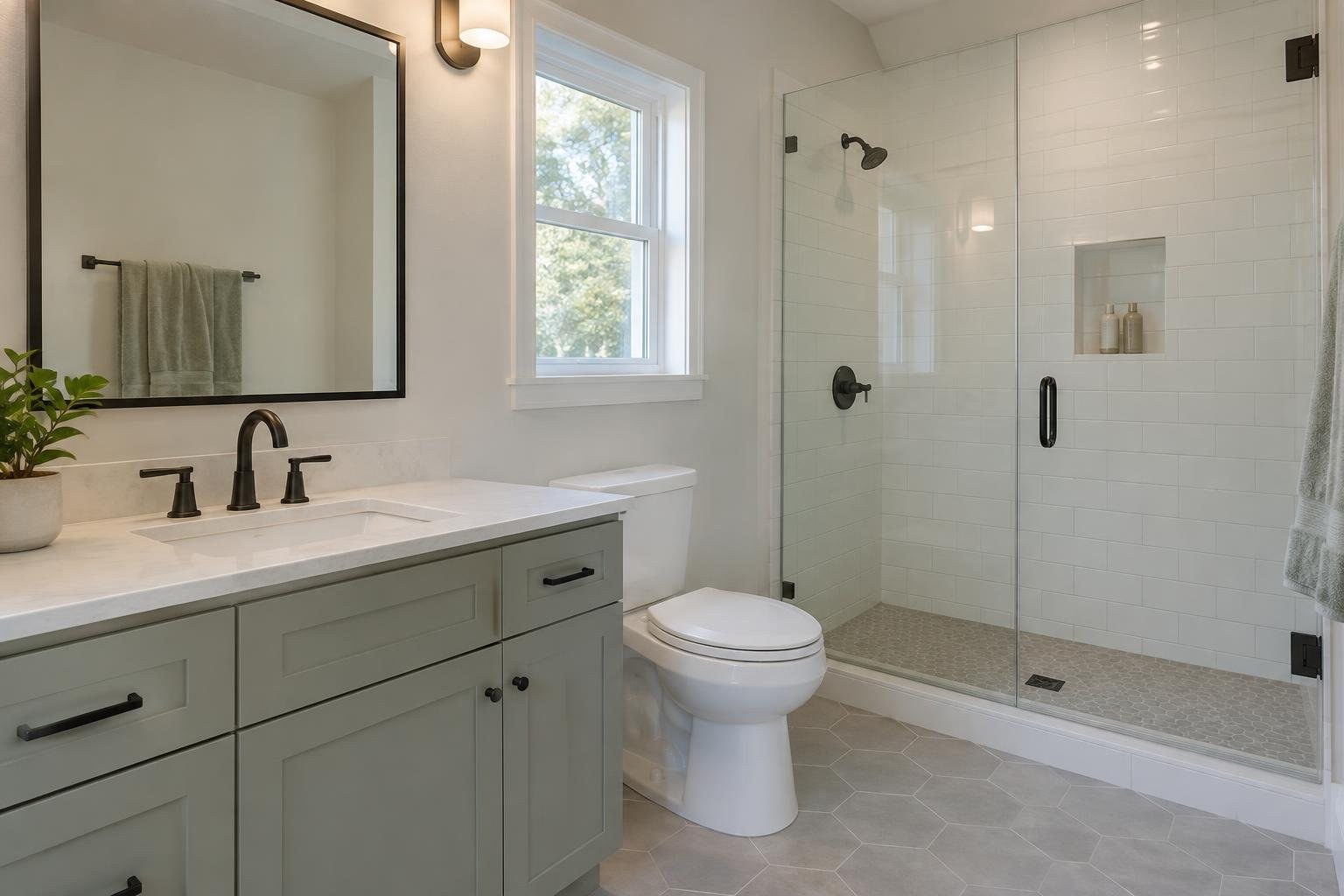
What a bathroom remodel can include
A bathroom project can be a focused refresh or a full renovation. At the smaller end, you may change selected finishes or fixtures while keeping the room's arrangement. A broader renovation can involve removing walls or flooring and constructing new plumbing or electrical systems. It may also involve new windows, moving walls, or expanding the room.
That difference matters because a contractor cannot give a meaningful comparison based only on the phrase “bathroom remodel.” Before you request estimates, write down what needs repair, what you want to improve, and what you hope to leave in place. This gives providers a practical starting point and helps you judge whether their proposals address the same job.
A remodel can improve the room's appearance and function, but the first step is to identify the problem the work should solve. If the room is merely dated, cosmetic changes may be enough. If the plan includes changes to the layout or systems, treat it as a larger project and ask for a more detailed scope.
How the bathroom remodeling process works
Think of the project as a sequence of decisions and work rather than a shopping list. First, define the goal and sketch the room you want. Next, discuss feasibility, cost, and timing with a provider. Once you settle the scope and select products, the work can move through preparation, removal where needed, construction or system work, finish installation, and a final review.
The exact sequence depends on what you are changing. A complete renovation can include new plumbing or electrical systems as well as wall and floor work. A smaller update may avoid much of that scope. Ask the contractor to show how the tasks fit together and identify choices you must make before each stage can proceed.
Agree on how changes will be handled before work begins. If a condition discovered during demolition requires a different solution, ask for a written explanation of the change, its price effect, and any schedule effect before authorizing it.
Signs a remodel may be worth considering
There is no single warning sign that means every bathroom needs a full remodel. Begin with the problem you can observe and decide whether the proposed work addresses its cause or only changes the room's appearance. A fixture that no longer serves your household may call for a focused replacement; dissatisfaction with the layout may require a broader plan.
- The room no longer meets your needs: List the specific functions or storage you lack and discuss whether the existing layout can accommodate them.
- Several visible elements need attention: Compare the cost and disruption of changing selected items with that of a coordinated renovation.
- You are considering moving walls or fixtures: Ask a provider to assess feasibility before selecting products or assuming the new arrangement will work.
- You are planning a full teardown: Set a clear scope and budget before removal begins, and discuss how additional work will be approved.
These are planning prompts, not a diagnosis of hidden building conditions. If you suspect damage or a safety problem, ask an appropriately qualified professional to assess it before making cosmetic decisions.
Bathroom remodel cost and budget planning
Bathroom remodel pricing depends on the room and the written scope. Ask providers for itemized estimates based on the same plan so you can compare what each proposal includes.
Ask each estimate to distinguish the proposed work, products or allowances, labor, removal and disposal if included, and items that are excluded. Ask how the price would change if you select different finishes or fixtures, move a fixture, change a wall, or approve additional work after demolition. Get the process for pricing and approving those changes in writing.
Budgeting is not only about choosing a total. It is also about deciding which work matters most and whether the project's expected scope fits the amount you are prepared to spend. Set priorities before choosing finishes, then ask the contractor to identify tradeoffs rather than quietly removing important work to meet a target.
What can increase project cost?
- A broader scope that includes demolition and rebuilding rather than selected finish changes.
- Changes to plumbing, electrical systems, walls, windows, or the room's size.
- Product or fixture choices that differ from the items included in the estimate.
- Additional work identified after removal, or changes requested once construction is underway.
How to manage cost without cutting corners
Keep the plan focused, decide which upgrades are essential, and compare estimates line by line. Ask whether keeping the current layout is a feasible way to simplify the scope. Do not choose a bid solely because it is lowest: first confirm that its products, labor, and exclusions match the other proposals.
Bathroom remodel options and tradeoffs
Three useful planning approaches are a focused refresh, a renovation that retains the existing layout, and a broader renovation that changes the room. The right choice depends on the result you want, the work the room needs, and the scope you can fund. These are scope comparisons, not guaranteed price tiers.
| Approach | What it may involve | Best suited to | Tradeoff to discuss |
|---|---|---|---|
| Focused refresh | Selected finishes or fixtures, with much of the existing room retained | A room that functions adequately but needs selected updates | It may not address layout limits or needs beyond the chosen items |
| Renovation with the same layout | Multiple coordinated changes while retaining the fixture arrangement where feasible | Homeowners seeking a broader update without making layout change the goal | Confirm what systems and underlying work remain in scope |
| Full renovation or reconfiguration | Removal and rebuilding, potentially including plumbing, electrical, windows, walls, or added space | A project whose goals require a substantial change to the room | More decisions and types of work must be coordinated and priced |
Ask the contractor to describe the actual work, not just call it “refresh,” “renovation,” or “full remodel.” Those terms do not substitute for an itemized scope.
Choosing fixtures, finishes, and products
Plan around use, maintenance preferences, and how long you expect to live with the finished choices. Select fixtures and finishes only after you understand which items are included in the estimate and whether your selections affect installation or the schedule. A provider can help you compare specific products, but the proposal should identify what will actually be supplied.
It can help to sort choices into three groups: items you need for the room to function, finishes you strongly prefer, and decorative touches you can decide on later. This avoids spending early planning time on details before the layout and core scope are settled.
Do not assume that an attractive sample tells you how a product will look or perform in the completed space. Request the product name or specification for proposed materials and ask what care, limitations, or warranty terms apply. Compare alternatives on more than appearance: consider how each fits the project budget and how much upkeep you are prepared to do.
What to expect and how to plan the timeline
Bathroom remodel timing depends on the agreed scope, product decisions, and the sequence of work. Ask for a written schedule for your specific plan and have the provider explain which activities could affect it.
Before work starts, clarify when the room will be unavailable, when fixtures will be removed or reinstalled, and what access the crew will need. If the project involves several kinds of work or a changed layout, ask who coordinates the steps and how you will be told about schedule changes.
Use the planning period to finalize the layout, product selections, budget, and estimate. A sketch of your preferred room can help a contractor discuss feasibility, cost, and timing before you commit to construction. Confirm what must be selected or delivered before each stage begins.
How to choose a qualified bathroom contractor
Before choosing a contractor, compare written proposals that describe the same work. Ask for the scope, identified products, labor, estimated schedule, exclusions, cleanup responsibilities, and the process for approving changes. If a proposal is too general to explain what will happen, ask for detail before signing.
Verify any license, insurance, or other credential that applies to the provider and project in your location. Ask who will perform plumbing, electrical, or other specialized work and who is responsible for coordinating it. Request references for work with a similar scope, and look for a written warranty that states what it covers and what the homeowner must do.
Questions to ask a bathroom remodeling provider
- What work is included, and what is specifically excluded?
- Which fixtures and finishes are included in this estimate?
- What choices could change the quoted price?
- How do you price and document additional work?
- Who will manage the project and communicate schedule changes?
- Who will perform each trade or specialized task?
- What credentials or insurance can you provide for this work?
- Will you determine whether local approvals or inspections are needed?
- How will the work area and surrounding rooms be protected?
- What cleanup and disposal are included?
- What is the proposed schedule, and what could affect it?
- What product and workmanship warranties apply?
- What payment stages do you require?
- Can you provide references for projects with a similar scope?
Permits, credentials, safety, and warranties
Requirements for permits and inspections depend on the project and local jurisdiction. Before demolition, contact the local building department or ask the contractor to identify what approvals apply to your proposed work. Do not assume a permit is unnecessary simply because a project is indoors or because a contractor has recommended a particular scope.
When reviewing providers, confirm applicable credentials and ask who is responsible for obtaining approvals and arranging inspections. Put that responsibility in the agreement. For work involving plumbing, electrical systems, or changes to walls, ask which qualified professionals will perform it and how the completed work will be reviewed.
Read the agreement and warranties before signing. Check what products and workmanship are covered, how to report a problem, and whether registration or maintenance steps apply. Ask for written terms rather than relying on an informal assurance.
DIY versus hiring a professional
Some homeowners can handle selected planning or decorative tasks, but a bathroom project that reaches plumbing, electrical systems, demolition, or wall changes requires careful attention to qualifications, safety, and local requirements. Decide which tasks you can competently take on before agreeing with a contractor about responsibilities.
Do not assume that doing part of the work yourself will reduce the total cost. Ask the provider whether homeowner-performed tasks affect the scope, schedule, product warranty, or workmanship warranty. Keep the division of labor in writing, including who is responsible for preparing the room, removing materials, and correcting problems.
A safe way to control cost is to settle the layout early, distinguish necessary work from optional upgrades, and compare itemized bids. Avoid saving money by skipping required approvals, accepting unclear terms, or authorizing unpriced changes.
Is a bathroom remodel worth it?
A remodel may be worthwhile if the work solves a specific functional problem, addresses needed repairs, or brings the room closer to how you want to use it. A cosmetic refresh may be a better fit when the layout already works and the project goals are limited. A larger renovation may be justified by goals that require moving fixtures, walls, or systems, but the added scope should be reflected in a written plan and budget.
There is no guarantee that a bathroom remodel will return its full cost at resale. Consider your expected time in the home, the usefulness of the finished room, the project cost, and the disruption involved. Ask a provider to compare a focused version of the project with the broader plan before committing.
The most persuasive reason to remodel is a clear match between the work and the problem you want solved. If you cannot explain what the project is meant to improve, pause and refine the brief before choosing products or signing a contract.
Common bathroom remodeling mistakes to avoid
Prevent avoidable confusion by treating the written scope as the project reference point. These common planning mistakes can make bids harder to compare or decisions harder to change:
- Starting demolition before the layout, scope, and budget are clear.
- Choosing finishes before deciding which work is essential.
- Comparing estimates with different products or excluded tasks.
- Accepting a vague verbal promise instead of written terms.
- Assuming a small room cannot involve substantial work.
- Changing fixtures, walls, or other scope without approving the price and schedule effect.
- Assuming a contractor will handle permits without confirming responsibility.
- Taking on specialized work without checking safety, qualifications, or local requirements.
- Choosing only by the lowest bid without checking what it includes.
- Leaving the warranty and final review until after the project is complete.
Before authorizing work, ask the provider to walk through the proposal with you and identify the assumptions behind the price and schedule.
Related projects to evaluate before work begins
Bathroom work is often connected to other decisions in the home. Evaluate related work early enough to coordinate it, but do not add projects simply because they are nearby. Ask providers which work can share preparation or disruption and which tasks must happen first.
- Plumbing: If the remodel changes fixture locations or includes new plumbing, discuss that scope before selecting the layout. Coordinate plumbing work before finish installation.
- Electrical work and lighting: If the plan changes electrical systems or lighting, include those tasks in the project discussion before walls and finishes are completed.
- Windows: If you are considering a new window, decide whether it belongs in the renovation scope before finalizing surrounding wall work.
- Walls and room size: Moving walls or expanding the bathroom changes the project beyond a finish update. Ask about feasibility, cost, approvals, and schedule before proceeding.
- Decor and storage: Mirrors, towel or laundry baskets, plants, and other functional touches can be selected near the end. They do not replace decisions about the layout or core construction.
Agree on the sequence and responsibility for any bundled work in writing. The project that affects walls or underlying systems generally needs to be planned before the finishes that cover them.
Final walkthrough and finishing touches
At completion, walk through the agreed scope with the contractor. Compare the installed work with the proposal and product selections, identify incomplete items, and ask how any remaining work will be resolved. Request copies of applicable warranty information and instructions for reporting a problem.
Decorative details can make the room feel more finished after construction. Functional mirrors and baskets for towels or laundry can support everyday use; plants or other decor may add a personal touch. Treat these as finishing choices, not substitutes for completing the agreed construction and checking the result.
Factors that affect the project
Several decisions shape the scope of a bathroom project and the planning it requires. A focused update to selected finishes or fixtures differs from work that removes walls or flooring and adds plumbing or electrical systems. A new window, moved wall, or expanded room can make the project broader still.
Your preferred layout and product choices also matter. Sketch the room you want and discuss feasibility, cost, and timing with a provider before settling the scope. Decide which changes are essential, which can wait, and whether the existing arrangement can meet your needs. These choices help you define what providers should include in their estimates and what work may need to be coordinated.
Frequently asked questions
What does a bathroom remodel include?
A bathroom remodel can range from replacing finishes and fixtures in their current locations to removing finishes and rebuilding the room, potentially including new plumbing or electrical work, moving walls, or expanding the space. Define the work in a written scope before comparing estimates so you can tell which projects are actually comparable.
How much does it cost to remodel a bathroom?
There is no reliable single price for every bathroom remodel. The total depends on the room, the work included, material and fixture choices, labor, and whether the project uncovers issues or changes the layout. Request itemized estimates based on the same scope, and ask providers to explain what is excluded and how additional work will be priced.
How long does a bathroom renovation take?
A project with demolition, new finishes, fixture installation, or changes to plumbing and electrical systems usually involves more steps than replacing a few visible items. Ask each contractor for a written schedule showing preparation, demolition, installation, inspections if applicable, and final work. Get clarification on what could change the schedule before work starts.
Is it cheaper to keep the same bathroom layout?
Keeping plumbing fixtures and walls in their existing locations can make a plan simpler to price and discuss, while moving them or expanding the room adds scope that should be evaluated carefully. Compare both approaches with a provider using a defined budget, desired function, and written explanation of the work involved.
Can I remodel a bathroom myself?
Some finish and fixture choices may be suitable for a capable homeowner, but a project involving demolition, plumbing, electrical work, or changes to walls calls for careful planning and qualified help. Confirm which tasks you can safely do, what credentials or approvals are needed locally, and whether your work could affect the contractor's responsibilities or warranty.
How do I choose a bathroom remodeling contractor?
Before signing, ask the contractor to explain the scope, products, labor, schedule, cleanup, payment stages, change-order process, and written warranties. Verify any credentials or insurance that apply to your location and project, and ask who will perform each part of the work. Compare estimates only after confirming they cover similar tasks and materials.
People Also Ask
How do I plan a bathroom remodel on a budget?
Separate must-fix issues from optional upgrades, decide what can remain in its current location, and make a list of materials and fixtures you want priced. Establish a budget range before choosing finishes, then ask providers to review your plan for feasibility, cost, and timing. Leave room in the plan to discuss conditions discovered after work begins.
What is the difference between a bathroom renovation and a bathroom remodel?
A surface-focused update changes selected visible features while leaving more of the room intact. A full renovation can include removing finishes and rebuilding parts of the room, with plumbing, electrical, walls, windows, or room size potentially changing. Ask a provider to define the proposed scope in writing rather than relying on labels such as “partial” or “complete.”
What should I decide before remodeling a bathroom?
Create a list of essential work, desired improvements, and items that can wait. Sketch your preferred arrangement, identify fixtures and finishes to price, and ask contractors to explain the cost and schedule implications of your choices. Do not treat the first estimate as final if it does not clearly state the work and products included.
What should I expect during a bathroom renovation?
A remodel can disrupt access to the room, and a broad renovation can involve several kinds of work. Ask providers how they will phase the project, when fixtures will be unavailable, what areas they need to access, and how they will protect and clean the work area. Make arrangements for household needs before demolition begins.
What questions should I ask a bathroom remodeling contractor?
Discuss the finished room as well as the work behind it. Ask how the contractor will handle demolition, installation, product selection, cleanup, changes in scope, and any required local approvals. Clarify who is responsible for each task and how you will review completed work before final payment.
How can I make a remodeled bathroom feel more relaxing?
Plan functional elements first, including the arrangement of fixtures and storage, then select finishes and decor that suit the space. After construction, mirrors, towel or laundry baskets, and plants can add function or a finished feel; choose items that work with the room rather than relying on decor to solve layout problems.
A successful bathroom remodel starts with a clear scope, a realistic budget, and decisions made before demolition. Decide what needs to change, compare options that fit the room and your priorities, and get written estimates that explain the work. Keep the layout where practical if you want to limit complexity, and agree in advance how hidden conditions and changes will be handled. When you are ready to plan, compare providers and explore your options on Estimate.org.
Your next step
Explore services and find providers at Estimate.org.
Reviewed and maintained by the Staff at Estimate.org.
Last reviewed and updated October 9, 2026 by the Estimate.org Editorial Team.
Sources
- How To Remodel a Bathroom: Complete Guide – Kitchen Cabinet Kings
- How to DIY a Bathroom Remodel
- How to Remodel a Bathroom – Level by Level and Step by Step | PODS
- Complete Bathroom Renovation : 12 Steps (with Pictures) – Instructables
- How To Remodel a Bathroom – Start to Finish – YouTube
- How to Remodel a Bathroom | Myhome Renovation Experts
- A Step-by-Step Guide to DIY Bathroom Remodels
- How to remodel a bathroom? A step-by-step look into a bathroom gut renovation project.
