

A bathroom remodel commonly takes about three to six weeks of hands-on construction, but a professionally managed project may span three to eight weeks depending on its scope. The complete process can take longer: planning, design, material ordering, permits when needed, and final inspections may extend the calendar to six to ten weeks or more. These are broad planning ranges, not guarantees. A cosmetic refresh and a renovation involving tile, custom finishes, layout changes, or electrical upgrades are not equivalent projects. To estimate your own timeline, define the work first, confirm that materials and decisions are ready, and ask each provider to distinguish active construction from the full project schedule.
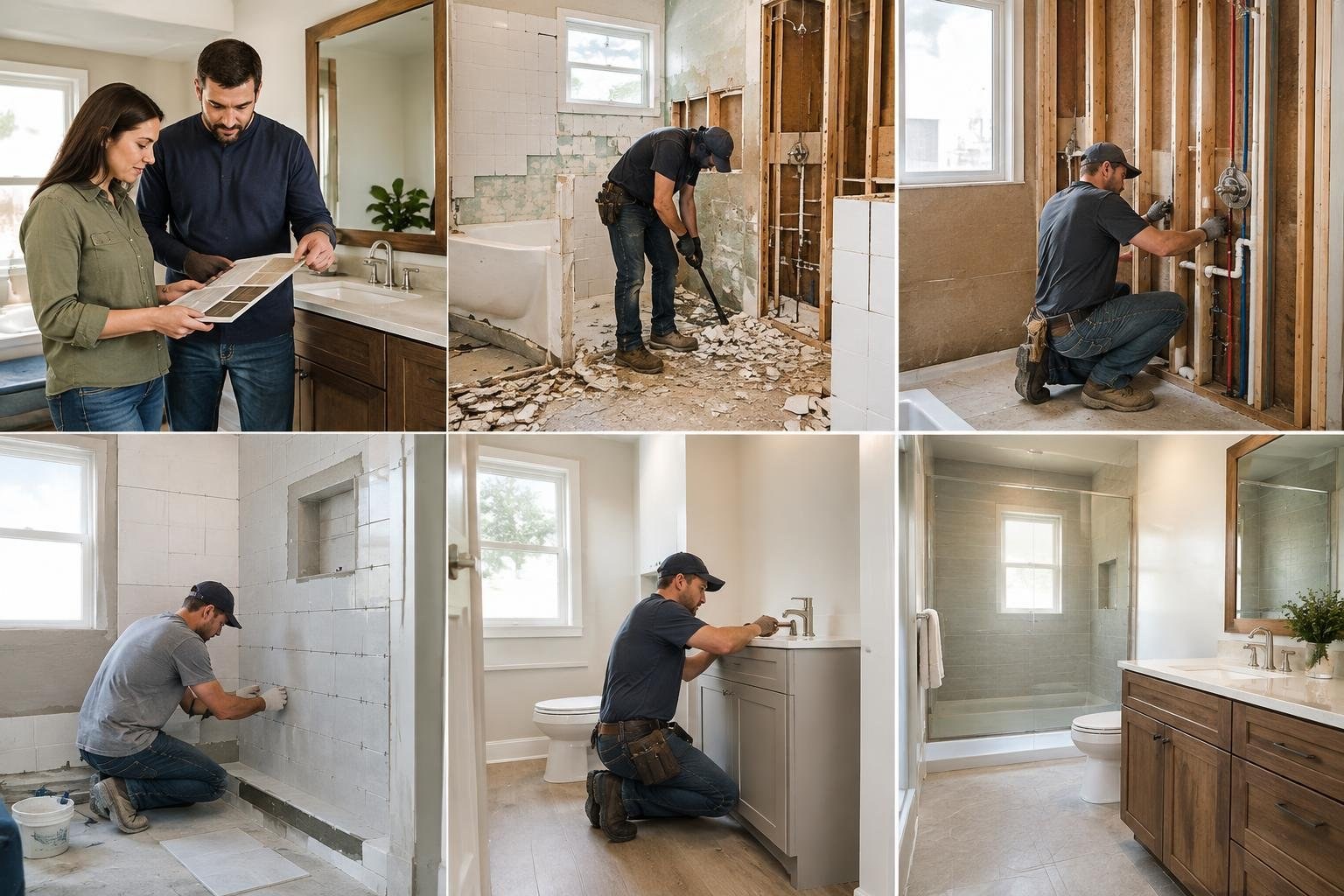
What counts as a bathroom remodel?
A bathroom remodel is a planned update to some or all of a bathroom. The scope can range from replacing visible finishes and fixtures to changing the layout and upgrading building systems. That distinction matters because “remodel” can describe very different amounts of work, and a timeline is useful only when you know what it includes.
Before comparing dates, write down what will be removed, what will be installed, and whether the room’s layout or electrical systems will change. A provider can then connect the schedule to the actual work instead of offering a generic duration. The broader project also includes decisions and coordination before construction, so the first day of demolition is not necessarily the first day of the project.
How the bathroom remodeling process affects timing
The timeline usually has two broad parts: preparation and active construction. Preparation includes planning the work, choosing finishes and products, placing orders, and handling permits when required. Construction is the hands-on work in the bathroom. The project may then need final inspection and cleanup before it is considered complete.
These stages do not always happen back-to-back, and a contractor’s quoted duration may refer only to construction. When you hear “six weeks,” ask whether that means six weeks on site, six weeks from demolition to completion, or six weeks from agreement through final inspection. Define the start and finish in writing so you can compare estimates fairly.
For planning, keep three milestones distinct: when the project is ready to begin, when the bathroom becomes unavailable for work, and when it is ready for normal use. Ask the provider to identify any anticipated gaps and explain what could change the sequence.
How long does a bathroom remodel take? Typical timeline ranges
For many standard bathroom remodels, estimates describe about three to six weeks of hands-on construction. Across the supplied contractor guidance, broader estimates for professionally managed renovations range from three to eight weeks. The complete process can take longer: one estimate places planning through completion at six to ten weeks or more, and another notes that a project may stretch over two to three months.
| Schedule description | Planning range in supplied estimates | What to clarify |
|---|---|---|
| Active construction | About 3 to 6 weeks for many full remodels | What workdays and completion milestones are included? |
| Professionally managed remodel | About 3 to 8 weeks | Does this count from the first construction day or an earlier date? |
| Planning through completion | About 6 to 10 weeks or longer; some projects may span 2 to 3 months | Are design, ordering, permits, and inspections included? |
These figures are not interchangeable promises. Different project scopes and definitions of “complete” can produce different estimates. Treat a range as a starting point for questions, then request a schedule based on your room and agreed scope.
What can make a bathroom renovation take longer?
A larger or more customized project generally needs more time than work with a narrower scope. The supplied guidance specifically identifies custom finishes, tile work, layout changes, and electrical-system upgrades as factors that can extend a renovation. Structural work may also lengthen some medium-to-large projects. The schedule depends on the combination of tasks, not simply the room’s dimensions.
- Scope: Clarify which surfaces, fixtures, and systems are included.
- Layout: Ask how moving or changing the arrangement affects the work sequence.
- Finishes: Discuss the schedule impact of custom selections and tile work.
- Electrical upgrades: Confirm how this work is included in the proposed plan.
- Preparation: Check whether materials, permits when needed, and inspections are reflected in the overall timeline.
Do not accept “it depends” as the entire answer. Ask the contractor to name the project-specific assumptions behind the estimate and to identify which choices or changes would require a revised schedule.
Compare project scope before comparing timelines
There is no single timeline for every bathroom project. A limited refresh and a full renovation have different scopes, so first compare what each provider proposes to do. If the project includes custom finishes, tile, layout changes, or electrical upgrades, ask the provider to explain those tasks in the schedule rather than relying on a general average.
When comparing proposals, look for matching scope and milestones. One estimate may count from the first day of construction; another may include planning and ordering. A shorter number is not automatically a better schedule if it excludes work another proposal includes. Ask each provider to explain the planned sequence and the assumptions that make the proposed duration possible.
A useful comparison has at least three parts: written work scope, a stated schedule with start and completion definitions, and a method for documenting changes. If an estimate is vague about any of these, ask for clarification before using its duration to plan.
When might a bathroom remodel be needed?
Warning signs that a bathroom remodel may be worth discussing with a qualified provider include a room that no longer meets your needs, a desired change to its layout or finishes, or a planned upgrade to electrical systems. These are reasons to evaluate a project, not proof that a full remodel is necessary. Define the problem you want to solve before deciding how much work to authorize.
Make a short list of priorities: what is not working, what must change, and what would simply be nice to improve. This helps a provider distinguish essential work from optional upgrades and makes it easier to compare proposals. Ask whether the proposed solution addresses your stated need or expands the project beyond it.
If you are considering work because of a specific problem, describe what you have observed and ask what further assessment is appropriate. Avoid treating a cosmetic improvement as a substitute for evaluating an underlying issue. A schedule is only meaningful once the proposed scope is clear.
Ways to reduce cost or save safely on a bathroom remodel
To manage your budget without creating avoidable delays, start by separating essential work from optional upgrades. Ask providers to quote the same written scope and explain what is included, excluded, and subject to change.
- Set priorities and distinguish required work from optional improvements.
- Finalize important selections before asking for a schedule and estimate.
- Ask how custom finishes, tile work, layout changes, or electrical upgrades affect the proposed work and timing.
- Request the price and schedule impact of any proposed change before approving it.
- Do not rush work or skip steps that may apply just to pursue a shorter or cheaper project.
Compare written proposals on scope, price, and timing rather than choosing by the lowest total alone. Clear assumptions help you understand the tradeoffs before committing.
How to choose a provider who can explain the schedule
Before signing, ask each provider to provide a schedule that explains the start point, expected construction duration, major stages, and anticipated finish. The full renovation process may include planning, ordering, permits when needed, and final inspections, so ask whether each is included. Request a clear explanation of how the project’s tile, custom finishes, layout decisions, and electrical work affect the estimate.
Useful questions include:
- Does the schedule cover construction only or the full project?
- What event counts as the project start and completion?
- Which selections or orders must be finalized before work begins?
- Are permits or inspections anticipated, and are they included in the schedule?
- Which parts of the project could change the timeline?
- How will schedule changes and added work be communicated and documented?
- Who is responsible for coordinating the work included in the proposal?
Compare the answers as carefully as the quoted duration. A provider who explains assumptions clearly gives you a more useful basis for planning than a confident but undefined finish date.
Permits, written terms, and project safeguards
Permits may be part of a renovation, and final inspections can affect the full project schedule. Whether permits or inspections apply depends on the work and local requirements. Ask the provider what will be needed for your project, who will arrange it, and how the expected timing is represented in the written schedule. Confirm requirements with the relevant local authority when needed rather than assuming that a general estimate settles the question.
Get the scope, schedule, payment terms, change process, and warranty information in writing. Ask who performs each part of the work and who will be your point of contact. These questions help clarify responsibilities; they do not replace checking the qualifications that apply to the work in your area.
Be cautious if a provider will not define the scope, explain the timeline, document changes, or discuss permits and inspections when those may apply. A short schedule without clear assumptions is not enough to make an informed decision.
How to keep the project organized and avoid preventable delays
Preparation helps make a schedule more useful. Before work is booked, confirm the agreed scope and ask when key decisions must be final. Discuss material ordering, permit assumptions, and inspections directly with the provider. The supplied guidance identifies these as stages of the full renovation process, separate from hands-on construction.
Once work is scheduled, keep a record of selections, approved changes, and milestone updates. If a change is proposed, ask how it affects both cost and timing before authorizing it. Do not assume that a verbally discussed adjustment leaves the original schedule unchanged.
Safe cost control means making informed tradeoffs, not rushing work or skipping steps that may apply. Keep the project’s essential goals intact, compare like-for-like estimates, and ask the provider to explain any proposed shortcut and its effect on the scope. If the schedule shifts, request an updated written plan rather than relying on an informal revised date.
Bathroom remodel timeline mistakes to avoid
Common planning mistakes include treating a broad range as a guarantee, comparing different scopes as though they were identical, and confusing construction time with the full renovation process. Other avoidable problems include postponing key choices without asking how that affects the schedule and failing to document a change to the work.
- Ask what “complete” means in the contractor’s estimate.
- Check whether planning, ordering, permits, and inspections are included.
- Compare the same scope, not just the lowest quoted duration.
- Ask how custom finishes, tile, layout changes, or electrical upgrades affect your schedule.
- Put milestones, exclusions, and the change process in writing.
- Confirm who will coordinate the work and communicate updates.
- Review revised timing before approving added work.
A realistic schedule is a planning tool, not a guarantee that no change will occur. Clear definitions and written updates give you a better way to respond if the project differs from the original plan.
Is a bathroom remodel worth the time?
Is a remodel worth the time and disruption? That depends on whether the proposed work solves a meaningful problem for you and whether the scope fits your priorities. A schedule alone cannot establish value. Consider the planned changes, the expected time without normal use of the room, and whether the project addresses needs that a narrower update would leave unresolved.
Ask providers to explain the tradeoffs between the work you want now and any optional additions. If a full renovation is proposed, ask which parts are essential to your goals. If a smaller scope is proposed, confirm that it still addresses the reason you are considering work. Compare written plans on scope, timing, and terms before deciding.
The most useful next step is to gather project-specific proposals and ask each provider to make the schedule understandable. Readers can compare options and search for providers on Estimate.org while deciding what scope makes sense.
Frequently asked questions
How long does a bathroom remodel take from start to finish?
For many standard remodels, hands-on construction takes about three to six weeks. Broader estimates for professionally managed projects commonly range from three to eight weeks, depending on scope and complexity. Those figures do not always include design, ordering, permitting, or final inspections. Ask each contractor to state exactly what their estimate counts as the start and finish of the project.
Can a bathroom remodel be finished in two weeks?
A bathroom remodel can sometimes be completed in a few weeks once construction begins, but the total process may take considerably longer. Planning, selecting products, ordering materials, permits when needed, and inspections can extend the calendar. One supplied project estimate puts the full process at six to ten weeks or longer, while another describes a process that can stretch to two or three months. Treat these as planning ranges, not promises.
What makes a bathroom renovation take longer?
Work that changes the layout, includes custom finishes or tile, or upgrades electrical systems can extend the schedule. The amount of planning and ordering before demolition also matters. Ask the contractor to separate workdays from calendar time and explain how the selected scope affects the schedule.
How can I get a reliable bathroom remodel timeline?
Request a written schedule that identifies the planned start, major work stages, ordering and permit assumptions, inspections, and expected completion. Ask how the contractor will notify you about delays and what happens if a selection or hidden condition changes the work. Compare schedules only after confirming that each proposal includes the same work and measures the same start and finish points.
Does a full bathroom remodel take longer than a cosmetic update?
Often, yes. A full renovation commonly involves several weeks of hands-on construction, and the schedule can extend when the project includes layout changes, custom finishes, tile work, or electrical upgrades. Confirm the proposed duration with the contractor and ask whether the estimate covers only active construction or the full project process.
Does moving plumbing or changing the bathroom layout affect timing?
It can. The supplied project sources identify custom finishes, tile work, layout changes, and electrical upgrades as reasons a larger renovation may take longer. The contractor should describe how those choices affect the actual scope and schedule rather than applying a generic duration to every bathroom.
People Also Ask
How many weeks does a typical bathroom remodel take?
For many standard projects, hands-on construction takes about three to six weeks. The full process may take longer when planning, ordering, permits, or inspections are included. Ask the contractor to define the duration and milestones in the written schedule.
Why do bathroom remodel timelines vary so much?
The supplied project estimates range from three to eight weeks for professionally managed remodels, while one estimates six to ten weeks or longer for planning through completion. Differences in project scope and what each estimate counts help explain the range.
Does a bathroom remodel timeline include planning and permits?
The construction phase is only part of the schedule. Design and planning, product selection and ordering, permits when needed, and final inspections may add calendar time. Confirm which of these stages are included in the contractor’s timeline.
How long does construction take for a full bathroom renovation?
A full bathroom renovation commonly takes several weeks of hands-on work. Custom finishes, tile, layout changes, and electrical upgrades can extend the schedule. Ask for a project-specific estimate rather than assuming every full remodel takes the same amount of time.
How can I help keep a bathroom remodel on schedule?
Before booking work, settle the scope and major selections as much as possible, then ask the contractor to identify ordering and permit assumptions. Request a schedule with milestones and a process for communicating changes. These steps improve planning, although they cannot guarantee that every project finishes on a specific date.
What should a bathroom remodel estimate say about timing?
Ask the provider to separate active construction from the full process and to list the expected start, key stages, and completion. Discuss how custom work, layout changes, electrical upgrades, ordering, permits, and inspections apply to your project. Compare written schedules with matching scope.
A bathroom remodel’s schedule depends less on the room’s size alone than on the work being done, the choices made before construction, and how clearly the schedule accounts for ordering, permits, and inspections. Use the construction range as a planning guide, not a guarantee. Before committing, ask providers to explain the full timeline, identify what could change it, and put major milestones in writing. A careful scope and realistic schedule make it easier to compare proposals and plan around the disruption.
Your next step
Explore services and find providers at Estimate.org.
Reviewed and maintained by the Staff at Estimate.org.
Last reviewed and updated October 9, 2026 by the Estimate.org Editorial Team.
Sources
- How Long Does a Bathroom Renovation Take? | Golden Rule Builders
- How Long Does It Take To Remodel A Bathroom: Complete Guide
- How Long Does a Bathroom Remodel Take? — Revive Works PDX
- How Long Does A Bathroom Remodel Take – Blog | Carolina Creek Tub & Shower, LLC
- How Long Does a Bathroom Remodel Take?
- Bathroom Remodel Timeline | How Long Does a Bathroom Remodel Take?
- How Long Does a Bathroom Remodel Take? | Hogan Design & Construction
