

Choosing bathroom flooring means balancing the look you want with how the room is used, the product’s suitability for bathroom conditions, installation requirements, and ongoing care. Ceramic and porcelain tile remain familiar options, while vinyl can offer a different style and product format. Natural stone and concrete may suit particular design goals. The best choice depends on the specific product and your project, not just a material label. Before comparing bids, decide what matters most: appearance, maintenance, the feel underfoot, or the kind of renovation you are planning. Then ask providers to explain what their estimate includes, including preparation, removal, installation, and any additional work. This guide compares common options and lays out a practical way to choose a floor and evaluate the people installing it.
What Is Bathroom Flooring and Why Does It Matter?
Bathroom flooring is the finished surface underfoot in a room where homeowners need to consider both design and moisture exposure. It can be part of a small refresh or a broader bathroom renovation. The material influences the room’s appearance, while the project also depends on the product selected and how the floor is installed.
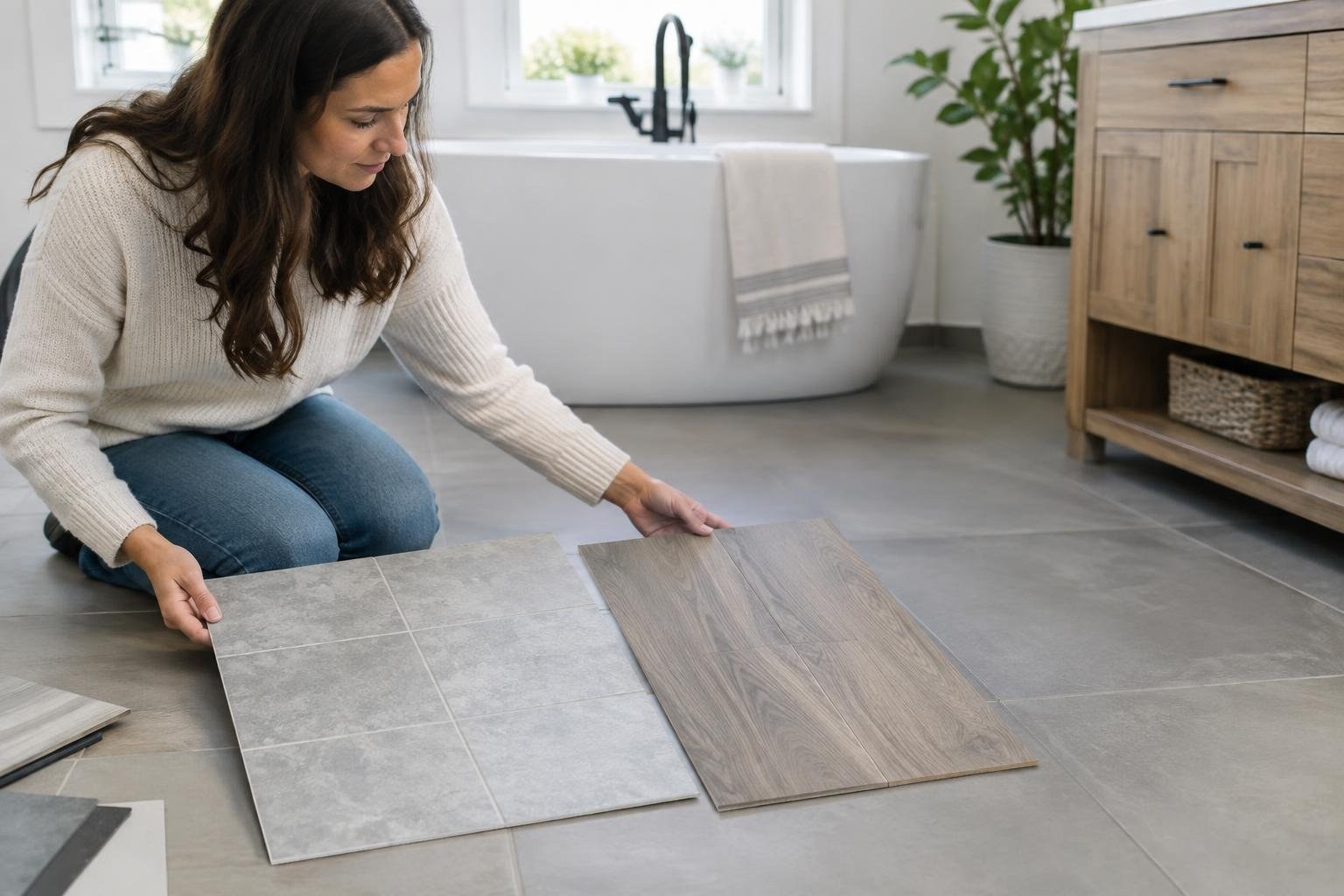
Tile is a familiar bathroom choice, especially ceramic and porcelain. Vinyl products can offer modern looks and simulated tile styles. Natural stone, including marble, slate, and travertine, is selected for its distinctive variation and upscale appearance. Concrete can suit an industrial aesthetic and may be poured, dyed, stained, or textured. Each choice calls for product-specific questions rather than assumptions based on a category name.
Begin by considering how you want the room to look, what kind of care you are comfortable with, and whether the project is limited to flooring or part of a larger remodel. Then have providers explain the installation plan and estimate scope in plain language.
What a Bathroom Flooring Project Includes
A flooring project is more than selecting a color or pattern. It typically involves agreeing on the material, documenting the work to be done, preparing the room and floor surface, installing the selected product, and reviewing the completed work. The details vary by material and by the condition of the existing floor.
Ask the provider to explain the proposed sequence before work begins. Clarify whether the estimate includes taking out the old floor, preparing the surface, installing the new material, finishing edges, and handling transitions to nearby flooring. Confirm who will move bathroom fixtures or other items if that work is part of the plan. Do not assume an item is included unless the estimate says so.
Product-specific information matters. For example, a source on cork flooring distinguishes between glue-down tiles and click-in-place planks for different locations. That guidance is not a substitute for checking the manufacturer’s directions for the product you are considering. Ask the installer to identify the product and explain why its installation method fits your project.
Signs You May Need New Bathroom Flooring
Consider replacement or professional evaluation when you are planning a bathroom renovation, changing the room’s style, or no longer want to keep the existing floor. An uneven-looking finish, visible damage, or a floor that does not suit the renovation may also prompt homeowners to investigate. These observations alone do not identify the cause or prove that the whole floor must be replaced.
Before treating a surface issue as a flooring-only problem, ask the provider to inspect the area and explain what they can determine. If the estimate identifies additional work, request a clear description of what was found, why it matters to the proposed installation, and whether the work changes the scope or price. Get agreement in writing before authorizing extra work.
Do not choose a product solely because it covers an unwanted appearance. A renovation is a useful opportunity to understand the existing floor, compare appropriate options, and make the scope of work explicit.
Bathroom Flooring Cost: How to Compare Estimates
There is no supported single national price that applies to every bathroom flooring project. The total depends on the product and the work required. Obtain current estimates from providers who can inspect your bathroom and describe the scope. Avoid relying on an undated online figure as a substitute for a local, itemized quote.
Ask each provider to clarify whether the written estimate includes:
- The flooring product and any stated product specification.
- Removal and disposal of the existing floor, if needed.
- Surface preparation and the installation approach.
- Finishing details, such as edges and transitions.
- Any additional work that could be required if the existing surface is not ready for the new floor.
- Cleanup, expected schedule, and applicable product or workmanship terms.
Material choice can also shape the project. Natural stone is often used for higher-end bathroom renovations, while porcelain and ceramic are long-established bathroom choices. These descriptions are not price quotes: compare actual local bids for the products and scope you want.
For a useful comparison, give every provider the same project description and ask them to list exclusions. If a quote changes after work starts, request the reason and revised cost in writing before agreeing.
Factors That Affect the Project
Several project choices can affect the final estimate and what the finished room looks like. The selected material and style matter: a simple tile selection, a patterned vinyl look, a naturally varied stone, and a finished concrete surface are different design decisions. The existing floor and the work listed in the installation scope matter too.
- Material and appearance: Compare the actual product, not just a broad label such as “tile” or “vinyl.” Vinyl includes products that simulate tile or other looks, and natural stone has individual variation.
- Removal and preparation: Ask whether the old flooring will be removed and what surface preparation is included.
- Project scope: A floor-only update is different from flooring included in a wider bathroom renovation. Confirm what work is included and who coordinates it.
- Installation approach: Ask the provider to explain the method specified for the exact product. Product directions should guide installation.
- Finish and detail: Discuss patterns, borders, edges, and transitions before approving the order or estimate.
These are questions to make estimates comparable, not a substitute for a site-specific assessment. Ask providers to identify assumptions and exclusions so you can evaluate the whole proposed project.
Bathroom Flooring Options: Pros, Cons, and Comparisons
| Option | Appearance and potential fit | What to compare |
|---|---|---|
| Ceramic or porcelain tile | Established bathroom flooring choices with a wide design role. | Specific product, layout, installation scope, and care information. |
| Vinyl | Can provide a modern look and products that simulate tile or planks. | Product suitability, installation method, finish, and care directions. |
| Natural stone | Marble, slate, and travertine offer distinctive natural variation and are often considered for upscale projects. | Appearance variation, care expectations, product details, and estimate. |
| Concrete | Can suit an industrial aesthetic; poured, dyed, stained, and textured treatments offer different appearances. | Proposed finish, project scope, and installer’s plan. |
| Cork | May be considered in some bathroom applications. | Use the installation approach specified for the exact product and location. |
Tile versus vinyl is a common comparison, but neither label settles the decision. Compare the exact products and the installer’s proposal. Vinyl can mimic tile visually, while tile remains a well-established bathroom option. Natural stone is compelling when distinctive variation is a priority; concrete may suit a more industrial design. A product that looks right in a sample still needs to be appropriate for the planned room and installation.
Carpet is generally a poor bathroom match when absorption is a concern. If considering an unfamiliar flooring material, verify its intended use with product documentation and a qualified installer instead of assuming it will work because it is attractive.
Is New Bathroom Flooring Worth It?
There is no single material that is the best choice for every bathroom. Tile may appeal if you want an established tile finish; vinyl may be worth comparing if you want a modern appearance or a simulated tile look. Stone can be a design-led option for homeowners who value natural variation, while concrete offers a different, industrial style.
To decide whether replacement is worthwhile, weigh the current floor’s condition, your renovation plans, the look you want, the complete written project cost, and how comfortable you are with the care required by your chosen product. If only appearance is driving the project, compare the cost and disruption with the result you hope to achieve. If the floor is being updated as part of a wider renovation, coordinate the flooring selection with the rest of the project before approving materials.
Before ordering, request product details and care guidance, compare local estimates based on the same scope, and ask what is not included. A clear plan is more useful than choosing a material based on a general “best” ranking.
What to Expect: Preparation, Installation, and Timing
Project duration depends on the chosen material, the work included, and what the provider finds during preparation. Ask each provider for a schedule specific to your bathroom, including product ordering, preparation, installation, and the point at which the room can be used again.
Before work starts, agree on access to the bathroom, what needs to be moved, how the work area will be protected, and who is responsible for removing existing flooring. Ask how the provider will communicate if the planned scope changes. If the flooring is part of a larger renovation, ask how its installation fits with the other work and which tasks must happen first.
At completion, review the floor and the agreed project details with the provider. Request any product information, care guidance, and written warranty terms that apply to the selected installation.
How to Choose a Bathroom Flooring Provider
Choose a provider who can explain the specific flooring product and proposed installation clearly, then support the proposal with a written scope. You do not need to be a flooring expert to compare bids: ask the same questions of each candidate and look for direct answers.
- Have you installed this specific type of product in bathrooms?
- What product and installation method are you proposing?
- What preparation is included?
- Does the estimate include removing and disposing of the current floor?
- What work is excluded?
- Who will perform the work, and who will supervise it?
- What is the expected schedule for this project?
- How are changes or unexpected work documented and priced?
- What product and workmanship warranty terms apply?
- What care instructions should I follow after installation?
- Can I review relevant references or examples of similar completed work?
- What is the payment schedule, and what events trigger each payment?
Compare the answers alongside the total estimate. A lower initial number may not be comparable if it excludes preparation, removal, finishing, or other work another provider included. Ask for revisions in writing and keep a copy of the final agreement.
Product Instructions, Permits, and Warranty Questions
Flooring products and installation instructions are not interchangeable. Ask the provider to follow the selected product’s guidance and explain the proposed method. For example, published guidance for cork flooring differentiates between glue-down tiles and click-in-place planks for different locations; do not apply that detail to another product without checking its instructions.
Ask for written product and workmanship warranty information before signing. Clarify what is covered, what is excluded, how to contact the responsible party, and whether any stated care requirements apply. Keep product identification, invoices, installation documentation, and care instructions with your renovation records.
Rules for permits, licenses, and approvals can differ by location and project scope. Before work begins, ask the provider and relevant local authority whether any approval or licensed trade is required for the work included in your renovation. Do not treat a flooring quote as confirmation that every part of a larger bathroom remodel is covered.
How to Compare Costs and Save Without Cutting Corners
Ways to keep a project controlled include choosing a clear scope before requesting bids, comparing similar products, and getting multiple written estimates based on the same work. These steps help reveal whether a lower quote leaves out preparation, removal, or finishing details. They do not mean choosing the lowest bid is automatically the best value.
- Decide which design features matter before comparing products.
- Ask providers to identify exclusions and explain additional-work procedures.
- Compare a standard product with a visually similar alternative only after checking the exact specifications and intended use.
- If flooring is part of a broader bathroom renovation, ask whether the work can be coordinated to avoid conflicting schedules or repeated disruption.
- Do not cut cost by disregarding product directions or skipping work the installer says is needed without understanding the implications.
Request an updated written estimate if the material, project scope, or assumptions change. A transparent comparison is safer than relying on a verbal discount or an unexplained price.
Common Bathroom Flooring Mistakes and Pre-Project Checklist
Avoid these common decision mistakes:
- Choosing from a photo without checking the actual product and its intended use.
- Assuming every tile, vinyl, stone, or concrete product has the same requirements.
- Comparing estimates with different project scopes.
- Forgetting to ask whether removal, preparation, and finishing are included.
- Choosing a simulated tile appearance without comparing it with actual tile and understanding the product difference.
- Assuming natural stone’s appearance alone tells you what its care will require.
- Approving extra work without a written scope and revised estimate.
- Skipping questions about product directions, care, and warranty terms.
- Accepting an unclear timeline or payment schedule.
Before signing: identify the product; confirm the bathroom is an intended application; compare itemized bids; review preparation, removal, and finishing; check the schedule and payment terms; and retain the written agreement, product information, and warranty documents.
Related Bathroom Projects to Coordinate
Bathroom flooring often overlaps with a wider bathroom renovation. Evaluate related work early enough to clarify which project affects the flooring scope and sequence.
- Bathroom fixtures and finishes: If the renovation includes other changes, coordinate selections and work boundaries with the flooring provider before installation begins.
- Nearby flooring and transitions: Discuss how the new bathroom floor will meet adjacent rooms and whether transition details are included in the bid.
- Existing floor removal and preparation: Confirm what happens to the current floor and how the installer will prepare the surface before laying the new material.
Ask the remodeler or flooring provider which work should happen first for your specific project. Bundling can simplify coordination when multiple tasks share a work area, but do not assume it reduces cost. Request a combined scope and compare it with clearly separated estimates so the value and responsibilities are visible.
Frequently asked questions
What is the best flooring for a bathroom?
Porcelain and ceramic tile are established bathroom choices, while vinyl is an alternative for people who want a different look and installation approach. There is no universally best floor: compare the specific product, room conditions, installation requirements, and maintenance expectations before deciding.
How much does it cost to replace bathroom flooring?
Bathroom flooring prices depend on the selected material and the work included in the estimate. Ask for separate details on flooring, preparation, removal, installation, transitions, and any repair work. Because prices depend on location and project conditions, compare current local written estimates rather than relying on an undated general figure.
Is tile or vinyl better for a bathroom?
Both are common bathroom choices. Ceramic and porcelain tile offer many style options, but compare the specific product and installation plan. Vinyl is another option, including products designed to simulate tile. Ask the installer how the selected floor performs in your bathroom and what care it requires.
Can you use vinyl plank flooring in a bathroom?
Do not assume that a flooring product is suitable simply because it resembles tile or stone. Check its manufacturer information, confirm the product is intended for the room and conditions, and ask the installer to explain the installation and maintenance requirements in writing.
Is natural stone a good choice for bathroom floors?
Natural stone such as marble, slate, and travertine can provide distinctive natural variation and an upscale look. Before choosing it, ask about the selected stone’s care, installation details, and overall project cost. Compare those responsibilities with the appearance you want and the upkeep you are willing to do.
What should I ask a bathroom flooring installer?
Ask for an itemized written estimate, relevant experience with the flooring you selected, a clear description of surface preparation and installation, a project timeline, and written information about product and workmanship coverage. Also ask who is responsible for removing old flooring and addressing unexpected conditions.
People Also Ask
Which bathroom flooring is easiest to maintain?
Porcelain and ceramic tile are widely used bathroom options, and vinyl is another choice. Compare the specific product, its intended use, appearance, care, and installation needs rather than choosing by material name alone.
What should a bathroom flooring estimate include?
Start by listing the work the estimate covers: old-floor removal, surface preparation, flooring, installation, transitions, and possible repair work. Ask providers to price the same scope so you can compare estimates fairly.
Can vinyl flooring look like bathroom tile?
Some vinyl products are designed to imitate tile, offering a way to pursue a tile-like appearance with a different product type. Confirm the particular product is suitable for the intended bathroom and follow its manufacturer’s installation and care instructions.
What natural stone is used for bathroom flooring?
Marble, slate, and travertine each have natural variation that can give a bathroom a distinctive appearance. Ask about the specific material, care expectations, installation, and project cost before selecting a stone floor.
Is concrete flooring an option for a bathroom?
Concrete can support a modern, industrial design. Poured, dyed, stained, and textured approaches can create different looks. Discuss the specific finish and installation plan with a provider before including it in a renovation.
Should you put carpet in a bathroom?
Carpet is generally a poor fit for a room where moisture exposure is a central consideration. When comparing flooring, prioritize materials intended for bathroom use and verify the selected product’s suitability with its manufacturer and installer.
The right bathroom floor is the one that fits the room’s moisture exposure, your maintenance preferences, your design goals, and the condition of the surface beneath it. Compare tile, vinyl, natural stone, concrete, and other viable choices by looking at the complete installed project, not just the appearance of a sample. Before committing, ask how the flooring will be prepared, installed, finished, and cared for. Then compare written estimates and search Estimate.org to find providers to evaluate.
Your next step
Explore services and find providers at Estimate.org.
Reviewed and maintained by the Staff at Estimate.org.
Last reviewed and updated October 9, 2026 by the Estimate.org Editorial Team.
Sources
- Top 8 Bathroom Flooring Options: What's the Best?
- Best Bathroom Flooring Options: Durability, Style, and Cost | Ranney Blair Weidmann
- What’s the Best Flooring for Bathrooms? – Capital Construction
- These Are the Best Flooring Options for a Bathroom Upgrade
- Best Bathroom Flooring Options for Your Home
- Best Flooring Options for Bathrooms – Refloor
- r/Flooring on Reddit: Best Flooring for Bathrooms?
- The Best Bathroom Flooring With High Marks for Safety and Style
