

A bathroom remodel on a budget does not have to mean replacing every fixture or surface. It means identifying what needs repair, deciding which changes will have the greatest effect, and keeping the project scope aligned with the money available. For some rooms, a vanity refresh, new hardware, paint, wallpaper, or another wall treatment may be enough; other bathrooms need more substantial work. The right choice depends on the room’s condition, your priorities, and the products and labor included in the plan. A 2025 midrange remodel average cited by Bob Vila is about $26,000, but that figure should not be treated as a price for a small refresh or as a local estimate. Start with a written list of must-fix items and nice-to-have changes, compare estimates for the same work, and avoid choosing finishes before understanding the full scope.
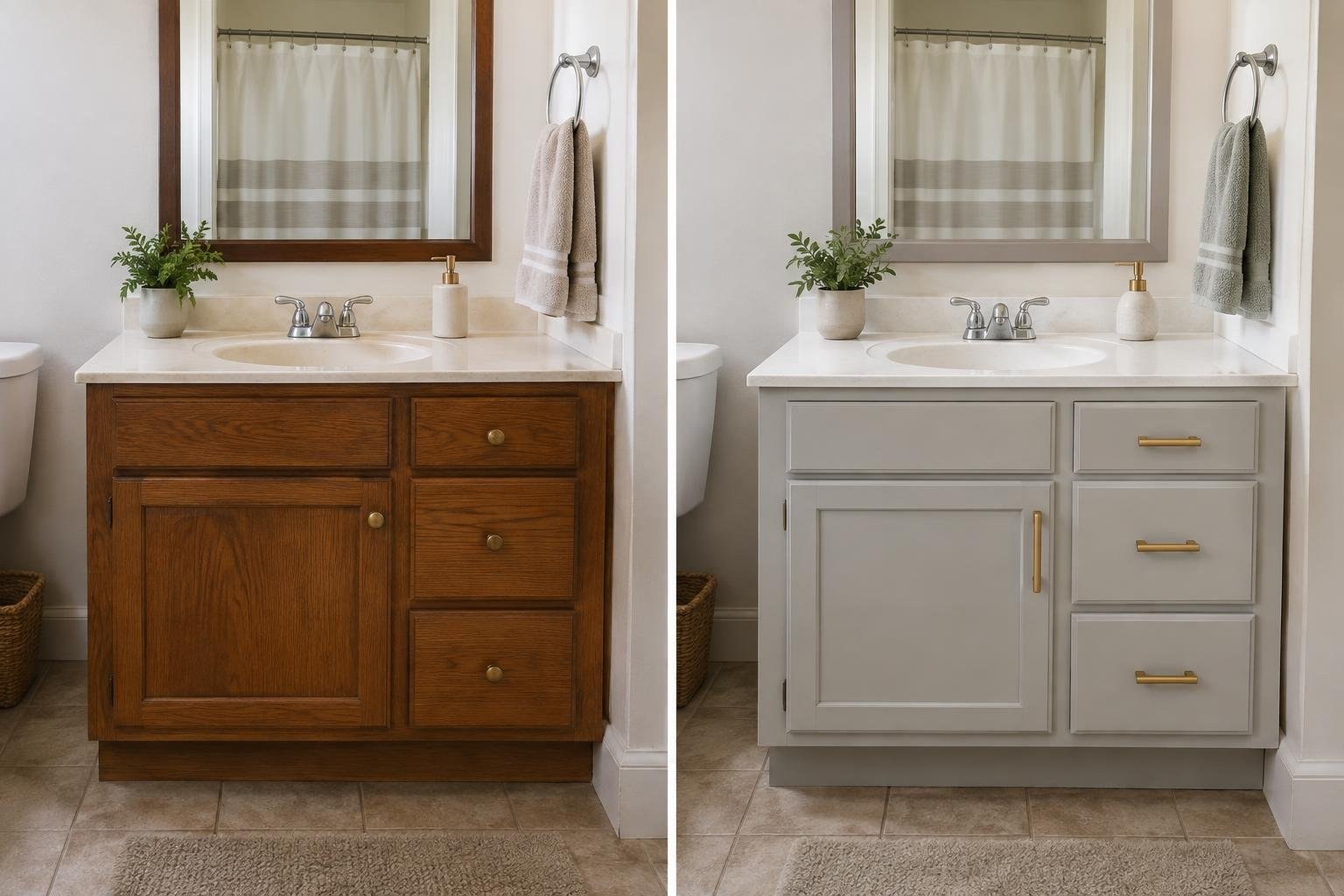
What a budget bathroom remodel can include
A bathroom remodel can mean anything from a focused cosmetic refresh to replacing fixtures and finishes across the room. Before you shop, write down what is failing, what is inconvenient, and what you simply want to look different. That distinction helps separate essential repairs from discretionary upgrades.
A budget-conscious project does not have to use the cheapest product in every category. It should put the available money toward the changes that matter most to your household while avoiding work that does not solve a real problem. Examples of lower-scope updates discussed in the research include refreshing a vanity, changing hardware, and using wall treatments such as wallpaper or board-and-batten detail instead of taking on a more extensive tiled-wall project.
Set a spending limit, list the work you expect it to cover, and ask providers to estimate the same scope. Keep a separate allowance for uncertain conditions rather than assuming every surface behind an existing finish is in good shape.
Signs your bathroom may need attention
Start with symptoms, not a shopping list. Aesthetic wear may call for a finish update, while a fixture that does not work as intended or a surface that appears damaged deserves closer investigation before it is covered up. The available project examples focus on changes to walls, tile, vanities, grout color, fixtures, and accessories; they do not diagnose the cause of any particular bathroom problem.
- The room looks dated, but the existing pieces still meet your needs: price a refresh before replacement.
- A vanity or cabinet finish is worn: find out whether refinishing or painting is suitable for its material and condition.
- You want a different wall treatment: compare paint, limewash, wallpaper, paneling, and tile for the exact location and maintenance needs.
- You see damage or suspect a problem behind a surface: ask a qualified professional to assess it before spending money on cosmetic work.
- You are unsure what needs attention: request a written assessment that distinguishes repairs from optional improvements.
Do not treat a new finish as a substitute for investigating a problem that may continue beneath it. A professional assessment can help establish whether a surface is ready for an update or needs repair first.
Bathroom remodel cost: what the estimate should cover
There is no single reliable price for every bathroom remodel. The estimate depends on what is being changed, the products selected, labor, the room’s condition, and the project’s location. A 2025 Cost vs. Value figure cited by Bob Vila places a midrange bathroom remodel at about $26,000 on average. That is a benchmark for a midrange remodel, not a promise about what a small, cosmetic, or local project will cost.
Use published figures as orientation only; rely on current, itemized local estimates for a decision.
What to ask an estimate to include
- Labor and the specific work each trade will perform.
- Products, quantities, finish selections, and any allowances for items not yet chosen.
- Removal and disposal of existing materials, if included.
- Any proposed changes to fixtures or layout, clearly separated from finish updates.
- Permit or inspection responsibilities, if applicable to the proposed work.
- Cleanup, schedule assumptions, payment milestones, and written change-order terms.
Small rooms can still have many line items: sinks, vanities, mirrors, lighting, tubs, and toilets are among the components identified in the cost discussion. Ask what is excluded. That makes it easier to spot an estimate that looks inexpensive only because important items are missing.
Factors that affect price and ways to save safely
The main cost drivers are the size of the requested scope and the products and labor required to complete it. A change that looks small in a photograph may require preparation, removal, or related work that is not obvious until a provider examines the room. The source material identifies fixtures and finishes such as sinks, vanities, mirrors, lighting, tubs, and toilets as potential remodel costs, but does not provide a current, location-specific price for each.
What can make a project more expensive?
- Replacing several major components rather than refreshing selected finishes.
- Choosing products or custom details that increase material or installation needs.
- Discovering that a planned surface treatment is unsuitable for the existing material.
- Adding work after the initial estimate or changing selections once work is underway.
- Leaving out removal, disposal, or other necessary work when comparing bids.
How to reduce cost without cutting corners
- Decide what must be repaired before choosing decorative upgrades.
- Compare a focused update with a full-room scope before committing.
- Ask whether a sound vanity, tile surface, or other existing item can remain.
- Consider paint, wallpaper, paneling, or selected accessory updates where appropriate.
- Get several written estimates based on the same selections and scope.
- Do not remove essential work from a bid simply to reach a lower number; ask for a clearly defined alternative instead.
Save money by reducing unnecessary scope, not by guessing that an unsuitable product will work or leaving an underlying problem unaddressed.
Refresh or replace? Comparing bathroom update options
For each item, compare keeping and refreshing it with replacing it. The right option depends on condition, appearance, function, product compatibility, and the full installed cost. A cheaper material is not automatically a better value if it is unsuitable for the surface or does not meet your needs.
| Update | Potential benefit | What to check |
|---|---|---|
| Paint or refinish a vanity | Can refresh existing cabinets instead of replacing them. | Confirm the cabinet material, condition, preparation, and coating instructions. |
| Paint, limewash, or wallpaper | Can change a wall’s appearance without choosing tile for every wall. | Verify that the finish and product are appropriate for the specific surface and location. |
| Board-and-batten or beadboard detail | Adds visual interest as an alternative to a more extensive wall treatment. | Include materials, installation, and any needed finishing in the estimate. |
| Update hardware, grout color, window treatments, or shelving | Targets selected details rather than replacing the entire room. | Check fit, condition, compatibility, and the finished look with existing elements. |
| Replace major fixtures or tile | May address a need that a cosmetic update cannot solve. | Compare complete installed costs and the work required around the replacement. |
Painting tile or flooring is not a universal shortcut. The research specifically advises checking whether tile is paintable, so verify the product and surface before budgeting for this approach.
What to expect: planning, work, and timing
A manageable project begins with a defined scope. First, inspect the room and make a list of repairs and desired changes. Next, decide which existing components will remain, choose finishes, and ask providers to price a consistent plan. Before work starts, confirm the schedule, access arrangements, cleanup expectations, and how changes will be approved.
- Set priorities: mark each item as necessary, preferred, or optional.
- Check the room: ask a qualified provider to assess any damage or uncertain surface conditions.
- Choose a scope: compare a targeted refresh with more extensive replacement.
- Get written estimates: check inclusions, exclusions, product allowances, and payment terms.
- Confirm approvals: contact the local building department about requirements for the proposed work.
- Prepare and complete the work: agree on who is responsible for protecting the home, removing materials, and cleaning up.
- Review the finished work: walk through the scope with the provider and collect product and workmanship documents.
There is no defensible single timeline for every bathroom project in the supplied research. Ask providers for a project-specific schedule, including product lead times, work days, inspection steps if applicable, and how delays or additional work will be communicated.
DIY or hire a bathroom remodeling professional?
Some appearance updates may be reasonable DIY tasks for people with the right skills and a suitable surface. The research includes painting or refinishing a vanity, changing hardware, and adding selected wall treatments as budget ideas. It also cautions readers to check whether tile is paintable before considering a floor-paint project.
Before starting, read the product instructions, assess the preparation involved, and be honest about your experience. If a project involves work you do not understand, a damaged surface, or a component that needs specialized installation, ask a qualified professional instead. A DIY plan should include materials, tools, preparation, cleanup, and the cost of correcting mistakes, not just the price of a can of paint.
Do not assume DIY automatically saves a fixed percentage. Compare the complete project cost and the value of your time with a written professional estimate. For work subject to local approvals or professional requirements, verify those requirements rather than relying on an online tutorial.
How to choose a bathroom remodeler
Compare providers on the work they propose, not only on their total price. Ask for a written estimate that describes the scope, products, labor, exclusions, payment milestones, schedule, cleanup, and the process for approving changes. Check references and recent reviews, and verify applicable licensing and insurance with the relevant local or state authority.
Questions to ask before hiring
- What exactly is included in the quoted price?
- Which materials and finish products are included, and which are allowances?
- What work is excluded or likely to require a change order?
- Who will perform the work, and will subcontractors be involved?
- What experience do you have with this type of bathroom update?
- Can you provide references for similar projects?
- What licensing and insurance apply to this work in my area?
- Who checks whether permits or inspections are needed?
- How will you protect the rest of the home and handle cleanup?
- What schedule do you expect, and what could change it?
- How are payments divided across project milestones?
- What product and workmanship warranties apply, and where are they documented?
- How do I approve additional work or product changes?
Be cautious about pressure to sign immediately, a bid with a vague scope, refusal to put promises in writing, or a price that is much lower without a clear explanation of what has been omitted.
Permits, qualifications, warranties, and product safety
Permits, inspections, and contractor requirements depend on the location and the work proposed. Before signing, ask your local building department what applies and ask the provider to identify in writing who will handle any required applications and inspections. Do not assume that a project is exempt just because it is small or described as cosmetic.
Ask for applicable license and insurance details and verify them through the relevant authority. Get product warranties, workmanship coverage, exclusions, registration steps, and maintenance conditions in writing. Confirm who will give you receipts and product information when the project is complete.
For painting, refinishing, wallpaper, or another surface treatment, check that the manufacturer identifies the product as suitable for the material and intended location. A finish recommendation for a wall should not automatically be treated as approval for a floor or a wet area.
Is a budget bathroom remodel worth it?
A budget-friendly update is worthwhile when it improves the room in a way you value and the existing components are suitable to keep. A small change can make a noticeable visual difference, but a finish update is not a substitute for repairing a problem that requires more than cosmetic work. Decide whether you want improved appearance, more useful storage, replacement of a failing component, or a broader redesign, then compare the cost and scope for each path.
Before committing, consider how long you expect to use the room, what you can comfortably spend, how much maintenance a finish may require, and whether the proposed product suits the space. The available sources offer project ideas and cost benchmarks, but they do not establish a guaranteed return on investment, resale premium, or savings for an individual home.
Related bathroom projects to consider
A bathroom update can connect to other work in the same room. Consider these projects while setting the scope, but do not bundle work automatically: compare the combined estimate with separate pricing and make sure the order is sensible for your specific surfaces and products.
- Vanity and storage: evaluate whether existing cabinets can be refreshed or whether replacement better meets your needs. Decide before selecting finishes that depend on the vanity’s size or appearance.
- Walls and tile: compare tile with paint, wallpaper, limewash, or paneling where products are suitable. Choose the wall approach before finalizing related trim and finish selections.
- Lighting and mirrors: include them in the estimate if you are changing the room’s appearance or replacing those items. Confirm the plan before final finish work.
- Fixtures and accessories: consider faucets, knobs, window treatments, and shelving alongside the larger design plan so the finishes work together.
- Flooring: evaluate its condition and suitability separately. Do not assume a paint treatment is appropriate without checking the tile and product instructions.
Ask providers to show any proposed savings and explain which work must happen first.
Budget bathroom remodel mistakes to avoid
Common budget mistakes are often planning mistakes. Avoid these before work begins:
- Choosing a finish before checking whether it suits the surface and location.
- Replacing items that could have been refreshed without first comparing the options.
- Trying to solve a suspected underlying problem with a cosmetic finish alone.
- Comparing estimates with different products, exclusions, or amounts of work.
- Forgetting to include fixtures and other line items in the overall plan.
- Assuming an online price range applies to your location, date, room, and scope.
- Starting work without checking local permit or inspection requirements.
- Accepting verbal promises about price, schedule, or warranty instead of written terms.
- Taking on a DIY task without accounting for preparation, tools, and possible correction costs.
- Failing to agree on how added work and changes will be approved.
A lower bid is only useful when you understand what it covers. Ask for clarification before signing, and keep a copy of the final scope and selections.
Frequently asked questions
How can I remodel a bathroom on a tight budget?
Start by listing what is not working and separating necessary repairs from appearance upgrades. If the layout and major components still suit your needs, consider updates such as painting suitable surfaces, refreshing the vanity, changing hardware, or adding wall treatments instead of replacing everything. Compare complete written scopes before choosing a plan, and keep a contingency for problems uncovered during work.
How much does a budget bathroom remodel cost?
The total depends on the room, the work included, material choices, and whether plumbing or other systems need attention. A 2025 Cost vs. Value figure cited by Bob Vila puts a midrange bathroom remodel at about $26,000 on average, but that is not a quote for a small cosmetic refresh or a guaranteed local price. Ask for itemized estimates based on the same scope.
What bathroom remodel updates can I do myself?
Painting a vanity, changing hardware, refreshing walls, or replacing selected accessories can be suitable DIY projects when the surface and product instructions allow it. Work involving plumbing, wiring, concealed damage, or unfamiliar installation is a reason to pause and get qualified help. Check whether the proposed work needs approval or permits locally before starting.
What is the most expensive part of a bathroom remodel?
Keeping the existing layout can help limit the scope, while moving fixtures or replacing several major components may add complexity. The specific cost depends on the room and proposal, so compare itemized bids rather than assuming that one choice always saves a fixed amount. Be sure estimates state what is excluded and how concealed problems will be handled.
How do I choose a bathroom remodeling contractor?
Compare providers using a written scope, itemized pricing, schedule, payment terms, and a clear description of who handles permits and cleanup. Ask for references and proof of applicable licensing and insurance, and confirm any product and workmanship coverage in writing. Treat a vague estimate or a promise that exists only verbally as a reason to ask more questions.
Can I paint bathroom tile to save money?
That depends on the surface, its condition, the product, and how the room is used. The research supports checking whether tile is paintable before considering a paint treatment; it does not establish that every tile or floor is a suitable candidate. Follow the product maker’s preparation and use instructions, and ask a professional if you are unsure about the substrate or moisture exposure.
People Also Ask
What is the difference between a bathroom refresh and a remodel?
A focused refresh changes selected finishes and accessories while leaving much of the room in place. A full remodel may involve a broader set of products or changes to the room. Ask each provider to define exactly what their estimate includes so you can compare proposals fairly.
How do I reduce the cost of a bathroom renovation?
Often, the first step is to keep the existing layout if it still works and decide whether major components truly need replacement. Compare an appearance-focused refresh with a broader remodel using itemized estimates; the best choice depends on the room’s condition and your priorities, not a universal rule.
What are affordable ways to update a bathroom?
The available research describes budget updates such as painting or refinishing a vanity, changing hardware, adding wallpaper or board-and-batten detail, refreshing grout color, and updating window treatments or shelving. Check surface suitability and product instructions before applying paint or coatings, especially on tile or floors.
How long does a bathroom remodel take?
A bathroom project’s timeline depends on its scope, product availability, and any issues found as work proceeds. Get the expected start and completion dates, working hours, delivery assumptions, and steps for handling changes in writing. Do not rely on a generic timeline without a defined scope.
Do I need a permit to remodel a bathroom?
Some jurisdictions may require approvals for certain work, but requirements depend on the location and project. Ask the local building department what applies to your proposed work, and confirm in writing who is responsible for applications and inspections before signing a contract.
Is paint cheaper than tile for bathroom walls?
The research supports considering paint or limewash as an alternative to tiling in some wall updates, but it does not establish that these finishes work for every surface or wet area. Confirm product suitability for the exact location and follow the manufacturer’s preparation and application directions.
What should I remodel first in a bathroom?
The right starting point is the problem you need to solve. Address necessary repairs first, then compare surface and accessory updates with replacing larger components. A written priority list and itemized estimates can help prevent attractive optional upgrades from crowding out essential work.
A bathroom remodel on a budget is usually about choosing where a visible update will make the most difference and avoiding expensive scope changes. Start with the room’s needs, keep the layout when it works, compare refresh options before committing to replacement, and set aside money for surprises. Then compare written project scopes and verify local requirements before work begins. For your next step, compare options and search for providers on Estimate.org.
Your next step
Explore services and find providers at Estimate.org.
Reviewed and maintained by the Staff at Estimate.org.
Last reviewed and updated October 9, 2026 by the Estimate.org Editorial Team.
Sources
- Large or small bathroom remodel on a budget? Save with these tips
- 23 Easiest DIY Budget Bathroom Remodel Ideas to Try
- 12 Bathroom Remodel Ideas on a Budget – Bob Vila
- 7 Inexpensive Bathroom Remodel Ideas | Budget Dumpster
- 15 Bathroom Remodel Ideas on a Budget! – Driven by Decor
- Before and After: Budget Bathroom Remodels That Completely Transform Small Spaces
- 23 Budget-Friendly Bathroom Remodel Ideas to Try Yourself
- Bathroom Remodeling on a Budget – Bella Tucker
