

Choosing a bathroom remodeler means evaluating more than design ideas or a headline price. The right provider for your project should have relevant experience, communicate clearly, explain what the estimate includes, and give you time to review a written agreement. Start with referrals and local searches, then compare contractors on similar work, credentials, references, project scope, and how they handle questions and changes. Bathroom remodeling costs and schedules depend on the work and choices involved, so a useful estimate must be specific to your bathroom rather than a generic number. The key takeaway: compare proposals on equal terms and choose the contractor whose plan, professionalism, and contract best fit your goals.
What a Bathroom Remodeler Does and When to Hire One
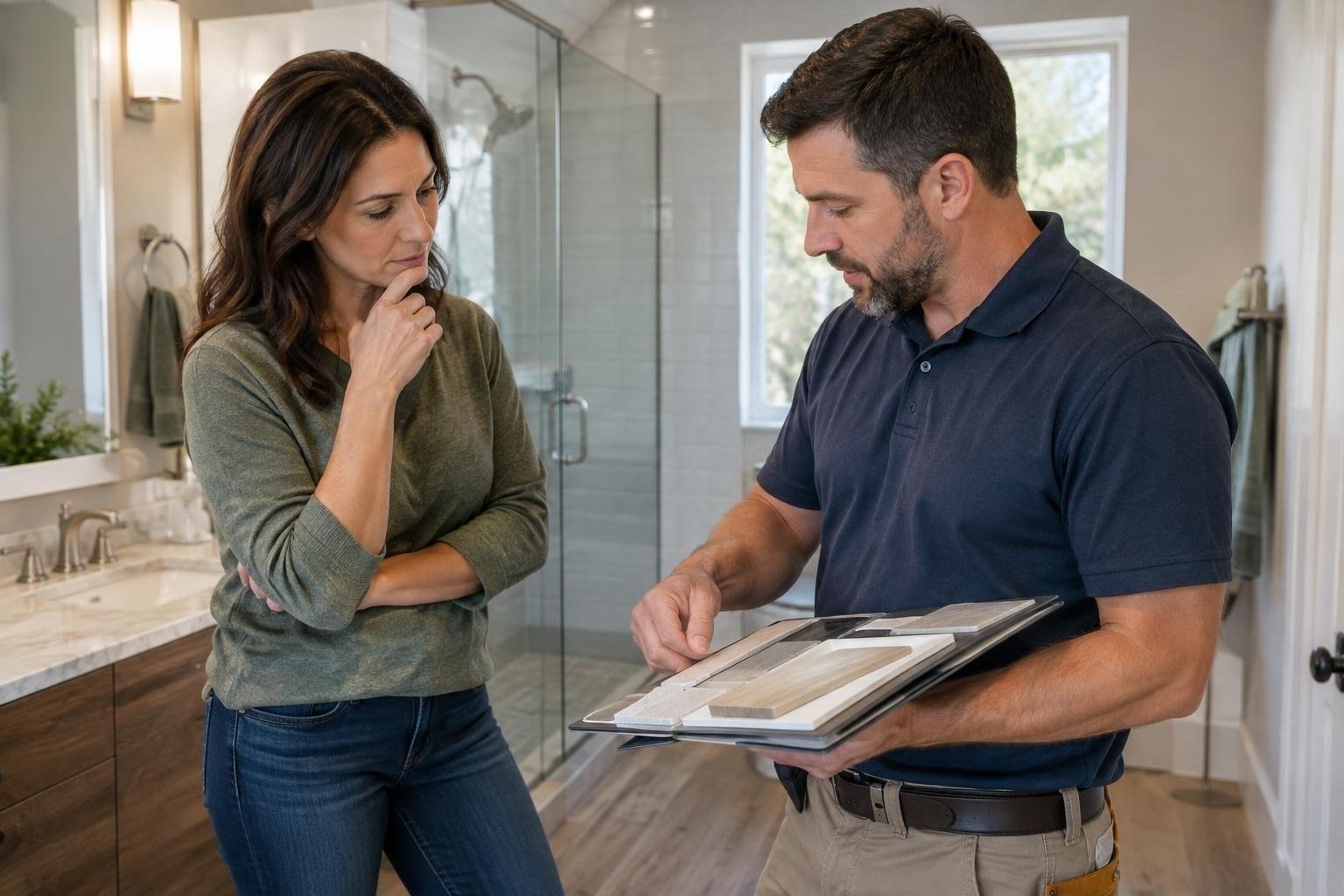
A bathroom remodeler may coordinate some or all of the planning, removal, construction, installation, and finishing work in a bathroom renovation. The exact role varies: one provider may manage multiple trades, while another may perform only a defined part of the project. Never assume what is included based on the company name or a verbal description. Ask for a written scope identifying the work, materials, responsibilities, exclusions, and how changes will be handled.
Choosing a provider matters because the estimate and agreement shape what you can expect from the project. A clear process helps you compare proposals and spot unanswered questions before work begins. Recommendations, online searches, portfolios, and professional credentials can help you build a candidate list, but each needs to be checked against your specific project.
Signs you may need a remodeler
You may be considering a professional because the bathroom no longer meets your needs, you want to update its appearance or layout, or you are planning a renovation that requires coordinated work. Before contacting providers, write down what you want changed and what must remain. Separate essential needs from preferences. This makes it easier to assess whether each contractor understands your goals and has experience with comparable work.
Compare Remodeler Approaches and Project Proposals
Bathroom projects can differ substantially in scope, materials, and the amount of coordination required. Compare the contractor’s proposed approach, not just the label attached to the service. Ask whether the provider is proposing a focused update or a broader renovation, which parts of the work are included, and which decisions or tasks remain yours.
| Comparison point | Questions to resolve |
|---|---|
| Project scope | Which surfaces, fixtures, or other elements are included, and what is expressly excluded? |
| Provider approach | Who manages the work, and who will be on site or responsible for each part? |
| Products and finishes | Are specific products identified, or are selections and allowances still open? |
| Project changes | How are changes to scope, materials, or schedule approved and documented? |
Two estimates are not directly comparable when one includes different work or makes different assumptions. Ask contractors to price the same written scope where possible. If a proposal uses allowances or leaves selections open, request an explanation of what those amounts cover and how a final choice could change the total.
Compare fit, not just price
Review examples of work similar to your planned renovation. Look at craftsmanship, materials, and overall appearance, then ask how that experience relates to your project. A provider who understands your goals, communicates clearly, and gives you time to examine a transparent estimate may be a better fit than a lower bid that leaves important details unclear.
Bathroom Remodeler Cost: What an Estimate Should Explain
There is no single bathroom remodeling price that applies to every home. The useful figure is a project-specific estimate that explains the planned work and assumptions. Request a written proposal that makes it possible to see what is included before comparing totals. Since prices depend on project details and geography, do not treat a generic estimate or an unusually low headline quote as proof of what your own renovation should cost.
What can affect the price?
- Scope: A proposal covering more tasks or areas is not comparable with one covering less.
- Selections: Products, finishes, and whether choices are finalized or left as allowances can affect the proposal.
- Project complexity: Ask how the contractor has accounted for the specific work and conditions discussed during the estimate.
- Exclusions and changes: Work outside the stated scope may require a revised price. Understand the written change process before work begins.
- Project responsibilities: Clarify who supplies items, coordinates work, handles disposal, and addresses any permit-related tasks if they apply.
How to compare estimates fairly
Ask each contractor to describe labor, materials, exclusions, assumptions, and any open selections in writing. Ask what could change the price and how you will approve changes. If one quote is substantially lower, request a line-by-line explanation of differences rather than assuming the same work is included. Do not accept a verbal promise as a substitute for a written scope.
Ways to manage cost safely
Define your priorities before requesting estimates, make selections as clear as you can, and compare providers on a consistent scope. These steps can reduce misunderstandings while preserving the ability to weigh options. Avoid saving money by choosing a contractor whose qualifications, work examples, or project responsibilities you cannot verify. The goal is not the smallest number at any cost; it is an informed comparison of price and value.
How to Choose a Qualified Bathroom Remodeler
A practical selection process starts with several candidates and ends with a written agreement you understand. Referrals from friends or family who recently renovated can provide useful leads and a sense of what to ask. Local online searches can expand your list. Treat both as starting points: check each provider’s suitability for your project independently.
- Describe the project. List your goals, must-haves, preferences, and questions.
- Build a candidate list. Seek recommendations and look for local remodeling companies.
- Check relevant experience. Ask for examples of projects similar to the bathroom work you are considering.
- Review completed work. Look at craftsmanship, materials, and the overall result. Ask about the contractor’s role in each project.
- Verify credentials. Research state and local licensing requirements and check applicable credentials with the relevant authority.
- Request references. Ask to speak with clients who can discuss the work and communication.
- Compare written proposals. Check scope, exclusions, selections, responsibilities, and change procedures.
- Choose deliberately. Favor clear communication and a transparent estimate, and take time to review the contract before signing.
Questions to ask each candidate
- Have you completed bathroom projects similar to mine?
- Can I review examples of comparable work and speak with references?
- What exactly is included in this estimate, and what is excluded?
- Who will manage the project and perform the work?
- Which licenses, insurance, or other credentials apply to this project and location?
- Who is responsible for checking permits and arranging any that are required?
- How are product selections and allowances handled?
- How do I approve a change in scope, price, or schedule?
- What schedule are you proposing, and how will updates be communicated?
- What warranties apply to products and workmanship, and where are their terms documented?
- What payment schedule and contract terms are proposed?
- How will cleanup and the final walkthrough be handled?
Licensing, Permits, Insurance, and Warranties
Licensing rules, permit requirements, and the credentials relevant to a renovation vary by location and project. Ask contractors what requirements may apply, then confirm licensing and permit details with the appropriate state or local agency. Make the agreement clear about who will check, apply for, and coordinate any required permits or inspections. Do not assume a contractor’s membership in an association replaces a license or other requirement.
Ask about relevant professional credentials and associations, including whether the contractor belongs to organizations such as the National Kitchen and Bath Association, the National Association of Home Builders, or the National Association of the Remodeling Industry. Consider this information alongside project experience, references, and the written proposal; membership alone does not establish that a contractor is qualified for your particular job.
Clarify insurance and warranties
Ask what insurance applies to the contractor and project, and request documentation you can verify. Have the contract explain any product warranties and workmanship commitments, who provides them, how to make a claim, and any conditions that apply. Do not rely on a general verbal assurance: ask for the actual terms in writing and retain them with your project documents.
What to Expect: Schedule, Communication, and Project Changes
A reliable schedule should be specific to the proposed project. Ask the contractor for the expected sequence, a realistic start and completion window, and the points when you need to make decisions or approve selections.
Before work begins, confirm who will communicate schedule updates and how changes will be recorded. Ask what assumptions the schedule depends on and how the contractor will notify you if those assumptions change. Make sure the contract and estimate describe the same scope. If the planned work changes, request a written description of the effect on price and timing before authorizing it.
Plan for practical questions
Discuss how work areas, access, cleanup, and coordination will be handled. Ask the remodeler to explain the sequence in plain language, including any decisions you need to make. These details do not guarantee a particular completion date, but they make expectations and responsibilities easier to discuss before the project starts.
Red Flags and Common Mistakes When Hiring
Watch for a provider who pressures you to sign before you have compared proposals, will not give you time to review the contract, or cannot explain what the estimate covers. Other warning signs include vague scope, unclear responsibility for permits, unsupported claims about credentials, reluctance to provide references, and a price that appears low because important work is omitted. Treat these as reasons to pause and ask questions, not as proof of wrongdoing by themselves.
- Do not choose on the total price without comparing scope and exclusions.
- Do not rely on a verbal description of the work, schedule, or warranty.
- Do not assume a portfolio shows work comparable to your project; ask about the details.
- Do not treat reviews or personal referrals as a substitute for checking credentials and references.
- Do not sign while questions about changes, payment, permits, or responsibilities remain open.
- Do not let pressure prevent you from getting a transparent estimate and reviewing the contract.
A trustworthy selection process gives you room to compare, ask follow-up questions, and understand the written terms. If a contractor avoids reasonable questions or will not clarify key items, consider other candidates.
Is Hiring a Bathroom Remodeler Worth It?
Choosing a bathroom remodeler is worthwhile when you want a renovation provider whose experience, project approach, and communication fit the work you have in mind. The right choice is not determined by an association membership, a polished portfolio, or a low quote alone. Consider the full picture: comparable work, verified credentials, references, clear scope, a fair opportunity to review the agreement, and answers that address your priorities.
Before hiring, write down your goals, compare multiple proposals on the same scope, confirm responsibilities and local requirements, and keep the signed agreement and warranty information. If you are ready to research providers, use Estimate.org to compare options and make an informed next step.
Bathroom Remodeler Hiring Checklist
- Write down what you want changed and what matters most.
- Get referrals and search for local remodeling providers.
- Review examples of work similar to your project and request references.
- Check applicable state and local licensing requirements and credentials.
- Ask about insurance and verify relevant documentation.
- Compare written estimates with the same scope, selections, and exclusions.
- Clarify schedule, project communication, and change approvals.
- Confirm who checks and arranges permits or inspections if required.
- Read the contract, payment terms, and warranty details before signing.
- Keep copies of the estimate, agreement, approved changes, and warranty information.
Sources and Further Reading
These recommendations are based on the supplied consumer guidance about finding remodelers, evaluating similar work, checking credentials, comparing bids, and reviewing agreements. Before hiring, verify local requirements and project-specific details with the relevant agencies and the providers you are considering.
- How to Choose a Bathroom Remodeler, Howcast
- How to Choose a Bathroom Remodeling Contractor, MyBath Colorado
- Choosing a Bathroom Remodeling Contractor, Casa Utopia
- How to Choose the Right Contractor for Your Bathroom Remodel, Bath Tune-Up
- How to Choose a Bathroom Remodeling Contractor, ConsumerAffairs
Factors That Affect the Project
Several decisions shape the work a bathroom remodeler proposes and how the project is managed. Define the changes you want, identify which details are essential, and explain your priorities before requesting estimates. Then ask each provider to show how the proposed scope, materials, and responsibilities reflect those goals.
- Scope and project goals: A focused update and a broader renovation involve different work. Make sure each proposal describes the same intended tasks so you can compare them fairly.
- Materials and finishes: Review the proposed materials and finish choices, and clarify any selections that remain open. Ask how those choices are represented in the estimate.
- Contractor experience: Look for completed projects similar to the work you have in mind. Ask about craftsmanship, materials, and the contractor’s role in those projects.
- Communication and coordination: Discuss who will manage the work, how questions and project updates will be handled, and how changes will be documented.
- Local requirements and responsibilities: Ask which licensing or permit requirements may apply to your project and location, and confirm who is responsible for checking and arranging them.
These factors can affect what a proposal covers and how well the contractor’s approach fits your plans. Compare written estimates against the same project description, and ask for clarification before signing if assumptions, responsibilities, or selections are unclear.
Frequently asked questions
How do I choose a bathroom remodeler?
Start with recommendations from people you trust and local online searches, then compare several remodelers. Check whether each has experience with projects like yours, review examples of similar work, and ask for references. Verify applicable licensing and insurance, request a detailed written estimate and contract, and choose the provider who communicates clearly and addresses your goals, not automatically the one with the lowest price.
What questions should I ask a bathroom remodeling contractor?
Ask whether the contractor has completed bathrooms similar in scope and style to yours, who will do the work, what the estimate includes, how changes are approved, and who handles permits if they are needed. Also verify applicable licensing and insurance, request references, and ask what warranties apply to products and workmanship. Get the answers and project scope in writing before signing.
How much does it cost to hire a bathroom remodeler?
The cost depends on the work included, selected products and finishes, the room’s existing condition, and project complexity. A contractor should explain which labor and materials are included, what is excluded, how unknown conditions or changes are priced, and whether disposal or permit-related costs apply. Compare estimates only after checking that they describe comparable work. This brief does not provide a current, geographically specific price range.
How long does a bathroom renovation take?
There is no single reliable timeline for every bathroom remodel. The scope, product selections, contractor schedule, and any work added after opening walls can affect the schedule. Ask each remodeler for a project-specific sequence, expected start and completion windows, and an explanation of what could cause delays. Have the expected milestones and communication plan recorded in the agreement.
Does a bathroom remodeler need a license or permit?
Licensing and permit requirements depend on the location and the work being done. Ask the contractor which permits or inspections may apply and who will arrange them. Confirm licensing requirements with the relevant state or local agency rather than relying only on a contractor’s statement. Keep permit responsibilities and any required inspection steps clear in the written agreement.
What are red flags when hiring a bathroom contractor?
Useful warning signs include pressure to sign immediately, a vague or verbal-only estimate, unclear responsibility for permits, reluctance to provide references, and an unusually low bid that does not explain what is included. Be cautious if a contractor will not give you time to review the contract or answer questions about changes, payment milestones, and warranties.
How can I find a reliable bathroom remodeling contractor?
Ask friends, family, or neighbors who recently renovated a bathroom for recommendations, and search for local remodeling companies with reviews. Treat recommendations and online reviews as starting points, not substitutes for checking relevant project experience, references, credentials, written scope, and communication.
Should I hire the lowest-priced bathroom remodeler?
Not necessarily. A low bid may have a different scope, material allowance, or list of exclusions than competing estimates. Compare what each proposal includes, the contractor’s experience with similar work, the clarity of the schedule and contract, and how questions are handled. Prioritize fit, quality, and transparency over price alone.
People Also Ask
What is the best way to find a bathroom remodeler?
Begin with referrals from people who recently remodeled and local company searches. Compare providers based on relevant project experience, references, credentials, a clear written estimate, and communication. Verify applicable licensing and insurance for your location, and review the contract before making a decision.
How do I check a bathroom contractor’s work?
Ask to see completed projects that resemble your plans in scope, layout, or finish level. Look closely at the quality and consistency of the work, materials, and overall appearance. Ask what the contractor personally managed and whether you can speak with a past client about the project process.
What should a bathroom remodel estimate include?
Ask each contractor for an itemized or otherwise clear written scope explaining included labor, materials, exclusions, allowances, and how changes are priced. Compare proposals only when you understand what work each covers. A low total is not a fair comparison if one bid leaves out important parts of the project.
What should I look for in a bathroom remodeling contract?
Ask what the payment schedule is tied to, who will perform the work, how changes are documented, and who is responsible for permits if required. Read the entire agreement, including start and completion expectations, cleanup, warranties, and dispute terms. Do not sign while significant questions remain unanswered.
Who is responsible for permits during a bathroom remodel?
Ask the contractor which permits or inspections may apply to your specific work and location, and who will arrange them. Check requirements with your local building department or relevant licensing agency. Make permit responsibility part of the written project scope so it is not left ambiguous.
Should I hire a contractor who belongs to a remodeling association?
Professional associations can be one point of background research, but membership alone does not establish that a contractor is the right fit. Also check relevant licensing, insurance, references, similar completed projects, and the quality of the written proposal and communication.
Choosing a bathroom remodeler is less about finding the lowest quote and more about finding a qualified professional whose experience, communication, scope, and contract fit your project. Compare multiple written proposals, verify credentials for your location, review similar completed work, and resolve questions before signing. A careful selection process cannot guarantee a problem-free renovation, but it gives you a clearer basis for making decisions and managing expectations.
Your next step
Explore services and find providers at Estimate.org.
Reviewed and maintained by the Staff at Estimate.org.
Last reviewed and updated October 9, 2026 by the Estimate.org Editorial Team.
Sources
- How to Choose a Bathroom Remodeler
- How to Choose the Best Bathroom Remodeling Contractor: Step-by-Step Guide
- Choosing the Right Bathroom Remodeling Contractor: A Guide for a Successful Renovation
- How to Choose the Right Contractor for Your Bathroom Remodel | Bath Tune-Up
- How to Choose the Best Bathroom Remodeling Company: A Comprehensive Guide
- How Do I Choose a Bathroom Remodeling Contractor?
- How to Choose a Bathroom Remodeling Contractor: Expert Tips
- How to Choose a Bathroom Remodeling Contractor (2026) | ConsumerAffairs®
