

An affordable bathroom remodel is usually a matter of choosing what to change, not making every surface new. If the layout and major fixtures still work, smaller updates such as replacing hardware, refreshing a mirror or vanity top, improving lighting, or changing a wall finish may alter the room without a full renovation. If the shower, plumbing, or underlying surfaces have a problem, cosmetic changes alone may not address it. The right plan depends on the bathroom’s condition, the changes you want, product suitability, labor, and any work uncovered during the project. Start by separating functional or moisture concerns from appearance goals, then compare written estimates for the same scope. That makes it easier to decide where a modest budget can have a meaningful effect and where saving now could mean redoing the work later.
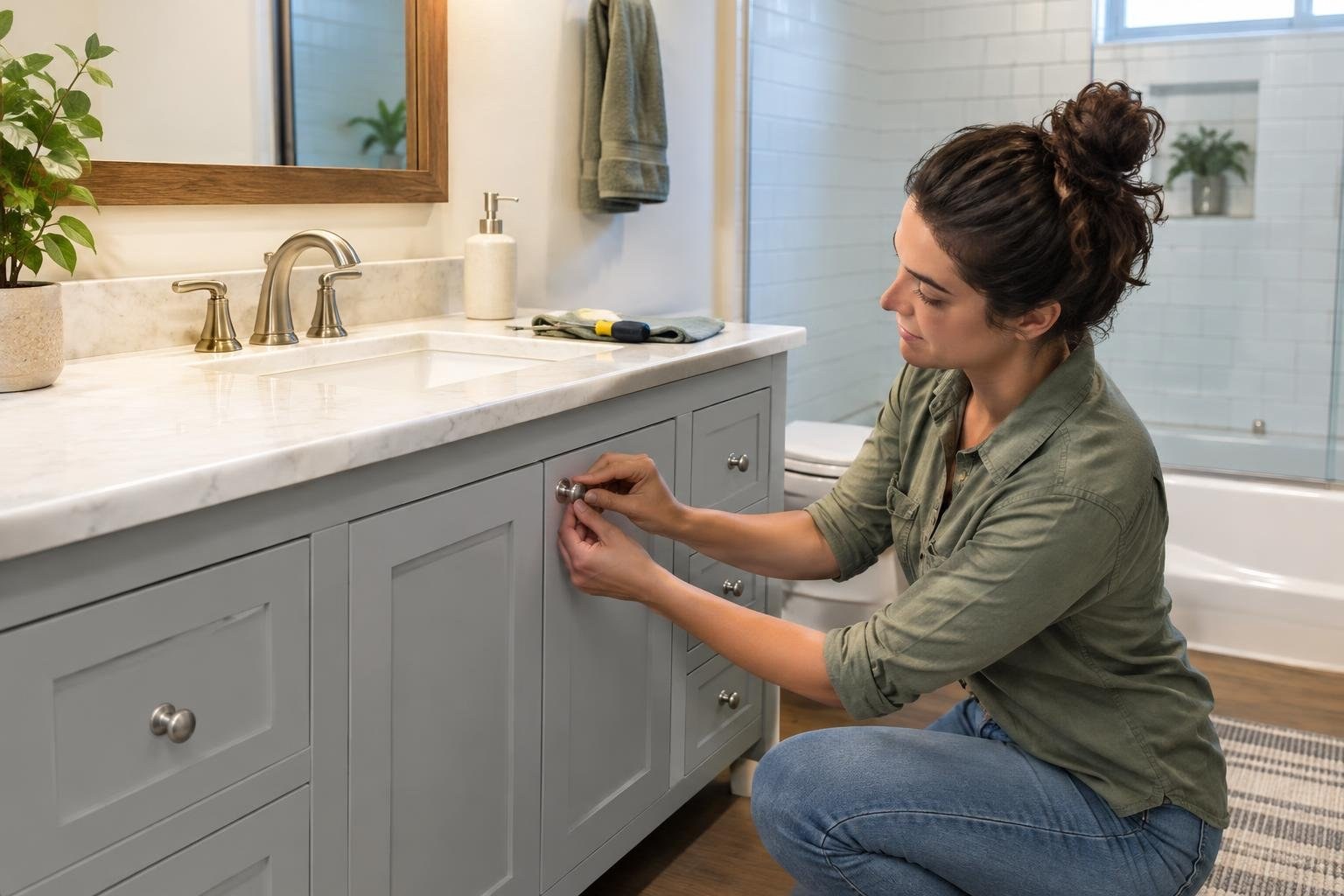
What an Affordable Bathroom Remodel Includes
An affordable bathroom remodel can mean a targeted refresh or a larger renovation planned around a firm budget. The useful first step is to identify the job: do you want a cleaner look, more storage, a more convenient room, or repair of a specific problem? Those goals lead to different scopes.
A cosmetic refresh might involve paint, hardware, a mirror, or lighting. A broader project may replace a vanity, alter the shower, or change finishes across the room. Keeping the layout and sound fixtures may avoid expanding the work, while a problem with a surface or fixture needs attention before it is covered up. “Affordable” is therefore about choosing an appropriate scope and comparing its full cost, not simply picking the least expensive product.
How to Set Priorities Before You Shop
Make two lists before shopping: changes that solve a practical problem and changes that improve appearance. A faucet that needs replacement is a different priority from a mirror that looks dated. Separate these goals so that an attractive finish does not distract from a repair that should be addressed first.
- Function: note storage, lighting, fixture, or usability concerns.
- Condition: record surfaces or fixtures that appear damaged or need assessment.
- Appearance: identify the areas that most affect the look of the room.
- Budget: decide what is essential and what can wait.
Choose a focal point, such as the vanity or shower, and coordinate a restrained number of finishes around it. A design example pairs deep green vertical shower tile with a marble countertop and warm wood vanity. The broader lesson is to use a few deliberate materials rather than adding many competing ones. See an example of a limited, contrasting material palette.
Affordable Bathroom Updates to Consider
Small updates can change the room without a full-scale renovation. Ideas described by home-improvement and design sources include replacing bathroom hardware, updating a faucet or vanity knobs, adding a framed mirror, changing lighting, refreshing a vanity top, painting or wallpapering walls, and replacing window treatments. These are options to assess, not a guarantee that every product or method will suit every bathroom.
For a compact room, consider whether vertical storage could help. Over-the-toilet shelving is one example of making use of wall space. Check that shelves fit the room and suit how it is used before purchasing.
Tile is often a visually dominant part of a bathroom. In some remodel examples, homeowners retained or painted existing tile and refreshed other finishes rather than replacing every tiled surface. That approach is only appropriate when the existing surface and the coating or treatment are suitable. A cosmetic layer cannot repair a damaged surface or solve an underlying moisture problem.
Bathroom Remodel Cost: Factors That Affect the Project
There is no single reliable price for an affordable bathroom remodel: the term covers work ranging from a few decorative changes to replacement of major finishes or fixtures. The supplied project examples establish possible approaches, not a standard price for a U.S. bathroom. Get local written estimates for the specific work rather than relying on a broad label or a material’s shelf price.
Ask each provider to describe labor and materials separately where possible and identify what is excluded. Confirm whether the estimate includes removal and disposal, installation, preparation, and any work needed to make the existing surface ready. Ask how a change in scope or a previously hidden condition would be priced and approved. Do not assume a low initial quote covers every item you have in mind.
What can affect the total?
- The number and type of fixtures, surfaces, and finishes being changed.
- Whether the existing products and surfaces can remain in place.
- Product selection, availability, and compatibility with the existing room.
- Labor, removal, preparation, and the complexity of installation.
- Additional work identified after a surface or fixture is opened or assessed.
How can you keep the scope manageable?
Keep the existing layout if it continues to work, retain sound fixtures, and make a short priority list. Ask providers to price optional upgrades separately so you can compare a basic scope with additions. Reuse or refinish an existing item only when its condition and the proposed treatment make that a sound choice. Do not save money by covering a suspected problem or choosing a finish that is not intended for its location.
Compare Refreshing, Refinishing, and Replacing
Compare options by looking at the current condition, the result you want, and the extra work each choice involves. A new mirror may be a focused vanity-area update; replacing a vanity top changes a larger surface; redoing tile affects a more substantial part of the room. These are not interchangeable scopes, so ask for estimates that describe the work and materials clearly.
| Approach | Potential advantage | Tradeoff to consider |
|---|---|---|
| Small cosmetic changes | Can refresh selected details while leaving more of the room in place. | Will not solve a functional or underlying surface problem. |
| Refresh or reuse existing finishes | May avoid replacing every finish when existing materials are suitable. | Condition, preparation, and product suitability limit where this works. |
| Replace a major surface or fixture | Allows a more substantial design or functional change. | Usually involves a broader scope and more decisions than a detail update. |
Design can come from contrast without using many materials. For example, a deep green shower tile can be balanced by warm wood and a light countertop. Matte black and brass finishes are another possible pairing, and a backsplash can provide a visual transition while protecting a wall when appropriately installed. Select finishes with the room and maintenance expectations in mind, not just a photo.
Warning Signs: When a Cosmetic Update Is Not Enough
Signs that may justify a closer look include a fixture that no longer works as intended, a surface that is visibly damaged, or a persistent concern that a cosmetic refresh would leave unresolved. These signs do not establish the cause. Describe what you see to a qualified provider and ask whether the proposed work addresses it or only changes the appearance.
- Outdated appearance, but sound surfaces: consider cosmetic changes before replacing the whole room.
- Vanity or fixture concern: assess whether a targeted replacement will meet the need.
- Questionable tile or wall condition: investigate before painting, wallpapering, or installing a new finish over it.
- Suspected moisture damage: identify and address the source before covering the area.
Do not treat an attractive makeover as proof that a repair has been completed. If you are uncertain about the condition beneath a finish, make assessment part of the scope and ask the provider to explain the findings.
What to Expect: Planning, Work, and Timing
A modest bathroom project still benefits from a defined process. Begin with a room assessment and written list of work. Decide which existing items will remain, select products, and ask providers to confirm the proposed work and schedule before it starts. For any finish being painted, coated, or installed over an existing surface, clarify preparation and suitability.
- Set the scope: distinguish essential repairs from optional appearance changes.
- Get comparable estimates: provide the same task list and product expectations to each provider.
- Confirm details: document materials, exclusions, payment terms, schedule, and change approval.
- Prepare the room: agree on access, protection, and what needs to be moved.
- Review the completed work: check the agreed items and ask about product care and warranty documentation.
Timing depends on the work, product availability, provider schedule, and the condition of the room. A hardware or mirror change is not the same project as replacing tile and a vanity. Ask for an expected start date and duration for the actual scope, and have the provider explain what could change it. No source-supported universal timeline applies to every bathroom remodel.
How to Choose a Bathroom Remodeling Provider
The right provider should explain what is included, what is not, and why a proposed finish or update is appropriate for the existing bathroom. Compare at least two written estimates when practical, making sure providers are pricing the same scope. A price alone does not tell you whether preparation, removal, or finishing work is included.
Questions to ask before signing
- Which exact fixtures, surfaces, and details are included?
- What products and materials are specified?
- What preparation is needed for the existing surfaces?
- Are removal and disposal included?
- What is excluded from the estimate?
- How will additional work or changed selections be approved and priced?
- Who will perform the work, including any subcontractors?
- What is the expected start date and project duration?
- How will the work area and remaining bathroom be protected?
- Which local permits or inspections may apply to this scope?
- What credentials or insurance are relevant to the work?
- What product and workmanship warranties apply, and where are they documented?
- What payment schedule is required?
- What cleanup and final review are included?
Check relevant credentials and insurance directly, and contact your local building department about requirements for the planned work. Get promises in writing. A contractor should be able to explain how the selected materials will be used and what care they need.
Permits, Safety, Warranties, and Contractor Red Flags
Bathroom work can involve products or tasks that have specific installation requirements. Before signing, ask whether the proposed scope requires a permit or inspection in your jurisdiction; requirements depend on location and work type, so verify with the local building department rather than assuming. Confirm who is responsible for obtaining any required approval.
Ask for product instructions, warranty terms, and written details of any workmanship coverage. A product warranty and a contractor’s workmanship promise are not necessarily the same. Review conditions, exclusions, and any care or registration steps before relying on coverage. For DIY work, stay within your skills, follow product directions, and bring in a qualified provider when the work involves a task you cannot safely perform or assess.
Red flags to take seriously
- A provider will not give a clear written scope or payment schedule.
- The estimate is vague about products, preparation, exclusions, or extra work.
- You are pressed to sign immediately or pay before the terms are clear.
- Credentials, insurance, or responsibility for permits cannot be verified.
- Promises about results or warranties are verbal only.
DIY vs. Professional Work: Where to Save Carefully
Do-it-yourself work can be a reasonable fit for straightforward decorative updates if you have the tools and ability to complete them properly. Home-improvement ideas include updating hardware, changing a mirror, painting, wallpapering, and refreshing selected surfaces. A low material cost does not make every task simple: assess access, product instructions, preparation, and the consequences of a mistake.
Do not assume painting or refinishing is right for every tile, wall, vanity, or bathroom location. Check the product’s intended use and preparation instructions, and first make sure the existing surface is suitable. If the work involves plumbing or electrical connections, uncertain damage, or a task beyond your experience, ask a qualified provider rather than learning through a costly repair.
To save safely, keep what is sound, reduce optional changes, and ask for alternatives that retain the current layout. Compare the complete project scope rather than choosing a cheap product in isolation. A bathroom example used painted existing tile and a salvaged vanity alongside new faucet and hardware, illustrating that a selective update is possible when the retained elements are appropriate.
Common Budget Bathroom Remodeling Mistakes
Common mistakes include treating a cosmetic change as a repair, selecting products before checking the existing surface, and expanding the scope without revising the budget. Avoid these by documenting the room’s condition, defining the desired result, and confirming what every estimate includes.
- Replacing serviceable items just because a trend has changed.
- Choosing a finish solely for its appearance without checking its intended use.
- Painting or covering a surface before assessing its condition.
- Adding many finishes instead of planning a coordinated palette.
- Assuming a product price includes labor, preparation, and removal.
- Accepting a verbal promise instead of a written scope and warranty terms.
- Failing to verify local permit needs for the actual work.
- Agreeing to additional work without understanding its price and schedule effect.
For a smaller bathroom, assess whether vertical storage can help before buying furniture or changing the layout. For a design update, try a short finish palette and focus on a high-visibility area such as the vanity. These decisions keep the plan specific and make provider estimates easier to compare.
Related Bathroom Projects to Plan Together
Before starting, consider whether another nearby improvement belongs in the same plan. A vanity update can involve a countertop, faucet, mirror, and lighting; choosing these together may make it easier to coordinate appearance and scope. Ask providers whether combining work changes labor, disruption, or scheduling for your project, rather than assuming bundling will reduce the price.
If the existing wall finish or tile is part of the plan, decide whether it should be assessed or updated before fitting adjacent details. A backsplash may connect the vanity area visually and protect a wall when properly selected and installed. Make the surface and repair decisions first, then finalize trim, mirror, and accessories that depend on them. Confirm sequencing with the provider performing the work.
Is an Affordable Bathroom Remodel Worth It?
A targeted remodel can be worthwhile when the room functions well and the main goal is to refresh a few visible details. More extensive work may make sense when the current layout or fixtures do not meet your needs, or when a surface needs attention beyond a cosmetic treatment. There is no reliable promise that a particular update will increase a home’s value or repay its cost. Decide based on your budget, expected use, condition of the bathroom, and the result you want.
For an affordable result, protect the essentials first, retain suitable existing items, and invest in a small number of coordinated changes. If a provider recommends replacing more than you planned, ask what condition or function justifies the extra work and request the explanation in writing. That helps separate necessary work from optional upgrades.
Frequently asked questions
What is the cheapest way to update a bathroom?
Begin with a short list of visible changes that do not require moving plumbing or rebuilding the shower: update hardware, faucet, mirror, lighting, paint, or vanity top if each is suitable for the existing installation. Keep usable fixtures and finishes, and get estimates before deciding whether a larger change is worth the added work. Never cover a suspected leak or damaged surface with a cosmetic finish.
How can I remodel my bathroom without replacing everything?
Often, the lowest-disruption approach is to keep the layout and serviceable fixtures, then focus on a few coordinated changes such as new hardware, a mirror, lighting, or a fresh wall treatment. What is cheapest for a particular bathroom depends on its condition, chosen products, and labor. Compare complete written scopes rather than judging a project by one item’s material price.
How long does an affordable bathroom remodel take?
It depends on what is being changed and what is found once work begins. A hardware or mirror update is not comparable to replacing a shower, vanity, or multiple surfaces. Ask each provider for an expected start date, working days, decisions and deliveries that could affect the schedule, and how the bathroom will be usable during the work. Get the timeline in writing.
How much does a budget bathroom remodel cost?
A bathroom remodel does not have one reliable price that applies to every home. The estimate can change with the project scope, selected products, labor, removal, site conditions, and any additional work needed. Request itemized estimates for the same scope and ask providers to identify exclusions and how unforeseen work will be priced before you sign.
Can you paint bathroom tile instead of replacing it?
Yes, if the existing surface and product are appropriate for painting and the preparation and application follow the product instructions. Painting may refresh dated tile, but it is not a substitute for repairing loose, damaged, or moisture-affected surfaces. Confirm that the coating is intended for the location and discuss care expectations before choosing this approach.
Which bathroom updates are reasonable to do yourself?
A DIY update may suit tasks such as changing a cabinet knob or mirror when the homeowner has the right tools and can do the work safely. Work involving plumbing, electrical connections, waterproofing, or concealed damage can carry greater consequences if done incorrectly. Check local requirements and product instructions, and hire a qualified professional when the scope exceeds your skills.
How do I save money on a bathroom renovation safely?
Keep the existing layout when it meets your needs, retain sound fixtures, and prioritize a small number of changes that work together. Ask whether existing materials can be cleaned, refinished, repainted, or reused safely. Before choosing a lower-cost finish, check that it suits a bathroom environment and will not conceal an underlying problem.
Is it a good idea to paint bathroom walls or tile?
Only if the old tile is sound and the proposed coating is suitable for that surface and location. Painting can change the appearance without full replacement, but it does not correct a failed installation, water intrusion, or damaged substrate. Ask a qualified provider to assess questionable areas before deciding to coat them.
What should a bathroom remodeling estimate include?
A written estimate should describe the work and materials, identify exclusions, and explain whether labor, removal, preparation, and installation are included. It should also state the anticipated timing, payment schedule, and how changes or additional work will be approved and priced. Ask about cleanup and confirm any permit or inspection requirements for the planned work.
How do I compare bathroom remodeling contractors?
Compare the scope, products, labor, removal, exclusions, and approach to unexpected conditions, not just the total. Ask each provider the same questions, verify relevant credentials and insurance, and get promises about workmanship and products in writing. Be cautious of pressure to sign immediately or a bid that is vague about what is included.
People Also Ask
What are affordable bathroom remodel ideas that make a big difference?
A focused refresh can involve changing hardware, a mirror, faucet, vanity top, lighting, wall finish, or window treatment. Keeping the existing layout and sound fixtures can limit the scope, but suitability and labor still affect the total. Address suspected damage before applying cosmetic finishes.
How do I make a bathroom look more expensive on a budget?
Choose one or two finishes as focal points, then coordinate other surfaces and hardware around them. For example, a contrasting shower tile can be balanced by warm wood and a lighter countertop. Limiting the number of prominent materials can help the room feel intentional rather than visually busy.
How can I remodel a small bathroom affordably?
Start with vertical storage and a clear plan for the room’s limited floor area. Over-the-toilet shelving is one option for using wall space. Check that any storage or fixture change fits the room and does not interfere with how the bathroom is used.
What should I avoid when remodeling a bathroom on a budget?
Keep products and finishes intended for bathroom use, and do not use a new finish to hide a leak or damaged surface. Confirm product instructions and the condition of the existing material before painting or refinishing. For concealed or persistent moisture concerns, have the cause assessed first.
Can I update a bathroom vanity without replacing it?
Yes, where the existing vanity is sound and its size and layout still work. A new faucet, hardware, mirror, or finish can refresh the area without automatically replacing the cabinet. Check compatibility and the condition of the vanity before buying replacement parts.
What bathroom updates can I make without changing the tile?
Consider paint or another suitable wall treatment, refreshed hardware, a new mirror, or a changed grout appearance where the existing surface is in good condition. Product suitability and preparation matter in a bathroom. If the tile is loose or the wall shows signs of damage, investigate before applying a coating.
An affordable bathroom remodel does not have to mean replacing everything or settling for a room that feels unfinished. Start by deciding what needs to work better, keep sound fixtures and layouts where practical, and spend selectively on the surfaces and details that matter most to you. Get written, comparable estimates before committing, and treat any signs of moisture damage as a reason to investigate before covering the area. With a clear scope and careful choices, you can update the room while keeping control of the project.
Your next step
Explore services and find providers at Estimate.org.
Reviewed and maintained by the Staff at Estimate.org.
Last reviewed and updated October 9, 2026 by the Estimate.org Editorial Team.
Sources
- 27 Budget Bathroom Remodel Ideas for 2026 That Make Expensive Renovations Look Like A Scam
- 8 Affordable Bathroom DIYs Designers Swear By for a High-End Look
- 23 Budget-Friendly Bathroom Remodel Ideas to Try Yourself
- Affordable Bathroom Remodel Ideas | Payless Bath Makeover
- 15 DIY Bathroom Remodel Ideas For An Affordable Makeover
- Bathroom Remodeling on a Budget – Bella Tucker
- Before and After: Budget Bathroom Remodels That Completely Transform Small Spaces
- 15 Affordable Bathroom Remodel Ideas & Tips | Bath Fitter
