

Bathroom remodel labor cost is not one fixed fee. It reflects the work required in your specific room: demolition, installation, plumbing or electrical changes, finish work, and any repairs or code-related updates included in the project. Published cost estimates vary substantially. One source places bathroom remodeling at $100 to $500 per square foot and $3,500 to $25,000 or more overall; others cite $70 to $250 per square foot. Those figures describe broad project costs, not a dependable labor-only price for every location. For a useful budget, compare detailed local estimates for the same scope. Ask providers to separate labor from materials, identify included trades, and explain how demolition, disposal, project supervision, and concealed damage are handled. The right comparison is not simply the lowest number: it is the clearest estimate for the work you actually want done.
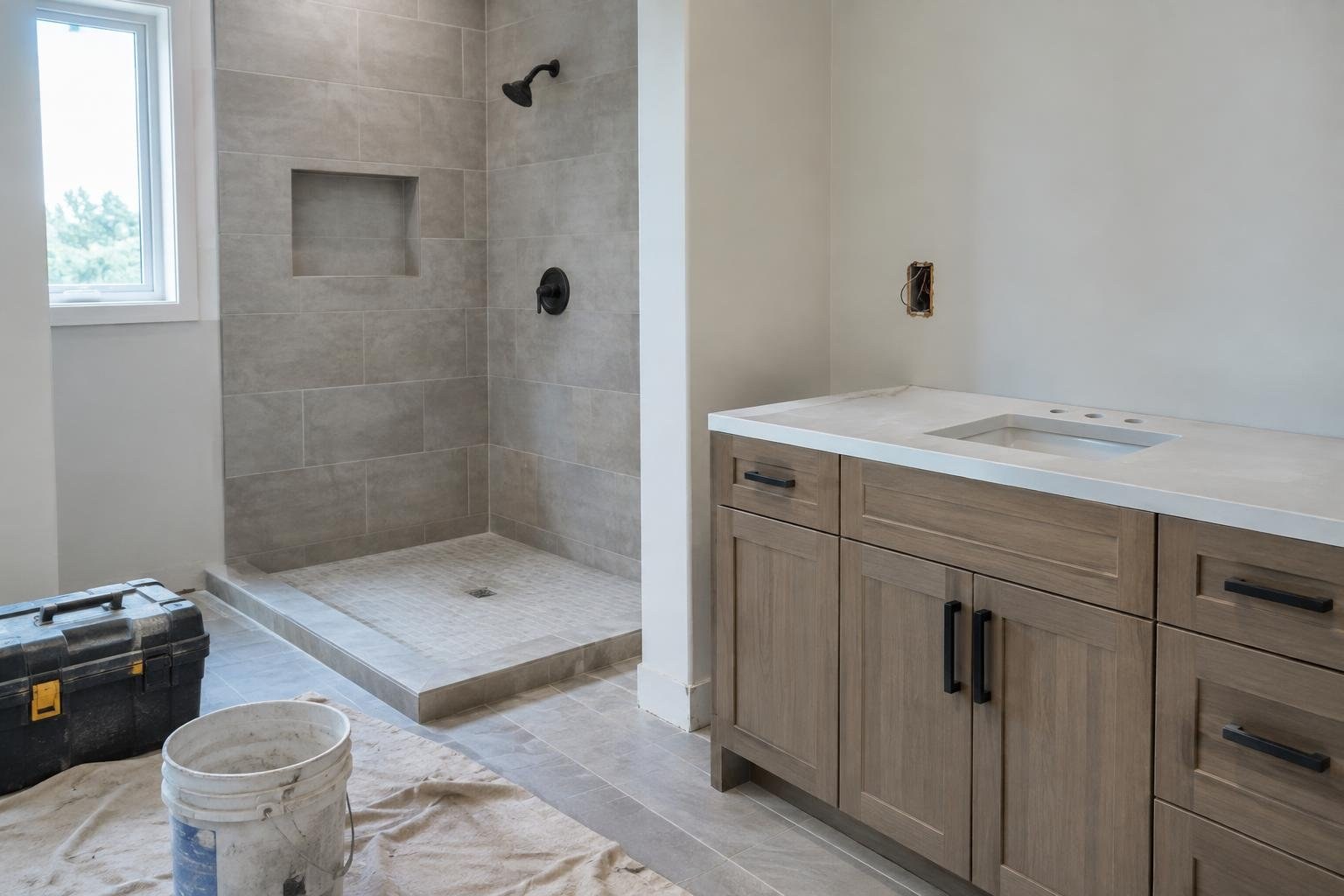
What Bathroom Remodel Labor Includes
A bathroom remodel can range from a limited refresh to a project that removes finishes, replaces fixtures, changes the layout, or modifies plumbing and electrical systems. Labor is the paid work needed to carry out the selected tasks. It may involve demolition and preparation, trade work, installation, finish repair, and coordination by a general contractor.
That distinction matters when reviewing a quote. A total project estimate can combine labor, materials, removal, disposal, and contractor overhead. Unless labor is listed separately, the total does not tell you what the installation work itself costs. Ask for a written scope that identifies tasks and responsible trades.
Remodeling can also uncover work outside the visible finish choices. Estimates may account for repairs or modifications to framing, finishes, fixtures, HVAC, electrical, and plumbing systems, as well as bringing systems into compliance with applicable codes. Whether any of those tasks are necessary depends on the actual project and local requirements.
Bathroom Remodel Labor Cost and Published Price Ranges
Use published price ranges as a starting point, not as a quote for your address. HomeGuide gives a broad bathroom remodel range of $100 to $500 per square foot or $3,500 to $25,000 or more for an average-sized bathroom. NerdWallet and Realm Home cite $70 to $250 per square foot. These ranges differ, so avoid treating them as interchangeable or as labor-only prices.
Fixr reports average bathroom-remodel labor of $6,000, while NerdWallet says labor can account for 40% to 65% of the total project price. These are broad published estimates, not a promise of what a contractor will charge for your scope or region.
For comparison, Block Renovation estimates demolition and site preparation labor at $1,000 to $3,000, depending on complexity, access, and disposal needs. This is one cost component, not the price of a complete remodel.
Build a comparable estimate
Request separate amounts or clear descriptions for demolition and disposal, plumbing, electrical work, installation, finish repair, project supervision, and materials. Ask which work is an allowance, what assumptions the quote makes, and how additional work will be approved and billed. Use the same fixture and finish selections when comparing providers so you are not comparing unlike scopes.
Renovation Options: Refresh, Replace, or Change the Layout
Project scope is usually more informative than the word “remodel.” A refresh that keeps the layout and limits removal is not equivalent to a full renovation with new finishes, fixture relocation, or system changes. Before collecting bids, list the result you want and sort each item into must-have, optional, and later.
- Keep the existing layout: Useful when the current fixture positions work. Ask whether retaining them avoids plumbing changes in your specific project.
- Update finishes and fixtures: Specify exactly what will be removed, supplied, and installed. Similar-looking fixtures may involve different labor or installation requirements.
- Change the layout: Request separate pricing for moving each fixture and modifying related systems or finishes.
- Address underlying conditions: Ask how repairs to framing or existing systems will be handled if discovered during work.
There is no universally least-expensive option independent of condition and scope. A narrower project may cost less than a broader one, but an estimate should account for the tasks needed to deliver the selected result, not simply the visible finish materials.
What Changes the Price of a Bathroom Remodel?
Bathroom square footage, material and finish quality, scope, and local labor prices influence the budget. Larger spaces may require more flooring and wall work, and may involve more complex plumbing or electrical runs. Labor can also change with the amount and type of work rather than room size alone.
Other estimate drivers include premium craftsmanship, expedited scheduling, local labor shortages, difficult access or site conditions, and travel time. Removing, relocating, repairing, or modifying existing framing, finishes, fixtures, HVAC, electrical, or plumbing can add work. So can code-related system updates, hazardous-material testing or remediation, and general-contractor coordination and markup.
Questions that reveal what is included
- Does the quote cover demolition, hauling, and disposal?
- Which plumbing and electrical tasks are included, and which are excluded?
- Who supplies each fixture, finish, and installation material?
- Are wall, floor, trim, and framing repairs included or priced separately?
- How will concealed damage or additional code-related work be approved?
- Is project supervision included, and who coordinates the trades?
These details help explain why two estimates can differ. A provider may have included more tasks, a different material allowance, or more coordination. Ask for a written explanation rather than assuming the higher or lower number is automatically better.
Signs to Investigate Before You Remodel
A remodel may be worth investigating when a bathroom no longer meets your needs, when you want to update its fixtures or finishes, or when the planned work includes addressing damaged or outdated components. Those observations do not by themselves prove that a full renovation is needed. Ask a qualified provider to identify the cause, explain which work is necessary, and price repair and replacement alternatives where practical.
Pay attention to recurring repairs, visible finish or fixture damage, and conditions that may require work behind a surface. Have the provider distinguish cosmetic improvements from repairs to framing, plumbing, electrical, HVAC, or other systems. The cost of modifying or repairing those systems can affect a remodel estimate, so get the proposed work documented before approving it.
If there may be hazardous materials, do not assume they can be safely disturbed as part of ordinary demolition. Homewyse identifies testing and remediation of materials such as asbestos, lead, and radon as potential project costs. Ask what testing is appropriate for your home and who is qualified to perform any needed work.
What to Expect: Estimate, Work, and Timeline
Start with an inspection and a written description of the desired work. Then confirm the fixture and finish selections, ask for an estimate, and clarify who is responsible for any needed trade work, permits, disposal, and coordination. A detailed scope makes it easier to understand both the labor price and the schedule.
During preparation, confirm access, protection of nearby areas, and how removed materials will be handled. The work may include demolition and site preparation, installation, plumbing or electrical modifications, finish repair, and project supervision. The exact sequence depends on the scope and site conditions.
Before signing, ask the provider to set out expected start and completion dates, work hours, milestones, and how delays or added work will be communicated. At the final walkthrough, compare completed work with the written scope, identify outstanding items, and collect product and workmanship warranty information and any applicable inspection records.
How to Compare Bathroom Remodel Approaches
For most homeowners, the useful first comparison is not a single labor number. It is the difference between the existing-layout scope and the desired-layout scope. Request both when you are undecided. A second comparison is a limited refresh versus a fuller renovation, with each estimate spelling out the finish and system work.
Review estimates line by line. Match the room, layout, fixtures, material assumptions, demolition, disposal, trade work, finish repairs, and supervision. A quote that leaves those details open can be hard to compare fairly. Ask each provider to explain exclusions and the process for approving changes.
Keep cost, appearance, maintenance, and project disruption in view. Premium finishes or expedited scheduling may raise labor or project costs, while changing existing plumbing, electrical, framing, or finishes can add work. A lower initial estimate is not necessarily the lower-cost choice if important tasks are excluded and later become change orders.
How to Choose a Qualified Bathroom Remodeler
Choose a provider based on a clear scope, relevant experience, communication, and verifiable business details, not price alone. Check licensing and insurance requirements with the relevant local or state authorities for the work and location. Ask who will perform each trade and whether subcontractors will be used.
Questions to ask a remodeler
- Can you provide a written scope with each task and material identified?
- Which labor and trades are included in this price?
- What work is excluded or treated as an allowance?
- Who will handle plumbing, electrical, and other specialty work?
- Who obtains any required permits and arranges inspections?
- How do you protect nearby rooms and handle demolition debris?
- What happens if you find damage or a system issue after opening a surface?
- How must I approve a change, and how will its price be documented?
- What schedule and payment milestones do you propose?
- Who is the daily contact for questions or concerns?
- Will subcontractors be involved, and who supervises them?
- What labor warranty do you provide, and where are its terms written?
- Which product warranties apply to the selected fixtures and finishes?
Get references for comparable work, review the contract before paying, and retain copies of estimates, selections, change orders, and receipts. These steps make scope and responsibilities easier to verify if questions arise.
Permits, Credentials, Safety, and Warranties
Permit, inspection, licensing, and insurance rules depend on the project and jurisdiction. Before work begins, ask your building department which approvals apply and ask the provider to state in writing who will obtain them. Do not assume that a small project is automatically exempt or that the contractor’s estimate settles the question.
Ask for proof of insurance and verify any required license with the relevant authority. Confirm who is responsible for specialized work, including plumbing and electrical changes. If a provider proposes modifying systems or handling potentially hazardous materials, ask what qualifications and procedures apply before authorizing the work. Homewyse lists code-related system work and hazardous-material testing or remediation among possible project costs; it does not establish a rule for every location.
Read product and labor warranties separately. Ask what each covers, how to submit a claim, what exclusions apply, whether registration or maintenance is required, and whether coverage transfers if the home is sold. Put answers in the contract or warranty documents rather than relying on a verbal summary.
Ways to Control Cost Without Cutting Corners
Save safely by defining the project before requesting bids. Keep optional work separate, compare the same scope with multiple providers, and ask whether retaining the existing fixture layout is a viable alternative. Because moving or modifying plumbing, electrical, framing, and finishes can affect cost, price proposed changes separately before committing.
Choose finishes and fixtures before the estimate is finalized when possible, so providers can state what the material allowance covers and what installation labor is included. Ask whether you can supply materials, and clarify who remains responsible for delivery, compatibility, damage, and installation warranty. Do not assume customer-supplied products lower the total unless the quote shows the difference.
Do not save by skipping required approvals, qualified trade work, or repairs to problems that the project exposes. Set aside room in your plan for a written change order if concealed conditions require additional work. A provider should explain the proposed task and price before proceeding rather than adding undocumented costs afterward.
Common Bathroom Remodeling Mistakes
- Choosing on price alone: Compare the scope, trade work, allowances, and exclusions as well as the total.
- Using an unclear scope: List what is removed, installed, repaired, and supplied.
- Comparing unlike estimates: Match fixtures, finishes, layout, and project tasks before comparing totals.
- Assuming demolition is included: Confirm removal, hauling, and disposal explicitly.
- Ignoring systems behind finishes: Ask how plumbing, electrical, framing, or finish repairs will be priced if needed.
- Accepting verbal change orders: Require written approval, scope, and price before added work starts.
- Skipping local checks: Confirm permits, inspections, and credential requirements with the appropriate authority.
- Overlooking hazardous-material questions: Ask about appropriate testing before disturbing suspect material.
- Relying on a verbal warranty: Obtain written product and workmanship terms.
- Forgetting project coordination: Clarify who manages trades, schedule updates, and cleanup.
These checks are especially important because demolition, system modifications, site conditions, and project supervision can all affect the estimate.
Related Bathroom Projects to Evaluate
Bathroom work can overlap with plumbing, electrical, HVAC, framing, and finish work. Ask whether any adjacent task should be evaluated as part of the same project, especially when the estimate already includes system changes, removal, or repairs. Compare a bundled estimate with separate, clearly scoped pricing.
- Plumbing: Evaluate when changing fixture locations or replacing fixtures. Confirm which plumbing work is included and whether it comes before finish installation.
- Electrical: Evaluate when the plan changes electrical components or fixture locations. Ask which provider is responsible and whether approvals are needed.
- Ventilation or HVAC: Ask whether related system work is part of the proposed scope if it is being modified.
- Framing and wall or floor finishes: Coordinate repairs and finish installation so the estimate accounts for the work in the right sequence.
Before bundling, confirm one lead contact, each trade’s responsibilities, the combined schedule, and how changes will be priced. Homewyse identifies modifications to HVAC, electrical, plumbing, framing, and finishes as potential cost factors, but whether a related project is necessary depends on the home and plan.
Is a Bathroom Remodel Worth It?
A bathroom renovation can be worthwhile when its benefits fit your needs and budget, whether those benefits are improved function, updated finishes, or addressing needed repairs.
Consider how long you expect to use the home, which parts of the bathroom matter most, and whether a repair or a narrower renovation could deliver the needed result. Compare the cost of keeping the current layout with the cost of proposed changes. Include labor, materials, demolition, disposal, and any possible system or framing work rather than focusing on finish prices alone.
If the project is optional, prioritize the work that solves a real problem and defer cosmetic preferences you do not need now. If the scope involves concealed damage, system modifications, or code-related work, use written estimates and qualified providers to understand the full decision before committing.
Frequently asked questions
What is the average labor cost to remodel a bathroom?
Published estimates vary by source and by what a project includes. HomeGuide gives a broad bathroom-remodel range of $3,500 to $25,000 or more overall, while NerdWallet and Realm Home cite $70 to $250 per square foot and HomeGuide cites $100 to $500 per square foot. These figures describe remodeling costs, not a guaranteed labor-only quote. Local written estimates are more useful for budgeting your actual scope.
What affects bathroom remodel labor cost the most?
The amount of labor depends on the tasks in the scope. A cosmetic update with limited fixture changes differs from work that removes finishes, modifies plumbing or electrical systems, repairs framing, or brings systems into compliance with applicable codes. Ask each contractor to list labor by task or trade and identify any work excluded from the quote.
How do I know whether a bathroom remodel estimate is fair?
Compare written estimates for the same scope, then check what each includes. Ask whether demolition, disposal, installation, plumbing, electrical work, finish repair, and project supervision are covered. A lower quote may exclude work another provider has included. Ask each provider to explain allowances, assumptions, and how concealed damage or added work will be priced.
Does keeping the same bathroom layout save money?
Keeping fixtures in their current locations can help limit the scope when the existing layout works, because relocating plumbing and modifying related systems are potential cost items. It is not a guaranteed saving: compare a written estimate for the existing layout with one for the proposed changes, including all labor, materials, and finish repairs.
How long does a bathroom remodel take?
Ask providers to describe the project schedule in writing, including preparation, demolition, installation, inspections if applicable, and final walkthrough. Timing depends on the selected scope, site conditions, scheduling, and any additional repairs, so request dates and a plan for changes before work begins.
Do I need permits for a bathroom remodel?
Ask who will perform each type of work, whether subcontractors are involved, and who is responsible for permits, inspections, and coordination. Verify applicable local requirements with your building department and check credentials and insurance relevant to the work. Requirements vary by location and project, so do not rely on a general estimate or verbal assurance.
How can I reduce bathroom remodeling costs safely?
Separate labor, materials, demolition, disposal, and project management in the estimate. Keep the layout and finish selections focused, compare similar scopes from multiple providers, and ask whether you can supply any materials without affecting installation responsibility or warranty terms. Do not reduce cost by skipping required permits, qualified trade work, or repairs to concealed damage.
What should a bathroom remodel warranty cover?
A labor warranty is a provider’s commitment regarding its installation work; a product warranty comes from a product manufacturer. Request both in writing and check what is covered, how long coverage lasts, exclusions, claim steps, and whether required maintenance or registration applies. Do not assume a product warranty covers labor or that a verbal promise is enforceable.
People Also Ask
What percentage of a bathroom remodel is labor?
Labor is not a single fixed percentage or fee across all bathrooms. Published sources give different overall project ranges, and NerdWallet reports labor may represent 40% to 65% of a remodel total. Treat that percentage as a broad estimate, then request a task-by-task quote for your location and project.
How much does bathroom demolition labor cost?
Demolition and site preparation are separate tasks to check in a quote. Block Renovation gives a typical range of $1,000 to $3,000 for demolition and preparation, depending on complexity, access, and disposal requirements. Confirm whether your estimate includes removal, hauling, disposal fees, and protection of nearby areas.
Does moving a toilet or shower increase remodel labor cost?
Moving fixtures can add work when it requires plumbing relocation or changes to other systems and finishes. Homewyse lists removing, relocating, repairing, or modifying existing plumbing, electrical, HVAC, framing, and finishes among factors that can raise project cost. Ask for a separate price for the layout change before deciding.
Does bathroom size affect labor cost?
Yes. Larger rooms can require more flooring, wall finish, painting, and potentially more complex plumbing or electrical runs. NerdWallet and Realm Home both describe size as a cost factor, but a square-foot estimate cannot account for every detail. Use it as context, not a substitute for a scope-specific estimate.
Why do bathroom remodel labor estimates vary so much?
Premium craftsmanship, an expedited schedule, difficult site conditions, local labor shortages, and long travel requirements can affect labor pricing. Homewyse also identifies project coordination and general-contractor overhead as cost considerations. Ask providers to clarify which conditions apply to their estimate and which may change the price later.
What is the cheapest way to remodel a bathroom?
Potential cost-saving choices include retaining a functional layout, limiting finish changes, and comparing estimates based on an identical scope. Ask whether a proposed lower-cost option changes durability, maintenance needs, installation responsibility, or warranty coverage. Avoid cutting out necessary system repairs or required approvals just to reduce the initial quote.
Bathroom remodel labor cost is driven by the work involved, not just the room’s size. Compare written estimates line by line, confirm which trades and project tasks are included, and keep a contingency for concealed conditions or required system updates. A smaller, carefully scoped renovation may meet your needs without the cost of moving plumbing or choosing premium finishes. Before signing, verify the provider, clarify permits and warranty terms, and decide whether related work should be coordinated. When you are ready, use Estimate.org to compare options and find providers to evaluate for your project.
Your next step
Explore services and find providers at Estimate.org.
Reviewed and maintained by the Staff at Estimate.org.
Last reviewed and updated October 9, 2026 by the Estimate.org Editorial Team.
Sources
- How Much Does a Bathroom Remodel Cost? (2026)
- Homewyse Calculator: Typical Bathroom Remodel cost estimates
- How Much Does a Bathroom Remodel Cost? [2026 Data] | Fixr.com
- Bathroom Remodel Cost in 2026: Is It Worth It? – NerdWallet
- r/HomeImprovement on Reddit: Fair labor cost for bathroom remodel?
- Labor Costs to Remodel Your Bathroom
- Breaking Down Labor Cost to Remodel Bathroom
