

Bathroom plumbing remodel cost depends less on the word “remodel” than on what the plumbing work actually involves. Keeping fixtures in their current locations is generally a different scope from opening the room and relocating drains or supply lines. One 2026 estimate puts plumbing work at $800 to $2,500 when the layout stays the same, and $2,500 to $5,000 for a full gut renovation with drain relocation. Those figures are planning references, not a quote for every bathroom. A broader bathroom remodel estimate averages $15,586, with a reported range of $6,456 to $24,715 for bathrooms measuring 40 to 150 square feet. That total includes more than plumbing, so it should not be mistaken for a plumbing-only price. To build a useful budget, define the fixture and layout changes, request a line-item estimate, and ask how the provider will price work that cannot be assessed until an area is opened.
What bathroom plumbing remodeling includes
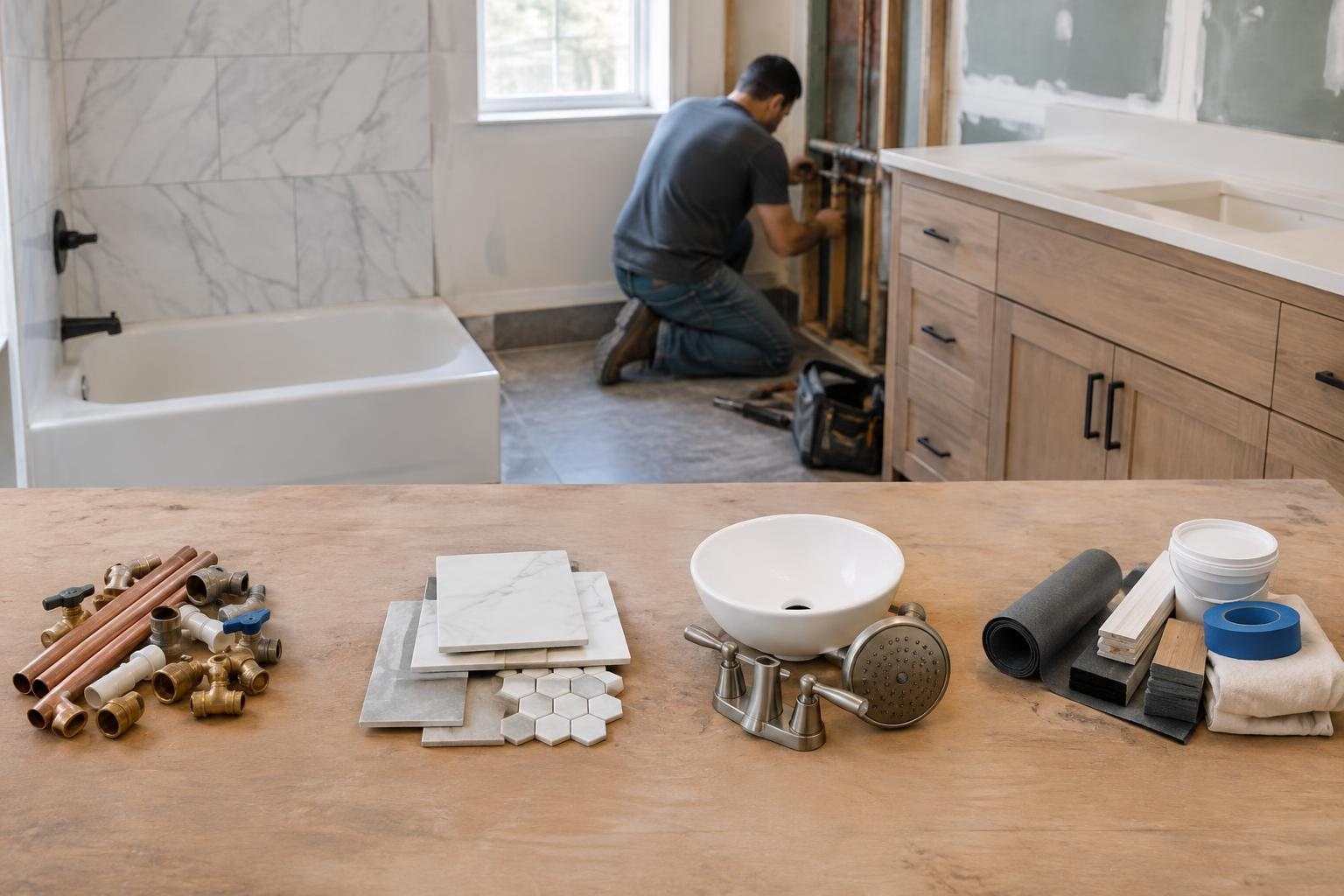
Bathroom plumbing remodeling means planning, changing, or reconnecting the plumbing associated with a bathroom renovation. Depending on the written scope, work may address connections for a sink, toilet, tub, or shower. Some projects retain the existing fixture arrangement; others include moving a fixture or drain. The estimate should say which work is included rather than relying on a broad label such as “bathroom remodel.”
For budgeting, keep three categories distinct: plumbing work, other renovation work, and the total room project. A 2026 bathroom remodel estimate reports an average of $15,586 and a range of $6,456 to $24,715 for bathrooms measuring 40 to 150 square feet. That is a whole-remodel estimate, not a plumbing-only price. A separate plumbing estimate gives lower ranges for keeping the layout and higher ranges for a gut renovation with drain relocation.
The key decision is whether the desired outcome requires changing the plumbing locations. Write down what is not working in the current bathroom, which fixtures you want to replace, and whether you want to move any of them before requesting bids.
How the planning and plumbing process works
Begin with a room plan and a list of desired changes. Identify the existing and proposed locations of the sink, toilet, tub, and shower. Ask each provider to explain what plumbing work follows from the plan, what is excluded, and what assumptions are built into the price.
- Define the scope: List the fixtures to remain, be replaced, or move.
- Request comparable estimates: Provide the same plan and fixture information to each provider.
- Clarify unknowns: Ask how concealed or unexpected work will be documented and priced.
- Coordinate the room work: Confirm how plumbing connects with the rest of the renovation and who is responsible for each task.
- Review the completed scope: Compare the finished work with the written agreement and ask for any product or workmanship documents.
These steps help keep the conversation concrete. A price that does not define fixture locations, included tasks, exclusions, or change approvals is difficult to compare with a more detailed quote.
Signs plumbing work may be needed
Symptoms worth documenting include a fixture that does not function as intended, a recurring issue that returns after a repair, or visible signs of water where they should not be. These observations do not establish the cause or prove that a remodel is needed. Record when and where the issue occurs, and ask a qualified provider to assess the specific condition before you decide on a larger project.
- Note which fixture is affected and whether the problem is occasional or recurring.
- Record any visible moisture or damage and whether it changes over time.
- Describe previous repairs and whether they resolved the issue.
- Ask whether the condition can be addressed as a repair or whether it affects the renovation scope.
Do not authorize a full remodel based only on a vague diagnosis. Request an explanation of the observed condition, the proposed work, and any reasonable alternative.
Bathroom plumbing remodel cost and price references
Use cost ranges as scope-specific references rather than a single promise about what your bathroom will cost. The researched sources cover different kinds of projects and should not be treated as interchangeable.
| Published estimate | Reported figure | How to interpret it |
|---|---|---|
| Bathroom remodel estimate for 40–150 square feet | $15,586 average; $6,456–$24,715 reported range | Whole-room remodel context, not plumbing alone. |
| Plumbing with layout retained | $800–$2,500 | Reference for plumbing work when the bathroom layout stays the same. |
| Full gut renovation with drain relocation | $2,500–$5,000 | Reference for plumbing alone in the described scope. |
| DIY bathroom remodel | $2,000 to more than $10,000 | Broad DIY project estimate; not a plumbing-only estimate or guaranteed savings. |
| Complete guest bathroom renovation | $8,000–$35,000 | One 2026 source's broad renovation range, dependent on the project. |
Another source gives a $1,330 plumbing estimate and notes that costs vary significantly by location, materials, and labor. A separate plumbing-cost page describes a low-end small half-bath figure of $751, while its high-end example is a deluxe bathroom with multiple fixtures. These figures reinforce why an estimate must be matched to the actual room and scope; they do not establish a standard national price.
Published ranges have different scopes and may use different assumptions. Confirm the date, geography, included labor and materials, and project definition for any benchmark before relying on it. Your written bids should specify the work and identify exclusions, rather than presenting a bare total.
Factors that affect the project
Several project choices can change what the estimate covers. Have providers explain each item in writing instead of assuming it is included.
- Fixture locations: Ask whether the plan retains the current layout or relocates a sink, toilet, tub, shower, or drain. The available plumbing estimate is higher for a full gut renovation with drain relocation than for a same-layout project.
- Project boundary: Establish whether the bid covers plumbing alone, fixture replacement, or coordination with the wider room renovation.
- Selected fixtures: Identify the fixtures being priced and who supplies them. Do not assume a quote covers a product you have not selected.
- Location and labor: A cost source specifically cautions that location, materials, and labor can cause significant variation.
- Unseen conditions: Ask how additional work discovered during the project will be described, priced, and approved before it proceeds.
Ask for a base estimate and separately listed options where possible. That helps you see which choices are necessary to complete the planned work and which are discretionary.
Options and tradeoffs: keeping or moving plumbing
For a bathroom plumbing remodel, the clearest comparison is often a layout-preserving plan versus a plan that moves fixtures or drains. The right option depends on the room's needs and the budget, not on a universal rule that one layout is better.
| Decision | Keep the existing layout | Relocate plumbing |
|---|---|---|
| What changes | Plan around the current fixture locations. | Include plumbing changes associated with new fixture locations. |
| Cost reference | $800–$2,500 for plumbing work in one same-layout estimate. | $2,500–$5,000 for plumbing alone in one full-gut estimate with drain relocation. |
| Useful when | The current arrangement can support the intended renovation. | A different fixture arrangement is important to the project goal. |
| What to ask | Which existing connections will be changed or replaced? | Which drains or supply connections will move, and what work is included? |
These price ranges come from one source and describe different scopes, not a guaranteed price difference for every home. Request both options when layout flexibility is part of the decision. Compare the amount added with the practical value of the new arrangement.
A broader DIY bathroom-remodel figure of $2,000 to more than $10,000 is also available, but it covers varying renovation choices and is not a quote for plumbing work. It does not mean DIY is automatically less expensive once tools, materials, time, and the consequences of incomplete or incorrect work are considered.
What to expect and how to plan timing
Timing should be tied to the contractor's defined scope rather than a generic promise. Ask the provider to put the expected sequence and schedule in writing.
Before signing, ask when the bathroom will be unavailable, when plumbing work is planned relative to other renovation tasks, and how schedule changes will be communicated. Confirm who coordinates fixture delivery and the work of any other providers. If the proposal depends on a fixture choice or another trade completing work first, have that dependency stated clearly.
For the handoff, review the completed work against the agreed scope, confirm that the provider has addressed your questions, and keep the estimate, change approvals, and product or workmanship documents together.
How to choose a qualified bathroom plumbing provider
Choose a provider by comparing the scope and the quality of the proposal, not only its bottom-line number. Local rules and credential requirements vary, so check the licensing authority that applies to your location and the type of work. Ask the provider to show relevant credentials and evidence of insurance, and verify details with the issuing organization when practical.
Use these questions when requesting a written estimate:
- Which specific plumbing tasks are included?
- Does the proposal keep fixture locations or relocate any plumbing?
- Which fixtures and materials are included, and who supplies them?
- What work is excluded?
- How will you assess conditions that are concealed before work begins?
- How will extra work be priced and approved?
- Who will perform the work, and will subcontractors be involved?
- Which licenses or other credentials apply to this work in my area?
- Can you provide current proof of insurance?
- Who will check whether permits or inspections are required?
- What schedule do you expect, and what might change it?
- How will you protect the room and manage cleanup?
- What product and workmanship warranties apply, and what do they exclude?
- What payment schedule and dispute terms will the contract use?
Compare at least two proposals based on the same room plan and fixture assumptions. References and reviews can add context, but ask specific questions about work comparable to yours. Treat an unusually low bid as a reason to examine omissions, not as proof of poor work.
Permits, credentials, contracts, warranties, and safety
Permit and credential requirements vary by jurisdiction and by the work proposed. Before work begins, ask the provider which permits, inspections, and trade qualifications may apply, and verify the answer with your local building department or licensing authority. Get the responsibility for applications and inspections written into the agreement.
Ask for a written contract describing the scope, materials or fixture assumptions, price, payment schedule, work schedule, exclusions, change-order process, cleanup, and warranty terms. Review manufacturer product documents separately from any workmanship promise made by the provider. Ask about coverage limits, exclusions, claim steps, registration, and whether the warranty can be transferred if the home is sold.
Do not proceed on a verbal assurance if the contract or local requirements say otherwise. If you are uncertain whether a task is appropriate for DIY, seek guidance from the local authority or a qualified provider before attempting it.
Ways to reduce cost or save safely
Saving safely starts with deciding what the project needs to accomplish. If the existing layout works for your goals, request a price for keeping it before committing to fixture relocation. The cited plumbing estimate is lower for a same-layout scope than for a full gut renovation with drain relocation, but the ranges should not be treated as a guaranteed saving for your home.
- Choose fixtures and share the selections before final pricing.
- Ask for required work and optional upgrades to be separated.
- Compare estimates with identical plans and stated assumptions.
- Ask whether a repair or a smaller, defined plumbing scope can meet the need.
- Set a written process for approving additional work before it is performed.
- Coordinate related work in the schedule, but compare the total scope rather than assuming a bundle costs less.
A DIY estimate can look lower than a professional renovation estimate because the scopes may differ. Budget comparisons should account for the actual work, materials, and responsibilities included in each option.
Common homeowner mistakes and provider red flags
Common planning mistakes are avoidable when you make the scope explicit and pause before approving changes.
- Comparing unlike estimates: A whole-room remodel total is not a plumbing-only bid.
- Focusing only on the lowest price: Check included work, exclusions, assumptions, and change terms.
- Moving fixtures without a clear reason: Compare the added plumbing scope with the benefit to the room.
- Leaving fixture choices undecided: Confirm exactly what products or allowances the estimate assumes.
- Accepting a vague scope: Require a description of tasks and responsibilities.
- Skipping local verification: Check applicable permits and credentials with the relevant authority.
- Relying on verbal promises: Put price, schedule, warranty, and change approvals in writing.
- Ignoring concealed-work terms: Agree how findings and added costs will be communicated and approved.
- Assuming DIY means cheap: The available DIY range varies widely and is not a plumbing-only price.
- Leaving related work uncoordinated: Clarify who handles fixtures and how plumbing fits into the full renovation schedule.
Related bathroom projects to coordinate
Plumbing decisions are connected to the rest of the bathroom project. Discuss the relationships before work is scheduled so the estimate can identify who owns each task.
- Fixtures: Select or identify the sink, toilet, tub, and shower being considered before finalizing assumptions. Coordinate plumbing connections with the fixture plan.
- Tile and wall or floor finishes: Confirm how finish work fits around the agreed plumbing scope, and which provider is responsible for coordinating the sequence.
- Vanity and cabinetry: Check that the proposed sink and vanity arrangement matches the plumbing plan before ordering or installing either.
- Electrical and lighting: Ask whether other trades are part of the renovation and who coordinates their work. Do not assume an estimate for plumbing covers electrical work.
- Ventilation and general room improvements: If these are part of the project, list them separately and identify the responsible provider.
Compare both the combined proposal and clearly separated scopes, and decide which project sequence makes sense for your plan.
Is a bathroom plumbing remodel worth it?
A bathroom plumbing remodel may be worthwhile when the planned work solves a clearly identified problem or enables a layout that better meets your needs. It may be less compelling to relocate plumbing if the existing arrangement already serves the renovation goal and the added scope does not deliver enough value to you.
Consider the home's condition, the reason for the project, your budget, and how long you expect to use the result. Compare a repair, a layout-preserving remodel, and a layout change where those are realistic alternatives. The available sources provide cost estimates, not a guaranteed return on investment, resale premium, or savings figure, so do not assume that a particular plumbing project will pay for itself.
The strongest decision is one supported by a clear scope, comparable estimates, verified local requirements, and a plan for handling changes.
Final homeowner checklist
Before authorizing work, use this checklist:
- Write down the problem the remodel is meant to solve.
- Mark which fixtures will stay, be replaced, or move.
- Request estimates based on the same plan and fixture assumptions.
- Separate plumbing-only costs from the full bathroom renovation budget.
- Ask for exclusions, allowances, and possible added-work terms in writing.
- Compare a same-layout option with relocation when relevant.
- Verify local permit, inspection, and credential requirements.
- Check provider insurance and references, and document who performs the work.
- Review schedule, payment, cleanup, warranty, and dispute terms before signing.
- Coordinate fixtures and related room projects with the plumbing scope.
- Keep the contract, approved changes, and final project documents.
When comparing prices, remember that a broad remodel estimate and a plumbing-only estimate describe different work. A written, itemized scope is more useful than a number without context.
Sources and cost references
This Old House: Bathroom Remodel Cost
Modernize: Bathroom Remodel Cost Calculator
Nationwide Builders: Bathroom Plumbing Cost
HowMuch.net: Plumbing for a Bathroom Remodel Costs
USA Cabinet Store: Bathroom Remodel Cost Guide
Fixr: Cost to Plumb a Bathroom
Frequently asked questions
How much does plumbing cost in a bathroom remodel?
For a bathroom remodel where the plumbing layout stays the same, one 2026 cost source estimates plumbing work at $800 to $2,500. For a full gut renovation that relocates a drain, the same source estimates $2,500 to $5,000 for plumbing alone. These are planning ranges, not guaranteed quotes; location, project scope, and site conditions can change the price.
Is it cheaper to keep bathroom plumbing in the same place?
Keeping the sink, toilet, shower, or tub in its current location can help limit plumbing changes. However, the right choice depends on how well the existing layout works and what the remodel is meant to solve. Ask providers to price both a same-layout plan and any proposed relocation separately so you can compare the added cost with the benefit.
What is included in bathroom plumbing remodeling?
Bathroom plumbing work can include disconnecting and reconnecting fixtures, updating or extending supply and drain lines, and adapting connections to the selected fixtures. The exact scope should be written into the estimate. Ask which tasks are included, which other trades are needed, and how the provider will handle concealed conditions discovered after work starts.
How long does a bathroom plumbing remodel take?
The available estimates do not provide a reliable universal timeline for bathroom plumbing work. Timing depends on the agreed scope, fixture availability, whether the layout changes, coordination with other renovation work, and any concealed conditions. Ask for a written schedule that identifies plumbing work, inspections if applicable, fixture installation, and the point when the bathroom can be used again.
Should I move plumbing during a bathroom renovation?
A plumbing-layout change is not automatically necessary for a successful remodel. Consider moving fixtures when the existing arrangement is a problem and the added work fits your budget. Compare a layout-preserving option with the proposed change, and request a written explanation of the plumbing work and price difference before authorizing it.
Can I remodel bathroom plumbing myself?
A DIY bathroom remodel estimate from one source ranges from $2,000 to more than $10,000, depending on what is being renovated, but that is not a plumbing-only price or a promise of savings. Before taking on any plumbing work, check local rules, your ability to complete the specified tasks, and the consequences of mistakes. Keep work requiring a qualified trade with a properly selected professional.
People Also Ask
How much should I budget for bathroom plumbing?
The plumbing portion may be a small part of the total when fixtures stay in place, or a larger line item when the plan includes drain relocation. A 2026 estimate places same-layout plumbing at $800 to $2,500 and a gut renovation with drain relocation at $2,500 to $5,000. Compare the scope behind every estimate, not just the total.
How much does it cost to relocate a bathroom drain?
Moving fixtures can add plumbing scope because the proposed locations may require changes to supply or drain connections. The available estimate for a full gut renovation with drain relocation is $2,500 to $5,000 for plumbing alone, compared with $800 to $2,500 for plumbing when the layout stays the same. Ask for the relocation work to be identified separately.
Why do bathroom remodel cost estimates vary so much?
No single price covers every bathroom. The researched estimates differ in what they include: a plumbing-only estimate is not comparable to a whole-room renovation estimate, and costs also vary with location and project details. Get written estimates based on the same fixture list, layout, and defined work before setting a final budget.
What is the average cost of a bathroom remodel?
For early planning, distinguish plumbing from the full renovation. A broad 2026 estimate reports an average bathroom remodel cost of $15,586 and a range of $6,456 to $24,715 for 40- to 150-square-foot spaces. That estimate covers a broader project than plumbing alone, so use it only as a whole-room comparison point.
How do I get an accurate bathroom plumbing estimate?
Start with the current layout and mark which fixtures you want to keep, replace, or move. Then request comparable written quotes that identify plumbing tasks, fixture assumptions, exclusions, and how additional work will be approved. Check local permit and licensing requirements with the relevant authorities before the project starts.
Can I save money by combining plumbing and bathroom renovation work?
The available cost information does not establish a reliable savings percentage for bundling work. It can still be useful to ask whether plumbing, fixture installation, and related renovation work can be coordinated under one schedule and estimate. Compare the combined scope and responsibilities with separate bids rather than assuming bundling is automatically less expensive.
A bathroom plumbing remodel is easiest to budget when you define the work clearly, decide whether the layout will change, and separate plumbing costs from the rest of the renovation. Compare written estimates with matching scopes, ask how unknown conditions will be handled, and verify the relevant local requirements before work begins. Then weigh the upfront cost against the practical value of a safer, more functional bathroom and the length of time you expect to use the home.
Your next step
Explore services and find providers at Estimate.org.
Reviewed and maintained by the Staff at Estimate.org.
Last reviewed and updated October 19, 2026 by the Estimate.org Editorial Team.
Sources
- Bathroom Remodel Cost in 2026
- 2026 Bathroom Remodel Cost Calculator: Estimate Prices in a Few Clicks!
- Plumbing for a Bathroom Remodel Costs
- Bathroom Plumbing Cost in 2026 Install, Rough-In & Remodel
- Bathroom Remodel Cost 2026: Complete Guide To Pricing
- Cost to Plumb a Bathroom | Plumbing Cost for Bathroom Remodel | Fixr.com
