

A walk-in tub has a door in its side, allowing a user to enter without stepping over the tall wall of a traditional bathtub. It may be worth considering when a lower threshold and seated bathing suit the needs of the person using it. The tradeoffs matter: the user generally needs to enter before filling the tub and wait inside while it drains, and some bathrooms need changes to accommodate the tub. Walk-in tubs can also be a substantial project; ConsumerAffairs reports that they often cost more than $10,000, although the price for a specific home depends on the product and work included. Before choosing, compare the user’s bathing habits and mobility needs, bathroom dimensions, shower options, water-heater requirements, installation scope, and alternatives such as a walk-in shower. The central question is not simply whether a walk-in tub has safety features, but whether its whole routine and layout work for the person who will use it.
What Is a Walk-In Tub and What Does It Do?
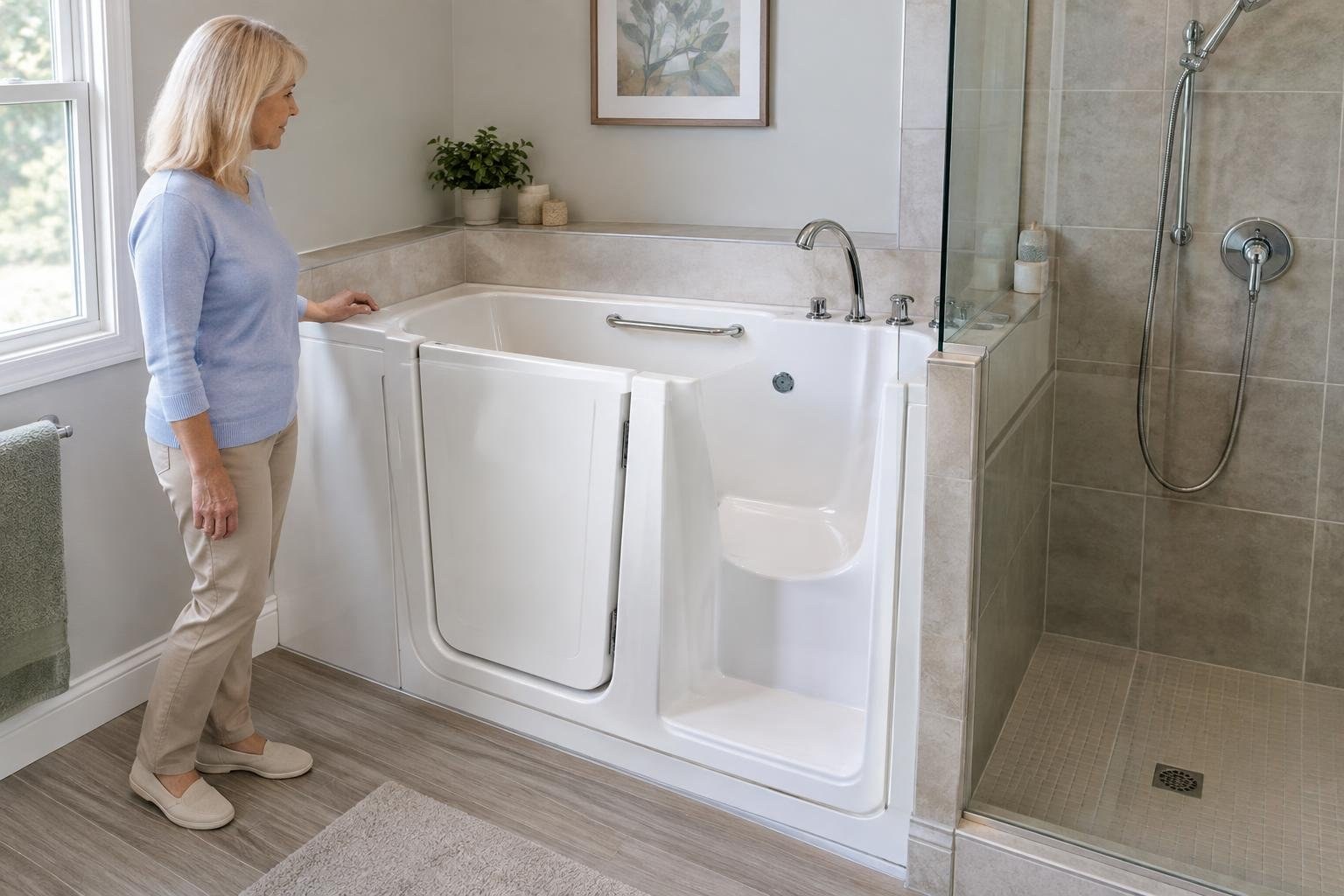
A walk-in tub is a bathtub with a door in its side. The user enters through the opening, closes the door, and fills the tub while seated. The lower entry threshold can reduce the need to step over a traditional bathtub wall, a feature that may matter to people with mobility challenges.
The tub changes the bathing routine, not just the fixture. The user generally has to enter before the tub fills and remain inside while it drains before getting out. That waiting period, along with how the door and controls work, should be considered as carefully as the threshold.
Some models offer combined shower options. If the household uses a shower regularly, ask how the proposed model integrates that experience instead of assuming the tub will work like a standard tub-shower combination.
When Might a Walk-In Tub Be Worth Considering?
Consider a walk-in tub when stepping over a conventional tub wall has become difficult, seated bathing is preferred, or a bathroom renovation is already being considered. A lower threshold may address one barrier to getting into the tub. It does not tell you whether the user can safely manage the door, sit down, reach the controls, wait through filling and draining, or stand and exit afterward.
Make a practical list of difficulties before shopping: trouble entering or exiting, a preference for soaking over showering, or a bathroom arrangement that no longer supports the user's routine. Then consider who will use the room now and whether the same features will remain useful as needs change.
Ask the person who will use the tub to evaluate the routine where possible. If the proposed layout or transfer needs are uncertain, get an individualized assessment from an appropriate accessibility or care professional before committing to a product.
Walk-In Tub Options and Alternatives
Compare walk-in tub options by how a person will use them, not by feature count alone. Review the door and entry, the seat, controls, drainage routine, available shower setup, and whether the model fits the room. Ask to see the specific model or a demonstration; a product description cannot answer every question about fit and comfort.
| Option | May suit | Tradeoffs to investigate |
|---|---|---|
| Walk-in tub | Someone who wants a tub for seated bathing and values a lower entry threshold | Entry and exit routine, filling and draining wait, bathroom fit, and installation price |
| Walk-in tub with shower option | A household that wants bathing and showering in one area | How the shower functions and whether it is practical for everyday use |
| Walk-in shower | Someone who mainly showers or wants to consider a more open bathroom layout | Room design, access, privacy, and whether giving up a tub works for the household |
| Traditional tub or shower | A household whose current setup remains comfortable and usable | Whether the existing entry, layout, and bathing routine meet current needs |
A walk-in shower may use less space than a tub and can make a small bathroom feel more open, while corner tubs or a different shower size may help address awkward layouts. These are design possibilities, not guarantees: compare a measured plan for your room.
Walk-In Tub Cost and What Changes the Price
There is no universal installed price in the supplied research that can stand in for a project quote. ConsumerAffairs reports walk-in tub projects often cost more than $10,000. Treat that as a broad signal that the project can be expensive, not as a guaranteed price, current local average, or complete estimate for your home.
Ask each provider to separate the tub and installation from any bathroom reconfiguration and related work. A project may need adjustments to fit the tub, and a new water heater may be needed in some cases. Ask the installer to assess the specific home rather than assuming either change is necessary.
What can affect the price?
- The selected model and the features included.
- Whether the existing bathroom can accommodate the tub or needs reconfiguration.
- The installation work and any changes identified during an in-person assessment.
- Whether the project requires a water-heater change or other related work.
- How the proposed tub will integrate with an existing or planned shower.
How to compare estimates
Request written, itemized estimates based on the same tub model or a clearly described equivalent and the same project scope. Ask what is included, what could be additional, and how changes will be approved and priced. Do not compare a product-only price with an installed-project estimate.
To control cost safely, compare more than one complete proposal, keep the layout and scope focused on the user's needs, and evaluate alternatives such as a walk-in shower or targeted safety improvements. Do not omit work an installer identifies as necessary to make the planned installation fit or function.
What to Expect: Assessment, Installation, and Timing
Before calling providers, write down what makes bathing difficult and what would make the finished bathroom usable. Then measure the room and note the current tub, shower, and door locations. A provider should assess the actual space and discuss whether it can accommodate the selected tub or needs changes.
In the estimate, confirm the tub model, the work included, how the new tub relates to the shower, and any possible water-heater work. Ask for a clear description of what happens if the room needs changes beyond the original scope. A bathroom renovation that opens walls may offer more flexibility to plan walls, drains, and storage, but it also calls for a clear scope before finishes are installed.
Ask the provider to explain the sequence and timing for this particular project. Timing depends on the selected work and whether bathroom reconfiguration is involved, so get the expected start, work period, and completion conditions in writing rather than relying on a generic timeline.
At completion, walk through the installation with the provider. Ask them to demonstrate the door, controls, filling, and draining, and provide the written product and workmanship coverage and care instructions. Raise any concerns before signing off on the completed scope.
How to Choose a Walk-In Tub Provider
A useful provider discussion starts with the user and the room, not a sales pitch. Look for someone who will assess the bathroom, explain the proposed tub and installation scope, and answer questions about the door, shower arrangement, drainage routine, and possible room or water-heater work.
Ask for a written estimate and written warranty details. Verify any license or registration required for the work in your jurisdiction, and ask who will perform the plumbing and remodeling portions. Confirm whether permits or inspections apply locally; requirements depend on the location and scope, so do not assume they are unnecessary.
Questions to ask before hiring
- What exact tub model and door configuration are you proposing?
- How will the user enter, sit, operate the controls, and exit after draining?
- Can I see or test the model being quoted?
- Will the tub fit the existing bathroom, or do you expect reconfiguration?
- How will the installation work with the current shower?
- Does this project require assessing or changing the water heater?
- What work and materials are included in the written price?
- What conditions could add cost, and how will changes be approved?
- Who will do each part of the work?
- Are permits or inspections required for this scope in my jurisdiction?
- What product and workmanship warranties apply, and what do they exclude?
- What is the expected schedule for this particular project?
- How will the bathroom be protected, cleaned, and handed back?
- What payment schedule and written contract terms do you use?
Safety, Permits, Credentials, and Warranties
Walk-in tubs are promoted as accessibility solutions, but the threshold is only one part of the experience. Evaluate the whole routine and room with the person who will use the tub. Ask the provider to explain safe entry, sitting, door operation, controls, and exiting; do not assume a product feature makes every user safe.
Before signing, confirm in writing who is responsible for permits and inspections if local rules require them. Verify applicable trade credentials with the relevant local authority, and confirm the provider's insurance and contract terms. Requirements vary by jurisdiction and project; this guide does not establish a particular local code rule.
Review product coverage separately from labor or workmanship coverage. Ask how to make a claim, what is excluded, whether registration or specific maintenance is required, and whether coverage transfers if the home is sold. Get the answers in writing and keep the model information, contract, and care instructions.
Do not accept verbal assurances as a substitute for a defined scope, schedule, price, and warranty. If a provider cannot explain the installation plan or how the tub will fit the room, pause and seek another assessment.
Mistakes and Provider Red Flags
Common decision mistakes include choosing a tub based only on the low threshold, assuming it will suit someone who has not tried the routine, and overlooking the wait while it fills and drains. A household that mainly showers may also find that a tub with an optional shower arrangement is not the same experience as a separate walk-in shower.
- Shopping by feature list alone: Check whether the user can manage the exact door, seat, and controls.
- Skipping a room assessment: Confirm the tub fits and whether bathroom changes are needed.
- Assuming the current water heater will work: Ask the installer to assess it for the chosen project.
- Comparing unlike estimates: Match the model and scope, including reconfiguration and related work.
- Ignoring shower habits: Compare the actual shower experience and a separate shower option.
- Relying on verbal promises: Get the scope, changes, schedule, payment terms, and coverage in writing.
- Assuming a low quote includes everything: Ask what is excluded and how additional work is priced.
- Choosing before the user evaluates the routine: Make the intended user's needs central to the decision.
Be cautious if a provider pressures you to commit before assessing the room, will not itemize the work, or gives unclear answers about permits, responsibility, and warranty coverage. A written proposal should make it possible to understand both the price and what the household will receive.
Related Bathroom Projects to Plan Together
Evaluate a walk-in tub alongside related bathroom decisions. The order matters because the tub's footprint and the user's bathing habits can shape the shower and room layout.
- Walk-in shower: Compare it at the planning stage if the household showers more often than it bathes or wants to reclaim space. Decide whether the tub or shower is the priority before finalizing the room plan.
- Bathroom layout and storage: Review clearances and storage while comparing tub placement. If a broader renovation is planned, make layout decisions before choosing finishes; an open-wall renovation may allow more flexibility for walls, drains, and storage.
- Water heater: Ask the installer to assess whether the existing heater suits the selected tub. Resolve this question while the project scope and estimate are being prepared, rather than discovering an assumed upgrade after work is planned.
- Shower integration: If keeping a shower matters, evaluate the proposed combined arrangement before selecting the tub. Confirm the user can comfortably use it for ordinary bathing.
Bundling related work may reduce repeated disruption when it is already part of a larger bathroom renovation, but do not assume it will reduce the total cost. Ask the provider to price the combined scope and each relevant option separately so you can compare.
Pros, Cons, and Is a Walk-In Tub Worth It?
A walk-in tub's strongest case is for a user who wants a bathtub, values a lower entry threshold, and can manage its door and seated filling-and-draining routine. Its drawbacks are meaningful: the routine may be inconvenient, the bathroom may need adjustments, and the project can be expensive. A walk-in shower may be more attractive when space or showering is the priority; other safety improvements may be worth comparing if the full tub project is not a fit.
To make the decision, weigh the user's current needs, how long the household expects to use the setup, the room's constraints, complete written prices, and the alternatives. Do not count on a particular resale return or energy savings without reliable evidence for the home and project. A walk-in tub is worth considering when its specific benefits address a real need and the cost and routine are acceptable to the user.
Factors That Affect the Project
The project scope depends on the selected tub and the bathroom it must fit. Some rooms may need reconfiguration, and a new water heater may be needed in some projects. If keeping a shower matters, the chosen tub’s shower arrangement can also affect the plan.
Consider these factors when defining the work:
- Bathroom fit: Confirm whether the room can accommodate the tub as it is or needs changes.
- Shower needs: Decide whether a combined tub-and-shower arrangement works for the household or whether a separate shower should be considered.
- Water heating: Ask the installer to assess whether the existing water heater suits the selected tub and project.
- Renovation scope: If the bathroom is being remodeled, plan layout, walls, drains, and storage before finishes are installed.
Ask for a written proposal that identifies the tub, installation work, any bathroom changes, and possible water-heater work. This makes it easier to compare estimates for the same project rather than comparing different scopes.
Frequently asked questions
Are walk-in tubs safer than regular tubs?
A walk-in tub can reduce the need to step over a traditional tub wall, which may help people who have difficulty lifting a leg or stepping across a high threshold. It does not remove every bathing risk. Consider whether the user can manage the door, sit and stand, operate the controls, and wait in the tub while it fills and drains. A bathroom or occupational-therapy professional can help assess individual needs.
How much does a walk-in tub cost installed?
There is no single price that applies to every walk-in tub project. ConsumerAffairs reports that walk-in tub projects often cost more than $10,000, but the figure should not be treated as a quote for a particular home. The model, installation scope, bathroom changes, and possible need for a larger water heater can affect the total. Get itemized, written estimates for the same scope before comparing bids.
Do you have to sit in a walk-in tub while it fills and drains?
Most walk-in tubs are designed so the user enters through a door, closes it, and fills the tub while seated. That means the user may need to wait inside before bathing and remain there while the water drains before exiting. Ask to see the exact model operating, including the drain controls and door, and consider whether this routine suits the person who will use it.
Is a walk-in tub better than a walk-in shower?
A walk-in tub may suit someone who prefers soaking and needs a lower entry threshold. A walk-in shower may be a better fit when showering is the priority or the bathroom needs a more open layout. Some walk-in tubs offer a combined shower option, but check how the shower works and whether it meets the user's everyday needs. Compare both options in the actual bathroom plan.
Can a walk-in tub fit in a small bathroom?
Possibly. The tub, user, and installation plan all matter. Check the bathroom dimensions and access route, door swing, drain location, and whether the tub requires changes to the room. Have the installer assess the floor and plumbing needs and provide a written scope. Do not assume that a tub will fit just because a standard bathtub currently occupies the space.
Is a walk-in tub worth the investment?
A walk-in tub can be considered during a bathroom renovation, but it is not automatically the right choice for every household. Compare how often the user bathes versus showers, the entry and transfer needs, the waiting time while filling and draining, the full project price, and alternatives such as a walk-in shower or targeted safety improvements. The best choice depends on the user and the room.
People Also Ask
What are the biggest disadvantages of a walk-in tub?
A walk-in tub can reduce the need to step over a traditional tub wall, but it does not eliminate every risk. Consider the user’s ability to open and close the door, sit and stand, and wait while the tub fills and drains. Compare the exact model and bathroom layout rather than assuming that a low threshold alone makes bathing safe.
What should I check before buying a walk-in tub?
The tub’s door, seat, controls, drainage routine, and fit in the bathroom all affect usability. The user typically enters before filling and waits inside while the tub drains. Measure the room and ask the installer to explain how the selected model fits, connects, and works with any existing shower.
Can a walk-in tub also be used as a shower?
A combined shower option may be available on some walk-in tubs, but the exact arrangement and shower experience vary by model. If showering is important, test or inspect the proposed setup and compare it with a separate walk-in shower before choosing.
Will installing a walk-in tub require bathroom renovation?
The answer depends on the tub, bathroom, and installation. A project may involve changes to fit the tub, and some models or circumstances may call for a new water heater. Request a site assessment and a written estimate that identifies the tub, labor, alterations, and any water-heater work.
Do walk-in tubs help people with mobility challenges?
A lower entry threshold may make access easier than stepping over a traditional bathtub wall. Still, judge the entire transfer and bathing routine, including entering, closing the door, sitting, reaching controls, and exiting after drainage. If the user has specific mobility or care needs, seek individualized advice rather than relying on product claims alone.
Which takes up less space, a walk-in tub or shower?
A walk-in shower may take less space than a tub and can create a more open bathroom layout. A walk-in tub may better suit someone who wants to soak and values its lower-entry design. Compare space, bathing habits, the user's needs, cost, and how each option fits the room.
A walk-in tub may be a good fit when easier entry and seated bathing are important, but its threshold alone does not make bathing safe or convenient for every person. Compare the entry, seat, door, drainage, bathing habits, bathroom layout, water-heater capacity, and full installed price before deciding. If a shower is used more often or space is tight, compare a walk-in shower and other safety improvements too. Explore your options and find providers at Estimate.org.
Your next step
Explore your options and find providers at Estimate.org.
Reviewed and maintained by the Staff at Estimate.org.
Last reviewed and updated October 19, 2026 by the Estimate.org Editorial Team.
Sources
- Pros and Cons of Walk-In Tubs | Love Your Bath
- Walk-In Shower vs Bathtub: Pros & Cons
- The Advantages and Disadvantages of Walk-In Bathtubs — EDR Design Build
- Pros and Cons of Walk-In Tubs | Retirement Living | 2026
- r/HomeImprovement on Reddit: Anyone Have Experience – Good or Bad – With A Walk-In Bathtub?
- Pros & Cons of a Walk-in Shower vs. Walk-in Tub: How to Decide Which Is Right for You? – Revive Design and Renovation Remodeling Tampa FL
- Pros and Cons of Walk-In Tubs (2026) | ConsumerAffairs®
