

A freestanding bathtub is a standalone tub that is not built into a wall alcove or surrounded by a fixed deck. Homeowners consider one for its distinctive look, a different bathing experience, or a bathroom redesign. The right decision depends on more than the tub’s listed price: account for delivery, removal of the old fixture, plumbing, possible floor work, and any wider renovation. Published prices vary by tub type and by what a quote includes. Some guides cite freestanding tubs in the $600–$3,000 range, while premium acrylic examples reach $1,800–$3,500 or more; these are not interchangeable, guaranteed installed prices. A straightforward installation without drain relocation or floor work may take one to two days, but added work can extend the schedule. Before ordering, verify the room layout, project scope, and written estimate with a qualified provider.
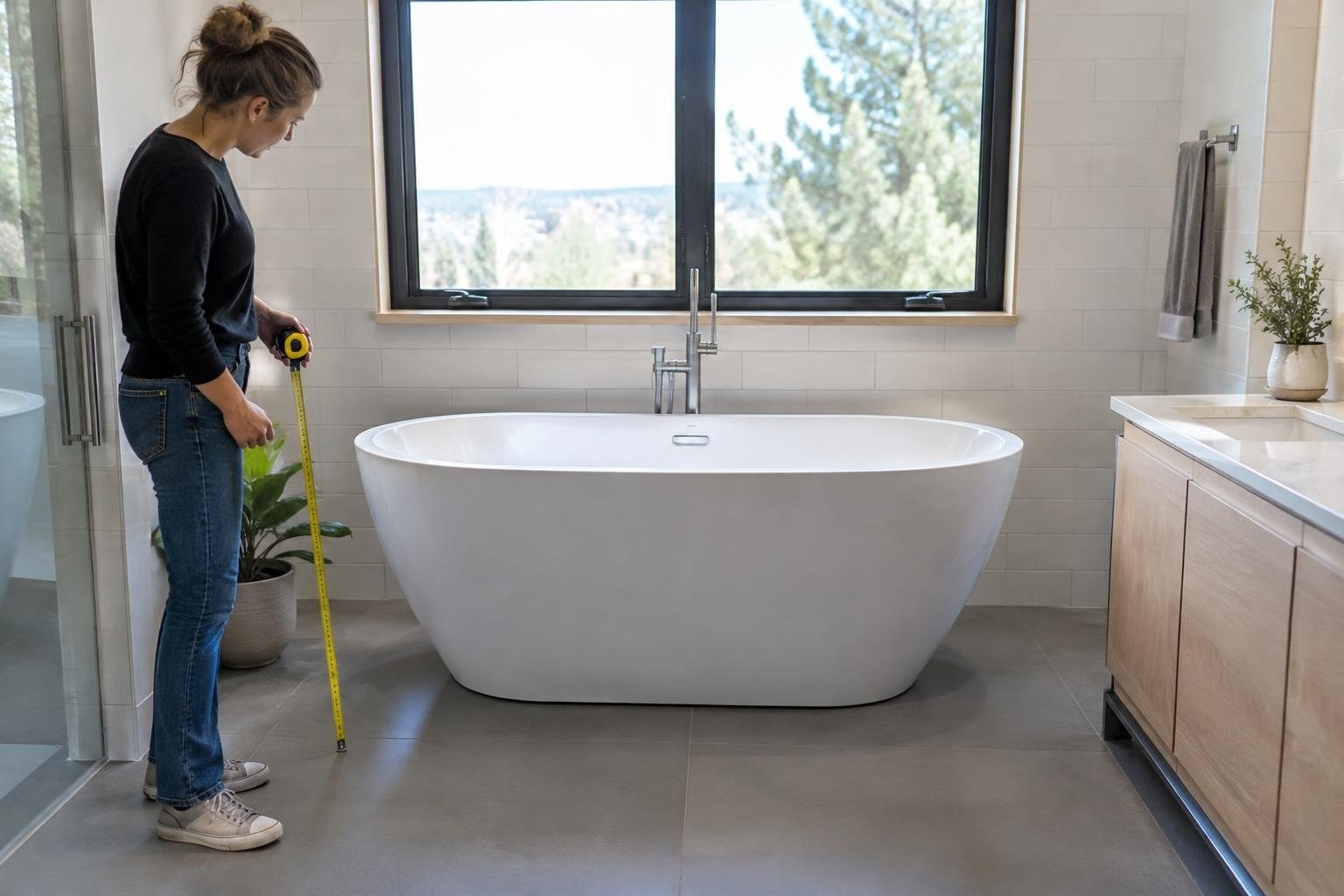
What to know before choosing a freestanding bathtub
A freestanding bathtub stands apart from surrounding walls rather than fitting into a built-in alcove. It can be a focal point in a bathroom renovation, but selecting a tub is only one decision. The location, plumbing, room layout, delivery route, and work required to remove the existing fixture all affect the project.
Start by deciding what you want the upgrade to do. Is appearance the priority, or do you want a more comfortable bathing setup? Does the room have enough usable space for the tub and everyday movement? Will you keep the existing drain location? These questions help distinguish a product purchase from a full renovation plan.
Compare the complete scope before comparing contractors’ totals. A quote that excludes removal, drain changes, or finishing may look less expensive than one that includes them. Ask each provider to state what is included, what is assumed, and what could trigger additional work.
What does a freestanding tub installation include?
A typical project starts with selecting a tub and confirming its dimensions and intended location. The provider then assesses the existing bathroom and identifies the work needed to connect the tub. Depending on the project, this may include removing the old bathtub, installing the new fixture, changing plumbing, or addressing the floor. Ask who is responsible for each part; the tub installer and the trades handling related work may not be the same provider.
Drain location matters. A freestanding tub may allow more placement choices than a built-in design, but a new position may require drain relocation or other plumbing work. One project guide notes that floor reinforcement or new supply-line rough-in can add work beyond the tub installation itself. Confirm those possibilities during the site assessment, rather than assuming the tub can be placed anywhere without changes.
Before work begins, confirm the tub model, delivery plan, project sequence, protection of nearby surfaces, water shutoff arrangements, cleanup, and final testing. Ask the contractor to explain how they will check for leaks and confirm that the tub is stable and usable before they consider the job complete.
Freestanding bathtub cost and renovation budget
There is no single reliable price that applies to every freestanding bathtub renovation. Published guides show different ranges and may describe different things: the tub alone, a particular material or style, or a broader bathtub replacement project. Treat any online number as a starting point, not a personalized quote.
- Freestanding tub examples: One guide gives a range of $600–$3,000. Another cites a basic acrylic freestanding tub as low as $650 and a high-end clawfoot tub at $3,000 or more.
- Premium acrylic example: A 2026 price guide places high-end acrylic models at $1,800–$3,500 or more.
- Broader bathtub replacement reference: A 2026 guide reports an average of $2,100 to replace a bathtub, including removal. That is not a freestanding-tub-specific installed price.
These figures are reported by different publications and should not be combined into one guaranteed range. Check the date, scope, location, tub type, and inclusions behind a price before using it to set a budget. Request an itemized estimate for your own bathroom.
What can increase the project total?
The main budget question is whether the project is a simple swap or part of a wider renovation. Removal and disposal, a different drain location, new supply-line work, floor reinforcement, tub delivery, and additional bathroom work may add cost. The project guide on freestanding installations specifically notes that drain relocation, floor reinforcement, and new supply-line rough-in can turn a short installation into a larger job. Ask providers to price these items separately when they are possible but not yet confirmed.
How to compare estimates
Ask each provider for a written breakdown that identifies the product and model, labor, removal, disposal, plumbing, floor work, delivery, finish repairs, permit responsibilities if applicable, cleanup, and warranty terms. Ask what is excluded and how unforeseen conditions will be approved and priced. A complete scope makes it easier to compare bids and avoid mistaking an incomplete quote for a bargain.
Tub types and options: what should you compare?
Freestanding tubs come in a range of looks and price points. The research available for this guide gives examples for acrylic and clawfoot styles, but does not provide a like-for-like technical comparison of every material, maintenance need, or lifespan. Review the manufacturer’s specifications and warranty for the exact model rather than assuming that appearance or price alone predicts performance.
| Option | What the published examples say | What to compare |
|---|---|---|
| Basic acrylic freestanding tub | One example starts around $650. | Exact model, finish, product warranty, delivery, and what installation includes. |
| Premium acrylic | A 2026 guide cites $1,800–$3,500 or more for high-end examples. | Whether the added price buys features or quality that matter to your household; verify specifications with the manufacturer. |
| Clawfoot style | One guide cites high-end examples at $3,000 or more. | Style, fixture compatibility, installation scope, and the complete project estimate. |
| Freestanding versus built-in | Freestanding designs may offer more placement flexibility; built-in tubs fit a defined layout and may have fewer design options. | Room layout, plumbing changes, usable space, project scope, and preferred appearance. |
These are examples, not a definitive ranking or a complete material comparison. A product’s actual suitability depends on its technical specifications and the conditions of your bathroom. Ask the provider to identify the exact model in the estimate, so you can check dimensions, installation instructions, and warranty terms before purchase.
Signs you may need a bathtub replacement or renovation
Look for a renovation assessment if your existing tub needs replacement or if your planned tub will not work with the current bathroom layout. A cracked or otherwise damaged tub, a desired change in placement, or a plan to remodel the surrounding bathroom are reasons to ask a qualified provider to inspect the project. These signs alone do not establish the cause, urgency, or repairability; get the condition assessed before deciding to replace.
For a prospective installation, pay attention to practical constraints: a tub that cannot be brought through the planned access route, a desired location that would require plumbing changes, or uncertainty about the floor and drain. Bring these issues up before ordering. A provider’s assessment can help determine whether the project is a simple installation or a larger renovation.
If the existing tub is damaged, ask whether repair is practical and whether any related condition needs attention before a replacement is installed. Compare repair and replacement proposals in writing, and ask what each option does and does not address. Do not authorize cosmetic work until the provider has explained the scope and any relevant underlying work.
What to expect: installation steps and timing
A focused freestanding-tub installation without drain relocation or floor work typically takes one to two days, according to a project guide. That is an installation estimate, not a promise for every bathroom. The same source explains that drain relocation, floor reinforcement, or new supply-line rough-in adds work; when the tub is part of a larger bathroom renovation, the overall project may span several weeks.
Ask the provider for a schedule that distinguishes product delivery, preparation, removal, plumbing, installation, finishing, and final checks. Confirm whether the bathroom will be usable during the work and how the provider will handle delays or discoveries after removal. If the tub has not arrived, clarify whether the schedule assumes it is on site and inspected before the crew begins.
Before accepting a completion date, ask what could change it. Plumbing changes, floor work, coordination with other trades, and a broader renovation may affect sequencing. A written schedule with milestones is more useful than a single informal estimate of how long the job will take.
How to choose a qualified bathtub contractor
Choose a provider who can explain both the tub installation and the project’s plumbing and floor requirements. Ask for a written estimate, a clear scope, references for similar work, proof of applicable insurance, and any locally required license or registration. Requirements vary by jurisdiction; verify them with the relevant local authority rather than relying only on a contractor’s statement.
- What exact tub model and installation method are included?
- Have you completed projects with a similar tub and bathroom layout?
- Does the quote include removal and disposal of the existing tub?
- Will the drain stay where it is, or does the plan include relocation?
- What plumbing work is included, and what is excluded?
- Have you assessed whether floor work or reinforcement is needed?
- Who obtains any required permits and arranges inspections?
- Who performs each part of the work, including plumbing?
- What is the expected schedule, and what could change it?
- How will changes and unexpected conditions be documented and approved?
- What product, labor, and workmanship warranties apply?
- What payment schedule, cleanup, and final walkthrough are included?
Get more than one written proposal where practical, and compare the scope line by line. Check references and review the contractor’s license status where licensing applies. A clear answer about exclusions and project risks is more valuable than a confident promise that everything will be easy.
Permits, credentials, warranties, and installation safety
Permit, licensing, and inspection requirements depend on the work and the local jurisdiction. Ask the contractor which permits may apply to the plumbing or renovation scope, who will obtain them, and whether inspections are included. Verify the answer with your building department when necessary. Do not assume that a tub-only product purchase determines the rules for work at your home.
Review product and workmanship coverage separately. Ask for the manufacturer’s written warranty for the specific tub, plus written terms for labor and installation. Check what is covered, how long coverage lasts, who handles a claim, whether registration is required, and what conditions or maintenance could affect coverage. Do not rely on verbal assurances or assume a product warranty covers labor, plumbing, or damage related to installation.
Before work begins, agree on the written scope, payment milestones, change-order process, protection of the home, cleanup, and final testing. The contractor should explain how the installation will be checked and what documentation you will receive at completion.
Ways to manage costs without cutting corners
The safest cost reduction is to control scope without skipping necessary work. Keep the tub location near existing plumbing if the assessment confirms that layout works for you; moving a drain can add work. Choose a specific model after checking its dimensions and installation requirements, and avoid ordering until a provider confirms it fits the planned opening and project conditions.
- Compare itemized estimates with the same tub and work scope.
- Ask which optional design choices can be deferred without affecting installation.
- Coordinate related bathroom work so the sequence is clear before removal begins.
- Confirm delivery and product availability before scheduling labor.
- Ask for written pricing for potential plumbing or floor work instead of leaving those items vague.
- Do not cut costs by skipping required permits, qualified plumbing work, or necessary floor assessment.
Bundling the tub with other bathroom improvements may reduce repeat disruption, but savings are not guaranteed. Request a combined estimate and a separate estimate for the tub work so you can compare the actual scope and cost. Ask which work must happen first and whether combining trades changes the schedule.
Mistakes and contractor red flags to avoid
Avoid these common planning errors:
- Budgeting from the tub price alone. Ask about removal, delivery, plumbing, floor work, and finishing.
- Comparing unlike estimates. Match the product and written scope before judging totals.
- Ordering before confirming fit. Verify dimensions, access, location, and installation requirements.
- Assuming placement is unrestricted. Ask whether the desired location requires drain or supply changes.
- Ignoring possible floor work. Have the provider assess and state any assumptions in writing.
- Accepting vague exclusions. Clarify who pays if additional work is found.
- Relying on spoken warranty promises. Get manufacturer and labor terms in writing.
- Skipping local checks. Confirm any permit or license requirements that apply to the scope and location.
- Scheduling before the tub is confirmed. Coordinate delivery and installation rather than assuming the product will be ready.
Pause if a contractor will not provide a clear written scope, refuses to explain permit responsibilities, asks for an unclear payment arrangement, or pressures you to decide before you can compare the proposal. Ask questions and verify claims before signing.
Related bathroom projects to plan alongside the tub
Think about adjacent work before setting the installation date. A freestanding tub may be part of a wider bathroom renovation, and a change in plumbing or floor scope can affect the work sequence. Ask the contractor to identify what should be completed before the tub arrives and what can be done at the same time.
- Bathroom flooring: Evaluate it if the tub location changes or the project already includes floor work. Clarify which work must be completed before installation.
- Plumbing: Review drain and supply locations during planning. If changes are required, coordinate them before the tub is installed.
- Wall and finish work: Consider whether surrounding surfaces will be updated as part of the same renovation. Ask how the sequence affects access and finishing.
- Other bathroom fixtures: If the project also changes nearby fixtures, request a coordinated schedule and a combined scope as well as a tub-only estimate.
Bundling may reduce repeated disruption, but it does not automatically reduce the total price. Ask providers to explain which tasks can be combined, which must come first, and whether separate subcontractors affect timing or warranty responsibility.
Is a freestanding bathtub worth the renovation?
A freestanding tub is most compelling when its appearance and placement suit the bathroom and the installation scope fits your budget. Published guides describe freestanding designs as sculptural and note that they can offer more placement flexibility, while built-in tubs fit a defined layout and may have fewer design options. Those general distinctions do not establish which option is best for your home.
Compare the complete proposal, not a product label. Consider the room layout, the desired tub model, whether plumbing must change, possible floor work, timing, and written warranty terms. If the project requires substantial changes, ask whether a simpler replacement or a different tub style would meet your needs with less work. No source supplied for this guide supports a guaranteed resale return or energy savings from choosing a freestanding tub.
The upgrade may be worthwhile if the design is important to you, it works with your bathroom, and you expect to use it. If the choice is mostly about appearance, weigh that benefit against any added installation scope and disruption. Make the decision from an itemized estimate and your priorities rather than assuming the project will increase home value by a specific amount.
Factors that affect the project
Several decisions can change the work and the final estimate. Consider them together before ordering a tub or setting an installation date:
- Tub model and style: Published examples range from about $650 for a basic acrylic freestanding tub to $3,000 or more for some high-end clawfoot models. Premium acrylic examples are also reported at $1,800 to $3,500 or more. These are product examples, not a single installed-price range.
- Room layout and plumbing: A freestanding tub may allow more placement flexibility, but the intended location still needs suitable plumbing. Moving the drain or adding supply-line work can expand the project.
- Floor work: Floor reinforcement may be needed in some projects. Ask the provider to assess the floor and state whether that work is included, excluded, or not anticipated.
- Removal and renovation scope: Replacing an existing tub and completing related bathroom work can involve more than installing the new fixture. Clarify removal, plumbing changes, and any broader renovation tasks in the written estimate.
- Project schedule: A straightforward installation without drain relocation or floor work is estimated at one to two days; added plumbing or floor work can make the tub installation part of a longer renovation.
Ask providers to price the same tub and scope, identify assumptions, and explain which potential work has not yet been confirmed. That makes estimates easier to compare without treating a published product price or a short installation estimate as the cost or schedule for your whole project.
Frequently asked questions
How much does a freestanding bathtub cost to install?
Published guides give different figures because they may describe a tub’s purchase price or a broader bathtub replacement project. Examples put freestanding tubs around $600 to $3,000, while premium acrylic models may reach $1,800 to $3,500 or more. One guide reports an average of $2,100 to replace a bathtub, including removal, but that figure is not a freestanding-tub-specific quote. Get an itemized estimate for your bathroom.
How long does it take to install a freestanding tub?
It depends on the scope. One installation guide says a straightforward freestanding tub installation without drain relocation or floor work typically takes one to two days. Moving the drain, reinforcing the floor, or adding supply-line work can extend the project; if the tub is part of a broader bathroom renovation, the overall work may span several weeks.
Can you put a freestanding tub anywhere in a bathroom?
Not necessarily. Some freestanding tubs can be placed in different parts of a bathroom, but placement still depends on suitable plumbing and the project’s conditions. Before choosing a location, ask a qualified provider to assess the drain, water connections, access, floor, and the tub’s dimensions. Moving plumbing or doing floor work can increase project scope and time.
Are freestanding tubs more expensive than built-in tubs?
Freestanding tubs are often selected for their sculptural appearance and flexible placement, while alcove tubs fit a more defined layout and may offer fewer design choices. The better option depends on bathroom dimensions, plumbing, daily use, budget, and the amount of renovation work you are prepared to undertake. Compare the full installed scope, not just the tub price.
Does a freestanding bathtub need floor reinforcement?
The tub alone does not tell you whether the floor is suitable. Have the project provider check the existing floor and the conditions beneath it, especially if the plan includes floor reinforcement or a substantial remodel. Do not assume that an estimate includes structural evaluation or floor upgrades; ask for those items and any exclusions in writing.
What should a bathtub installation estimate include?
Ask for a written, itemized quote that identifies the tub model, removal and disposal, plumbing work, drain location, floor work, delivery, finishing, permit responsibilities, cleanup, and warranty terms. Request a clear explanation of assumptions and exclusions. Compare proposals with the same project scope so a low price does not hide work that another contractor has included.
Is a freestanding bathtub worth the renovation cost?
It can be a good fit if the bathroom can accommodate the tub and its plumbing, the style suits how you use the space, and the full project cost is acceptable. It may be a poor fit if the design requires extensive changes you do not want to fund. Consider function, room layout, project disruption, and your intended time in the home rather than assuming a new tub will pay for itself.
People Also Ask
How many days does freestanding tub installation take?
A straightforward installation without drain relocation or floor work is commonly estimated at one to two days. Added plumbing or floor work can extend that schedule, and a larger bathroom renovation may take several weeks.
What is the average price of a freestanding bathtub?
Guides cite freestanding tub prices from roughly $600 to $3,000, with premium acrylic examples at $1,800 to $3,500 or more. Check whether a number covers the product only or installation too.
Can a freestanding tub go in the middle of a bathroom?
Possibly. Some designs can be positioned flexibly, but the location must work with the drain, water supply, floor, room dimensions, and access. Have the project assessed before deciding on placement.
Does $2,100 cover a freestanding tub installation?
A bathtub replacement cost guide reports an average of $2,100 including removal, but it is not a freestanding-specific estimate. A custom project quote is more useful for budgeting your actual scope.
Do freestanding tubs require extra floor support?
It can be, depending on the room and the amount of plumbing and floor work needed. Ask the contractor to explain whether floor assessment or reinforcement is included, excluded, or not anticipated.
How do I compare bathtub installation quotes?
Compare the tub model, removal, disposal, installation, drain and supply work, floor work, delivery, finishing, permit responsibilities, cleanup, and warranty coverage. Ask contractors to list exclusions as well.
Are freestanding tubs a good investment?
Consider whether the tub suits your routine, the room, and your budget after installation costs. A stylish fixture may not be worthwhile if it requires extensive changes or does not fit the way you use the bathroom.
A freestanding bathtub can be a striking bathroom upgrade, but the tub’s sticker price is only one part of the decision. Compare complete written estimates that spell out removal, plumbing, floor work, delivery, finishing, and any permit needs. Confirm the tub fits the room and the project fits your budget before ordering. A straightforward installation may take one to two days; changes to plumbing or the floor can make it part of a longer renovation. Explore your options and find providers at Estimate.org.
Your next step
Explore services and find providers at Estimate.org.
Reviewed and maintained by the Staff at Estimate.org.
Last reviewed and updated October 19, 2026 by the Estimate.org Editorial Team.
Sources
- 2026 Acrylic Freestanding Bathtub Price Guide – moklebabath
- Bathtub Renovation Costs and How to Make the Most of Your Remodel – America's Dream HomeWorks
- How Much Does Bathtub Installation Cost? (2026 Pricing)
- Bathtub Installation Cost in 2026: What It Really Costs – MonBlari
- Freestanding Tub Installation Costs & What Most Guides Leave Out
- What It Costs to Install a New Bathtub
- Guide to Freestanding Tubs: Types, Materials, and Costs | Modernize
