

Bathroom remodel before-and-after photos can help you see how changes to a layout, shower, vanity, lighting, or finishes might affect a room. But a compelling reveal does not show every decision behind it. To judge whether an example fits your home, look for what was replaced, what was retained, whether the layout changed, and how the design responds to the room’s size and use. Published makeovers range from selective updates, such as repainting and adding new hardware, to projects that repurpose space or transform a shower. This guide explains how to read those examples, compare options, plan costs without relying on generic photo-gallery prices, and prepare questions for a remodeling provider. The practical takeaway: use before-and-after images to define your goals, then base your project plan on your own bathroom and a written scope.
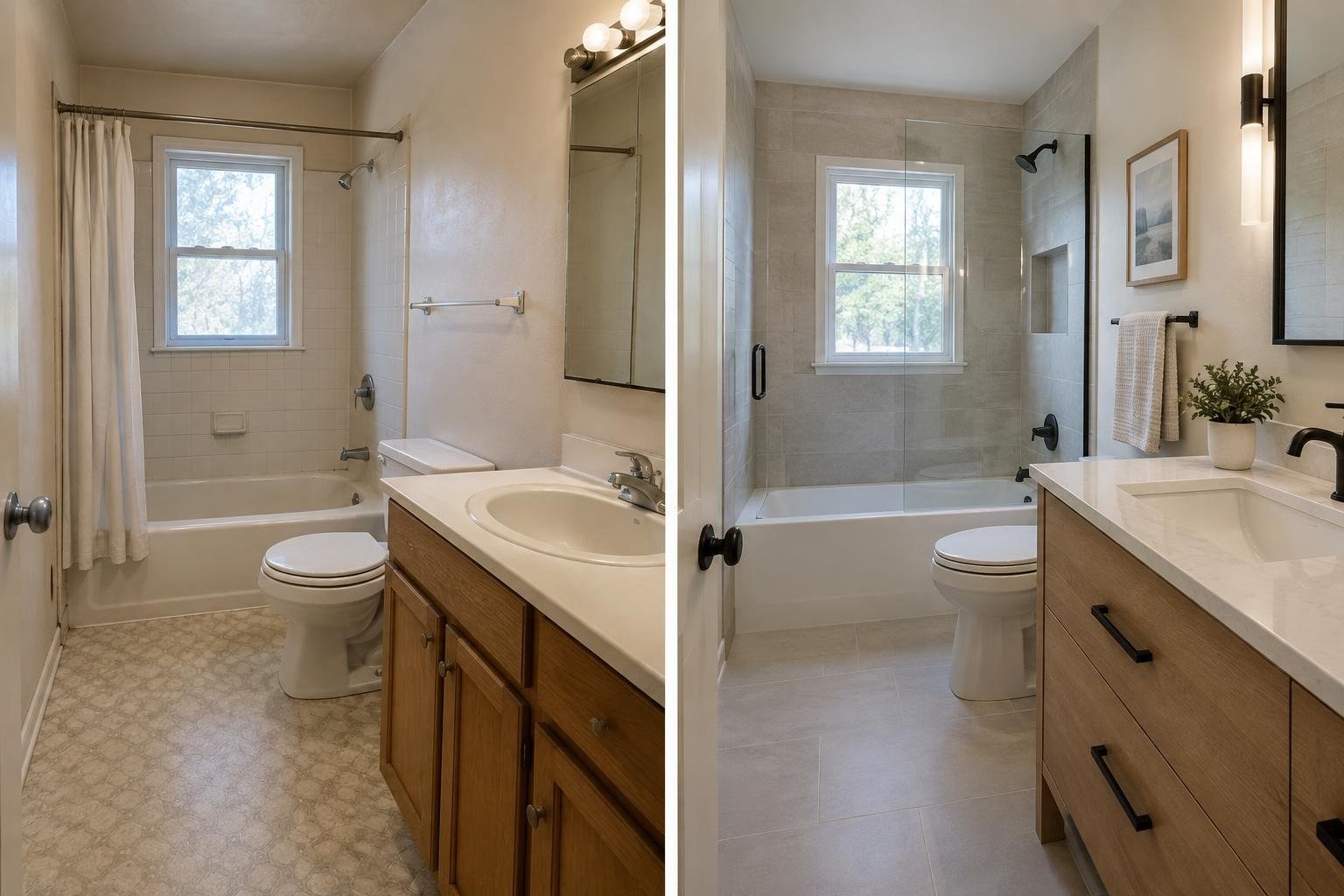
What a bathroom remodel before-and-after comparison can tell you
A bathroom remodel can mean a targeted visual update, a fixture or shower change, or a larger renovation that changes how the space is used. The before-and-after label does not define the scope. In one hall-bath example, the vanity stayed in place while its finish and surrounding elements changed. A Metairie, Louisiana, project repurposed a bedroom as a primary bathroom as part of a broader conversion of a two-family condo back into a single-family home.
For homeowners, the distinction matters because similar-looking final photos may represent very different plans. Start by describing the problem you want to solve: dated finishes, a cramped-feeling shower, poor fit for daily routines, or a need for a different use of space. Then use images to explore possible responses, not to assume that another home’s result can be copied exactly.
How to read before-and-after bathroom photos
A useful comparison connects visible changes to a homeowner’s goal. In published examples, replacing a stall-style shower with a frameless glass shower was presented as a way to let more light pass through a small room. Another makeover refreshed a vanity rather than replacing it. These examples illustrate different kinds of decisions: changing a major visual element versus retaining a feature and updating its appearance.
As you browse, ask: What was changed? What stayed? Did the layout or room use change? Which details appear to create the strongest visual difference? Is the same viewpoint used in both images? These questions help separate the design idea from the particular product, room, or renovation that produced it.
Save examples with a short note about what you like. “More light through the shower enclosure” is more actionable than “make it look like this.” A clear goal helps you discuss alternatives with a designer or contractor.
Options and tradeoffs: refresh, shower update, or larger renovation
Before choosing finishes, identify whether the bathroom needs a style update, a change to a fixture or shower, or a substantial change to the room plan. The available examples show that remodels can range from selective refreshes to repurposing a bedroom as a bathroom. They do not establish a universal scope or a standard package, so define yours in writing.
- Visual refresh: Consider which existing elements still work with the intended look. One makeover kept a vanity and refreshed it with paint; another hall bath retained its vanity while changing selected details.
- Shower-focused update: Compare the existing enclosure with alternatives and consider how each affects the look and use of the room. One example replaced a prefabricated stall-style shower with frameless glass.
- Broader renovation: If your plan changes the room’s use or layout, identify the full scope before comparing it with a cosmetic project. The Metairie example involved converting a bedroom into a bathroom as part of a larger home project.
These categories describe ways to frame a conversation, not fixed industry definitions. Ask providers to explain exactly what their proposed work includes.
Signs it may be time to rethink the bathroom
Make a list of what is not working before choosing a look. You may be responding to dated colors, a shower that feels visually enclosed, an arrangement that does not suit the household, or a bathroom that does not serve its intended purpose. The published makeovers include rooms described as dated, cramped, visually busy, or cavelike, as well as a primary bathroom whose owners disliked its brown-themed design.
Those descriptions are prompts for evaluating your own space, not a diagnosis. For each concern, note whether the remedy needs to be functional, visual, or both. If the issue is limited to appearance, a targeted update may be worth pricing alongside full replacement. If the room’s use or layout is the problem, ask providers to assess the broader plan before selecting finishes.
Photograph the room from several angles and record what you want to retain. This gives you a practical starting point for discussing the project scope and can help prevent a design conversation from focusing only on decorative details.
Bathroom remodel cost: what to compare in estimates
The supplied remodel examples do not provide comparable project prices, so a photo gallery cannot support a reliable estimate for your home. Instead, ask contractors to price the same written scope and identify the choices that drive their proposals. Request separate descriptions for work you consider essential and optional, and ask how retaining a usable item compares with replacing it.
Have estimates make clear what is included, such as selected materials and fixtures, removal of existing items, labor, and cleanup. Ask the provider to explain how the estimate would change if the scope or product selections change. Do not assume that two bids are comparable because they use the same phrase, such as “bathroom remodel.”
What can change a project’s price?
- Whether the plan is a selective refresh, shower update, or broader renovation.
- Which fixtures, finishes, and other elements are retained or replaced.
- Whether the layout or use of the space changes.
- The products and design choices selected for the project.
- Work identified after a provider evaluates the actual room.
These are questions to resolve in estimates, not price claims. Ask for written clarification before approving changes.
Factors that shape the project and its result
Project scope and design choices shape what a before-and-after result represents. A retained vanity refreshed with paint is a different approach from replacing a shower enclosure. A plan that converts another room into a bathroom is different again. Compare estimates only after you understand which of these kinds of work each provider proposes.
Also consider the relationship between your chosen changes. A new finish may create a noticeable visual update while leaving the basic arrangement intact. A more extensive plan may address how the room is used, but it is not directly comparable to a small refresh. The right choice depends on your priorities, the room, and the written scope, not on which online photo looks most dramatic.
To keep the comparison fair, give each provider the same list of goals and ask each to identify what is included, excluded, retained, and subject to change. If you are weighing a finish refresh against replacement, request both as distinct options rather than a single blended proposal.
Before-and-after ideas compared
Bathroom makeovers show several strategies rather than one recipe. The examples below illustrate published projects; they are not a guarantee that the same product or approach will work in another home.
| Approach shown in an example | What it demonstrates | Question to ask for your project |
|---|---|---|
| Retain and refresh a vanity | A vanity can remain while its appearance and selected details change. | Is the existing piece suitable to retain, and what would refreshing it involve? |
| Replace a stall-style shower with frameless glass | A shower enclosure change can alter the room’s visual openness. | What are the tradeoffs for my room, product choice, and preferences? |
| Repurpose a room as a bathroom | A bathroom project can be part of a larger change to the home. | What work belongs in the bathroom scope, and what falls outside it? |
Use these options to generate questions. Your provider should evaluate your room and explain alternatives rather than assuming a gallery image is a specification.
What to expect: planning, work, and timing
Photos show a finished room, not the steps or schedule that produced it. The available examples do not establish a typical bathroom remodeling timeline. Ask each contractor for a project-specific schedule that describes preparation, work stages, any required inspections, cleanup, and the point at which you can review the completed work.
Before work begins, confirm who is responsible for communicating schedule changes and how decisions about added or revised work will be approved. Ask what access the crew will need and what arrangements you should make while the bathroom is being worked on. Have the provider explain which assumptions the schedule depends on.
For a larger project that changes a room’s use, make sure the proposed schedule reflects the scope you are actually considering. Do not use the duration of a small finish update as a guide for a different kind of renovation. Get timing and scope in writing, and clarify updates through the person named in your agreement.
How to choose a qualified bathroom remodeling provider
Choose a provider based on the project you need, not just an appealing reveal photo. Ask to see examples that resemble your intended scope, such as a finish refresh, shower update, or wider renovation. Request references and check that the provider’s written proposal explains the work in enough detail for you to compare it with other offers.
Questions to ask a bathroom remodeler
- What work is included in this estimate, and what is excluded?
- Which existing items do you recommend retaining or replacing, and why?
- Who will perform the work, and who will supervise it?
- Can I speak with customers whose projects had a similar scope?
- What products and finishes are included in the proposal?
- How are changes to the scope documented and priced?
- What schedule do you expect, and how will you communicate updates?
- Who checks local permit requirements for this project?
- What insurance information can you provide?
- What product and workmanship warranties apply, and what are their terms?
- What is the payment schedule?
- How will the work area and cleanup be handled?
Compare responses alongside the written scope. A portfolio is useful for design ideas, but it cannot answer project-specific questions on its own.
Permits, credentials, safety, and warranties
Before signing, confirm which permits or inspections may apply to your specific project with your local building department or qualified provider. Requirements vary by jurisdiction and by the work involved. Do not assume that a project is exempt because its finished appearance seems simple.
Verify any license or registration that local rules require, and ask the provider for current insurance information. Read the contract for scope, payment terms, change approvals, cleanup, and warranty coverage. Get product and labor or workmanship warranty terms in writing; ask who provides each warranty, what it covers, and what actions could affect coverage.
Bathroom remodeling can involve work beyond visible finishes. Do not take on work that requires a licensed trade or creates a safety risk unless you are qualified and local rules allow it. Have the contractor identify who is responsible for permits and inspections before work starts, and keep copies of approvals and final documents.
Ways to manage the budget without cutting corners
One way to control a project’s scope is to decide what must change and what could stay. Published examples show homeowners retaining a vanity and refreshing it rather than replacing every visible element. That approach is worth discussing if an existing feature suits your plans and a provider agrees it is appropriate for the work.
Ask for separate written options: one that addresses your essential goals and another that adds optional changes. Compare the actual products, labor, and exclusions in each proposal. Make product selections before approving the final scope, and ask how a substitution would affect the price or schedule.
Do not reduce costs by skipping required permits, choosing a provider without verifying qualifications, or leaving unclear responsibilities out of the contract. Savings that depend on an incomplete scope are difficult to compare. A clear estimate helps you decide what to postpone, retain, or remove from the plan without confusing a lower bid with an equivalent project.
Common bathroom remodel planning mistakes
Before-and-after images are inspiration, not a complete project record. Avoid these common planning mistakes:
- Comparing only the final appearance: Ask what work produced it and what was retained.
- Assuming every remodel is a full replacement: Compare a refresh option when existing items may suit the plan.
- Copying a design without adapting it: Use the image to explain your goal, then ask for a room-specific proposal.
- Comparing estimates with different scopes: Align inclusions, exclusions, and product choices first.
- Accepting vague descriptions: Get work, materials, payment terms, schedule, and changes in writing.
- Ignoring who handles permits: Confirm local requirements and responsibilities before work starts.
- Choosing on a dramatic portfolio alone: Check relevant references, credentials, and warranty terms.
- Assuming a photo reveals cost or timing: Request estimates and a schedule for your actual project.
Small details such as lighting, hardware, or a retained vanity may contribute to a makeover’s character, but they should not distract from defining the work you need.
Is a bathroom remodel worth it?
Before-and-after projects can be worthwhile when the planned changes solve a problem that matters to you, fit the home, and make sense alongside the cost and disruption described in your estimates. A visual refresh may meet a design goal; a shower update may respond to how the space feels; a larger renovation may support a different use of the room. The examples show that those goals can lead to very different scopes.
Do not treat a gallery as proof of resale value, savings, or a guaranteed result. The supplied project examples show completed design changes, not measured financial returns. Decide based on your own priorities, the provider’s written proposal, and the tradeoffs among retaining, refreshing, or replacing features.
Before moving forward, compare at least two clearly described approaches if practical. A focused plan can be a better fit than pursuing every detail in an inspirational image. Use your final estimates and contract, not the photograph, as the basis for your decision.
Frequently asked questions
What should I look for in bathroom remodel before-and-after photos?
A useful before-and-after comparison shows the same room from similar angles and explains what changed. Look for details about the layout, fixtures, finishes, and items retained. Photos can inspire ideas, but they usually do not tell you the full scope, price, timeline, or hidden conditions of a different bathroom. Ask for those details when reviewing a contractor’s portfolio.
What is the difference between a bathroom makeover and a full remodel?
A visual makeover can come from changing finishes or updating selected fixtures, while a larger renovation may also change the layout or convert space for a new use. Compare the work described, not just how dramatic the photos look. The Metairie project, for example, involved converting a bedroom into a primary bathroom as part of a broader home change, unlike a finish-focused refresh.
How much does a bathroom remodel cost?
There is no reliable universal price in the supplied project examples. Cost depends on the actual scope and choices, so ask providers to itemize labor, materials, removal, and any anticipated additional work. Compare estimates for the same plan and products. Be cautious about treating a photo gallery or an advertised starting price as a quote for your bathroom.
Can I remodel a bathroom without replacing the vanity?
It depends on the work. Retaining a usable vanity and changing its finish, hardware, or selected surrounding elements can be an option to discuss if the item suits your plan and condition. A published makeover kept and painted a Chippendale-style vanity, while another hall-bath example retained the vanity and updated its appearance with paint, a new sink, hardware, wallpaper, and a light fixture.
How long does a bathroom remodel take?
Compare your intended scope, product choices, and room conditions before estimating duration. The supplied examples do not establish a typical project timeline. Ask each contractor for a written schedule covering preparation, work stages, inspections if applicable, and cleanup, and ask how the plan could change if conditions differ from expectations.
How do I choose a bathroom remodeling contractor?
Compare providers using detailed written scopes, relevant bathroom project examples, references, insurance information, and clear warranty terms. Ask who will perform the work, who handles permits when required, how changes are approved, and what is excluded. Verify licenses and local requirements with the relevant jurisdiction rather than relying only on a portfolio or verbal assurance.
People Also Ask
How do I get ideas from bathroom remodel before-and-after photos?
Start by deciding whether your priority is a visual refresh, a more open-feeling shower area, or a different layout. Then compare examples that show similar room sizes and explain what changed. Treat the photos as inspiration, not as a promise that the same design or result will suit your home.
Can you keep existing bathroom cabinets during a remodel?
Yes. A project can retain a usable vanity and update selected details instead. Published makeover examples include a vanity refreshed with paint and another hall bath that retained its vanity while adding a new sink and hardware. Whether this approach fits your bathroom depends on the item’s condition and your plan.
Does a frameless shower make a small bathroom look bigger?
A frameless glass shower enclosure is one option to compare. A published remodel used one in place of a prefabricated stall-style shower, describing the change as allowing more light through in a small space. Compare privacy, cleaning preferences, layout, and the specific product with a qualified provider before choosing.
What bathroom updates can make a noticeable difference without replacing everything?
Consider keeping existing elements that still suit the bathroom and the planned design. Published examples include retaining and painting a vanity and updating selected finishes rather than replacing every element. Ask providers to price a retain-and-refresh option alongside a replacement option so you can compare scope and tradeoffs.
What should a bathroom remodel timeline include?
The supplied examples do not establish a standard timeline. Project duration depends on the work being proposed, so request a written schedule specific to your scope. Ask what stages are included, what might change the schedule, and how the contractor will communicate updates.
A useful bathroom remodel before-and-after story is more than a new color palette: it shows what changed, what stayed, and how the choices addressed the room’s layout and use. Compare projects by scope, not appearance alone. Decide what your bathroom needs, set priorities, and get clear written estimates before committing. When you are ready, use Estimate.org to compare options and find providers to research.
Your next step
Explore services and find providers at Estimate.org.
Reviewed and maintained by the Staff at Estimate.org.
Last reviewed and updated October 9, 2026 by the Estimate.org Editorial Team.
Sources
- Before and After: 19 Dramatic Bathroom Makeovers
- 26 Gorgeous Bathroom Before and After Remodel [Updated]
- Get Inspired by These 11 Amazing Before and After Bathroom Remodels
- 15 Before-and-After Bathroom Remodels That Will Inspire You to Upgrade
- 77 Before & After: Bathroom Remodeling Projects ideas
- r/BathroomRemodeling on Reddit: Bathroom remodel:) before and after pics
- Bathroom Remodel Before & After Gallery Photos | Re-Bath®
- Before and After: 40 Incredible Bathroom Remodel Ideas
