

Bathroom remodel mistakes often start before demolition: a plan may prioritize attractive finishes but overlook storage, circulation, ventilation, plumbing, or how the room will be used every day. Those choices can leave a bathroom awkward, cramped, or more difficult to maintain. Before choosing tile or fixtures, list household needs, map where people will move, decide what must be stored, and confirm the project scope and budget with a qualified provider. The right materials and installation approach also matter: research on bathroom renovations highlights poor planning, inadequate ventilation, plumbing concerns, and unsuitable materials as recurring pitfalls. There is no reliable universal bathroom remodel price or timeline in the research available for this guide, so compare written, project-specific estimates rather than relying on a generic number. The central lesson is simple: plan for function first, then select finishes and details that fit the room, budget, and people who will use it.
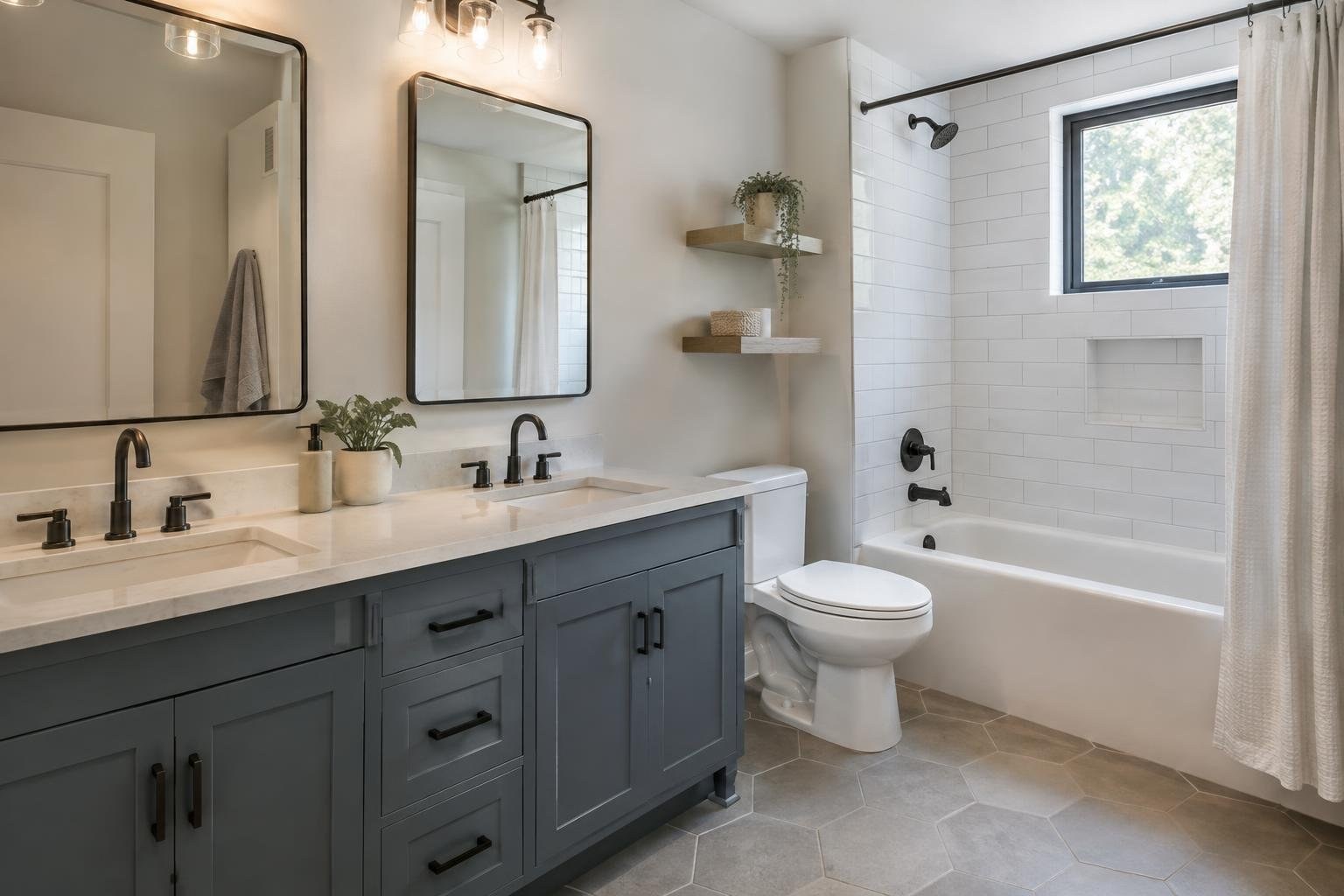
What a Bathroom Remodel Involves
A bathroom remodel may involve surface updates, fixture replacement, changes to storage or layout, or a broader renovation. The exact scope depends on the existing room and the homeowner’s goals. Whatever the scale, the decisions are connected: a vanity affects circulation and storage, while shower design and materials influence how the space is used and maintained.
That is why a remodel is more than a finish-selection exercise. Plan the practical requirements alongside appearance, then make sure the proposed work and products are described clearly before the project begins.
Plan the Room Before Choosing Finishes
Start with a needs list, measure the room, and sketch the existing fixtures and the routes people use through the space. Decide what must stay, what can change, and what problems the project should solve. Record storage needs, bathing preferences, and any frustrations with fixture access or water escaping the shower.
Once those priorities are clear, compare layout and finish ideas against the room’s function. The research on bathroom renovations emphasizes that poor space planning, ventilation, plumbing, and material choices can all become problems. Treat them as early design questions, not details to resolve at the end.
Mistake 1: Treating Storage as an Afterthought
Map where towels, toiletries, cleaning supplies, and other bathroom items will go before selecting a vanity. Think beyond drawers and cabinets: adding storage in several thoughtful locations may help avoid relying on one oversized unit. A bulky vanity can dominate a small room and make it feel cramped, while too little storage can leave everyday items without a home.
Ask for a plan that shows the vanity’s size in relation to fixtures and walking space. Make sure storage is useful for the items you actually keep in the bathroom rather than adding cabinetry simply because it is available.
Mistake 2: Choosing Style Without Testing Everyday Use
Good-looking products do not automatically make a workable bathroom. Consider whether you can reach shower controls comfortably, whether the layout suits the room, and how the design handles water. Homeowners have described open-shower layouts where controls are difficult to use without stepping into the spray, as well as wet-room floors where water did not drain as intended.
These examples are reminders to ask practical questions before the design is set. Have the provider explain how the proposed shower works during ordinary use, where water is expected to flow, and how the design fits your available space.
Mistake 3: Leaving Ventilation, Plumbing, or Materials Vague
Ventilation, plumbing, and materials deserve explicit attention in the project plan. Bathroom renovation guidance identifies inadequate ventilation, plumbing issues, and wrong material choices as recurring pitfalls. Ask what ventilation work is included, whether plumbing changes are proposed, and why each selected material is appropriate for its location.
Do not assume that a product labeled for bathrooms eliminates the need for careful installation or maintenance. Review manufacturer instructions and ask the provider to describe how seams, transitions, and other critical details will be handled.
Compare Materials and Shower Surrounds Carefully
Shower surrounds and other wet-area finishes differ in appearance, care, and installation demands. Compare the specific products under consideration rather than assuming one broad material category is always better. Ask about durability, cleaning, expected maintenance, product warranty, and installer familiarity with the chosen system.
Research on surrounds cautions that poor choices may contribute to frequent repairs, discoloration, or mold growth, and notes that DIYers should weigh installation difficulty. A lower purchase price is not the only relevant measure if a material is harder to install well or requires more upkeep.
- Confirm the product name and intended use.
- Request care and cleaning instructions.
- Ask how installation details affect the warranty.
- Compare the installed scope, not just the material price.
Bathroom Remodel Cost: What to Compare
A useful budget is based on the actual scope, not a general online average that may not fit the room or location. Request itemized proposals that distinguish products, labor, removal, and any proposed plumbing or layout work. Ask each provider to identify assumptions and explain what is excluded, so bids can be compared on the same basis.
The available research warns that underestimating a renovation budget is a common pitfall, but it does not provide current, geographically specific project prices. Do not treat an unsourced national figure as a quote. Ask providers how changes, concealed conditions, or product substitutions would be priced and approved.
What can increase the project price?
More extensive work, added plumbing or layout changes, higher-priced finishes, custom details, and additional labor can affect a project proposal. Which factors apply depends on the room and the written scope; confirm them with the provider rather than assuming they are included.
How can you control costs safely?
Finalize key selections before work begins, avoid changing the scope casually, and compare equivalent proposals. Save by simplifying nonessential design details or comparing suitable products, not by ignoring ventilation, choosing materials without understanding their installation needs, or accepting vague workmanship terms.
Warning Signs in a Bathroom Remodel Plan
Before demolition, check for warning signs that the proposed design may not solve the original problem. These are planning signals, not proof that a particular repair or product is required.
- Storage has no clear plan: The vanity is being chosen before anyone identifies what needs to be stored.
- The layout feels crowded: Fixtures or cabinetry leave an awkward path through the room.
- Ventilation is not discussed: The proposal does not explain what ventilation work, if any, is included.
- Plumbing scope is unclear: The estimate does not say whether existing plumbing stays or changes.
- Shower use has not been tested: Controls, splash, drainage, or access are not addressed.
- Materials are unspecified: A quote says “surround” or “tile” without identifying the product or installation scope.
- The budget depends on assumptions: Important selections or exclusions have not been documented.
Resolve these questions before signing off on the design or starting work.
What to Expect: Planning, Work, and Timing
Bathroom remodel timing depends on the scope, the products selected, the work sequence, and any required local approvals. Ask providers for a project-specific schedule and request that it identify decision deadlines, the expected order of work, and how schedule changes will be communicated.
A typical planning conversation should cover the room assessment, design and product selections, written estimate, permits if applicable, preparation, removal, installation, testing, cleanup, and final review. Confirm what the contractor considers complete and how concerns will be recorded and addressed.
How to Choose a Bathroom Remodeling Provider
Choose a provider who can explain the scope and tradeoffs in clear language. Check applicable licensing and insurance requirements with local authorities, and ask the provider for documentation relevant to the work. Request references or examples of comparable projects, product details, a written estimate, payment terms, and warranty information.
Compare bids line by line. A notably low total is not meaningful if the scope omits products, labor, or important installation details. Research on bathroom renovations cautions against cutting corners on the quality of professionals or products, so evaluate what is being delivered as well as the price.
Questions to ask before hiring
- What work is included and excluded in this estimate?
- Which products and models are specified?
- Who will perform each part of the work?
- What experience do you have with this type of layout or surround?
- How will storage and circulation be addressed?
- What ventilation and plumbing work is proposed?
- Who checks local permit requirements and obtains permits if needed?
- What is the expected schedule, and how are delays communicated?
- How are changes and additional costs approved?
- What product and workmanship warranties apply?
- How will the work area and cleanup be handled?
- What payment schedule and cancellation terms are in the contract?
Permits, Qualifications, Safety, and Warranties
Rules for permits, contractor licensing, and inspections vary by jurisdiction and by the work proposed. Before work begins, contact your local building department or ask the provider to explain which requirements apply and who is responsible for obtaining approvals. Keep permit responsibilities in the written agreement where relevant.
Read product and labor warranties before purchase. Ask who provides each warranty, what installation requirements or exclusions apply, whether registration is needed, and how to request service. Do not assume a product warranty covers labor or that a verbal promise replaces written terms.
Bathroom work can involve plumbing and other building systems. Use appropriately qualified professionals for work beyond your skills, and do not treat uncertain technical work as a trial-and-error DIY task.
DIY or Professional Installation?
DIY may be reasonable for a small cosmetic task if you understand the product instructions and can complete it safely. A full remodel can involve layout, plumbing, wet-area materials, tile cuts, and details that are difficult to correct after installation. Research on surrounds specifically recommends weighing installation difficulty, while tile-renovation guidance warns that awkward cuts can be hard to fix after grout is set.
Be realistic about the work you can perform accurately. If the project requires unfamiliar plumbing, complex tile work, or a waterproofing approach you cannot verify, seek qualified help. A professional estimate can also clarify which parts, if any, are appropriate to handle yourself.
Is a Bathroom Remodel Worth It?
A remodel is an opportunity to correct an inconvenient layout or improve storage, but it is not automatically worthwhile to replace everything. Compare the proposed work with the problems you want to solve, the condition of the existing room, and the cost and disruption of the alternatives. If the main concern is one finish or fixture, ask whether a smaller scope would meet the need without leaving a related problem unresolved.
Do not expect a guaranteed resale return or energy savings based on the available research. Instead, assess the project in terms of daily function, appearance, maintenance, budget, and how long you expect to use the space.
Related Projects to Evaluate Before Work Starts
Related work is worth discussing before the bathroom scope is final. It may be possible to coordinate connected tasks, but whether bundling saves money or disruption depends on the room and contractor. Confirm the sequence and costs in writing rather than assuming related work is included.
- Plumbing: Evaluate it when fixture locations or plumbing work are part of the plan. Decide the plumbing scope before finishes are installed.
- Ventilation: Discuss it while planning the room so the proposed approach is clear before renovation work begins.
- Lighting and electrical: Consider these alongside the layout and fixture choices; confirm which trades and tasks are included.
- Adjacent flooring or finishes: Check transitions and the effect of the bathroom work on adjoining surfaces before ordering materials.
- Storage and vanity: Coordinate these choices with circulation and the room’s dimensions before finalizing the design.
Common Bathroom Remodeling Mistakes to Avoid
- Choosing finishes before deciding how the room must function.
- Leaving storage until after selecting an oversized vanity.
- Ignoring circulation and fixture access.
- Not asking how ventilation and plumbing are addressed.
- Choosing a surround without comparing quality and installation difficulty.
- Assuming an open shower will work without discussing water flow and control access.
- Accepting a vague estimate that does not identify products or exclusions.
- Budgeting from an unsupported generic price instead of written local proposals.
- Cutting corners on product or installation quality to focus only on the lowest bid.
- Waiting until tile is installed to review the layout and cut locations.
- Failing to confirm permit responsibilities, payment terms, or warranty details in writing.
Most of these risks can be reduced by resolving design questions early and making the scope specific before work begins.
Bid Comparison and Contractor Red Flags
Look beyond the headline price when comparing proposals. Ask what each provider includes, which products are specified, how changes are handled, and what protections apply if workmanship or a product has a problem. Red flags include a refusal to put scope or payment terms in writing, unclear product descriptions, pressure to decide immediately, and a reluctance to explain permit responsibilities or warranty terms.
Do not assume a higher bid is automatically better, or that the lowest bid is a bargain. Compare equivalent scopes and verify credentials and insurance requirements for your area before making a decision.
Frequently asked questions
What is the biggest mistake to avoid in a bathroom remodel?
Start with how the bathroom needs to work: who uses it, what must be stored, how people move through it, and which fixtures are priorities. Then plan ventilation, plumbing, lighting, materials, and budget before committing to finishes. Poor planning and decisions that favor appearance over function are recurring renovation pitfalls.
How do I avoid going over budget on a bathroom remodel?
Create a written scope before work begins and include the fixtures, finishes, labor, removal, and any known plumbing or layout work. Set aside room in your budget for decisions or conditions that are not confirmed until the project is assessed. The supplied research warns that budget underestimation can contribute to difficult remodels, but it does not establish a reliable universal contingency percentage or national project price.
How can I add bathroom storage without making the room feel cramped?
Plan storage before selecting the vanity. Consider what needs to be kept in the room and where it can go, including options beyond vanity drawers and cabinets. Oversized cabinetry can dominate a small room, so compare storage capacity with the space needed to move comfortably.
Why does bathroom ventilation matter during a remodel?
Ventilation should be part of the plan, not an afterthought. Ask the contractor how the proposed ventilation approach fits the room and how it will be installed. The available research identifies inadequate ventilation as a common remodeling mistake, but it does not specify a fan size or code requirement for individual bathrooms.
How do I choose a bathroom shower surround?
Compare materials and surrounds for durability, maintenance, appearance, and installation difficulty, not just initial price. The available research cautions that lower-quality surround choices can be associated with frequent repairs, discoloration, or mold growth. Confirm product care instructions and warranty terms before choosing.
Should I choose an open shower or an enclosed shower?
It depends on your layout, needs, and preferences. An open shower can help fit more than one bathing feature in a tight plan, but think through splash control, water drainage, and whether the controls can be reached without stepping into cold spray. These are practical design concerns raised in homeowner renovation accounts.
What should I ask a bathroom remodeling contractor before hiring?
Ask for a written description of the work, product details, expected sequence, payment schedule, warranty information, and who is responsible for permits if they are required. Verify applicable licensing and insurance with the relevant local authorities or provider documentation, since rules vary by location. Compare bids by scope, not only by total price.
How long does a bathroom remodel take?
There is no supported universal timeline in the available research. Ask each provider for a project schedule that explains preparation, removal, installation, inspections if applicable, and cleanup. Confirm how the contractor will communicate schedule changes and what decisions must be made before work begins.
People Also Ask
How do you plan a bathroom layout to avoid mistakes?
Plan around the way the bathroom will actually be used. Consider clear paths, fixture access, storage, and whether doors or shower controls are convenient. A layout that looks good on paper can still be frustrating if it crowds the room or makes everyday tasks awkward.
What should I consider before choosing a bathroom vanity?
Do not choose a vanity solely for its appearance or storage capacity. Check that it fits the room and leaves enough space for comfortable movement. Also look at storage beyond the vanity so cabinets do not become oversized just to hold everything.
What should I know before installing an open shower?
Review the shower’s water-management design before installation, especially in an open shower or wet-room arrangement. Think about where water will go and whether the controls are reachable without standing in the spray. Ask the installer to explain how the design addresses those everyday concerns.
What tile planning mistakes should I avoid?
The research identifies tile layout and awkward cuts as details that can be difficult to correct after grout is set. Before work begins, discuss the tile pattern, cut locations, and how the layout will meet edges and transitions. Consider professional installation if the design requires precise cuts or complex detailing.
How can I avoid problems with a new shower surround?
Ask for the exact product and installation scope, how the surface should be maintained, and what the warranty covers. Compare quality and installation difficulty as well as price. Research on bathroom surrounds flags recurring repairs, discoloration, and mold growth as possible concerns with unsuitable choices.
Do I need a permit to remodel a bathroom?
Check local permit requirements before work starts, particularly if the proposed scope changes plumbing or other building systems. Requirements depend on the jurisdiction and the work involved, so confirm them with the local building department and ask the provider to clarify who will obtain any required permits.
The most reliable way to avoid bathroom remodel mistakes is to settle the room’s functional needs before choosing finishes. Plan circulation, storage, ventilation, plumbing, materials, and the full budget together, then confirm the scope and responsibilities in writing. A thoughtful design and qualified installation can help prevent costly compromises that are difficult to correct after work is complete.
Your next step
Explore services and find providers at Estimate.org.
Reviewed and maintained by the Staff at Estimate.org.
Last reviewed and updated October 9, 2026 by the Estimate.org Editorial Team.
Sources
- 10 Common Bathroom Remodel Mistakes and How to Avoid Them – Tile Club
- 10 Common DIY Bathroom Remodeling Mistakes
- 10 Bathroom Renovating Mistakes Contractors Wish You'd Stop Making
- 6 Bathroom Renovating Mistakes Contractors Are Tired of Seeing All the Time
- Avoid These 5 Bathroom Remodel Mistakes for a Better Build
- More Renovation Regrets And Cautionary Tales As Told By Our Readers: Bathroom Edition – Emily Henderson
- 11 Mistakes to Avoid During Your Bathroom Renovation, According to Interior Designers
- 4 Rookie Bathroom-Remodeling Mistakes and How to Avoid Them
