

A bathroom remodel timeline depends on what is changing, which materials are ready, and whether the project uncovers work that was not visible at the start. A cosmetic refresh and a full gut renovation should not be expected to follow the same schedule. Broad published examples range from a week or two for some small updates to eight weeks or more for some extensive projects, while another remodeling source gives a three-to-eight-week range for many remodels. Those are examples, not a promise for your home. The most useful estimate is a written, project-specific schedule that separates planning and ordering from active construction, names key milestones, and explains how permits, deliveries, and changes could affect the finish date. This guide shows what to ask before signing and how to plan for the disruption.
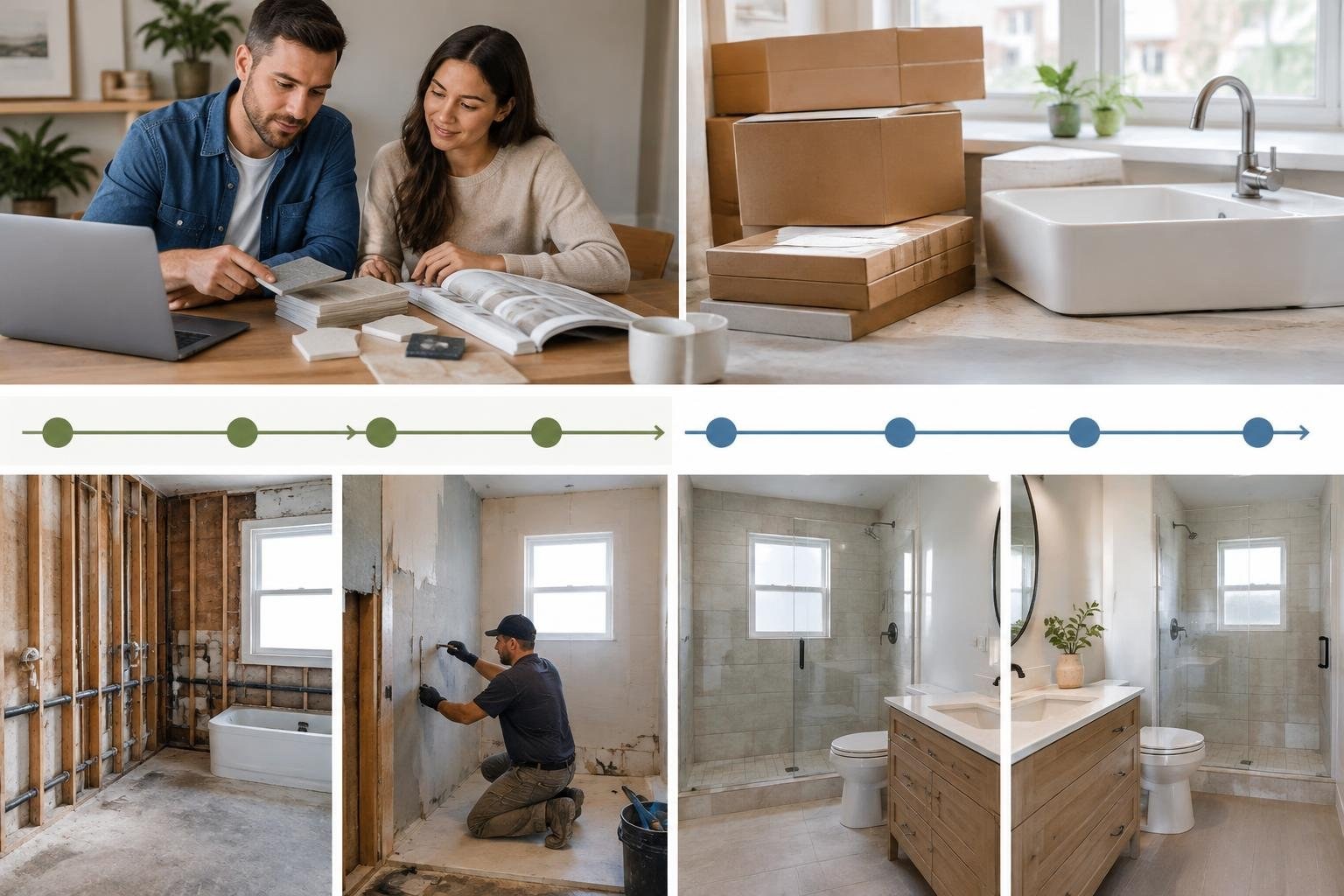
Bathroom remodel timeline: the short answer
A bathroom remodel is a coordinated project, not just the days when workers are in the room. A useful schedule accounts for decisions made before construction, material ordering, any applicable approvals, on-site work, and final corrections. Ask the contractor to identify which dates are estimates and which depend on deliveries, inspections, or decisions still to be made.
Published timelines illustrate why a single number can mislead. One remodeling company describes three to eight weeks as a typical range for many projects, depending on scope and complexity. Another source says a small cosmetic update might take a week or two, while a full-scale project with layout changes could take eight weeks or more. These figures describe different project types and should not be treated as interchangeable guarantees.
Before comparing estimates, make sure each contractor is scheduling the same work. A shorter duration may reflect a narrower scope or exclude planning, ordering, or repair work discovered after demolition.
What is included in a bathroom renovation schedule?
Remodel timelines are easiest to understand when divided into two broad parts: preparation and construction. Preparation covers defining the work, choosing products, coordinating the project, ordering materials, and checking whether local approvals apply. Construction is the on-site work itself. A schedule that shows only construction may not tell you how long you will wait before the room is ready to start.
- Define the scope. Decide what stays, what is removed, and whether the layout or plumbing locations may change.
- Make selections. Identify the products and finishes that affect dimensions, installation, or ordering.
- Confirm the plan. Review the written scope, schedule assumptions, responsibilities, and any permit questions.
- Prepare the room. Agree on access, protection for nearby areas, storage, and household arrangements.
- Complete the work. The contractor coordinates the agreed work and raises discoveries or changes for approval.
- Inspect and close out. Walk through the finished work, record remaining corrections, and confirm payment and warranty documents under the contract.
The exact sequence and duration depend on the project. A published remodel account describes a planned 17 working days of construction but notes that material lead times slowed progress, even though the materials had been ordered together. This is a useful reminder to ask what the schedule assumes about product availability and delivery.
How scope changes the expected duration
Look at the room and the planned work before deciding whether the project is a quick update or a major renovation. A cosmetic project may keep the existing layout and focus on finishes or selected fixtures. A more extensive remodel may involve removing most finishes, changing the layout, or coordinating substantial work behind walls and floors. The latter can require more trades, materials, and sequencing.
| Project approach | Typical schedule implication | Planning consideration |
|---|---|---|
| Limited cosmetic update | May be shorter; one source describes some small updates as taking a week or two. | Confirm exactly which surfaces and fixtures are included and whether the room remains usable. |
| Broader remodel with existing layout | Can take several weeks; a remodeling source gives a broad three-to-eight-week range for many projects. | Ask what trades, product deliveries, and finishing tasks are included. |
| Full gut or layout change | May take eight weeks or more in some cases, according to published timeline examples. | Plan for additional coordination and possible loss of use, especially if it is the only bathroom. |
These are not firm durations. A contractor should explain how the proposed scope, home conditions, and available products translate into the schedule for your project.
Common causes of bathroom remodel delays
A delay is a reason to ask for a clear update, not automatically proof of poor work. Some scheduling challenges can be anticipated; others only become clear as the project develops. Ask the contractor to distinguish a revised target date from a completed milestone and to explain what needs to happen next.
- Materials are not ready. A product may have a lead time or delivery issue. Confirm which items are schedule-critical and whether their availability has been checked.
- Selections are undecided. Late decisions can make ordering or installation harder to coordinate. Set decision deadlines before work begins.
- The project scope changes. A different fixture, finish, or layout can require revised work or orders. Request a written change and schedule update.
- Hidden conditions appear. A remodel discussion and a contractor account mention concerns such as water-damaged subfloors, mold, or dry rot. Ask how the contractor will document a discovery and get approval before carrying out added work.
- Permits or local conditions affect the plan. A source focused on Charlottesville identifies geography and permits as factors that can affect project cost and timing. Verify the requirements for your own location rather than assuming the same rules apply everywhere.
Bathroom remodel cost and budget factors
Bathroom remodeling costs cannot be responsibly estimated from timeline alone. The research available for this guide does not establish a current national or local price range, so do not use a duration estimate as a substitute for a written price. Ask providers for comparable, itemized scopes and check that each explains what is included, excluded, and treated as an allowance or potential additional work.
In a real estimate, ask the contractor to clarify the cost treatment of labor, products, removal, preparation, and any repair work that cannot be confirmed until finishes are removed. The written agreement should explain how unplanned conditions are priced and approved.
What can make the project more expensive?
- A change in scope or layout that adds work or coordination.
- Selections with different prices or availability than the original plan.
- Permit costs or additional steps where local requirements apply.
- Work required after concealed damage is discovered.
- A location where labor or material costs differ from the estimate assumptions.
How can you control spending safely?
Finalize choices early, compare bids based on identical work, ask about delivery and availability, and keep a contingency decision process in writing. Do not reduce cost by skipping a needed permit, concealing a known problem, or accepting vague language about repairs. Request a written change order before approving added work.
What to expect while the bathroom is out of service
Ask the contractor to describe how your bathroom will function at each stage. Work that affects plumbing can make the room unavailable, and the impact is more serious when there is no second bathroom. A timeline source recommends planning for the possibility that the only bathroom will be unusable during a full gut remodel or layout change. Confirm the specific dates and arrangements for your household instead of assuming the room will remain partly functional.
Before the first day, clarify where workers may enter, how the work area will be protected, where materials will be stored, and how schedule updates will be delivered. Ask which household decisions could hold up the next task. These details help avoid preventable pauses and make the disruption easier to manage.
Build flexibility into personal plans around the contractor’s target completion date. A published project account describes delays tied to material lead times, while remodeling sources emphasize that no one timeline fits every project. Avoid making the earliest projected finish date a hard deadline for travel, guests, or other work unless the contractor has agreed to it and explained the assumptions.
How to choose a bathroom remodeling contractor
Compare providers by the quality and completeness of their plans, not by the fastest promised finish. Ask for a written scope and schedule that make clear what the timeline covers, what could change it, and who is responsible for communicating updates. The estimate should be specific enough that you can compare it fairly with another proposal.
Before signing, verify that the provider has the credentials and insurance required for the work in your area. Requirements vary by location and type of work, so check with the appropriate local authority rather than relying on a verbal assurance. Ask for references for comparable bathroom projects and review how the contract handles permits, payments, subcontractors, changes, cleanup, completion, and workmanship coverage.
Questions to ask before hiring
- What work is included in this schedule, and what is not?
- Does the duration refer to working days or calendar days?
- How much time is allocated to planning and product ordering?
- Which products are schedule-critical, and have their availability and delivery been checked?
- What permits or inspections might apply, and who will confirm them?
- Who will be my day-to-day contact?
- How often will I receive schedule updates?
- How are changes documented and approved?
- How are concealed conditions assessed, priced, and scheduled?
- When might the bathroom be unavailable, and for how long?
- Who performs the work, including subcontracted work?
- What insurance and local credentials can you provide for verification?
- What are the payment milestones?
- What written warranty or workmanship coverage applies?
- How will the final walkthrough and remaining corrections be handled?
Permits, safety, warranties, and project closeout
Ask your local building department or qualified provider whether the proposed work needs a permit or inspection. Requirements depend on the location and project details; a source discussing bathroom timelines specifically identifies permits as a possible factor in cost and schedule. Make permit responsibility explicit in the contract and do not assume that a contractor’s estimate includes every approval step.
Review what product and labor warranties cover, who provides each one, and what documents you should receive. Ask whether registration or specific care is required and how to report a problem. A completed project should also have a clear closeout process: a walkthrough, a written list of remaining corrections if needed, final documentation, and payment according to the signed agreement. One remodeling process guide describes final payments occurring after punch-list items are addressed, but payment terms should be established in your own contract.
Do not treat a schedule as a reason to bypass safety, local rules, or an inspection that applies. Have the contractor explain how any required approvals fit into the expected sequence.
DIY bathroom renovation versus hiring a professional
Many homeowners can handle finish selection, planning, and household preparation, but the construction work may involve plumbing, electrical, waterproofing, or other specialized tasks. Whether a particular task is appropriate for DIY depends on skill, local rules, and the consequences of an error. Do not take on work that you cannot safely complete or that requires a qualified, licensed trade in your jurisdiction.
DIY can also change the schedule. A homeowner account describes planning a 17-working-day construction phase and encountering delays, including material lead times. If you are coordinating work yourself, allow time for product ordering and for arranging each stage; do not assume that a target number of hands-on days equals the full time until the bathroom is ready.
For a professional project, ask who coordinates the trades, who manages deliveries, and how a delay or hidden condition is communicated. Clear responsibility matters whether the work is managed by a general contractor or by the homeowner.
Comparing estimates, approaches, and schedules
Project timing and cost are related but not identical. A faster construction estimate may omit planning or ordering, while a longer one may include more work or allow for coordination. A source describing project delays identifies material lead times, and another notes that geography and permits can influence cost and schedule. Ask providers to explain their assumptions rather than interpreting duration as a direct measure of price or quality.
To compare options, keep the room layout and scope consistent across bids. Ask each contractor to state whether the proposal includes product ordering, removal, any known preparation, permits if applicable, and the same completion standard. If one estimate is much faster or cheaper, identify what differs before you decide. A useful choice is the plan that fits your needs and has a credible, clearly explained sequence, not simply the shortest advertised timeline.
Ways to avoid preventable schedule delays
Some schedule risks can be reduced through decisions made before demolition. Confirm the scope, choose products early, check availability, and ask which delivery dates are essential. A project account notes that material lead time affected a planned construction phase even when materials were ordered together, so ordering early can help with planning but cannot guarantee that every delivery arrives as expected.
- Get the project scope and schedule in writing before work begins.
- Complete selections by agreed decision dates.
- Ask the contractor to identify dependencies and long-lead items.
- Confirm permit questions with the relevant local authority.
- Agree on a written process for approving extra work.
- Keep communication regular and raise schedule concerns promptly.
Do not try to “save time” by starting before materials, responsibilities, or approvals are clear. A rushed start can create avoidable uncertainty when the next step depends on a decision or delivery.
Common scheduling mistakes and warning signs
Before committing, look for an estimate that describes the work and its schedule in plain language. A vague promise such as “done in a few weeks” is hard to compare or use for planning. Ask for milestones, assumptions, and a process for communicating changes.
- Do not compare bids until you confirm they cover the same scope.
- Do not assume a published duration applies to your room or includes preparation.
- Do not postpone important product decisions until installation is imminent.
- Do not treat concealed damage as automatically included unless the contract says so.
- Do not accept verbal-only changes to price or schedule.
- Do not assume a permit is unnecessary; verify local requirements.
- Do not make household plans that depend on an unconfirmed finish date.
- Do not make final payment without following the written contract’s closeout process.
A credible contractor should be willing to explain uncertainty and how it will be managed. A schedule is useful when both sides understand the plan, not when it promises an unrealistically precise outcome.
Related projects to coordinate with a bathroom remodel
A bathroom remodel may overlap with other home projects, but bundling should be based on scope and coordination rather than an assumption that it always saves time or money. If work outside the bathroom affects access, utilities, deliveries, or the same contractor’s schedule, discuss sequencing before signing.
- Plumbing work: Identify any related plumbing changes while setting the bathroom scope. Confirm which tasks must be coordinated before finishes go in.
- Electrical or ventilation work: Ask whether the bathroom plan includes these tasks and who is responsible for any required trade work or approvals.
- Adjacent-room or whole-home renovation: If the bathroom is part of a larger remodel, ask for one coordinated schedule and clarify how shared access and deliveries will be managed. A remodeling source notes that a bathroom renovation may be part of a whole-home project.
Ask which work must happen first and whether combining projects changes the schedule, price, or disruption. Put the agreed sequence in writing so the bathroom is not left waiting on an unplanned related task.
Frequently asked questions
How long does a bathroom remodel usually take?
There is no single schedule that applies to every bathroom. One contractor’s project account estimated 17 working days for its construction phase but described delays from material lead times. A remodeling contractor gives a broad estimate of three to eight weeks for many remodels, depending on scope and complexity. These examples are not guarantees. Ask whether a proposed timeline means workdays or calendar days and whether it includes ordering, permits, and inspection.
Can a bathroom remodel be completed in two weeks?
A limited cosmetic update can be shorter than a renovation that removes finishes, changes the layout, or requires extensive work. One published estimate describes a small update as potentially taking a week or two, while a full-scale remodel with layout changes may take eight weeks or more. These are broad examples, not a promise for a specific home. Confirm the contractor’s expected construction duration and the schedule assumptions in writing.
What can delay a bathroom renovation?
Material lead times can delay the start or interrupt work even after a construction schedule has been prepared. A contractor’s project account describes lead time as one reason a planned construction phase took longer than expected. Ask which items must be ordered, whether they are confirmed in stock, and what the schedule does if a selection arrives late.
Do permits affect a bathroom remodel timeline?
The available timeline sources identify geography and permits as factors that can affect cost and schedule. Whether your project needs a permit depends on the work and local requirements, so ask your contractor or local building department before starting. If a permit or inspection applies, include its expected timing in the project plan rather than treating it as an afterthought.
Will hidden water damage extend a bathroom remodel?
Possibly. If concealed water damage, a damaged subfloor, or similar conditions are found after finishes are removed, the contractor may need to assess the issue and agree on additional work before proceeding. A homeowner discussion and remodel timeline account both describe hidden damage as a concern. Ask how discoveries will be documented, priced, approved, and reflected in the schedule.
Can I use my bathroom during a remodel?
If the bathroom is your only one, plan for the possibility that it will be unavailable during some or all of the construction period. A project timeline source specifically advises planning for no working bathroom during a full gut remodel or layout change when it is the only bathroom. Ask your contractor when plumbing will be disconnected and when the room is expected to be usable again.
What should a bathroom remodeling schedule include?
A useful estimate separates the work into phases and identifies what must happen before the next phase can begin. It should explain the expected start, major milestones, selections and deliveries, permit or inspection assumptions, how changes affect timing, and who will communicate schedule updates. Ask the contractor to distinguish active construction time from the time needed for planning, ordering, and approvals.
People Also Ask
How do I get an accurate bathroom remodel timeline?
The schedule varies with scope, material availability, and project-specific conditions. Ask for a written timeline that separates planning, ordering, and active construction, and clarifies whether the dates are working days or calendar days.
Does a contractor’s timeline include ordering materials?
Not necessarily. A schedule based on a completed room may not include planning, product lead times, permits, or time needed to address discoveries behind existing finishes. Ask what the quoted duration includes and excludes.
When should I choose bathroom fixtures and finishes?
Ask what selections need to be made before work starts and which deliveries are schedule-critical. Confirm who tracks orders and what happens if an item is delayed, unavailable, or arrives damaged.
How do changes affect a bathroom renovation schedule?
A change can affect more than the task being changed: it may require new materials, additional labor, or a different sequence. Ask the contractor to document the cost and schedule impact and obtain approval before the added work begins.
How should I prepare if my only bathroom is being remodeled?
For an extensive renovation, consider where you will wash, shower, and use the toilet if the room becomes unavailable. Ask the contractor when water or plumbing fixtures will be disconnected and when the bathroom can safely return to use.
How can I keep a bathroom remodel on schedule?
Ask for a phase-by-phase schedule with a target start, key milestones, expected completion, and the assumptions behind those dates. It should also explain communication, deliveries, approvals, and how unexpected conditions will be handled.
A bathroom remodel timeline is best treated as a sequence of decisions and work phases, not a guaranteed number of days. Define the scope, settle selections early, ask for a written schedule with milestones, and plan for the possibility of concealed damage or delayed materials. Before work begins, confirm who is coordinating the project, how changes will be approved, and what bathroom arrangements you will need. A clear plan will not eliminate every delay, but it can make the schedule easier to understand and manage.
Your next step
Explore services and find providers at Estimate.org.
Reviewed and maintained by the Staff at Estimate.org.
Last reviewed and updated October 9, 2026 by the Estimate.org Editorial Team.
Sources
- DIY Bathroom Remodel Schedule And Renovation Timeline
- Bathroom Remodel Timeline in Charlottesville: What Homeowners Should Expect
- r/HomeImprovement on Reddit: Time estimate for bathroom remodel?
- How Long Does a Bathroom Remodel Take? | Hogan Design & Construction
- Bathroom Remodeling Timeline: A Comprehensive Guide | Upscale Remodeling
- Bathroom Renovation Guide: Permits, Contractors & Detailed Timeline
- Bathroom Remodel Timeline 2026: Week-by-Week Guide
- What's the Average Timeline for a Bathroom Renovation?
