

A bathroom remodeling estimate is a written projection of the labor, materials, and other charges for a defined renovation scope. It is not a reliable apples-to-apples comparison unless each provider is pricing the same work, product choices, and assumptions. Published estimates illustrate why: one 2025 calculator reports a range from $2,500 to $80,000, while other sources publish narrower or differently framed ranges. Those figures are not a quote for your home. The main takeaway is to define the work first, request itemized local proposals, and check what each price excludes. Your room’s size, selected products, layout decisions, and any work discovered after opening walls can all affect the final project budget. This guide explains what to ask, how to compare options, and how to avoid choosing based on a low headline number alone.
What a bathroom remodeling estimate is for
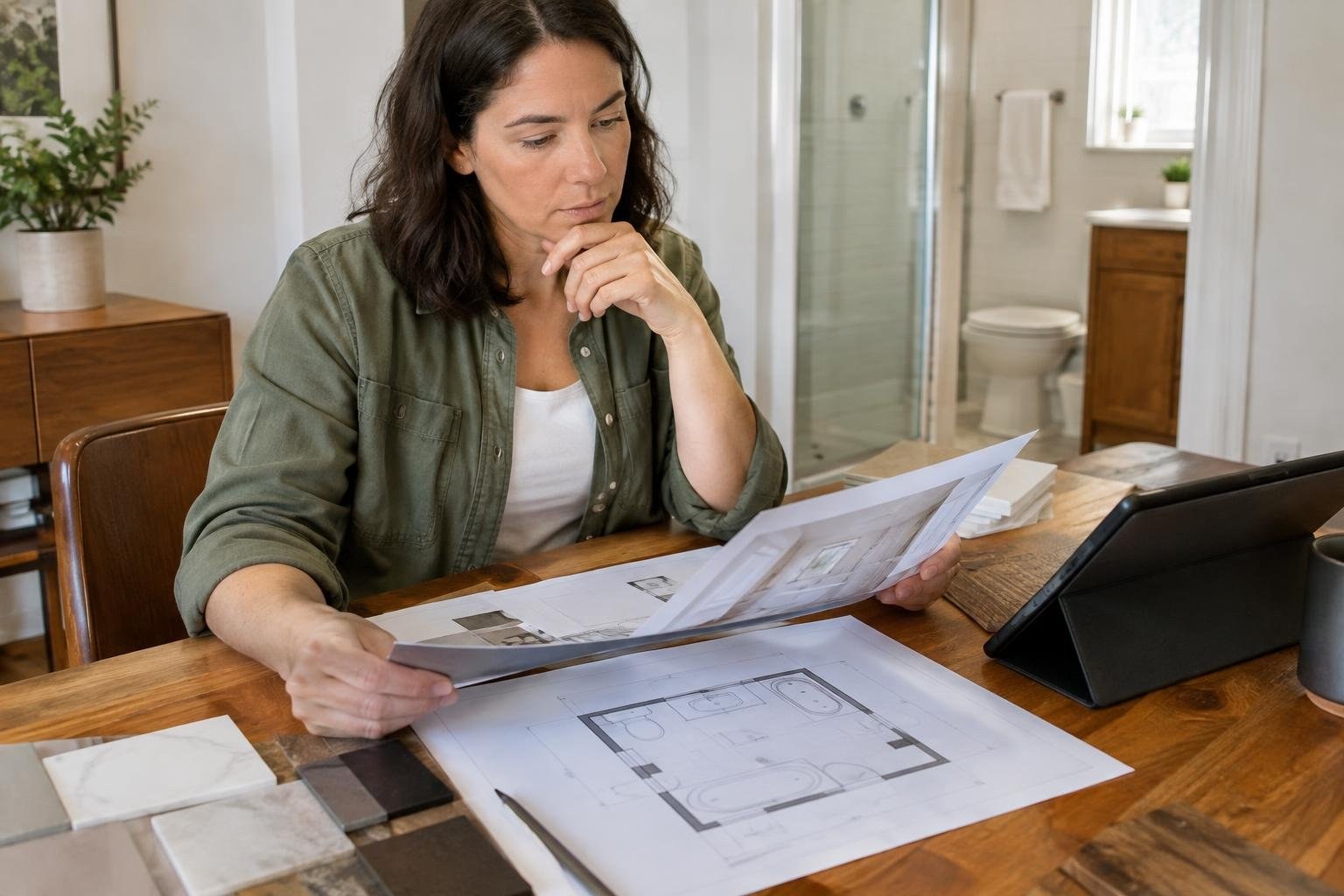
A remodeling estimate is a proposal for a specific set of changes, not a price for every possible bathroom project. Before requesting one, write down what is not working and what outcome you want. That could mean refreshing visible finishes, replacing selected fixtures, or considering a broader renovation. Treat these as scope choices to discuss with providers, not as fixed project categories with universal prices.
The estimate process matters because a total without a detailed scope can hide important differences. One provider may include removal and disposal while another lists them separately. A proposal may identify exact products, or use allowances that leave selections and final costs open. Ask each provider to explain the work in plain language and put the answer in the written proposal.
A useful estimate helps you decide whether the proposed work fits your priorities and budget. It also gives you a document to check against the work as the project progresses.
What to prepare before requesting estimates
- List the problems: Note which features are worn, difficult to use, or no longer meet your needs. Describe what you observe without assuming the cause.
- Set priorities: Separate essential work from desirable upgrades. This gives providers room to show alternatives without losing sight of your main goal.
- Describe the desired result: Identify the finishes, storage, fixtures, or layout changes you want considered. If you are unsure, ask providers to price a defined base option and clearly labeled alternatives.
- Collect project details: Share the room’s approximate dimensions, photos, known previous work, and any concerns you have noticed. Treat these as planning information, not a substitute for an in-person assessment.
- Request a written scope: Ask what will be removed, installed, repaired, protected, and finished. Make sure the proposal says what is not included.
Use the same project description with every provider. When one estimate makes an assumption that another does not, resolve the difference before comparing totals.
Bathroom remodel cost: how to read published estimates
There is no single dependable price range that describes every bathroom remodel. Published estimates from several sources use different scopes and assumptions:
- Bath Calculator reports a 2025 range of $2,500 to $80,000, with an estimated average of about $10,978.
- Houzz reports an average bathroom remodeling range of $7,500 to $17,000.
- HomeGuide reports $3,500 to more than $25,000 for an average-sized bathroom, and also presents a per-square-foot range.
- Home Depot says bathroom remodels typically start at $5,000.
- Modernize describes smaller renovations below $3,000 and larger remodels at $30,000 or more.
These are published estimates, not guaranteed local prices or competing quotes for the same job. Differences in project size, selected products, location, and included work make direct comparisons difficult. Use online ranges only to orient your planning, then seek proposals based on your home and written scope.
Homewyse’s typical-remodel estimate says general-contractor overhead and markup for organizing and supervising that example may add 13% to 22% to the base cost shown in that example. It also notes sales tax on materials and supplies. Ask whether supervision and tax are included in your own proposal; do not assume the example’s percentage applies to every contractor or project.
What can change the total?
Ask providers to identify how each of these affects their price: the work included, the room’s dimensions, product selections, whether the layout changes, demolition and disposal, preparation and finishing, supervision, taxes, and any work that cannot be confirmed before removal begins. Request separate figures where possible so you can see which decisions drive the difference.
How to budget with uncertainty
Ask for a base proposal and separately priced options. Find out how the provider will document extra work if conditions differ from what could be seen during an estimate. Decide in advance how you want to review and approve added costs. Do not treat a vague allowance or verbal assurance as a final price for a product or task.
How to compare bathroom remodeling estimates
Two proposals can look very different even if their totals are similar. Compare the actual scope and assumptions rather than treating the lowest number as the best value. Use a simple table or worksheet:
| Compare | What to check |
|---|---|
| Work | Which items are removed, repaired, installed, and finished? |
| Products | Are products named, selected by you, or represented by allowances? What is excluded? |
| Labor and coordination | Who performs and supervises the work? Are any coordination charges separate? |
| Other charges | Are demolition, disposal, taxes, permits, and protection of the work area included or excluded? |
| Changes | How are additional work, price changes, and schedule changes documented and approved? |
| Terms | What payment schedule, completion expectations, and written warranty terms apply? |
When proposals use different products or allowances, ask for alternatives with comparable selections. If a provider will not explain a large price difference, ask for more detail before making a decision.
Options and tradeoffs to discuss
Choose the scope that addresses your priorities and fits your budget rather than assuming that every project needs a complete renovation. Ask providers to distinguish between work you consider essential, optional upgrades, and alternatives. Compare those choices by the stated price, the work included, and how each option meets your intended use.
For example, if you are considering a visible refresh and a more extensive renovation, ask for separate written proposals rather than one estimate that combines both. If you are considering layout changes, ask the provider to explain which parts of the plan are assumptions and when those assumptions can be confirmed. The useful comparison is not simply “small versus large”; it is what you receive, what remains unchanged, and what could prompt a revised price.
Ask about product choices in practical terms: appearance, cleaning needs, durability information supplied by the manufacturer, availability, and cost. Do not accept an unsupported promise that a particular option is “best.” Request product names or specifications in the proposal so you can make a clear comparison.
What to expect: schedule and project communication
Bathroom projects can involve several decisions and trades, so ask the provider for a project-specific sequence instead of relying on a generic timeline. The proposal or schedule should explain when preparation, removal, installation, finishing, any required inspections, and final review are expected to occur. Ask how much notice you will receive before work begins and when you need to finalize product selections.
Before signing, clarify how the work area will be accessed and protected, what parts of the home may be affected, and whether the bathroom will be unavailable during any stage. Ask who will communicate schedule updates and how a delay or change in scope affects the expected completion window. If more than one provider or trade is involved, ask who coordinates them and who is your main contact.
Do not rely on a spoken start or finish date alone. Have the agreed schedule, relevant assumptions, and the process for communicating changes recorded in writing.
How to choose a qualified bathroom remodeling provider
Request estimates from providers who are willing to inspect the proposed work, answer questions, and put the scope and terms in writing. Verify any license or registration that applies in your location, and request current proof of insurance relevant to the work. Ask who will perform the project, who supervises it, and whether any work will be subcontracted.
Ask for references for projects with a similar scope. Review the estimate alongside references and any available work examples, but treat testimonials as one part of your decision rather than proof that every detail will go smoothly.
Questions to ask a remodeling provider
- What specific work is included in this price?
- What work, materials, or charges are excluded?
- Which product selections are fixed, and which are allowances?
- Who will supervise the project and be my day-to-day contact?
- Will you use subcontractors, and which tasks will they perform?
- What applicable license or registration do you hold?
- Can you provide proof of current insurance?
- Can I speak with references for similar work?
- What is the expected project sequence and schedule?
- How will you protect the work area and handle cleanup?
- How are additional work and price changes documented?
- What payment schedule do you propose?
- Which permits or inspections may apply, and who will confirm them?
- What written product and workmanship warranty terms apply?
- How will you handle a concern or dispute about incomplete work?
Permits, credentials, safety, and warranties
Permit, licensing, and inspection requirements can depend on where you live and what work is proposed. Before work starts, contact the local building department or ask the provider to identify the approvals they believe apply. Confirm who is responsible for applications, fees, and arranging inspections, and include those responsibilities in the written agreement. Do not assume that a project is exempt just because it is described as a remodel or a replacement.
Ask for applicable license or registration details and verify them with the relevant local or state authority. Request proof of insurance and check that the written agreement identifies the responsible provider. Discuss product, workmanship, and labor warranties separately: ask what is covered, how to make a claim, what may be excluded, and whether any registration or maintenance steps apply.
Safety and protection should also be addressed in the scope. Ask how the provider plans to manage access, protect adjacent areas, and respond if the project reveals a condition outside the original estimate. Avoid authorizing unpriced extra work without a written description and your approval.
Ways to manage cost without creating avoidable risk
Cost control starts with a clear plan. Decide which outcomes matter most, set a budget range you can manage, and ask providers to price a defined scope with separately identified alternatives. Compare products before signing and ask whether a selection change would affect price or timing.
- Keep the existing plan where it meets your needs, and ask the provider to price any proposed layout change separately.
- Ask for product alternatives with the price and relevant specifications stated in writing.
- Make decisions and finalize selections before the work reaches the point where a change could require rework.
- Ask what you can prepare yourself without interfering with the provider’s work, insurance, or written terms.
- Compare complete proposals, including exclusions and allowances, rather than selecting a low headline price.
- Keep a record of the approved scope, selections, payments, and change orders.
Do not save money by skipping approvals that apply, accepting unclear product allowances, or ignoring a concern that should be evaluated before finishing work covers it. Ask the provider to explain safe, lower-cost alternatives rather than negotiating away necessary scope without understanding the tradeoff.
Estimate mistakes and contractor red flags
Common estimate and project pitfalls are often preventable. Watch for a proposal that does not identify the work, leaves key products as undefined allowances, or excludes charges without making that clear. Be cautious if a provider pressures you to sign immediately, will not provide written terms, refuses to explain a price, or asks for payment terms you do not understand.
- Choosing on total price alone without checking the scope.
- Comparing proposals that assume different products or tasks.
- Overlooking demolition, disposal, taxes, supervision, or other exclusions.
- Assuming an allowance guarantees a particular product and installed price.
- Making late changes without asking for their cost and schedule effect.
- Proceeding without checking applicable credentials, insurance, or approvals.
- Accepting verbal promises about timing or warranties that are absent from the agreement.
- Paying or authorizing extra work without understanding the written terms.
A low estimate is not automatically a red flag, but an unexplained low estimate deserves questions. Ask the provider to confirm that the quote includes the same work as the other bids.
Project readiness checklist
Before accepting a proposal, use this checklist:
- Have I written down the problems to solve and the outcomes I want?
- Does the proposal describe the work and identify exclusions?
- Are products named or allowances clearly explained?
- Have I compared estimates based on the same scope?
- Do I understand labor, supervision, disposal, taxes, and other charges?
- Have I asked how unexpected work and change orders will be priced?
- Have I checked applicable credentials and requested insurance evidence?
- Have I asked who supervises the project and coordinates any subcontractors?
- Have I confirmed who checks permit and inspection requirements?
- Are the payment terms, schedule, cleanup, and warranties in writing?
- Have I made product decisions or documented when they are due?
- Do I know how to raise a concern and request a final review?
Keep a copy of the signed agreement, estimate, selections, approvals, change orders, and payment records. At the end, compare the completed work with the agreed scope and document any unresolved items before treating the project as complete.
Using published estimates as a planning reference
Use a published estimate as a starting point for questions, not as a budget for your specific bathroom. Check when it was published and what room size, scope, and product choices it assumes. If those details are unclear or differ from your project, do not treat the figure as directly comparable. Ask providers for written proposals based on the same project details.
Factors that affect the project
The project’s scope, room size, and product selections can all affect the estimate. Published cost sources explicitly identify bathroom size and the type of renovation as factors in price, while Home Depot notes that cost varies with room size and selected products. HomeGuide also reports a broad range for average-sized bathrooms and gives a per-square-foot estimate, illustrating why room dimensions matter when interpreting published figures.
- Scope of work: A smaller renovation and a more extensive remodel may fall into very different price ranges. Ask providers to list the exact tasks included and price optional work separately.
- Room size: Share the bathroom’s approximate dimensions and ask how the proposed work and price relate to the area being remodeled.
- Product selections: Ask providers to name the products or clearly explain allowances, and to state how selection changes could affect the total.
- Supervision and tax: One Homewyse example says general-contractor overhead and markup for organizing and supervising its typical remodel may add 13% to 22% to the cost above, and notes sales tax on materials and supplies. Ask whether these costs are included in your estimate; the example’s percentage is not a universal rate.
Because published cost ranges reflect different assumptions, use them as context rather than a project price. Request written local proposals based on the same scope, room details, and product assumptions.
Frequently asked questions
What should a bathroom remodeling estimate include?
A bathroom remodeling estimate should identify the work included, materials or allowances, labor, demolition and disposal, expected schedule, payment terms, exclusions, and how changes are priced. Ask whether the estimate includes taxes, permits, and any general-contractor supervision or markup. Compare proposals only after confirming that they describe the same work and product level.
How much does a bathroom remodel cost?
Published estimates vary widely. Bath Calculator reports a 2025 range of $2,500 to $80,000; Houzz reports $7,500 to $17,000; and HomeGuide reports $3,500 to more than $25,000 for an average-sized bathroom. These figures use different assumptions and are not a quote for a particular bathroom. Get local, scope-specific written estimates.
What makes a bathroom remodel estimate more expensive?
A quote may rise when the plan includes more work, more expensive selections, or changes to the room layout. Ask providers to separate labor, materials, allowances, demolition, disposal, and any supervision charge. Also ask how the price would change if concealed conditions require additional work, and require approval of a written change order before proceeding.
How do I compare bathroom remodeling contractors?
You can compare contractors by requesting written, itemized proposals based on the same scope and product selections. Check applicable credentials and insurance, ask who will supervise and perform the work, and request references for similar projects. Compare the exclusions, payment schedule, change-order process, and warranty terms, not just the total.
How can I reduce bathroom remodeling costs safely?
Keeping the existing layout is one option to discuss when seeking savings, as is selecting products with a clear price and avoiding late design changes. Ask for lower-cost alternatives that still meet your needs. Do not cut costs by accepting an unclear scope, skipping required approvals, or leaving water-related concerns unaddressed.
What should I ask about the bathroom remodel schedule?
Ask the provider for a project-specific schedule that explains when preparation, removal, installation, finishing, any required inspections, and final review are expected. Confirm how much notice you will receive before work begins, when product selections are due, how long the bathroom may be unavailable, and how schedule changes will be communicated.
People Also Ask
What should I prepare before requesting bathroom remodeling estimates?
Write down the problems you want to address, your priorities, and the result you want. Share approximate room dimensions, photos, known previous work, and any concerns with each provider, using the same project description each time. These details help providers prepare comparable proposals but do not replace an in-person assessment.
Can I trust online bathroom remodel cost calculators?
One 2025 cost calculator reports estimates from $2,500 to $80,000, while other publishers report narrower ranges. Because these estimates may assume different room sizes, locations, and scopes, use them only as broad context. A written quote based on your bathroom and project details is more useful for budgeting.
What is an allowance in a bathroom remodeling estimate?
Ask the contractor to identify the allowance, what it covers, and what happens if your selection costs more or less. Make sure the proposal clarifies whether installation and related materials are included. Keep selections and any agreed price adjustment in writing rather than relying on a verbal explanation.
What should a bathroom remodel change order say?
A change order is a written record of a change to the agreed work, price, or schedule. Before authorizing a change, ask for a description of the added or removed work, its cost, any schedule effect, and signatures or other written approval. This helps keep decisions and revised expectations clear.
Is general contractor markup included in bathroom remodeling estimates?
Ask the provider to explain any supervision or general-contractor charge and whether it is already included in the proposal. One Homewyse estimate states that general-contractor overhead and markup for organizing and supervising its typical remodel example may add 13% to 22% to the cost above. That is an example from one estimate, not a universal rate.
Should a bathroom remodeling estimate include a timeline?
Yes. Ask the provider to include a project-specific schedule or timeline that identifies preparation, demolition, installation, inspections if applicable, and final review. Confirm how delays, product-selection deadlines, and access to the bathroom will be handled.
A useful bathroom remodeling estimate is more than a headline price: it should describe the work, selected products, labor, exclusions, schedule, and how changes will be handled. Define what you want to improve, compare itemized proposals on the same scope, and keep a contingency for conditions that cannot be confirmed before work begins. If you are ready to explore options, use Estimate.org to compare providers and make a more informed next step.
Your next step
Explore services and find providers at Estimate.org.
Reviewed and maintained by the Staff at Estimate.org.
Last reviewed and updated November 2, 2026 by the Estimate.org Editorial Team.
Sources
- Typical Bathroom Remodeling Example Estimates – 2026 – Homewyse.com
- Bathroom Remodel Cost Calculator – Budget Tool – Bath Calculator
- How to Estimate Bathroom Remodeling Costs? Ultimate Guide
- Bathroom Remodel Cost Calculator & Estimator (2026 Pricing Guide)
- Cost to Remodel a Bathroom
- Bathroom Remodel Cost Guide
- How Much Does a Bathroom Remodel Cost? (2026)
- 2026 Bathroom Remodel Cost Calculator: Estimate Prices in a Few Clicks!
- Bathroom Remodel Labor Cost: What to Budget and How to Compare Estimates
