

A bathroom vanity can shape how a bathroom looks and how comfortably you use it every day. The right update might be as modest as refreshing a cabinet that still works, or as involved as choosing a new configuration, countertop, sink count, and storage plan. Start with the room’s dimensions and your daily routine, then compare appearance with practical needs. Design examples range from painted cabinets and natural wood to twin vanities and a vanity that also functions as a dressing area. There is no single style that suits every bathroom. A useful plan makes the vanity fit the available space, supports the way you get ready, and works with the bathroom’s existing look. Before choosing finishes, decide whether you need a cosmetic refresh, better storage, a different layout, or all three.
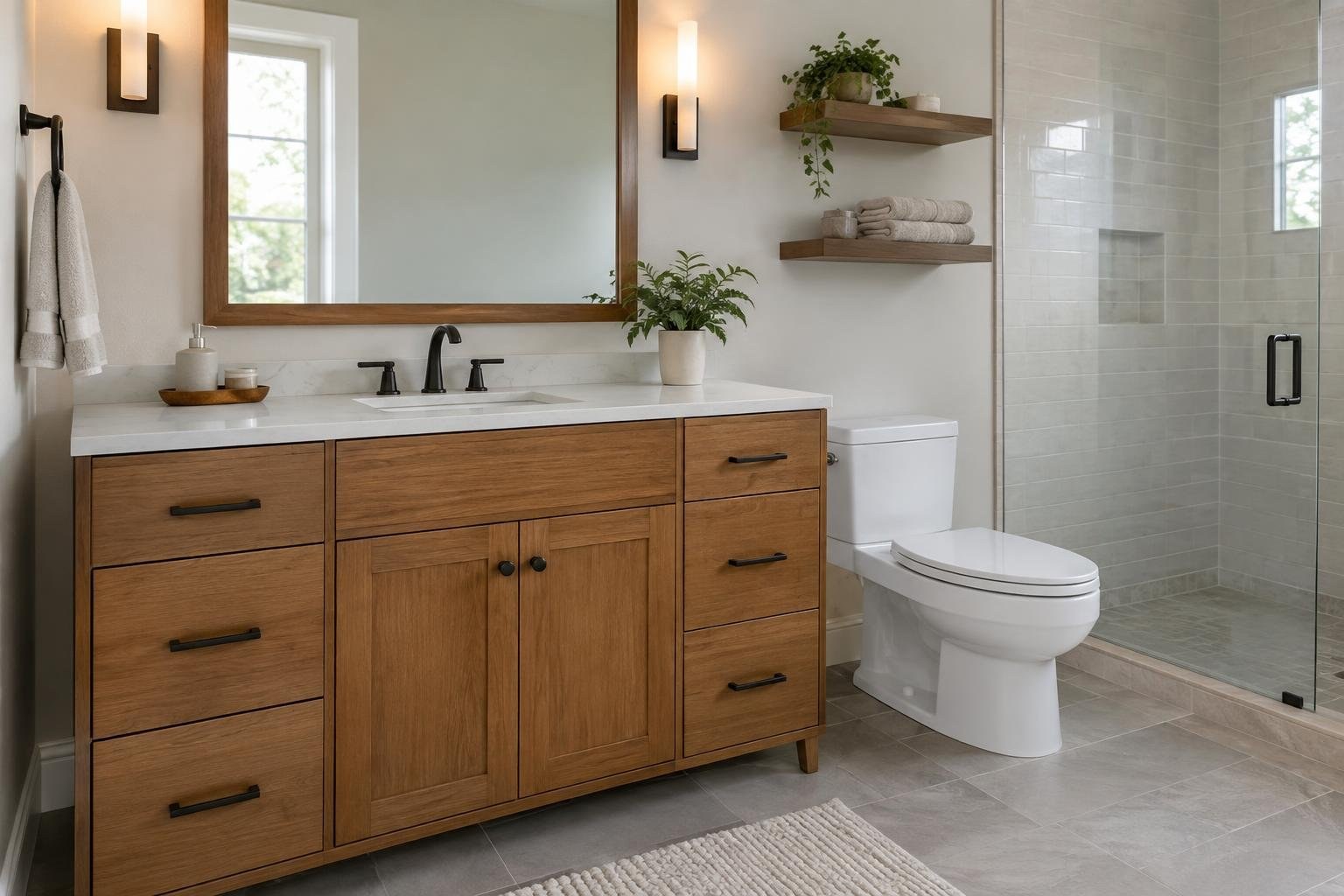
What a bathroom vanity update can change
A bathroom vanity combines a surface for a sink and daily routines with a strong visual element in the room. It can be treated as a simple cabinet refresh or as the centerpiece of a broader bathroom update. The best bathroom vanity ideas solve a real use problem as well as a style one: consider what you need to store, how many people use the bathroom at once, and how the vanity relates to the space around it.
Published design examples range from painted cabinets to warm wood with a light countertop, twin vanities, and a vanity that also serves as a dressing area. These examples are starting points, not formulas. Adapt their ideas to your room and priorities.
A quick planning checklist before choosing a style
Begin with a short room-and-routine check before shopping. Write down what is frustrating about the current setup: not enough storage, a dated appearance, a layout that does not suit the people sharing the bathroom, or a lack of space for getting ready. Separate problems that a new look could solve from ones that require a different configuration.
- Appearance: Would a change of color or a different material feel more at home in the room?
- Storage: What do you need close to the sink, and what should be kept elsewhere?
- Use: Is one sink enough, or would two positions better suit the household?
- Routine: Would a dedicated dressing area make the space more useful?
Design coverage includes vanities for small and large spaces and examples of added custom details. Use those ideas to clarify what you want, then check each choice against your actual room and routine.
Bathroom vanity styles, colors and design directions
Painted cabinet: A new color can give an existing vanity a different character without changing its basic design. One published makeover used black paint to add drama; another design guide recommends a high-adhesion primer and semi-gloss paint for a painted vanity. This approach is worth considering when the current cabinet’s layout and storage already suit you.
Natural wood: Wood tones such as oak and walnut can provide warmth. A design example pairs warm wood with a white marble top, while another uses light wood and white stone in a restrained, spa-like scheme.
Neutral or deeper color: White and off-white, navy, charcoal, and taupe are all presented as design options. Think about the finishes already in the room before choosing a cabinet color.
Furniture-inspired or vintage character: An antique-style wood double vanity and a painted wicker vanity illustrate how a more distinctive piece can give the room personality. Treat a strong statement piece as part of a complete composition: consider the countertop, fixtures, and surrounding finishes too.
Storage, scale and making the vanity work harder
Storage and shape deserve as much attention as color. A compact bathroom benefits from a vanity choice that respects the available space; a large room may offer more opportunities to create separate or paired stations. Before settling on a design, note the usable wall and floor area and think through how the cabinet will relate to the rest of the room. Avoid choosing a larger-looking feature just because it works in an inspiration photograph.
Some designs use a wide primary bathroom to accommodate twin vanities on opposite sides, giving two people places to get ready. A different approach combines vanity and dressing-table use, making a single area serve more of a morning routine. Consider these as distinct options: the first emphasizes two-user access, while the second emphasizes a consolidated personal-care station.
On a mood board, include the cabinet, countertop, and visible fixtures together. One example pairs warm wood, white marble, and gold-toned fixtures; another uses light wood and white stone for a quieter look. These combinations show how the surrounding details can support the main design idea.
Single vs. double vanity and other layout options
A single vanity keeps the plan centered on one sink position. A double vanity offers two positions and may be a better fit for a household whose members get ready at the same time. A designer example places twin vanities on opposite sides of a spacious primary bathroom; it demonstrates one possible layout, not a rule for every home.
| Choice | Design consideration | Best starting point |
|---|---|---|
| Single vanity | Keep the arrangement focused on one sink and decide how to use the available storage. | A bathroom planned around one primary getting-ready position. |
| Double vanity | Consider whether two people will use both positions and whether the room can accommodate the layout. | A shared bathroom where simultaneous use matters. |
| Vanity with dressing area | Decide whether a dedicated routine space is more useful than keeping all storage enclosed. | Someone who wants more of a morning routine in one place. |
There is no universal winner. Compare how each option would work in the room, not just how it looks in a photograph.
Bathroom vanity cost: how to compare estimates
Vanity projects can differ substantially in scope, so compare proposals by what is included rather than by a single headline price. A visual refresh of a cabinet you intend to keep is a different undertaking from changing the vanity design, surface, storage arrangement, or sink count. The supplied design examples do not establish current installation prices, so ask providers for itemized estimates based on your room and chosen work.
Ask each provider to describe the proposed cabinet, countertop, fixtures or other selected details, labor, removal of existing items if applicable, and any work that is excluded. Request a written explanation of how a change from a cosmetic refresh to a more involved update would affect the estimate. If you are deciding between painting and replacement, compare the cost and scope of both options rather than assuming one will always be cheaper.
One makeover article describes a particular black-paint update costing $20. Treat that as a reported example, not a current price guide or a promise about materials, labor, or a different bathroom.
What affects the scope and price of a vanity project?
The project’s scale depends on the decisions you make. A color refresh keeps the design focused on the cabinet’s appearance. A new vanity concept may involve comparing different styles, storage arrangements, countertop pairings, and sink counts. Custom details and a dressing-table function can change what needs to be considered in the design.
Other factors are personal and site-specific: the size and arrangement of the bathroom, how many people share it, the finishes you want to keep, and whether the chosen idea fits your storage needs. Ask providers to show what their estimate includes and to identify assumptions in writing. This makes it easier to compare proposals on equivalent work instead of comparing one fully described plan with a vague number.
What to expect: planning and project steps
Expect to make the design decisions before you settle on the work: define the problem, select the broad style and configuration, and agree on the included items with your provider. A small appearance-focused update and a more extensive vanity change are not the same project, so do not assume they share a schedule.
- Describe what is and is not working in the current setup.
- Choose a direction, such as a painted cabinet, natural wood, a double vanity, or a dressing-table function.
- Review the design in the context of the room’s proportions and existing finishes.
- Ask for a written scope and estimate, including stated exclusions and expected timing.
- Before work begins, confirm the final choices and the provider’s plan for communicating changes.
Ask your provider when the bathroom will be available for normal use again and what could affect the schedule. Get the answer for your specific project in writing rather than relying on a generic timeline.
Refresh or replace the vanity?
Consider a refresh when the existing cabinet’s basic arrangement and storage meet your needs and you mainly want a different appearance. Painting is one documented makeover approach, and design examples show that a changed finish can give a vanity a new visual identity.
Consider a new design when you want a different style or function, such as two getting-ready positions or a vanity that also supports dressing-table use. Before deciding, write down which shortcomings are about appearance and which are about how you use the room. A cosmetic change can address the first without necessarily addressing the second.
Compare the proposals by their stated work, selected design, and exclusions. If you are unsure whether to keep the cabinet, ask a provider to price both the refresh and replacement approaches so you can evaluate the tradeoff for your own project.
Signs your current vanity may need an update
Warning signs that it is time to reconsider the vanity are often practical rather than purely stylistic: the storage no longer supports your routine, the current arrangement does not work for the people sharing the bathroom, or the room would benefit from a different design direction. Ask what specific problem a proposed update will solve. If the answer is only a new color, a cabinet refresh may be enough; if it is about layout or function, compare options that change those features.
Before settling on a design, check that the idea fits the room’s proportions and your needs. Design inspiration shows both compact-space possibilities and larger arrangements, including twin vanities in a spacious bathroom. Do not assume an attractive example will suit a different room without adapting it.
DIY refresh or professional help?
Decide how much of the project you are prepared to do yourself before choosing a makeover plan. If you plan to paint, check the product directions and ask a knowledgeable paint or cabinet professional about preparation and finish choices for your specific surface.
For work beyond a cosmetic refresh, talk with providers who can explain the proposed scope and answer questions about the selected design. Ask what is included, who is responsible for each part, how changes will be handled, and what workmanship or product coverage is offered. Do not treat a design article as a substitute for project-specific advice.
How to choose a qualified vanity provider
Before hiring, compare written proposals for the same intended design and scope. Ask providers to identify their experience with the kind of update you are considering, describe what work they will perform, list exclusions, and provide the expected schedule. Request references or examples of comparable work if you want to judge whether their design approach suits your goals.
- What exactly is included in this estimate?
- Does the proposal describe the vanity style, configuration, and selected finishes?
- Is this a cabinet refresh or a replacement, and what work is excluded?
- Who will perform the work and who is my main point of contact?
- What is the expected start and completion window for this specific project?
- How will a change to the design or scope be documented and priced?
- What product or workmanship coverage applies, and where are its terms in writing?
- Can you provide references or examples relevant to the scope I am considering?
Check local requirements that may apply to your project and ask the provider who is responsible for confirming them. Do not assume the same rules apply in every location or to every scope.
Permits, qualifications and warranties to check
Before signing, ask for a written scope, itemized estimate, schedule, and terms covering products and workmanship. Confirm what is included and how additions or changes will be handled. Ask the provider whether permits, approvals, or other local requirements apply to the specific work and who will verify them. Requirements depend on the project and jurisdiction, so seek a project-specific answer from the appropriate local authority or qualified provider.
Get any warranty or coverage terms in writing, including what product or work they apply to and any stated conditions. The design sources inform style choices rather than permit rules or warranty terms; verify those details directly before work begins.
Ways to manage cost without losing the point of the project
Save safely by first deciding whether the existing vanity meets your functional needs. If it does, a cosmetic update such as painting may be worth comparing with a full change. If it does not, compare designs that address the real issue instead of paying for a fresh appearance that leaves the problem in place.
Keep the brief focused: identify the most important improvements, decide which existing finishes you want to retain, and ask for estimates that describe the same work. A published makeover example used black paint for $20, but that single reported example is not a reliable current budget for another home. Request project-specific pricing and compare what each proposal includes.
Common vanity-renovation mistakes to avoid
- Choosing a color before deciding whether the current storage and layout work.
- Assuming a painted refresh will solve a functional problem.
- Copying a double-vanity layout shown in a spacious room without considering your own space.
- Comparing a cosmetic refresh with a replacement as though they have the same scope.
- Choosing the cabinet without considering its countertop and surrounding finishes.
- Assuming an isolated makeover price applies to your project today.
- Accepting a verbal description instead of a written scope and exclusions.
- Failing to ask who is doing the work, what coverage applies, and how changes are priced.
- Assuming a design example confirms local permit or approval requirements.
Use these checks to keep the project tied to a clear need, a suitable design, and a proposal you can understand.
Related bathroom updates to evaluate together
Evaluate related bathroom choices while planning the vanity, so its look and use make sense with the rest of the room. The vanity and countertop should be considered together: design examples pair warm wood with white marble and light wood with white stone. Also review visible fixtures and finishes, since one example uses gold-toned fixtures to complement a warm-wood vanity and white tones.
Think about storage outside the cabinet if a dressing-table function is part of your plan. One design example combines vanity and dressing-table use so more of the morning routine can happen in one place. Decide whether that function is worth the space it takes and how it relates to the bathroom’s wider storage needs.
Frequently asked questions
Can I update my bathroom vanity without replacing it?
Yes. If the cabinet is in usable condition and you like its size and layout, painting or updating its appearance may be an alternative to replacing it. One makeover example used fresh black paint to change the look of a vanity, while another design source recommends a suitable high-adhesion primer and semi-gloss paint for a painted finish. Think about whether the existing storage and configuration still work before choosing a cosmetic update.
Is a single or double bathroom vanity better?
A single vanity suits a bathroom planned around one sink, while a double vanity provides two sink positions when the room and layout can accommodate them. A designer example places twin vanities on opposite sides of a spacious primary bathroom so two people can get ready at once. Use the idea as inspiration, not a layout template: measure your own room and consider how the arrangement will work day to day.
What bathroom vanity colors are timeless?
Natural wood, including oak and walnut, is one design direction; white and off-white, navy, charcoal, and taupe are other options identified by design experts. The best choice depends on the room’s existing finishes and the feeling you want. If you want a restrained, serene look, light wood paired with white stone is one example of a minimalist palette.
Are floating bathroom vanities a good idea?
A wall-mounted vanity can create a more open visual effect than a floor-standing cabinet, while a furniture-style vanity can make the cabinet a stronger decorative feature. The right choice depends on the room’s proportions, preferred storage, and the style of the rest of the bathroom. Compare the complete silhouette and countertop rather than choosing a cabinet style in isolation.
When should I choose a double-sink vanity?
Consider a double vanity when two people regularly use the bathroom at the same time and the room can support the arrangement comfortably. Design examples show twin vanities working in a spacious primary bathroom. In a smaller room, do not assume that adding a second sink improves the experience; consider whether the space would be more useful with one sink and better storage.
Can a bathroom vanity double as a dressing table?
Design examples show that a vanity can also serve as a dressing area, with storage adapted to support more of a morning routine in one place. Before adding that function, decide what you need to store and how you will use the counter. A design that looks appealing but does not fit your routine may not be the most useful choice.
What should I plan before renovating a bathroom vanity?
First decide whether you want to refresh the current cabinet, replace the vanity in the same configuration, or change the overall design. Then record the room’s dimensions, sink and storage needs, preferred style, and the visible finishes you want to keep. Share those priorities with any provider you consult and ask for a written description of the proposed work and exclusions.
Is painting a bathroom vanity a good way to save money?
A coat of paint is one design route for refreshing a vanity that remains suitable for reuse. One published makeover example used black paint for a dramatic change, and another source recommends high-adhesion primer and semi-gloss paint for a painted cabinet. Decide first whether the existing cabinet’s layout and storage still serve you; paint will not change either one.
People Also Ask
How do I choose a bathroom vanity style?
Begin with how the bathroom is used, how much space is available, and whether the current vanity’s storage and configuration work. Then compare cabinet style, color, countertop, sink count, and any added function, such as a dressing area. Keep the other visible finishes in mind so the vanity feels like part of the room rather than an isolated purchase.
What are some popular bathroom vanity renovation ideas?
A vanity makeover can be a cosmetic refresh, such as painting a cabinet, or a broader design update involving the cabinet’s style, countertop, sink arrangement, and storage. Inspiration includes painted vanities, natural wood, twin vanities, and combinations that add dressing-table use. Decide what problem you want to solve before selecting the look.
What vanity styles work in a modern bathroom?
Design examples include light wood and white stone for a minimalist, spa-like feel, warm wood with a light countertop, and painted cabinets that introduce a stronger color. White, off-white, navy, charcoal, and taupe are also presented as adaptable design choices. Choose based on the room’s existing finishes and your preferred atmosphere.
How can I add more function to a bathroom vanity?
A vanity can be arranged to support more than sink use. One design example incorporates dressing-table function so the homeowner can handle more of a morning routine in one place. To adapt the idea, consider what you need within reach and whether giving up some enclosed storage for a dedicated surface would be useful.
Do double vanities work in every bathroom?
A double vanity can provide two sink positions and may help people get ready at the same time. A published example uses two vanities on opposite sides of a spacious primary bathroom. Whether that arrangement makes sense in another home depends on room size, circulation, and how the household uses the space.
What is an inexpensive way to refresh a bathroom vanity?
Painting can change the appearance of a cabinet that you plan to keep. A makeover example used fresh black paint for a noticeable style change, and another source recommends a high-adhesion primer and semi-gloss paint for this type of update. First make sure the cabinet’s existing size, arrangement, and storage still meet your needs.
A successful bathroom vanity update starts with the way you use the room, not with a cabinet color or trend. Decide whether your vanity needs a cosmetic refresh, a more useful layout, or a full replacement; then compare storage, sink count, proportions, materials, and finish as one coordinated choice. A thoughtful plan can make even a small bathroom feel more personal and functional. Compare designs and providers on Estimate.org, and get the project scope clear before committing.
Your next step
Explore services and find providers at Estimate.org.
Reviewed and maintained by the Staff at Estimate.org.
Last reviewed and updated October 9, 2026 by the Estimate.org Editorial Team.
Sources
- 13 Before-and-After Vanity Makeovers You Need to See
- These Bathroom Vanity Ideas Will Instantly Transform Your Space—No Remodel Required
- 34 Bathroom Vanity Ideas That Are Stylish and Functional
- Bathroom Vanity Makeover Ideas to Refresh Your Space – Builders Surplus
- 30 Bathroom Vanity Ideas To Elevate Your Storage Space
- 17 Bathroom Vanity Ideas to Give Your Space a Polished New Look
- 25 Gorgeous Bathroom Vanity Ideas from Designers for 2025
- Bathroom Vanity Ideas: 39 Gorgeous Options to Inspire Your Next Makeover | Architectural Digest
