

Replacing a bathtub means removing the existing fixture and installing another, but the work can also involve new faucets, plumbing connections, and repairs to the area around the tub. The right approach depends on why you want a change: a cracked or leaking tub, a bathroom that no longer suits your household, or a wish to replace bathing with a shower. Compare replacement with refinishing and tub-to-shower conversion before deciding. Project cost depends on the work included, such as demolition and removal, installation, fixtures, plumbing changes, tile, and waterproofing. A straightforward professional installation may take one or two days, but added work can change the schedule. Ask for an itemized estimate, a written scope, and a clear explanation of what happens if the provider finds damage after removal. If the bathroom has serious plumbing or structural problems, needs a different layout, or requires specialized accessibility features, a basic tub swap may not solve the real problem.
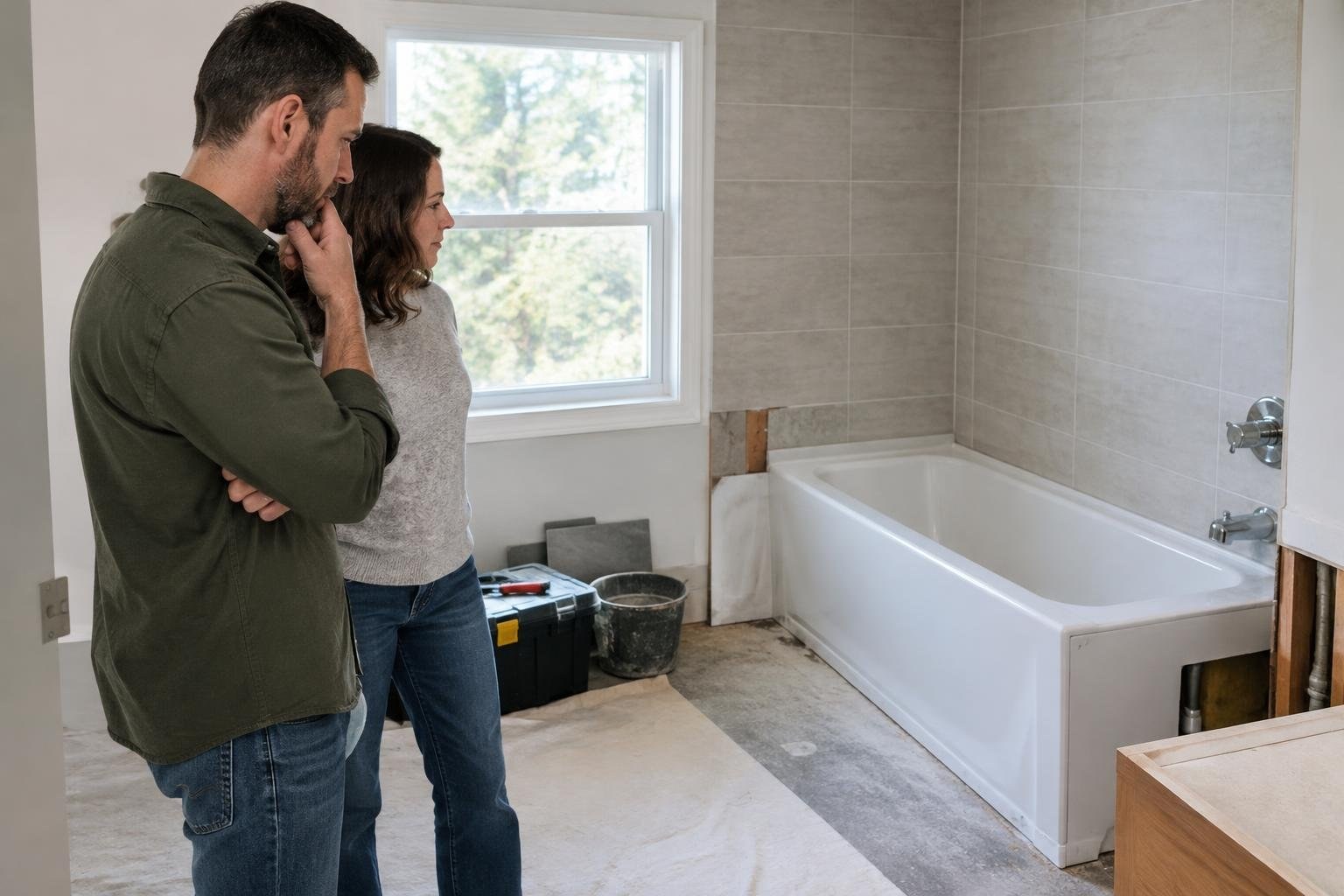
What bathtub replacement includes and when it matters
Bathtub replacement is the removal of an existing bathtub and installation of a new one. Depending on the job, the work may also include a faucet, other fixtures, or work around plumbing and nearby surfaces. It is one possible answer to a damaged tub, but it is not automatically the right answer to every bathroom concern.
Start by identifying the outcome you need. Are you trying to address a crack or leak, refresh a worn appearance, make bathing easier, or change the bathroom layout? A tub replacement may not address serious plumbing or structural issues, a desired layout change, or the need for specialized accessibility features. Those situations may call for a broader renovation or another solution.
How the replacement process works
A replacement generally follows a sequence: prepare the space, shut off the water, disconnect the plumbing, remove the old tub, and install the new one. The provider then completes the connections and any finish work included in the agreed scope. The details vary with the existing bathroom and the replacement plan.
Removal can be a major part of the project. The estimate should state who removes the old tub and how disposal is handled. The new fixture also needs to fit the intended space and work with the plumbing plan. Ask the provider to explain the sequence before work begins so you know what areas will be opened and what finish repairs are covered.
Signs you may need a new tub or a different solution
Common reasons to investigate replacement include a cracked or leaking tub, visible wear that is no longer acceptable, or a bathroom that does not fit how the household uses it. A stain or worn appearance alone does not prove the tub must be replaced; refinishing may be another option to discuss. If the tub is cracked or leaking, compare replacement with other approaches based on the tub’s condition and the broader project scope.
- Crack or leak: Compare replacement with repair options and ask whether the surrounding area needs inspection.
- Worn appearance: Ask whether refinishing can meet your goal or whether the condition favors replacement.
- Rarely used tub: Consider whether a shower would better serve the household.
- Changing accessibility needs: Discuss specialized options rather than assuming a standard tub swap is sufficient.
If there are signs of wider plumbing or structural trouble, request an assessment of that issue as part of the project discussion, not just a price for a new tub.
Bathtub replacement cost: what drives the estimate
The total price depends on the project’s location and exact scope. Compare estimates by checking what each provider includes rather than judging bids by the tub price alone.
A replacement estimate can include demolition and removal of the old bathtub, installation of the new tub, and a faucet or other fixtures. Plumbing changes, tile labor, waterproofing, fixture selection, and the extent of the work can alter the scope and price.
What to check in an estimate
- Removal and disposal of the old tub
- The replacement tub and included fixtures
- Installation and plumbing connections
- Tile, waterproofing, or other finish work
- How additional plumbing or structural work will be priced and approved
- Labor, project schedule, payment terms, and warranty coverage
Ask each provider to separate included work from optional work and potential additional charges. If an estimate is much lower than others, compare its scope line by line before treating it as a saving.
Factors that affect price, scope, and results
Cost and timing are shaped by the work around the tub as well as by the selected fixture. A like-for-like replacement may have a different scope from a project that changes plumbing, tile, waterproofing, or the bathroom layout. Ask how the provider will document and price any additional work discovered during removal before approving it.
Removal is part of the project: the old tub must be disconnected and taken out, and the new tub must be brought into the work area and installed. Discuss the route, debris handling, and protection of adjacent surfaces during the estimate. The more the project departs from a straightforward replacement, the more important a detailed scope and plan for extra work become.
Before comparing estimates, check whether each includes the same fixtures, removal, finish repairs, and plumbing work. A clear written list is more useful than a broad promise that the bathroom will be “updated.”
Replacement, refinishing, or tub-to-shower conversion?
There are several ways to update a bathtub area. The best comparison is the one that matches the condition of the existing tub and the bathroom’s intended use.
| Option | Consider it when | Tradeoff to discuss |
|---|---|---|
| Refinishing | The tub is still suitable and the main goal is a refreshed appearance. | It may not address a crack, leak, plumbing problem, or layout concern. |
| Bathtub replacement | The tub is damaged or you want a new fixture while retaining a bathtub. | Removal and installation may lead to additional plumbing or finish work. |
| Tub-to-shower conversion | The tub is rarely used or household needs have changed. | Consider whether a bathtub will still be useful to current or future occupants. |
| Walk-in or other accessibility-focused option | Specialized access needs are part of the project. | Plan around the specific accessibility requirement rather than assuming a standard replacement will meet it. |
Refinishing, replacement, tub-to-shower conversion, walk-in showers, and wet-room planning are distinct project approaches. Their costs and work requirements depend on the particular scope. For specialized accessibility needs, assess the proposed solution directly with a qualified provider.
What to expect and how long replacement may take
A professional bathtub replacement may take one or two days for many jobs, but that is a general reference, not a promise for every project. The actual timeline depends on the scope, including whether plumbing, tile, waterproofing, or layout changes are involved.
- Assessment and estimate: Explain the problem and desired outcome; confirm what the provider will inspect.
- Selection and preparation: Confirm the tub, fixtures, scope, schedule, and how the work area will be protected.
- Removal: The provider shuts off water, disconnects plumbing, and removes the old tub as planned.
- Installation: The new tub and included fixtures are installed, with agreed plumbing and finish work.
- Review: Walk through the completed scope, ask how to report concerns, and collect warranty documents.
Before the start date, ask which bathroom areas will be unavailable and what the provider will do if removal reveals work outside the estimate.
How to choose a qualified bathtub replacement provider
Choose a provider based on the clarity of the proposed work as well as the price. Ask for a written estimate that identifies the tub, fixtures, removal, installation, plumbing, finish work, and exclusions. Confirm who will do each part of the job and how the provider handles extra work discovered after removal.
Questions to ask before hiring
- What work is included in this estimate?
- Does it include old-tub removal and disposal?
- Which tub, faucet, and fixtures are included?
- Are plumbing changes included or priced separately?
- What tile and waterproofing work is part of the scope?
- How will you document unexpected damage or additional work?
- Who will perform the installation and plumbing work?
- What is the expected start date and project duration?
- How will the work area and adjacent surfaces be protected?
- What cleanup and debris removal are included?
- What product and workmanship warranties apply?
- What are the payment schedule and change-order terms?
- Will you check local permit requirements for this scope?
Compare at least the scope, schedule, warranty, payment terms, and change-order process. Ask for references or examples of similar work, and verify any applicable credentials and insurance before signing.
DIY, safety, permits, credentials, and warranties
Replacing a tub involves shutting off the water and disconnecting plumbing before removing the old fixture. Removal may also require help to lift and guide the tub out. Consider your experience, tools, and ability to handle the work safely before deciding whether to do it yourself.
For a contractor, ask whether the work requires a permit or inspection in your jurisdiction and who is responsible for checking. Requirements depend on local rules and the final scope; do not assume a fixture-only quote answers the question if plumbing or layout work is included. Request applicable license and insurance information and confirm warranty terms in writing.
Read product and labor warranty documents before work begins. Ask who handles a claim, whether registration is required, what maintenance or exclusions apply, and whether coverage transfers if the home is sold. Do not rely on a verbal warranty summary.
Ways to control cost without sacrificing the project
Replacement involves disconnecting plumbing and removing a large fixture. One installation guide describes shutting off water and disconnecting the piping system; another notes that tub removal can require help to lift and guide the tub out. These steps are reasons to assess your skill, tools, and ability to handle the work safely before considering a DIY project.
If you hire a provider, discuss the exact work, who will perform each task, and how additional work will be reviewed and approved. Ask for the product and labor warranty terms in writing and read them before work begins.
Common bathtub replacement mistakes and provider red flags
- Choosing by tub price alone: Compare removal, installation, fixtures, plumbing, and finish work too.
- Replacing a tub without diagnosing the problem: A plumbing or structural issue may need broader work.
- Assuming a cosmetic update fixes a leak or crack: Compare refinishing with replacement based on condition.
- Overlooking household use: Decide whether to retain a tub or convert to a shower based on actual needs.
- Leaving accessibility until later: Include specialized access needs in the initial plan.
- Accepting a vague scope: Get included tasks, exclusions, and change-order terms in writing.
- Ignoring removal and disposal: Confirm who handles the old tub and related debris.
- Assuming a one- or two-day schedule is guaranteed: Ask how added plumbing or finish work affects timing.
Compare the scope and intended outcome before choosing a bid. A project estimate should make clear what work is included and what could change the scope or schedule.
Related bathroom projects to consider
Related bathroom work is worth evaluating before you finalize a tub estimate because it can affect the project scope.
- Faucets and fixtures: They may be part of the tub estimate. Choose them before final pricing and confirm installation is included.
- Tile and waterproofing: Ask whether the surrounding finish needs work and whether that work is included. These items can change project costs.
- Plumbing: Evaluate plumbing changes as part of the scope, especially if connections or broader plumbing concerns are involved. Serious plumbing issues may make a simple replacement a poor fit.
- Bathroom layout or shower conversion: Decide whether to retain the bathtub before buying a replacement. A tub-to-shower conversion is a different project and should be planned as such.
Discuss these related items before scheduling. If they belong in the same project, ask whether coordinating them changes the schedule, estimate, or finish-work responsibilities. Compare written scopes rather than assuming that combining projects will save money.
Is bathtub replacement worth it?
A bathtub project is worth pursuing when the chosen work addresses the actual problem and fits how the bathroom will be used. Replacement can be an option for a cracked or leaking tub, while refinishing may be worth discussing when the goal is primarily an appearance update. A conversion may be a better fit when the household rarely uses the tub or no longer needs one.
Before deciding, weigh the tub’s condition, broader plumbing or structural concerns, the desired layout, accessibility needs, total written estimate, and how you expect to use the bathroom. A basic replacement may not be the right fit when the room’s layout or underlying condition is the reason for the project.
Bathtub replacement homeowner checklist
- Write down the problem you want to solve and how the bathroom should function afterward.
- Ask whether repair, refinishing, replacement, or conversion best fits the tub's condition.
- Identify any plumbing, structural, layout, or accessibility concerns.
- Compare written estimates with the same fixture and scope assumptions.
- Confirm removal, disposal, faucets, installation, tile, and waterproofing coverage.
- Ask how additional work will be documented, priced, and approved.
- Check provider credentials, insurance, references, and applicable local requirements.
- Confirm schedule, payment terms, warranty documents, and cleanup in writing.
- At the final walkthrough, compare the completed work with the agreed scope and collect relevant product and labor documents.
Once you know what work you need, explore your options and find providers at Estimate.org.
Frequently asked questions
What is included in a bathtub replacement estimate?
The price depends on the project scope, not just the new tub. An estimate may include demolition and removal of the old tub, installation of the replacement, and new faucets or fixtures. Plumbing changes, tile, waterproofing, and other work can also affect the total. Ask providers to itemize what is included and what could be an additional charge.
How long does it take to replace a bathtub?
A straightforward professional replacement may take one or two days, according to one home-improvement source. That is not a guarantee for every bathroom. The schedule can change if the layout, plumbing, surrounding finishes, or concealed conditions require additional work. Ask the provider to separate the expected installation time from any contingency time.
Should I refinish or replace my bathtub?
Refinishing may be worth comparing when the existing tub is serviceable and the goal is to refresh its appearance. Replacement is a stronger option to evaluate if the tub is cracked or leaking. If the bathroom layout is the underlying problem, consider whether a conversion or broader renovation would address it better than installing another tub.
When should I replace a bathtub with a shower?
Consider a tub-to-shower conversion if the tub is rarely used, another bathtub is available in the home, or the household no longer needs a tub for children or accessibility-related reasons. Think through how the bathroom will be used and whether you may need a tub in the future before changing the layout.
Can I replace my bathtub without remodeling the bathroom?
Not always. A replacement may be a poor fit if serious plumbing or structural issues call for broader work, you want to reconfigure the bathroom, or you need specialized accessibility features such as a walk-in tub. Discuss the full problem and desired outcome before accepting a tub-only quote.
What should I ask a bathtub replacement contractor?
Have the provider inspect the tub and surrounding area, explain how the old tub will be removed, and describe what happens if plumbing or structural problems are found. Ask whether the quote includes fixtures, removal, installation, and finish repairs, and request the expected timeline and warranty terms in writing.
Can I replace a bathtub myself?
Replacing a tub involves preparing the work area, shutting off water, disconnecting plumbing, removing the existing tub, and installing the new one. Plumbing connections and the condition of the surrounding area make this more involved than simply placing a new fixture. Consider your experience and the consequences of a mistake before attempting the work yourself.
How do I choose the right bathtub replacement option?
The best choice depends on how the bathroom is used, the existing tub's condition, the room's layout, and the work needed around it. Compare a like-for-like replacement with refinishing and a tub-to-shower conversion. If you need accessibility features or have broader plumbing or structural concerns, include those needs in the project plan.
People Also Ask
What does bathtub replacement include?
A tub replacement project can include removing and disposing of the old tub, installing a new one, and adding faucets or other fixtures. Whether plumbing or surrounding finishes are included depends on the written project scope. Ask the provider to list each task and identify possible extra work.
How many days does bathtub replacement take?
A simple replacement may take one or two days of professional work, but the schedule depends on the job. Changes to plumbing, tile, waterproofing, or the bathroom layout can expand the scope. Ask for a project schedule that explains both expected work time and possible delays.
Is it better to refinish or replace an old tub?
Compare refinishing when the tub is still suitable for use and the aim is primarily an appearance update. Consider replacement if the tub is cracked or leaking. If you want a different bathroom layout or need accessibility features, ask about conversion or a larger renovation instead of focusing only on the fixture.
Is a tub-to-shower conversion a good idea?
A tub-to-shower conversion may make sense if the tub is rarely used, another tub is available in the home, or the household no longer needs one for children or special needs. Consider future use as well as current preference before giving up a bathtub.
What should a bathtub replacement quote include?
A replacement estimate should say whether it covers the old tub's removal, the new tub's installation, and faucets or fixtures. It should also explain whether plumbing, tile, waterproofing, and repairs are included, since these items can change the job's scope and price.
Is replacing a bathtub a DIY project?
A tub replacement requires more than lifting out one fixture and setting another in place. The process can involve shutting off water, disconnecting plumbing, removing the old tub, and installing the replacement. If you are uncertain about plumbing work or safe removal, compare professional estimates before deciding to DIY.
A good bathtub replacement starts with the reason for the project: a damaged tub, a bathroom that no longer works for you, or a desire to change how the space is used. Compare repair, replacement, refinishing, and conversion options against the actual condition of the tub and the work each option requires. Get written estimates that explain removal, installation, fixtures, plumbing work, and possible additional repairs. When you are ready to compare providers, explore your options and find providers at Estimate.org.
Your next step
Explore your options and find providers at Estimate.org.
Reviewed and maintained by the Staff at Estimate.org.
Last reviewed and updated October 19, 2026 by the Estimate.org Editorial Team.
Sources
- 2023 Bathtub Remodel Guide | Best Types of Bathtubs | Modernize
- Bathtub Replacements 101: How to Change a Tub, Explained
- Step-by-Step Guide to Replacing Your Old Bathtub in 8 Steps
- Replacing a Bathtub Instantly Refreshes Your Bathroom—What to Know About the Process
- Bathtub Replacement: How to Replace This Fixture on Your Own
- How to install a bathtub – A Complete Bathtub Replacement Guide – Bath One
- Update Bathtub: Upgrade Ideas for Remodel & Replacement
- Best Bathtub for Your Bathroom Remodel: A Bathtub Replacement Guide
