

Choosing a bathtub is a mix of fit, comfort, appearance, and installation planning. The best option is the one that suits the room’s dimensions and plumbing, works for the people who will use it, and can be installed without unwanted surprises. Common choices include alcove tubs, freestanding tubs, drop-in models, and specialized designs such as clawfoot or corner tubs. Materials range from acrylic and fiberglass to cast iron and stone. Before buying, measure carefully, compare maintenance and installation requirements, and get an itemized estimate that covers more than the tub itself. A well-matched tub can support a practical bathroom renovation; a poor fit can mean lost floor space, extra work, or a bathing setup that does not suit your household.
What to Know Before Choosing a Bathtub
A bathtub is both a fixture and part of the room’s layout. Its dimensions affect how people move through the bathroom; its style determines how it meets the walls, floor, or built-in surround. The right choice depends on how the household uses the tub, the space available, and how much of the existing bathroom needs to change.
For a familiar three-wall arrangement, an alcove model may suit the layout. A freestanding tub makes the fixture more visually prominent, while a drop-in tub is installed within a surrounding deck or structure. Corner and custom designs may suit particular floor plans. These choices are not interchangeable: each calls for a different fit and finish plan.
Think beyond appearance. Confirm the tub’s measurements, how it will be delivered and brought into the room, where its plumbing connects, and what work is needed around it. Product dimensions and installation details should be checked for the specific model rather than inferred from a style name.
What a Bathtub Project Includes
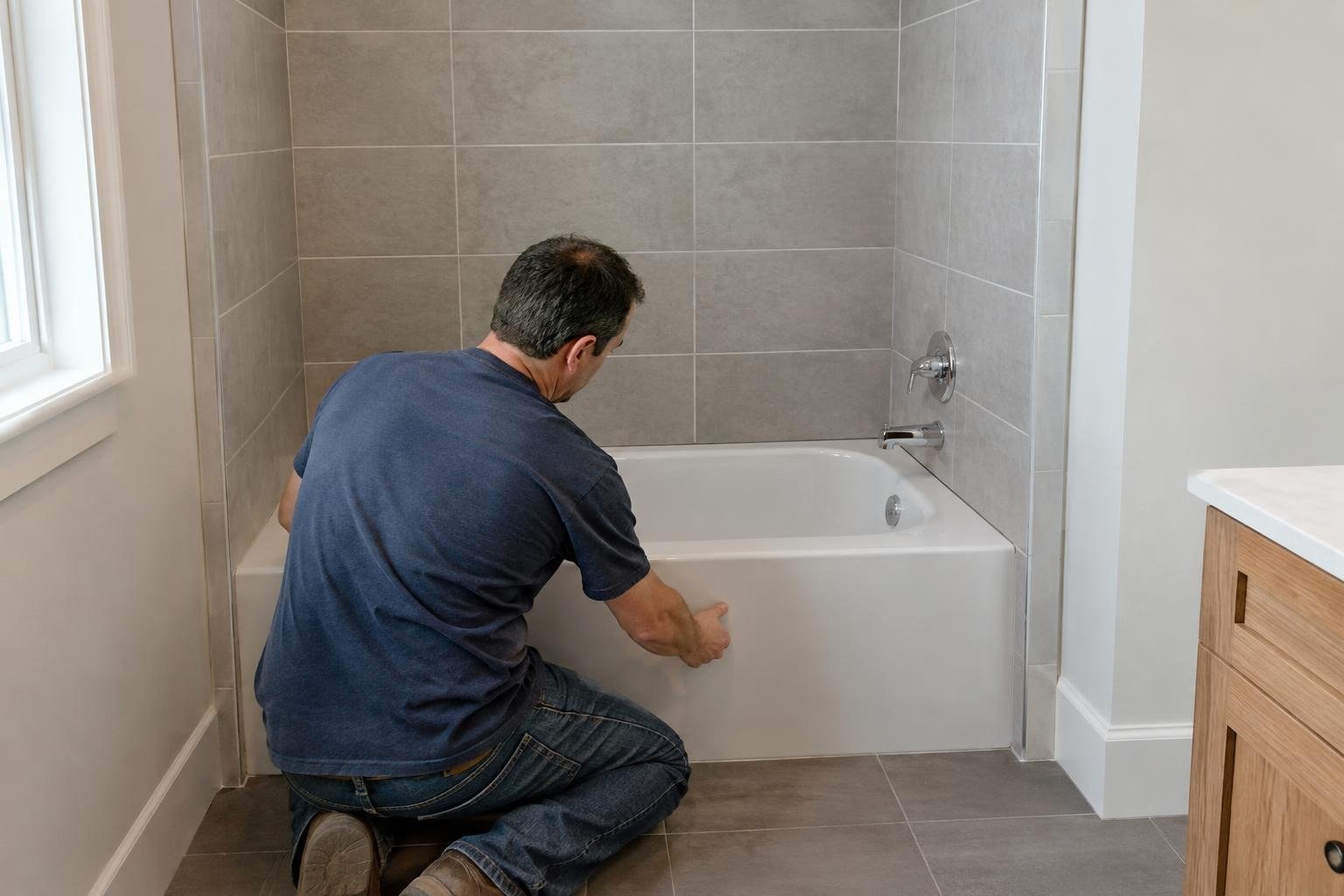
Bathtub installation is not just setting a new fixture in place. The project may involve measuring and selecting a tub, arranging delivery, removing the old fixture, connecting the new one, finishing the surrounding surfaces, and checking the completed work. The exact scope depends on the existing bathroom and the selected tub.
Before ordering, ask the installer to review the current layout and the product’s installation requirements. Confirm whether the drain and water connections align with the planned fixture, what happens to the wall or deck around it, and whether any existing surfaces must be opened or replaced. Clarify who handles delivery, removal, disposal, and cleanup.
Have the proposed work described in writing. A useful scope identifies the model or product allowance, installation tasks, finish work, exclusions, and how unexpected conditions or requested changes will be priced and approved.
Signs You May Need a New Bathtub or an Assessment
Consider replacement or professional assessment if the current tub no longer fits the household’s needs, its size or shape makes the room difficult to use, or a renovation is already changing the tub area. A change in style can also prompt a closer look at floor space, plumbing location, and the surrounding finishes.
- The tub is uncomfortable or impractical for the people who use it.
- You are changing the bathroom layout or replacing the enclosure and finishes.
- The preferred new style has different dimensions or plumbing requirements.
- You cannot confirm that the existing tub and surrounding area are suitable for the planned work.
These are reasons to investigate, not proof that a tub must be replaced. Ask a qualified provider to assess the fixture and installation area. If the concern involves a leak or damage, have the cause evaluated before choosing a replacement; installing a new tub without addressing a related problem may not resolve it.
Bathtub Cost Factors and Ways to Manage the Budget
There is no useful price comparison based only on the tub’s shelf price. A project estimate should account for the selected model and material, delivery, removal and disposal, installation labor, plumbing changes, surrounding construction, and finish work. Access and the amount of customization can also affect the scope.
Ask for itemized proposals based on the same product or clearly stated product allowance and the same work description. Confirm whether the estimate includes demolition, disposal, protection of nearby areas, plumbing connections, wall or deck finishing, cleanup, and any permit-related work if applicable. Ask what is excluded and how concealed conditions or scope changes will be handled.
What can increase the project total?
- Changing the tub’s location or selecting a model that does not match the current plumbing layout.
- Choosing a nonstandard shape, custom surround, or higher-cost material.
- Needing additional work to the floor, walls, or tub surround.
- Restricted delivery or work access, or a project that requires more removal and finish work.
How can you control costs safely?
Keep the layout where practical, compare complete installed scopes rather than product prices, and decide on the tub before related work begins. Do not cut essential installation, plumbing, or waterproofing-related work to meet a target budget. Ask the provider to identify lower-cost alternatives and explain any tradeoffs in writing.
Bathtub Styles: Alcove, Freestanding, Drop-In and More
Style determines how a tub fits into the room; material influences its appearance and product-specific care. Compare the complete product and installation plan rather than treating any style or material as universally best.
| Option | What to consider | Potential fit |
|---|---|---|
| Alcove | Designed for a three-wall enclosure; check the opening and surrounding finish plan. | A familiar layout where the tub sits between walls. |
| Freestanding | Check clear floor area, delivery access, and plumbing location. | A room where the tub can stand apart from walls. |
| Drop-in | Requires planning for the surrounding deck or structure; shape and size options vary. | A design-led project with room for a built surround. |
| Corner | Assess how the shape uses the available floor plan and affects movement. | A bathroom where a corner configuration suits the layout. |
| Clawfoot | Compare its freestanding form with the bathroom’s style and installation plan. | A vintage-inspired or historic interior. |
| Inset or custom | Plan for a tailored build and confirm the materials and work involved. | A highly customized bathing area. |
Alcove tubs are commonly installed within three walls. Drop-in tubs offer flexibility in shape and size, while corner tubs may be considered when floor space is a concern. A clawfoot model can complement a vintage-style room, and inset designs can create a customized look. Suitability still depends on the actual bathroom and product.
Bathtub Materials, Quality and Maintenance
Bathtubs are made from a range of materials, including acrylic, fiberglass, copper, polyresin, and cast iron. Stone options include materials such as granite, marble, or travertine. The name of a material alone does not tell you how a specific tub will feel, look over time, or need to be installed, so compare the product’s care instructions and technical details.
- Compare upkeep: Ask what cleaners and care methods the manufacturer recommends, and how to address surface marks or damage.
- Check appearance: Review the actual finish and color, not only a small online image or sample.
- Confirm installation requirements: Ask the provider whether the selected product requires special handling, support, or surrounding construction.
- Evaluate the full cost: Stone tubs can be a luxurious, durable choice, but expense depends on the stone. Include installation and any custom work when comparing.
Product-specific specifications matter. Verify the tub’s exact dimensions, weight and installation instructions with the manufacturer and installer before purchase, particularly when selecting a distinctive material or design.
What to Expect: Planning, Installation and Timing
There is no single timeline that applies to every bathtub project. A straightforward replacement in the existing location differs from a renovation that changes plumbing, opens walls, adds a custom surround, or needs a specially ordered product. Ask the provider for a project schedule that separates product delivery from on-site work.
- Measure and assess: Review the existing tub area, access route, plumbing location, and planned finish.
- Select and confirm: Verify the model, dimensions, installation requirements, and product availability before ordering.
- Prepare: Agree on work-area protection, access, removal, and disposal arrangements.
- Install and finish: Complete the work described in the contract and any approved changes.
- Review: Walk through the finished work, ask how to care for the tub, and collect product and workmanship documents.
Ask what could affect the schedule, who will communicate delays, and whether the bathroom can be used during each stage. Do not rely on a broad verbal promise; have the expected start, key milestones, and completion expectations recorded in the agreement.
How to Choose a Bathtub Installer
Choose a provider who can explain the proposed tub and installation scope clearly, verify the fit before ordering, and put responsibilities in writing. Requirements for licensing, insurance, permits, and inspections depend on the work and local jurisdiction, so confirm what applies where you live.
Ask for proof of any license or insurance required for the work, and check that the contract identifies the company responsible for installation. Review references or examples of comparable projects, but focus on whether the provider can explain the details of your particular bathroom. Confirm who will perform plumbing or other specialized work and whether subcontractors are involved.
Questions to ask before signing
- Have you assessed the room and access route in person?
- Does the proposed tub fit the existing opening and plumbing plan?
- What is included in removal, disposal, installation, and finish work?
- Which items or conditions are excluded from this estimate?
- Who obtains any required permits and arranges inspections?
- Who will do the work, including any plumbing or subcontracted work?
- What is the expected schedule, and how are delays communicated?
- How will added work or hidden conditions be priced and approved?
- What product and workmanship warranties apply, and where are they documented?
- What payment milestones, cleanup, and final inspection are included?
Permits, Credentials, Safety and Warranties
Bathtub work may involve plumbing, structural or finish changes, or other work subject to local rules. Permit and inspection requirements vary by jurisdiction and project scope. Ask the local building department or a qualified provider what applies; do not assume that a like-for-like replacement automatically has the same requirements everywhere.
Before work starts, confirm responsibility for permits, inspections, and any required licensed trades in the written agreement. Ask for proof of relevant credentials and insurance, and verify it through the appropriate local authority where possible.
Read both product and workmanship warranty documents. Check what is covered, who handles a claim, how long coverage lasts, whether registration or specific care is required, and whether coverage transfers if the home is sold. A verbal assurance is not a substitute for written terms. Keep the product paperwork, contract, and records of approved changes together.
How to Match a Tub to Your Space and Household
A tub should suit the people who will use it now, not only the look of a renovation photo. Consider who needs to step into it, how the bathroom is shared, whether the tub’s dimensions feel practical, and how the surrounding area will be cleaned. If access or mobility is a concern, discuss the bathroom as a whole with a qualified professional before settling on a style.
Compare an alcove tub with a freestanding or drop-in option using the same questions: Does it fit? Does the plumbing plan work? What construction surrounds it? Does the completed layout leave comfortable room to move? Product dimensions and the amount of floor space available matter more than a general claim that one design is suitable for every room.
Think about the full renovation sequence. If the tub, surround, floor, or plumbing will all change, coordinate those decisions before work begins. Ask the provider which work should happen first and whether combining tasks changes the schedule or estimate.
Related Bathroom Projects to Plan Alongside a Bathtub
A tub replacement may connect to other bathroom decisions: the wall surround, floor, plumbing fixtures, storage, lighting, or shower arrangement. Evaluate these together when the project affects the same area. Coordinating related work can reduce the need to reopen completed surfaces, though whether bundling saves money or time depends on the scope and contractor’s estimate.
- Tub surround: Decide how the tub meets the walls before selecting the fixture. Coordinate the tub and surround plan together.
- Plumbing fixtures: Confirm faucet and drain locations against the chosen model; settle the fixture plan before installation.
- Flooring: If the floor may be replaced, determine how it meets the tub and sequence both decisions before finish work.
- Shower arrangement: If the tub also serves as a shower, choose a layout and surrounding finish that suit both uses.
- Storage and access: Check how the tub’s footprint affects movement and nearby storage before finalizing the floor plan.
Ask for one coordinated scope or clearly defined separate scopes. The estimate should explain which provider is responsible for each connection and finish so that gaps between trades do not become an unexpected homeowner task.
Common Bathtub Buying Mistakes and Contractor Red Flags
Common buying mistakes often start with choosing the tub before confirming the room and installation plan. Avoid these preventable problems:
- Ordering from a product photo without checking exact dimensions.
- Measuring the tub opening but not the route through doors and into the bathroom.
- Choosing a style for appearance without considering floor space and plumbing.
- Comparing bids with different products or incomplete scopes.
- Assuming a listed product price represents the full installed project.
- Leaving removal, disposal, finish work, permits, or cleanup undefined.
- Accepting verbal promises about timing, changes, or warranties.
- Skipping an assessment of the tub area before work begins.
Be cautious if a provider will not put the scope and payment terms in writing, cannot explain how the tub will fit, or pressures you to purchase before confirming installation details. A substantially lower bid is worth examining line by line; find out what work or product it leaves out before comparing it with other proposals.
Final Bathtub Buying Checklist
Use this list before placing an order or signing an installation agreement:
- Write down how the tub will be used and who needs to access it.
- Measure the room and have the installer verify product fit and the delivery route.
- Compare styles, materials, care requirements, and installation instructions.
- Confirm how the selected tub relates to existing plumbing and surrounding finishes.
- Get itemized estimates that describe the same product and complete scope.
- Check removal, disposal, finish work, cleanup, exclusions, and change-order terms.
- Verify applicable credentials, insurance, permits, and inspections.
- Review product and workmanship warranties in writing.
- Agree on a schedule, payment milestones, and who is responsible for each task.
- At completion, review the work, ask for care instructions, and retain project documents.
A bathtub is worth including when its practical value to the household justifies the space and project work. Compare the tub with the alternatives that fit your bathroom, then make the decision using an inspected layout and written estimates rather than a trend or a product image alone.
Frequently asked questions
How do I choose the best bathtub for my bathroom?
Start with the bathroom’s dimensions, the existing tub location, and how the tub will be used. An alcove tub can suit a three-wall layout, while a freestanding tub needs room around it and a practical plumbing plan. Compare material, comfort, cleaning, access, and the full installation scope before choosing a model.
Is an alcove or freestanding bathtub better?
An alcove tub fits into a three-sided enclosure and is a common configuration in homes. A freestanding tub stands apart from the walls and can make the tub a visual feature. Neither is automatically better: compare room layout, usable floor space, plumbing changes, bathing needs, and the surrounding finish work.
What affects the cost of replacing a bathtub?
A bathtub project’s price depends on the tub, delivery, removal and disposal, plumbing work, access to the bathroom, and whether the surrounding walls or floor need work. Moving plumbing or changing the tub footprint can add scope. Request itemized written estimates based on an on-site assessment rather than relying on a product price alone.
What is the difference between a drop-in and an alcove tub?
A drop-in tub sits in a built surround or deck, which can accommodate different shapes and sizes. An alcove tub fits between three walls. Compare the finished appearance and available space with the added surround work and installation requirements. The right choice depends on the room plan and the scope of the renovation.
Can a freestanding bathtub work in a small bathroom?
A freestanding tub is not automatically a good fit for a small bathroom. Check its dimensions, the room’s clear walking space, door and stair access, and where the drain and water supply are located. Some models are relatively compact, but confirm exact product measurements and installation requirements before purchasing.
What bathtub material is easiest to maintain?
Tub materials vary, including acrylic, fiberglass, copper, polyresin, and cast iron. Compare the specific product’s care instructions, surface, appearance, and installation requirements rather than assuming every material performs the same. Stone options can be durable but may be expensive, depending on the stone selected.
What should I ask a bathtub installer before hiring?
Ask the installer to confirm the opening and tub dimensions, explain any plumbing or finish changes, identify who handles permits if needed, and provide an itemized scope and written warranty terms. Also confirm removal and disposal, product delivery, access, cleanup, payment milestones, and how changes to the work will be approved.
Can I install a new bathtub without changing the plumbing?
Existing plumbing may be reused when the tub stays in its current location and its drain and water connections align with the selected model’s requirements. Have the installer confirm compatibility before ordering. Moving the tub or misaligned connections may require additional plumbing work.
Should I repair or replace my bathtub?
Consider repair when the issue is limited and a qualified professional confirms the tub and surrounding area remain suitable. Replacement may make more sense when the tub no longer meets your needs or the renovation involves broader changes. Ask for a diagnosis and compare repair scope with the complete replacement scope before deciding.
What is the difference between a clawfoot and an alcove bathtub?
An alcove tub fits within a three-wall enclosure, while a clawfoot tub is a freestanding style often associated with vintage or historic interiors. Compare layout, appearance, access, plumbing, and any surrounding construction. A clawfoot style is not a direct fit for every bathroom, so verify the room and installation plan first.
People Also Ask
What should a bathtub installation estimate include?
A written estimate should identify the tub or product allowance, delivery, removal and disposal, installation tasks, plumbing, surrounding finish work, cleanup, exclusions, and how changes or hidden conditions will be priced and approved.
Is a drop-in tub or an alcove tub easier to plan for?
An alcove tub fits a three-wall enclosure and is often selected when keeping the layout familiar is a priority. A drop-in tub sits in a built surround and offers flexibility in shape and size, but requires planning for that surround.
How do I know what size bathtub will fit?
Measure the room, doorways, and access route, then compare those measurements with the complete product dimensions and installation instructions. Ask the installer to confirm fit and plumbing before ordering.
Are stone bathtubs worth the added cost?
Stone tubs offer a distinctive appearance and can be durable, but their cost depends on the stone. Compare the specific model’s care requirements, installation needs, and total project scope with other materials.
Is it worth adding a bathtub during a bathroom renovation?
A tub can be a sensible choice if it fits your space and household’s bathing habits. Assess its daily usefulness, maintenance, installation scope, and alternatives before deciding whether it merits a place in the renovation.
What should I check in a bathtub warranty?
Read the product and workmanship warranty documents for what is covered, who handles claims, how long coverage lasts, whether registration or specific care is required, and whether coverage transfers if the home is sold. Keep the documents with your contract and change records.
The best bathtub is the one that fits your bathroom, bathing habits, access needs, and renovation budget, not simply the one with the most features. Start by confirming the available space and plumbing layout, then compare tub styles, materials, maintenance needs, and installation scope. Before committing, ask providers to inspect the full project area and put the product, work, exclusions, and warranty terms in writing.
Your next step
Explore services and find providers at Estimate.org.
Reviewed and maintained by the Staff at Estimate.org.
Last reviewed and updated November 2, 2026 by the Estimate.org Editorial Team.
Sources
- Top 8 Bathtub Options for Your Bathroom Remodel
- Best Bathtub Brands 2026: Top Tub Manufacturers Reviewed
- Top Rated Bathtubs for Bathroom Remodels
- Bathtub Buying Guide: Types & Materials
- 8 Best Bathtubs for a Bathroom Upgrade | Soaking and Whirlpool Tubs
- What Types of Bathtubs for Sale Best Suit Your Bathroom Remodel|WELLFOR
- Best Bathtub for Your Bathroom Remodel: A Bathtub Replacement Guide
- What Experts Are Saying About the Best 8 Bathtubs They Recommend in 2026
- Bathtub Installation Cost: A Homeowner’s Guide to Budgeting and Renovation
