

The best tile for a bathroom floor is the one that fits the room’s moisture exposure, expected use, desired appearance, maintenance tolerance, and budget. Porcelain and ceramic are common options; natural stone offers a different look but may require sealing and specific care. Finish and shape matter too: glossy surfaces reflect light, while matte or honed finishes soften glare, and tile size affects the look and layout. Start by checking that a specific product is intended for the floor and by asking how it performs in the conditions of your bathroom. Then compare the complete installed scope, not just the price of the tile. One supplied guide reports $7 to $45 per square foot for porcelain and ceramic bathroom floor tile, but that figure should not be treated as a complete installation quote. There is no universal best choice: compare product details, upkeep, and installation plans before you buy.
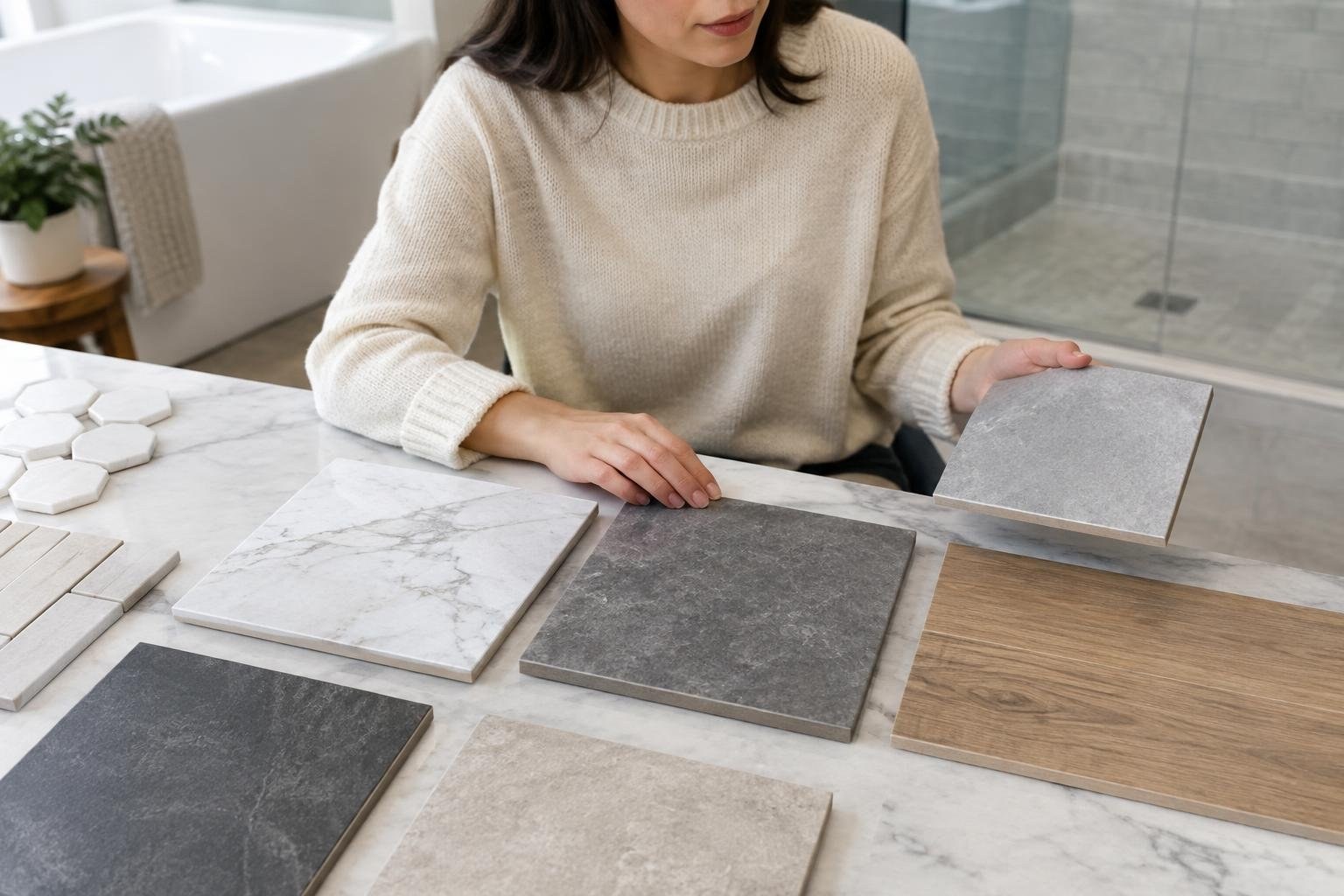
What to Know Before Choosing Bathroom Floor Tile
Bathroom floor tile is a surface covering selected for a room where water and everyday use are part of the environment. Choosing it means more than picking a color: material, finish, size, grout appearance, and installation details all shape the finished floor. Consumer buying guides recommend comparing tile options for the bathroom setting rather than treating every tile as interchangeable.
Start with three questions: Is the specific product intended for a floor? How will it look and feel in your bathroom? Are its care requirements realistic for your household? A tile that suits a rarely used powder room may not be the right choice for a busy family bathroom. Samples and product documentation help move the decision from a photo or showroom impression to a more informed comparison.
How Bathroom Floor Tile Choices Work Together
Floor tile works as part of a finished assembly, not as a loose decorative surface. The choice includes the tile itself and the visible details around it, such as grout joints, cuts at edges, and transitions to neighboring flooring. The tile’s dimensions, shape, finish, and pattern affect the visual result. The installation quote should explain the work needed to turn the selected product into a finished floor.
When reviewing a sample, look at it in the bathroom’s actual light and consider the floor as a whole. Glossy surfaces reflect light; matte or honed finishes soften glare. Rectangular shapes can draw the eye in a direction, while mixed sizes and textures create a different effect. These are design observations, not a substitute for checking whether the specific product is suitable for a bathroom floor.
Bathroom Floor Tile Options: Porcelain, Ceramic, and Stone
Porcelain: A widely considered option when a homeowner wants a durable, moisture-conscious floor. Compare individual product specifications, finish, and price; do not assume that every product performs identically.
Ceramic: A versatile choice that can balance cost and appearance. One supplied source describes ceramic as sensible where heavy impact or extreme moisture exposure is not a primary concern. Check whether the particular product is intended for your floor and household conditions.
Natural stone: Marble and other stones bring natural variation and a distinctive appearance. Stone can last for decades when sealed and cleaned properly, but its care requirements should be part of the purchase decision.
No material is automatically best for every bathroom. Compare samples, product guidance, finish, and maintenance before choosing.
Finish, Size, Shape, and Texture: What Changes the Result?
Surface finish affects the visual character of a bathroom floor. Glossy tile reflects light, which may appeal in a room where a brighter look is desired. Matte or honed tile softens glare and can create a quieter appearance. Neither label alone tells you whether a product is suitable for a wet floor, so verify its intended application and ask for product information.
Shape and size affect the pattern and the way the floor reads. Rectangular tiles can direct the eye across or along the room; varied sizes can add visual interest. Texture also changes how natural materials display shadows and detail. Before ordering, ask to see a sample and a proposed layout. Discuss grout appearance, cuts, and transitions with the installer so the finish is considered as a complete design.
Bathroom Tile Cost: What the Price Does and Does Not Tell You
A supplied 2025 homeowner guide reports porcelain and ceramic bathroom floor tile at $7 to $45 per square foot. Treat this as a broad reference for the tile options discussed in that guide, not a guaranteed local price or a complete installed-project total.
Ask for an itemized written estimate that identifies the selected tile and quantity, installation labor, preparation, removal if applicable, grout and finishing details, and any other proposed work. Compare estimates only after confirming that they describe the same project. The room’s chosen material, pattern, product, and scope can affect the quote; ask the contractor to explain each variable rather than relying on a single per-square-foot number.
What can make the project cost more?
A higher-priced tile selection, a more involved layout, or additional work beyond placing tile may increase a project quote. Have the provider inspect the room and state what is included and what could change the price.
How to control costs without cutting corners
Compare more than one written estimate, keep the tile choice within a clear budget, and avoid changing products after the scope is set. Do not save money by skipping needed preparation or by accepting a quote that leaves the work undefined.
Signs a New Bathroom Tile Floor May Be Worth Considering
Consider a new floor when you are planning a bathroom renovation, evaluating a worn or damaged surface, or choosing finishes for a redesigned room. The supplied research focuses on selecting floor tile, not on diagnosing particular damage. If you notice a problem, ask a qualified flooring professional to inspect it and explain whether it involves only the tile or other work as well.
Before assuming the tile itself is the cause, note what you see and where it occurs. Share that information during an estimate visit. A written assessment can help you distinguish a surface update from a broader project and clarify whether the proposed work addresses the underlying issue. Avoid ordering replacement material before confirming the product, quantity, and scope with the installer.
Tile may be worth considering when the existing floor no longer fits the renovation or design goals.
Factors That Affect Tile Selection and Project Scope
The project price and result depend on more than the area of the floor. The tile material, individual product, finish, shape, and layout all affect what you are selecting. The work included in the quote matters just as much: an estimate for tile alone is not directly comparable to one that includes installation and other project work.
Room conditions and project choices should be discussed during an in-person or otherwise informed assessment. Ask the provider to describe preparation, the layout, how edges and transitions will be handled, and what is excluded. If additional work is proposed, request a written explanation and price before authorizing it.
Maintenance is another factor. For example, the supplied stone-tile source says stone can last for decades when sealed and cleaned properly. That care commitment may be an important tradeoff compared with choosing a different material. Evaluate the whole ownership experience, not simply the showroom appearance.
Porcelain vs. Ceramic vs. Natural Stone
Compare material, finish, maintenance, and intended use side by side. The table summarizes the tradeoffs supported by the available product guidance; it is not a ranking of every tile on the market.
| Option | Potential advantage | Tradeoff to check | May suit |
|---|---|---|---|
| Porcelain | A common choice where durability and moisture exposure are priorities. | Product price, finish, and suitability vary; verify the individual product. | Readers prioritizing a resilient, moisture-conscious option. |
| Ceramic | Versatile and described as a practical balance of cost and function. | Check the product’s intended use, especially for the conditions in the room. | Value-conscious projects that match product guidance. |
| Natural stone | Distinctive natural appearance and color variation. | May require sealing and appropriate cleaning. | Homeowners who value its look and accept its care needs. |
These materials are not a substitute for checking each product’s documentation. Compare actual samples, finish, care instructions, and the installer’s recommendation for the specific bathroom.
What to Expect: From Tile Selection to Final Walkthrough
A tile project generally involves selecting a product, agreeing on a layout and written scope, scheduling the work, and reviewing the finished result with the provider.
Before work starts, confirm what the installer will do, what you need to move or protect, which materials are included, and how changes will be approved. Ask how the proposed tile will be laid out and how the work will finish at doorways and other edges. During the final walkthrough, compare the completed work with the written scope and ask for care instructions and warranty documents.
Timing can only be meaningfully discussed after the provider understands the room and scope. Have the estimate identify anticipated start and finish dates, the work stages, and how the provider will communicate a delay or a change in scope.
How to Choose a Bathroom Tile Installer
Choose a provider who can explain the proposed tile and installation scope in plain language. Ask for a written, itemized estimate and compare it with other estimates for the same materials and work. The supplied buying guide is focused on tile selection rather than contractor credentials, so verify relevant qualifications and local requirements independently before hiring.
- What tile product and finish are included in the estimate?
- Is the selected product intended for this bathroom floor?
- What preparation, removal, materials, and cleanup are included?
- How will you plan the tile layout, edges, and transitions?
- What is excluded from the price?
- How will you handle and price a proposed scope change?
- What schedule do you expect, and how will changes be communicated?
- What product and workmanship warranties apply?
- Can I review references or examples of comparable work?
- Who obtains any required approvals or permits?
Get the answers and payment terms in writing. A provider’s willingness to describe the scope clearly makes bids easier to compare.
Permits, Product Suitability, Safety, and Warranties
Requirements for permits, inspections, contractor credentials, and approvals vary by location and by project scope. Ask your local building department whether the planned work requires approval, and ask the contractor to explain who is responsible for confirming applicable requirements.
Before signing, request written product and workmanship warranty terms. Check who provides each warranty, what it covers, how long coverage lasts, and what actions could affect it. Keep purchase documents and care instructions. The stone-tile source specifically ties long-term performance to sealing and proper cleaning, so ask whether maintenance is required to preserve the product’s condition or coverage.
For safety and suitability, verify that the selected tile is intended for the floor and the conditions where it will be used. Ask for the manufacturer’s product information and get a clear answer from the installer rather than relying on a broad material label.
Common Mistakes and Ways to Save Carefully
Small planning decisions can prevent avoidable confusion. Compare the tile and written installation scope together, ask for product documentation, and confirm the quote includes the work you expect. If you are considering stone, include sealing and suitable cleaning in your maintenance decision.
- Choosing by appearance alone without confirming floor suitability.
- Assuming every porcelain, ceramic, or stone product has the same performance.
- Using a broad per-square-foot figure as though it were a complete installed quote.
- Comparing estimates with different materials or different work included.
- Failing to discuss layout, edges, and transitions before ordering tile.
- Leaving exclusions, changes, or payment terms out of the written agreement.
- Choosing natural stone without understanding its sealing and cleaning needs.
- Assuming a generic installation timeline applies to your project.
To reduce costs safely, set a product budget, compare like-for-like estimates, and resolve scope questions before the work begins. Do not remove necessary work simply to make a bid look cheaper.
Is Bathroom Floor Tile Worth It?
Bathroom floor tile can be worthwhile when the selected product fits the room, the household’s care preferences, and the project budget. Tile offers a broad range of material and design choices; a specific option’s value depends on its intended use, appearance, and maintenance needs.
Porcelain and ceramic are reasonable options to compare when cost and everyday functionality matter. Natural stone may be appealing when its appearance is a priority and its sealing and cleaning requirements are acceptable. No choice is worthwhile if the product is unsuitable for the floor or the estimate leaves important work unclear.
Before deciding, compare samples and written estimates, verify the product’s use guidance, and ask the installer to explain the scope and care expectations. If the project is part of a larger bathroom renovation, review the flooring choice alongside the other decisions that affect the finished room.
Frequently asked questions
What is the best type of tile for a bathroom floor?
Porcelain is a useful starting point when you prioritize durability and moisture exposure. Ceramic may fit a tighter budget, while natural stone offers distinctive variation but can require sealing and careful cleaning. Compare the specific tile’s intended use, finish, care guidance, and cost rather than choosing by material name alone.
How much does bathroom floor tile cost?
The supplied pricing guide reports a range of $7 to $45 per square foot for porcelain and ceramic bathroom floor tiles. Treat that as a broad reference, not a complete installed-project quote: tile selection, preparation, layout, labor, removal, and other work can affect the final estimate. Ask providers to specify what the price includes.
Is matte or glossy tile better for a bathroom floor?
Glossy surfaces reflect more light, while matte or honed finishes reduce glare. Neither finish alone guarantees safe footing. Compare the specific product’s intended application and surface characteristics, especially where the floor is likely to get wet, and ask the seller or installer for product documentation before purchasing.
Does natural stone bathroom tile need to be sealed?
Natural stone can last for decades when it is sealed and cleaned properly, according to the supplied stone-tile source. The exact care routine depends on the stone and product. Confirm sealing requirements, suitable cleaners, and maintenance frequency with the tile supplier or installer before making a selection.
Are small or large tiles better for bathroom floors?
Large-format tile creates fewer grout joints, while smaller pieces allow more joints and can work well in detailed layouts. The best format depends on the floor, the chosen pattern, and how the installer will handle cuts and transitions. Compare a layout drawing or sample before approving a full order.
Is ceramic tile suitable for a bathroom floor?
Ceramic is described by the supplied source as a practical, versatile option when heavy impact or extreme moisture exposure is not a primary concern. For a bathroom floor, check the specific product’s suitability and care guidance rather than assuming every ceramic tile performs the same way.
What should a bathroom tile installation estimate include?
Compare the full written scope, not just the tile price. Ask whether estimates include removal, floor preparation, materials, grout, transitions, cleanup, and any additional work the installer identifies after examining the room. A low price can be difficult to evaluate if important work is left unspecified.
How do I choose a bathroom tile installer?
Ask the installer how the selected tile and finish suit the bathroom, what preparation is included, how the layout and transitions will be handled, and what product and workmanship coverage applies. Get the answers, price, scope, and payment terms in writing before work begins.
Is stone tile worth it in a bathroom?
Not necessarily. Natural stone can offer a distinctive appearance, but it may call for sealing and suitable cleaning. Porcelain and ceramic are also widely considered for bathroom floors. Compare product care requirements and the look you want, then decide whether the added upkeep of a particular stone fits your household.
How long does it take to install bathroom floor tile?
Timing depends on the project’s scope, selected products, preparation, and the installer’s plan. Ask each provider for a written schedule that identifies the work stages, expected start and finish, and how changes or hidden conditions could affect timing.
People Also Ask
Which tile material is best for a bathroom floor?
Porcelain and ceramic are common choices to compare. Check the exact product’s floor suitability, finish, care guidance, and price. Natural stone offers distinctive variation, but its sealing and cleaning needs may require more upkeep.
How can I tell if a tile is suitable for a bathroom floor?
Do not rely on the material name alone. Review the manufacturer’s guidance for the specific tile and confirm it is intended for a bathroom floor and the conditions where it will be used.
Should bathroom floor tile be matte or glossy?
Glossy surfaces reflect light, while matte or honed finishes soften glare. Those visual differences do not establish whether a product is suitable for a wet floor, so check its product information before choosing.
Can ceramic tile be used on a bathroom floor?
Ceramic can be a versatile option where heavy impact or extreme moisture exposure is not a primary concern. Check the particular product’s intended use and guidance against your bathroom’s conditions.
How long can natural stone bathroom tile last?
Natural stone can last for decades when sealed and cleaned properly. Ask the supplier or installer about the specific stone’s sealing needs, suitable cleaners, and ongoing care before buying.
What is the price range for porcelain and ceramic bathroom floor tile?
A supplied 2025 homeowner guide reports $7 to $45 per square foot for porcelain and ceramic bathroom floor tile. Treat that as a broad reference, not a complete installation quote; request written estimates that explain the materials and work included.
What should I compare in bathroom tile installation estimates?
Ask for a written, itemized estimate that identifies the tile and quantity, labor, preparation, removal if applicable, grout and finishing details, and other proposed work. Compare estimates only when they describe the same scope.
There is no single best bathroom floor tile for every home. Porcelain is a strong starting point when durability and moisture exposure are priorities; ceramic can suit a value-conscious project, while stone may appeal when its natural appearance and care needs fit your plans. Compare the tile, finish, layout, grout, and installation scope together, then get written estimates that make those choices clear. When you are ready, compare options and search for providers on Estimate.org.
Your next step
Explore services and find providers at Estimate.org.
Reviewed and maintained by the Staff at Estimate.org.
Last reviewed and updated October 9, 2026 by the Estimate.org Editorial Team.
Sources
- Bathroom Floor Tile for Luxurious Shower Spaces – Artistic Tile
- Best Types of Tile for Bathroom Floors (2025 Guide) | Today's Homeowner
- exploring 10 types of tile for bathrooms — and how to choose
- r/BathroomRemodeling on Reddit: Best floor tile
- What Type Of Tile Is Best For A Bathroom Floor?
- How to Select the Best Tile For a Bathroom Floor
- Best Floor Tiles To Use For Bathroom Floors | Oasis Tile
