

A master bathroom remodel can mean replacing a vanity and fixtures, or taking the room down to its framing and rebuilding it. That difference is why published cost estimates vary so widely: the project scope, room size, materials, layout, local labor market, and conditions behind finished surfaces all matter. Available estimates range from about $10,000 to $80,000 or more, and one estimate for a 100-square-foot bathroom with mid-grade finishes is $15,000 to $30,000. These figures are broad planning references, not guaranteed prices or a substitute for local bids. Before you choose tile or fixtures, decide what needs to change, whether plumbing locations should stay put, and what level of finish fits your budget. Then compare written estimates with matching scopes and clear allowances for unknown repairs. A careful plan makes it easier to balance comfort, function, and cost without paying for upgrades that do not solve a real problem.
What a master bathroom remodel includes
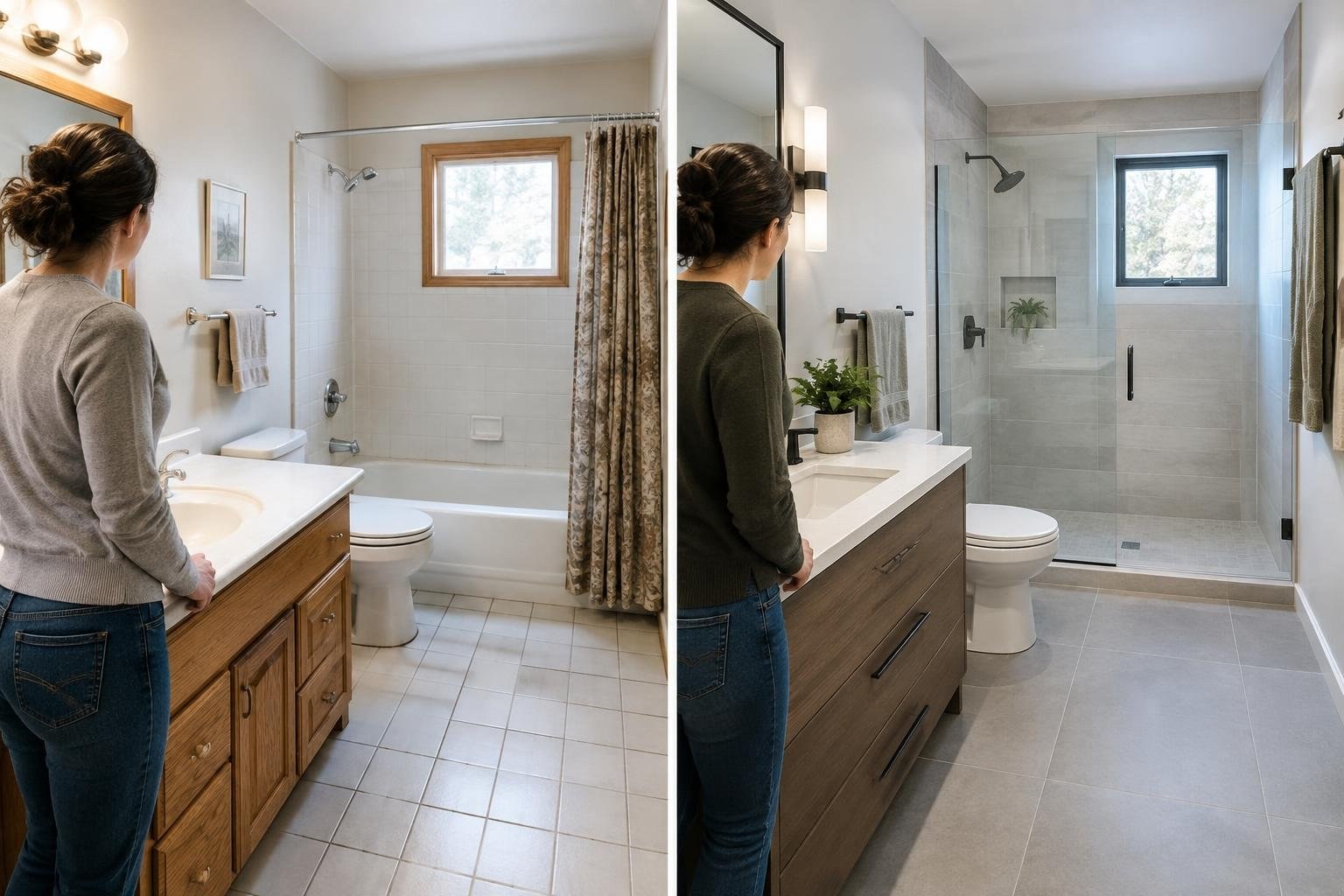
A primary or master bathroom remodel updates some or all of the room’s fixtures, finishes, surfaces, and systems. A project might replace a vanity, toilet, shower, tub, flooring, or lighting while keeping the layout. A larger renovation can involve demolition, changes to fixture locations, new tile or wall finishes, and work behind walls or below the floor.
The scope matters because a bathroom is a coordinated space: fixtures connect to plumbing, wet areas need appropriate detailing, and finished surfaces can conceal conditions that are not visible during an initial walkthrough. Start by naming the problems you want to solve. Examples include inadequate storage, worn finishes, a shower that does not suit your needs, or a layout that feels difficult to use. Separate must-haves from appearance upgrades before requesting estimates.
“Master bathroom” is commonly used in project descriptions; “primary bathroom” is another name for the main bathroom associated with a home’s primary bedroom. For budgeting, the important detail is not the label but the room’s actual size, existing construction, scope, and location.
How the project works and what to expect
A remodel generally moves through planning, selection, estimating, preparation, demolition, installation, and a final review. The exact sequence depends on the project. In a surface-focused update, existing plumbing locations may remain in place. In a deeper renovation, the contractor may need to coordinate demolition with plumbing, electrical, and finish work.
- Define the project. Record what is not working and decide what must change.
- Set the layout and selections. Identify fixture locations, surfaces, storage needs, and product preferences.
- Get comparable proposals. Ask bidders to price the same scope and identify assumptions.
- Prepare the home. Agree on access, dust protection, storage, bathroom availability, and disposal.
- Complete the work and review it. Confirm agreed items, outstanding corrections, product documentation, and warranty details before final closeout.
Ask the contractor for a schedule with decision deadlines and milestones. Product lead times, approval requirements, and concealed conditions can affect the sequence. A useful schedule explains how the contractor will notify you of changes rather than promising a completion date without explaining assumptions.
Signs it may be time to remodel
Consider a remodel when the room no longer meets your needs, finishes are worn, storage or circulation is inadequate, or you want to update fixtures and appearance. A persistent leak, damaged surfaces, or visible deterioration calls for investigation before selecting cosmetic finishes. The appearance of a problem does not always reveal its cause, so ask for a diagnosis and a written description of the proposed correction.
- Recurring leaks or damp-looking areas: Ask where water is coming from and whether the repair includes the underlying source.
- Loose, cracked, or deteriorated finishes: Find out whether the issue is limited to the finish or affects what is behind it.
- Fixtures that no longer suit daily use: Decide whether a targeted replacement will solve the problem or whether the surrounding layout also needs work.
- Repeated repairs: Compare the cost and scope of another repair with a planned update, rather than assuming replacement is always better.
- Access or storage frustrations: Describe the specific daily task that is difficult before paying to move fixtures or add custom features.
If water is actively escaping or the room appears unsafe to use, address the immediate issue with an appropriate qualified professional before starting a design-led renovation.
Master bathroom remodel cost and budget factors
There is no single reliable price for every master bathroom. The supplied estimates span roughly $10,000 to $80,000 or more, while HomeGuide gives an example of $15,000 to $30,000 for a 100-square-foot bathroom with mid-grade fixtures and finishes. Treat online numbers as planning context, not a promise of what a contractor will charge in your area.
Ask for a written estimate that separates labor, materials, fixtures, demolition and disposal, and any stated allowances. The proposal should also identify exclusions, the assumptions behind the price, and how additional work will be authorized and priced. If two bids have very different totals, compare their scopes line by line before deciding that one is a bargain.
What can raise the price?
- Changing the layout or relocating fixtures, which can expand plumbing and finish work.
- Choosing larger amounts of tile, custom cabinetry, specialty fixtures, or premium finishes.
- Adding work beyond the visible surfaces, or addressing concealed damage found during demolition.
- Room size, project complexity, access, local labor and material costs, and disposal needs.
- Changing selections after work has started, especially when the change affects items already ordered or installed.
What can help control the budget?
Keep the layout where it works, choose finishes to fit a defined allowance, and prioritize the changes that matter most. Ask which selections are included in the bid and what it costs to upgrade them. Preserve a contingency in your own planning for unknown conditions, but ask the contractor to explain how approval works before extra work begins. Do not cut essential installation or safety work simply to reach a target price.
Remodel options and tradeoffs
Choose an option by matching the work to the problem, not by starting with a luxury feature. Broadly, a bathroom project can be a refresh, a same-layout remodel, or a layout-changing renovation. Each can include different levels of finish, so request a precise list of included work rather than relying on labels such as “basic” or “full.”
| Approach | Typical scope | Tradeoff to consider |
|---|---|---|
| Cosmetic refresh | Selected finishes or fixtures updated, with much of the room retained | Can focus spending, but may leave underlying layout or concealed issues unresolved |
| Same-layout remodel | Several fixtures and surfaces replaced while locations largely stay put | Balances a broader update with fewer layout changes; confirm plumbing and finish scope |
| Layout-changing renovation | Room plan or fixture locations change, often with more extensive construction | Offers more opportunity to reconfigure the room but can add coordination and cost |
For materials and finishes, compare more than the purchase price. Ask about product specifications, cleaning needs, availability, installation requirements, and how a selection will be handled if it is delayed or discontinued. For a tub-and-shower decision, a vanity configuration, or a tile-versus-other-finish choice, consider who uses the room and what maintenance you are willing to do. Have the contractor confirm compatibility and installation details for the specific products you select.
Repair, refresh, or replace?
Repair, refresh, and full replacement are different responses. Repair may make sense when a clearly identified problem is limited and the rest of the room works well. A refresh may suit a room with a sound layout and no known need for broader construction. A more complete remodel may be appropriate when several elements no longer function for the household, or when a layout change is central to the project.
Compare the expected scope and cost of repair with the proposed renovation. Ask whether the repair resolves the cause, what work is excluded, and what conditions could require a change. If a contractor recommends replacing the whole room, request a clear explanation of why a smaller repair would not meet your goal. If you are comparing repeated repairs with replacement, include the likely disruption and the value of fixing the underlying issue, not just the initial price.
Do not make the decision on age alone or assume that a costly renovation will pay for itself at resale. Think about how long you expect to stay, whether the current bathroom has a functional or maintenance problem, and whether the proposed improvements fit the home and your budget. A remodel is most defensible when the project solves a real need at a cost you can support.
Permits, credentials, safety, and warranties
Bathroom work can involve trades, product installation, and approvals that vary by location and by scope. Before signing, ask the contractor which permits or inspections may apply, who will arrange them, and what work is included in the price. Verify current local requirements with the relevant building department rather than assuming that a project is exempt or that a contractor will handle approvals automatically.
For any provider, ask what license, registration, or trade qualification is required where the work will occur and how to verify it. Request proof of insurance and confirm who is responsible if subcontractors are involved. Discuss safe work practices, protection of the occupied home, debris removal, and how water or other essential services will be managed during construction.
Read product and labor warranties separately. Ask who provides each one, what is covered, how long coverage lasts, how to report a problem, and what could exclude a claim. Keep contracts, product information, approvals, change orders, and final payment records together. Do not rely on a verbal assurance when the scope, schedule, or warranty can be written down.
How to choose a qualified bathroom remodeler
Choose a contractor by comparing evidence and scope, not presentation alone. Seek a detailed written proposal, confirm applicable credentials and insurance, and ask for references from projects with a similar level of work. Ask who will manage the job day to day, who performs each trade, and how you will receive updates. A clear contract should identify the work, products or selection allowances, payment milestones, exclusions, cleanup, schedule assumptions, and change-order process.
Questions to ask before hiring
- What work is included, and what is specifically excluded?
- Who will supervise the project and perform each part of the work?
- What licenses, registrations, or trade qualifications apply to this work locally?
- Can you provide current insurance documentation?
- Will you obtain required permits and arrange inspections, if applicable?
- How will demolition and disposal be handled?
- What products and finish allowances are included in this price?
- How will you address concealed conditions and get approval for added work?
- What is the expected schedule, and what factors could delay it?
- How will you protect nearby rooms and manage access?
- What warranties cover products and workmanship?
- Can I speak with recent customers whose projects had a similar scope?
Be cautious of a bid that is unusually low without a clear explanation, a large demand for payment before work, pressure to sign immediately, no written contract, or reluctance to explain permits, insurance, exclusions, and warranties. Compare the complete proposal, not just the bottom line.
Related projects to consider before work begins
Several projects are worth evaluating alongside a bathroom renovation because they may affect the same room, surfaces, or contractor schedule. Whether combining work saves money depends on the home, scope, and provider; ask for separate and bundled pricing instead of assuming a discount.
- Ventilation: Consider it when planning moisture-producing bathroom work. Evaluate the fan and its installation needs while the room scope is being set; clarify whether ventilation work is included or requires a separate trade.
- Lighting and electrical: Review fixture locations and power needs before walls and finishes are closed. Coordinate this work with the remodel plan and confirm who is qualified and responsible for it.
- Adjacent flooring or finishes: If the renovation changes the bathroom threshold or affects nearby surfaces, decide how transitions and repair limits will be handled before demolition.
- Storage and bedroom access: If the bathroom connects to a closet or bedroom, check whether the work affects those spaces and whether protection or finish repairs are part of the contract.
Order work so that decisions affecting concealed systems and surfaces are made before final finishes are installed. For each related project, establish one written scope or coordinated scopes, clear trade responsibilities, and a single plan for sequencing.
Ways to manage cost without cutting corners
Homeowners can reduce uncertainty and avoid paying for avoidable changes by planning decisions before demolition. Set a practical spending limit, identify non-negotiable repairs or functional improvements, and decide where you can be flexible on appearance or product level. Ask contractors to price the same base scope and, where useful, list optional upgrades separately.
- Keep fixture locations when the current arrangement works and the contractor confirms it fits the plan.
- Choose products and finishes before the ordering deadline, and confirm the quoted allowance covers your selection.
- Ask whether a proposed upgrade solves a specific need or is simply an optional enhancement.
- Agree in writing on how unexpected conditions are documented, priced, and approved.
- Coordinate related work so that trades do not undo completed finishes or duplicate setup.
- Do not pay for work that is not described in the contract, and keep a copy of each approved change.
Lowering the price by removing necessary preparation, qualified work, or required approvals can create more risk than value. If a proposal exceeds your budget, ask the contractor to identify scope alternatives and price each one transparently rather than accepting an unexplained reduction.
Mistakes to avoid and final planning checklist
Common planning mistakes include choosing a contractor from the total alone, leaving selections undecided, and assuming a short description such as “complete remodel” defines the work. Other pitfalls include moving fixtures without understanding the added scope, failing to ask about concealed conditions, treating visible damage without investigating its cause, and overlooking permits or warranty terms.
Before you commit, use this short decision checklist:
- Have I written down the problems the remodel needs to solve?
- Have I compared repair, refresh, and broader renovation scopes where practical?
- Do the bids describe comparable labor, materials, allowances, exclusions, and disposal?
- Have I planned for product choices, possible added work, and timing decisions?
- Have I checked local credential and approval requirements?
- Are payment milestones, change orders, cleanup, and warranty responsibilities in writing?
- Have I coordinated related work and identified who is responsible for each task?
- Do I know what I will inspect at the final walkthrough?
At closeout, compare completed work with the contract, document unresolved items, collect product and warranty paperwork, and confirm that any agreed corrections have been addressed.
Is a master bathroom remodel worth it?
A remodel may be worthwhile when it resolves persistent functional problems, supports a household’s needs, or replaces finishes and fixtures the homeowner already intends to update. It may be less compelling when the room works well and the main motivation is a speculative resale gain. The cost estimates available for this topic vary widely, and they do not establish a guaranteed return on investment for a particular home or market.
Consider the total project cost, expected disruption, how long you plan to stay, the value of the improvement to daily use, and whether a smaller scope can accomplish the same goal. Ask for alternatives before choosing high-cost features, and avoid treating resale value as a promise. A well-defined project can be worthwhile on personal-use grounds even when its financial return is uncertain.
Frequently asked questions
How much does a master bathroom remodel cost?
Published estimates vary considerably. The sources reviewed place projects in ranges from roughly $10,000 to $80,000 or more, while one estimate for a 100-square-foot bathroom with mid-grade finishes is $15,000 to $30,000. Treat these as broad reference points, not a local quote. Your scope, location, products, and site conditions determine the actual price.
What affects the cost of a primary bathroom renovation?
The biggest cost variables are the amount of work, room size, finish selections, and whether the layout changes. Keeping fixtures in their current locations can help limit plumbing work. Tile coverage, custom features, demolition, and repairs discovered after opening walls can also change the estimate. Ask each bidder to state what is included and excluded.
What is the difference between a bathroom refresh and a full remodel?
A cosmetic refresh updates finishes or fixtures without rebuilding the room. A full remodel may include demolition, new surfaces and fixtures, layout changes, and work behind finished walls. Ask contractors to define each proposed scope in writing so you can compare similar projects rather than comparing a refresh price with a reconstruction price.
How can I reduce the cost of a bathroom remodel?
Keeping the plumbing layout can reduce the amount of plumbing work, and selecting standard, readily available finishes may make planning simpler. Prioritize the changes that solve daily problems, compare equivalent bids, and avoid paying for upgrades you do not need. Do not save money by skipping qualified installation or required approvals.
How long does a master bathroom remodel take?
There is no single duration that fits every remodel. Timing depends on the scope, product availability, permit or inspection needs, and conditions found during demolition. Ask the contractor for a project schedule with milestones and written procedures for delays. Confirm when the bathroom will be unavailable and how changes affect the schedule.
How do I choose a bathroom remodeling contractor?
Compare license or registration requirements where you live, relevant bathroom project experience, insurance documentation, references, written scope, payment terms, permit responsibilities, and warranty coverage. Ask who will supervise the work and whether subcontractors will be used. Check that the bid identifies products, quantities, exclusions, and how unexpected conditions are priced.
Should I include ventilation or electrical work in my bathroom remodel?
Yes. If you replace or relocate a fan, lighting, or other bathroom components, coordinate those decisions with the remodel scope rather than treating them as afterthoughts. A contractor can clarify which trades are included and whether separate providers or approvals are needed. Do not assume electrical or ventilation work is covered by a general remodeling quote.
People Also Ask
Is $20,000 enough to remodel a master bathroom?
It can, but it is not automatic. Cost depends on the work included, room size, selected materials, location, and any hidden repairs. Compare local written bids rather than assuming a broad published range applies to your home.
Can I remodel a master bathroom for $10,000?
It may be possible for a limited update, but a broad remodel can cost substantially more. Define whether your plan changes the layout, replaces surfaces, updates fixtures, or opens walls before deciding whether a budget is sufficient.
Does remodeling a master bathroom add value to a home?
A bathroom remodel may support comfort, function, and appearance, but do not assume a particular resale return. Consider how long you expect to stay, whether the existing room has problems, and whether the proposed upgrades suit the home and likely buyers.
Is it cheaper to keep the bathroom layout?
Usually, relocating plumbing adds scope compared with keeping fixtures in their current locations. The added cost depends on the plumbing work and conditions of the home, so request separate pricing for the existing layout and the proposed change.
What should a bathroom remodeling estimate include?
An estimate should identify demolition, labor, materials, fixtures, installation, cleanup, and the contractor's assumptions. It should also explain exclusions, allowances, payment milestones, schedule, change orders, and who handles permits or inspections when applicable.
Can I remodel my bathroom myself?
A limited cosmetic update can be suitable for a capable homeowner, but a full remodel may involve plumbing, electrical, waterproofing, demolition, and coordination among trades. Understand your local requirements and the risks before doing work yourself; hire qualified professionals for tasks outside your competence.
A master bathroom remodel can be a targeted refresh or a major reconstruction, so the useful budget is the one tied to a written scope, selected products, and a plan for unknown conditions. Decide what needs to work better, compare bids on the same work, and keep plumbing locations and finish choices in view when controlling costs. Before signing, verify who is responsible for permits, installation, cleanup, and warranty support. When you are ready to compare options, use Estimate.org to search for providers and make an informed choice.
Your next step
Explore services and find providers at Estimate.org.
Reviewed and maintained by the Staff at Estimate.org.
Last reviewed and updated October 9, 2026 by the Estimate.org Editorial Team.
Sources
- Master Bathroom Remodel Cost? Budget & ROI Guide
- How Much Does It Cost to Remodel a Master Bathroom? A Complete Cost Breakdown
- Master Bathroom Remodel Cost Guide: Budget & Save Smart
- How Much Does a Master Bathroom Remodel Cost? | 2026 Price Guide from Homebuddy
- Master Bath Remodel Cost by Size, Scope, and Market | Contractor Tips
- Average Cost of a Primary Suite Bathroom Remodel | HGTV
- Master Bathroom Remodel Cost : Full Breakdown (Avg $7K–$30K)
- How Much Does a Master Bathroom Remodel Cost? (2026)
