

A small bathroom remodel can mean a focused refresh or a full renovation, so there is no single price that fits every project. Published U.S. cost guides in the available research report estimates from roughly $1,500 to $15,000, while another gives a range of $3,000 to $18,000 or more. One guide places its national average near $9,000; another reports a typical spend of about $6,500. These estimates differ because project scope, room size, material choices, local labor rates, and plumbing or structural changes differ. The practical takeaway: use published figures as broad planning context, then compare local written estimates for the same work. Keeping the layout and choosing finishes deliberately can help you control scope. Replacing fixtures or finishes without addressing a leak, damaged surface, or poor function, however, may leave the main problem unresolved.
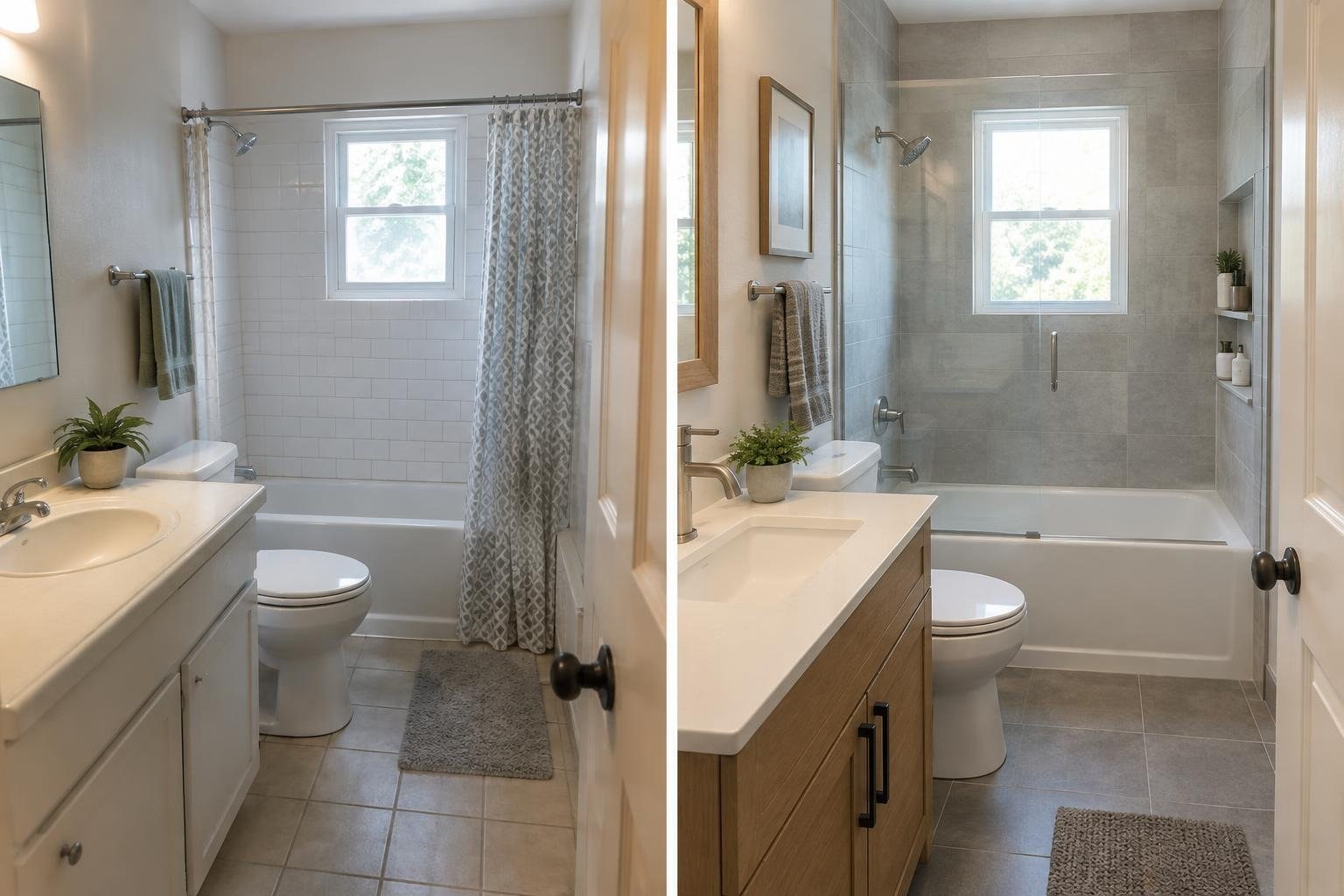
What a Small Bathroom Remodel Can Include
A small bathroom remodel is a set of planned changes to a compact bathroom, such as replacing finishes, fixtures, storage, or components of the shower or tub area. A project may be limited to visible updates or may involve a much broader renovation. The word “remodel” alone does not tell you what work is included, which is why agreeing on a written scope matters before discussing price.
Start by identifying the problem you want to solve. Is the room dated, difficult to use, short on storage, or affected by a leak or damaged finish? Separate essential repairs from desired upgrades. That distinction helps you decide whether a targeted update can meet your needs or whether a more comprehensive project is justified.
Signs It May Be Time to Update or Repair the Room
Some homeowners start planning when visible finishes feel worn or the room no longer works for everyday routines. Others are responding to a specific concern, such as a fixture that needs attention or a surface they want replaced. Before choosing new finishes, determine whether there is an underlying repair to address; cosmetic work alone may not resolve it.
- List what is not working, such as limited storage or an awkward arrangement.
- Record which fixtures and finishes you want to retain, repair, or replace.
- Ask a qualified provider to assess concerns that could affect the scope, including suspected plumbing or structural work.
- Decide which improvements are necessary and which are optional.
This is a planning checklist, not a diagnosis. If the problem is unclear, get an inspection or evaluation before choosing materials or authorizing demolition.
Small Bathroom Remodel Cost: How to Read the Estimates
Published U.S. small-bathroom cost estimates vary substantially. The sources reviewed report figures including $1,500–$15,000, $3,000–$15,000, and $3,000–$18,000 or more. Other guides describe a national average near $9,000 or a typical spend around $6,500. These are not interchangeable quotes: they reflect different definitions, project assumptions, and estimates. Use them as broad planning references, not a promise about your local price.
Ask each contractor to state what the price covers: labor, specified materials, removal, disposal, preparation, and any work related to plumbing or structural changes. The supplied estimates identify room size, material choices, local labor rates, and plumbing or structural changes as factors that can affect the total. They do not establish a reliable price for every item or market, so request current local pricing for your actual project.
More costly scope can include: changing the layout, selecting higher-cost materials, or needing plumbing or structural work. Ways to control scope: retain the current layout where it meets your needs, decide on finish selections before work begins, and ask for optional upgrades to be priced separately. Do not cut necessary repairs simply to meet a target.
Options and Tradeoffs: Refresh, Replace, or Renovate
For a compact bathroom, compare the level of work rather than relying on labels such as “basic,” “midrange,” or “full.” Those labels can mean different things from one estimate to another.
| Project approach | Typical scope to define | Tradeoff to consider |
|---|---|---|
| Cosmetic refresh | Selected finish or fixture updates while retaining most existing elements | Can limit scope, but may not address concealed or functional problems |
| Fixture and finish replacement | Several visible components replaced, with the existing arrangement retained | Clarify preparation, removal, and what happens if additional work is needed |
| Broader renovation | More extensive replacement, potentially including plumbing or structural changes | May suit a larger goal, but requires careful scope and cost planning |
For each option, compare included tasks, product selections, exclusions, and assumptions. Ask for separate prices for optional work instead of accepting a single package price that obscures the choices.
Choosing Materials and Fixtures for a Compact Room
There is no universally best finish or fixture for every small bathroom. Compare products by purchase and installation cost, appearance, cleaning needs, compatibility with the existing room, and the maintenance information provided by the manufacturer. A compact room can also make storage and clear access as important as decorative choices.
Before approving a selection, confirm its exact model, finish, dimensions, and availability in the estimate. Ask who is responsible for ordering and checking products, and what happens if a selected item is unavailable. The cost research supports the general point that material choices affect project price; it does not provide reliable product-by-product prices, lifespans, or performance comparisons.
Prioritize items that support the room's intended use. If a finish is chosen mainly for its appearance, consider how it will be cleaned and whether its care requirements suit your household. Ask providers to explain any maintenance recommendation in writing.
What Affects the Price and Project Scope?
The estimate is driven by the work being requested, not simply by the room's small footprint. Research on small-bathroom prices points to size, materials, local labor rates, and plumbing or structural changes as meaningful variables. A compact room may still require a more involved scope than a homeowner expects, so get the proposed work assessed rather than assuming square footage alone predicts the bill.
- Room dimensions: the amount of area and material involved can affect estimates.
- Finish selections: product choices alter the material portion of the budget.
- Location: the research identifies local labor rates as a cost factor, but does not establish prices for a particular city.
- Layout changes: moving plumbing or altering structure can change the scope.
- Unclear scope: estimates are difficult to compare when one leaves out tasks or makes different assumptions.
Ask providers to identify assumptions and exclusions in writing. If they cannot price an issue until work begins, ask how they will document and approve any change before proceeding.
Repair Versus a Full Replacement Project
Repair or replacement depends on the condition of the room and the goal of the work. If a focused repair or a few finish changes would address the issue, ask for that scope as well as a broader renovation estimate. If several desired changes are interconnected, compare the combined scope with separate updates. A contractor should explain what each option includes rather than presenting replacement as the only answer.
Before deciding, consider whether the work addresses the underlying concern, how much of the room must change, and whether the existing layout can remain. If the provider identifies possible plumbing or structural work, ask what has been observed, what remains uncertain, and how that work would affect the estimate. Published cost guides treat these changes as price factors, but they cannot tell you what is happening in an individual home.
What to Expect: Estimate, Work, and Completion
Project timing depends on the selected work, product availability, and what the provider finds while assessing the room.
- Assessment: describe the goals and have the room and requested work reviewed.
- Scope and estimate: select products, confirm what is included, and document exclusions and assumptions.
- Preparation: agree on access, protection of nearby areas, and the planned work sequence.
- Work and changes: confirm how unexpected conditions or requested changes will be communicated and priced.
- Completion: review the finished work, obtain relevant product and workmanship documents, and resolve agreed punch-list items.
Ask which decisions you need to make before the start date, how schedule changes will be handled, and who to contact with questions. Get significant changes in writing before approving them.
How to Choose a Qualified Bathroom Remodeling Provider
Compare providers on the clarity of their proposed work as well as price. Request written estimates that use the same project scope and list materials, labor, exclusions, assumptions, payment milestones, and the process for approving changes. Ask for relevant experience with similar bathroom projects, references you can contact, and proof of insurance. Verify any license or credential that applies to the work with the appropriate local authority.
Ask who will perform each part of the project, who is responsible for permits if they are required, and what warranty applies to products and workmanship. Get warranty terms in writing, including how to make a claim. A low estimate may simply omit work or assume less expensive materials; ask providers to explain differences line by line.
Questions to ask:
- What work is included, and what is excluded?
- Which specific products and materials are included?
- Will the existing layout remain?
- What assumptions are you making about plumbing or structural work?
- How are additional conditions priced and approved?
- Who obtains any required permits?
- Who will be on site and who supervises the work?
- What insurance and applicable credentials can you document?
- What are the payment milestones?
- What product and workmanship warranties apply?
- What is the expected schedule, and what could change it?
- How will you protect the surrounding area and handle cleanup?
Permits, Credentials, Safety, and Warranties
Requirements vary by location and by the work involved. Before work starts, contact your local building department or ask the contractor to explain which permits or inspections may apply to your project. Confirm responsibility in the written agreement rather than assuming the homeowner or contractor will handle it.
Ask the provider to document applicable licenses, insurance, and any other required credentials. Do not treat a verbal assurance as a substitute for verifying requirements with the relevant authority. Review product instructions and warranty terms, and keep receipts and project documents. The cost estimates provided for this guide do not establish local code, permit, licensing, or warranty rules.
Ways to Manage Cost Without Cutting Corners
Budget control starts with a clear scope, not with skipping necessary work. Consider keeping the layout if it meets your needs, choosing finishes after comparing their full project cost, and asking which items can be postponed without compromising the intended result. Request separate prices for optional changes so you can make informed tradeoffs.
- Compare estimates that cover the same work and product level.
- Ask whether you can provide any materials, and clarify who is responsible if they are delayed, damaged, or unsuitable.
- Make selections before work begins where possible, and document approved substitutions.
- Reserve a decision process for unexpected conditions instead of authorizing open-ended additions.
- Do not remove repairs or required approvals merely to make an estimate appear cheaper.
Because the available research identifies materials, labor rates, and plumbing or structural changes as cost variables, discuss those items explicitly with each provider. Ask for current local estimates; national published figures cannot determine your exact project price.
Mistakes to Avoid Before Signing
Common planning errors include comparing different scopes, choosing on total price alone, and assuming that a small room must mean a simple or inexpensive project. Avoid them with a brief written plan and a consistent estimate checklist.
- Vague scope: name the tasks and products rather than relying on “full remodel.”
- Price-only selection: compare exclusions, assumptions, and materials.
- Ignoring layout: decide whether moving fixtures solves a real problem before pricing a change.
- Skipping assessment: investigate a suspected underlying issue before choosing new finishes.
- Unclear change orders: agree that changes are documented and approved before extra work proceeds.
- Assuming rules: check permit and credential requirements for your location and scope.
- Unwritten promises: record schedule, payment terms, cleanup, and warranties.
- Unplanned product choices: confirm exact selections and who orders them.
Related Work to Consider Before or During the Remodel
Bathroom work can affect nearby finishes, fixtures, or other planned home improvements. Before committing, ask whether any related work should be assessed as part of the same estimate. Bundling may reduce repeated disruption when work areas overlap, but it does not automatically reduce total cost; ask providers to explain the schedule and pricing.
- Plumbing work: evaluate it before selecting a finish if the layout or fixtures may change. Confirm who is responsible for the plumbing scope.
- Lighting or electrical changes: include them in early planning if they are part of the goal, and verify applicable qualifications and approvals.
- Adjacent finishes: discuss any painting, trim, or flooring that may be affected by the proposed work.
- Storage or layout updates: decide these before finalizing materials so the estimate reflects the intended room.
Prioritize work that affects the bathroom's underlying function before cosmetic selections. Compare combined and separate scopes where more than one project is being considered.
Is a Small Bathroom Remodel Worth It?
A small bathroom remodel may be worthwhile when the proposed work solves a real functional or repair problem and the estimate fits your plans. A limited refresh may be a better fit if the existing layout works and only selected finishes need attention. A broader renovation may suit goals that cannot be met with isolated updates, but compare the added scope and cost before proceeding.
Do not assume that a renovation will pay for itself or produce a particular resale return. The supplied research concerns project cost estimates and does not establish resale value, savings, or return on investment. Decide using your household's needs, the condition of the room, the written scope, and the local quotes you receive.
Frequently asked questions
How much does a small bathroom remodel cost?
Published U.S. cost guides give different ranges because they describe different project scopes. Examples in the available research range from $1,500–$15,000 to $3,000–$18,000 or more. Basic cosmetic work may cost less than a renovation involving plumbing or structural changes. Treat these figures as planning context, not a local quote, and compare written estimates for the same scope.
What is the most affordable way to remodel a small bathroom?
Usually, preserving the existing layout is the more budget-conscious approach. Moving a toilet, sink, shower, or other plumbing fixture can add work, and published cost guides identify plumbing or structural changes as factors that affect the final price. Ask contractors to price a same-layout option separately from any proposed layout change.
What is included in a small bathroom remodel?
It depends on what you mean by remodel. A cosmetic update might refresh paint, hardware, and selected fixtures; a full renovation may replace more finishes and involve plumbing or structural work. Define the work in writing before comparing estimates, because a low price may reflect a smaller scope rather than a better deal.
Does moving plumbing make a bathroom remodel more expensive?
Not necessarily. Moving fixtures can improve how the room functions, but it can also add plumbing and project complexity. First ask whether the current layout is the main problem. Request comparable estimates for keeping and changing the layout, then weigh the added cost against the practical improvement you expect.
Is it worth remodeling a small bathroom?
Possibly, if the existing bathroom works and the project is limited to a few finishes or fixtures. A full renovation may make more sense when the desired work cannot be achieved with isolated updates. Compare the cost and scope of repair or cosmetic work with a complete renovation before choosing.
How do I compare small bathroom remodel estimates?
Ask for a written, itemized estimate that describes the work, materials, exclusions, and any assumptions about plumbing or structural conditions. Confirm who is responsible for checking applicable permits and requirements, how changes are approved, and what warranty applies. Compare at least two estimates with matching scopes when practical.
People Also Ask
What is a realistic budget for a small bathroom remodel?
Small bathroom renovation estimates depend on the work, finish selections, local labor rates, and whether plumbing or structural changes are involved. Cost guides publish different ranges, so use them only as planning context and get comparable local estimates.
How can I remodel a bathroom on a tight budget?
Keeping plumbing fixtures in their current locations can avoid adding a layout change to the project scope. Ask for separate estimates for the existing layout and any proposed changes so you can assess the tradeoff.
What is the difference between a bathroom refresh and a full remodel?
A cosmetic refresh usually changes selected surfaces or fixtures, while a full renovation can involve broader replacement work and possible plumbing or structural changes. Have each estimate spell out exactly which tasks and materials are included.
Why do small bathroom remodel estimates vary so much?
Published estimates vary. Research for small bathrooms includes ranges of $1,500–$15,000 and $3,000–$18,000 or more, with the final price affected by scope, materials, labor, and changes to plumbing or structure. Local estimates are more useful for setting a project budget.
What should I look for in a bathroom remodeling quote?
Start with a written scope that names the work, materials, exclusions, and assumptions. Compare estimates that cover the same tasks, ask who will handle any required permits, and confirm how additional work and warranties are documented.
A small bathroom can be refreshed for less when the layout stays intact and the work focuses on visible finishes. Costs climb when the project changes plumbing, involves structural work, or uses more expensive materials. Compare estimates by scope, not just by total, and decide which improvements solve a real problem before committing. For your next step, compare options and search for providers on Estimate.org.
Your next step
Explore services and find providers at Estimate.org.
Reviewed and maintained by the Staff at Estimate.org.
Last reviewed and updated October 9, 2026 by the Estimate.org Editorial Team.
Sources
- How Much Does a Small Bathroom Remodel Cost
- How Much Does a Small Bathroom Remodel Cost? [2025 Data]
- Small Bathroom Remodel Cost by Dimensions and Type
- Small Bathroom Remodeling Cost in the US
- Small Bathroom Remodel Cost In 2026: Complete Price Guide & Budget Breakdown
- How Much Does a Small Bathroom Remodel Cost? (2026)
- Small Bathroom Remodel Cost: 2026 Price Guide
