

A walk-in shower renovation can be a relatively focused shower replacement or part of a larger bathroom remodel. Published U.S. cost estimates vary: one gives a broad range of $4,000 to $25,000 or more, while another reports $4,000 to $7,000 installed for prefabricated showers and $14,000 to $20,000 or more for high-end custom work. These figures are planning references, not a quote for your home. The price depends on the shower type, labor, materials, glass and accessories, plumbing changes, and what workers find during removal. Start by defining what you want the shower to do, then compare written bids with the same scope. In particular, ask whether demolition, disposal, plumbing, finishes, glass, safety features, permits if required, and hidden-damage repairs are included. A detailed estimate is more useful than a low headline price.
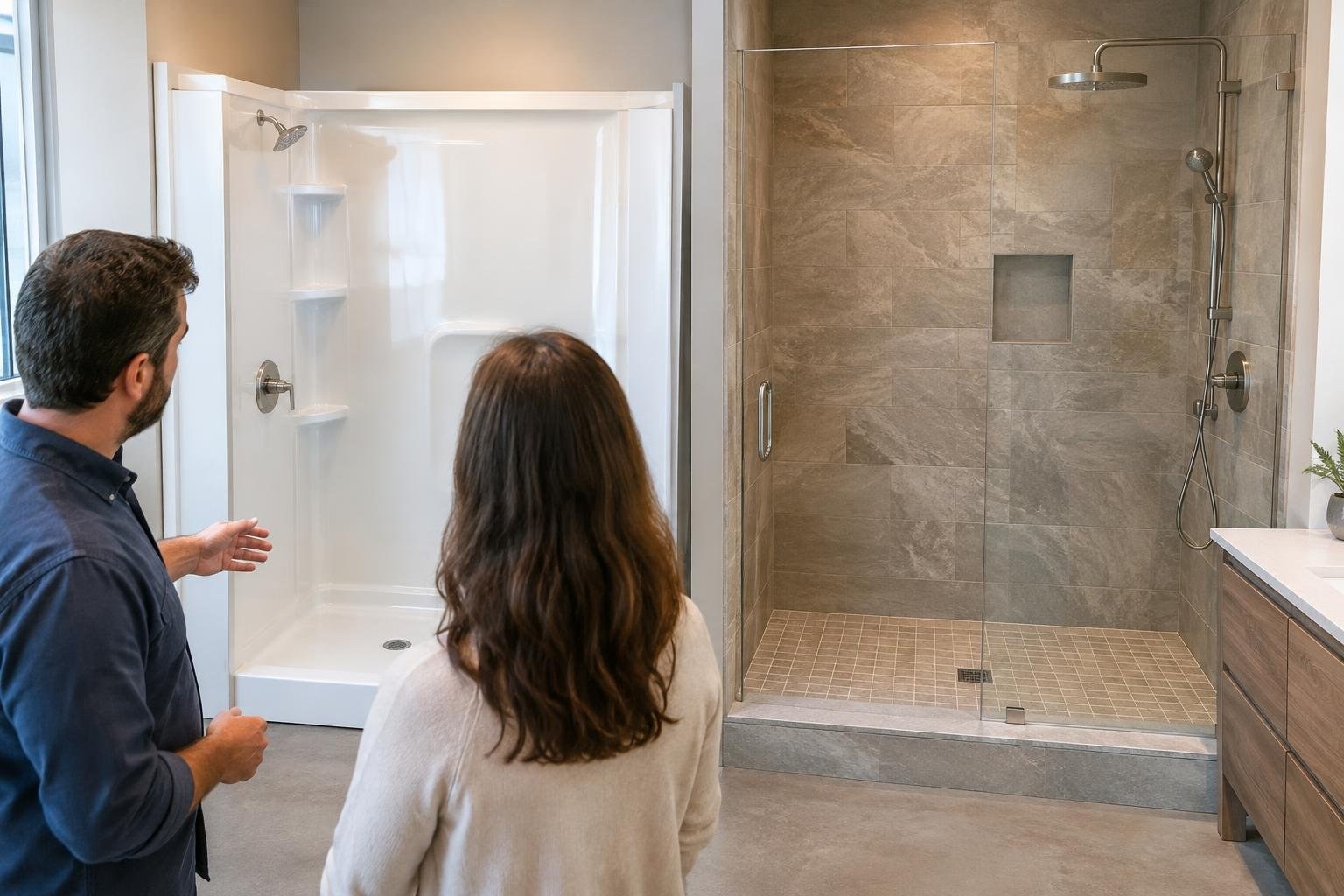
What Is a Walk-In Shower Renovation?
A walk-in shower is a shower designed for entry without stepping over a traditional bathtub wall. In renovation discussions, the term can refer to different configurations, from a prefabricated shower unit to a custom shower with selected finishes and glass. It does not automatically mean the shower is curbless or suitable for every mobility need, so evaluate the actual entry, space, controls, and features.
People consider this project to update a bathroom, replace an existing shower, or convert a tub into a shower. The conversion may involve tub removal, plumbing changes, and adapting the space to the new shower dimensions. That work can affect the estimate as much as the visible finish choices.
The useful first question is not simply “What does a walk-in shower cost?” It is “What work, products, and protections are included in the price?”
What Work Does the Project Include?
Before comparing prices, document the existing bathroom and define the outcome you need. Note whether the project is replacing an existing shower or removing a bathtub, the approximate shower footprint, and any desired features. Be clear about whether you want a prefabricated unit or a custom design, and whether glass, storage, seating, or grab bars are priorities.
During a conversion, the general sequence can include removing the tub, assessing the space, making necessary plumbing adjustments, preparing the area, and installing the selected shower. The exact scope depends on the existing layout and the new design. Ask the contractor to explain what will happen at each stage and what would trigger additional work.
Good planning also accounts for everyday use. Consider who uses the shower, how much room is needed, where controls and storage should go, and whether a seat or grab bars would be useful. Treat access features as part of the design, not last-minute accessories.
Signs You May Need a Shower Repair or Renovation
Visible symptoms can help you decide whether to investigate a shower, but they do not prove what is behind the surface. Pay attention to damage or deterioration around the shower, recurring problems that return after a repair, or a layout that no longer works for the people using it. Ask a qualified provider to inspect the issue and explain whether repair, replacement, or a larger renovation is appropriate.
- Repeated repair needs: Ask whether the same component is failing again or whether the proposed work addresses only a symptom.
- Outdated or unsuitable layout: If stepping over a tub or using the current arrangement is difficult, discuss a conversion and specific access needs.
- Planned bathroom update: If the shower is being changed as part of a larger renovation, coordinate the scope with related work before finishes are selected.
- Damage discovered during inspection: Have the contractor describe the evidence, proposed correction, and added cost before authorizing work beyond the contract.
Do not agree to a full replacement solely because a salesperson recommends it. Ask what has been observed, what alternatives exist, and what could happen if you defer the work.
Walk-In Shower Cost: What Published Estimates Say
Published prices differ because they describe different projects. One cost source gives a broad walk-in shower remodel range of $4,000 to $25,000 or more. Another reports installed prefabricated showers at $4,000 to $7,000 and high-end custom showers at $14,000 to $20,000 or more. A separate source cites $8,500 to $20,000-plus, while another describes a basic option at $2,000 to $5,000. These are source-reported ranges, not a standardized national price list, and the lower figures may reflect a narrower scope.
Use the figures to understand that product type and project scope can produce very different budgets. They do not establish what a contractor in your area will charge or what your bathroom requires. Get local written estimates and confirm the date, geography, and inclusions with each provider.
| Published estimate | Reported scope or type | How to use it |
|---|---|---|
| $2,000–$5,000 | Basic shower, as described by the source | Check carefully what labor, demolition, and other work is included. |
| $4,000–$7,000 | Prefabricated shower, installed | Compare the specified unit and installation scope. |
| $8,500–$20,000+ | Broad remodel estimate | Use only as a broad planning reference. |
| $14,000–$20,000+ | High-end custom shower | Confirm the custom materials, glass, and labor included. |
| $4,000–$25,000+ | Broad remodel range from another source | Illustrates the spread, not a quote or guaranteed national average. |
Do not add these figures together. They come from different sources and describe different scopes.
Factors That Affect the Project
Labor, materials, and demolition
Installed prices combine products and work, but estimates may draw the line differently. Ask whether labor, removal of the old tub or shower, and disposal are included. If a bid is product-only or excludes preparation, it should not be compared directly with a complete installation proposal.
Plumbing and the existing layout
A tub-to-shower conversion can involve plumbing adjustments and changes to fit the new shower dimensions. Ask which changes are actually planned in your bathroom and whether the estimate includes them. Do not assume that a simple-looking conversion requires no plumbing work.
Glass and selected features
A heavier frameless glass enclosure can add cost compared with a simple shower curtain. Recessed shampoo storage, an adjustable fixture with a hand wand, a folding seat, and grab bars are also examples of selections that can affect the budget. Ask for itemized upgrade prices so you can distinguish essentials from optional features.
Uncovered conditions and project scope
The available estimates do not provide a reliable national price for every possible hidden condition, permit, disposal charge, or access challenge. Ask the contractor to identify known exclusions and describe in writing how unexpected work will be documented, approved, and priced. Avoid treating an allowance or an open-ended contingency as a final price.
Options and Tradeoffs: Prefabricated, Custom, Glass, and Features
The principal comparison is usually a prefabricated system versus a custom shower. Published estimates put installed prefabricated options at $4,000 to $7,000 and high-end custom showers at $14,000 to $20,000 or more. Those are source-reported ranges, and they do not guarantee that either option will fit a particular bathroom or include identical work.
| Choice | Potential advantage | Tradeoff to investigate | Best comparison question |
|---|---|---|---|
| Prefabricated shower | A defined, ready-made product can simplify selection. | Confirm that the unit and layout meet your needs and fit the space. | What exact unit, installation work, and accessories are included? |
| Custom shower | Allows a project designed around the chosen space and finish selections. | High-end custom estimates can be substantially higher. | Which design details and labor account for the price difference? |
| Simple curtain versus glass enclosure | A curtain avoids the cost of a glass enclosure. | Glass selection can add materially to the total. | What is the separate price for the specified glass? |
| Basic fixture versus added features | A simpler specification limits optional components. | Seats, grab bars, recessed storage, and adjustable fixtures add cost. | Which features are necessary now, and what are their individual prices? |
Ask providers to explain product-specific care, warranty terms, and suitability for your layout.
What to Expect: Project Stages and Timing
There is no reliable project duration in the supplied cost information, so avoid relying on a generic promise that every shower remodel takes the same number of days. The work can differ depending on whether the project is replacing an existing shower or removing a tub and adjusting plumbing and dimensions.
Ask each provider to include a written schedule covering the site visit, product ordering, work start, demolition, plumbing or other preparation, installation, testing, cleanup, and final walkthrough. Ask what may delay the schedule and how the contractor will notify you. Confirm when the bathroom will be unavailable and whether the estimate assumes materials are already available.
Before work begins, clear the work area as requested and agree on access, protection of nearby areas, debris handling, and communication. At the final walkthrough, compare the finished work with the written scope, raise incomplete items, and collect product and workmanship warranty information.
Repair, Replace, or Convert the Bathtub?
A repair may make sense when the problem is limited and a qualified provider can identify a durable correction. Replacement or conversion deserves consideration when the current setup does not meet your needs, the project is part of a planned bathroom update, or the work required to adapt the existing shower approaches the scope of a new installation.
Compare more than the immediate price. Ask what each option fixes, what remains unchanged, and what future work might still be needed. For a tub conversion, include removal, plumbing changes, and any work to fit the new shower dimensions in the comparison. For replacement, verify whether the estimate includes removal and preparation rather than only the new product.
A written diagnosis and separate estimates for feasible alternatives help prevent a cosmetic upgrade from being presented as the only solution.
DIY or Hire a Professional? Permits, Qualifications, and Safety
Installation is skilled work, particularly when a project includes demolition or plumbing changes. A homeowner might handle planning, measurements for an initial discussion, product research, and clearing the area. Whether any installation task is appropriate for DIY depends on the work, the tools, local requirements, and the homeowner’s skill.
Do not take on work involving plumbing or construction beyond your competence. A mistake can create additional damage or complicate later repairs. Before deciding, ask the local building department whether permits or inspections apply, and confirm whether a licensed trade is required for the planned work in your jurisdiction.
For hired work, verify the provider’s applicable license, insurance, and experience with the specific project type. Get responsibilities for permits, subcontractors, cleanup, and workmanship in writing. Ask for product and labor warranty documents and understand what work or maintenance could affect coverage.
How to Choose a Qualified Shower Contractor
Look for a provider who can explain the scope in plain language and give a written, itemized estimate. Verify applicable licensing and insurance with the relevant local or state authority, and ask for references from similar shower projects. Compare the proposed products and work, not only the total.
Ask these questions before signing:
- Have you completed tub-to-shower conversions or shower replacements like mine?
- What exactly is included in the written price?
- Does the estimate include removal and disposal?
- What plumbing changes are planned?
- Which shower system, fixtures, glass, and accessories are specified?
- Can you price optional features separately?
- What is excluded, and how will unexpected work be approved and billed?
- Who obtains any required permits and schedules inspections?
- Will employees or subcontractors perform the work?
- What is the expected schedule, and what could change it?
- How will the bathroom and adjacent areas be protected?
- What cleanup is included?
- What product and workmanship warranties apply, and who handles claims?
- What are the payment milestones and cancellation or change-order terms?
- Can I speak with recent customers for comparable projects?
Be cautious if a provider will not put the scope, price, schedule, or warranty terms in writing, pressures you to decide immediately, requests a large unexplained upfront payment, or refuses to clarify permit responsibility. A very low bid can also be misleading if key work is excluded.
Permits, Inspections, and Warranty Questions
Requirements for permits and inspections vary by jurisdiction and by the work proposed. A simple product replacement and a project with changes to plumbing or the bathroom layout may be treated differently. Ask your local building department what applies, then get the contractor’s permit responsibilities in the contract. Do not rely on a verbal assurance that no approval is needed.
Review warranties before choosing products. Separate the manufacturer’s product coverage from the installer’s labor or workmanship coverage. Ask who handles a claim, how long each warranty lasts, what exclusions apply, whether registration is required, and whether the coverage transfers if the home is sold. Keep the contract, product details, care instructions, and proof of registration together.
Do not assume a warranty covers every defect or that a product warranty guarantees installation quality. Get the actual written documents and ask the provider to explain unclear conditions before work begins.
Ways to Control Cost Without Sacrificing the Scope
You can manage the budget without cutting corners by choosing the scope carefully. First decide which outcomes matter most: replacing an unsuitable tub, choosing a simpler shower system, or adding specific access or storage features. Then ask providers to show the cost of each optional selection separately.
- Get multiple written estimates based on the same project description.
- Compare complete installed scopes, including removal, disposal, plumbing, and specified products.
- Keep the existing layout where it meets your needs and the provider confirms that it can work for the planned design.
- Prioritize safety or usability features that serve a clear need; do not add accessories solely because they appear in a display.
- Ask for a clear process for approving unforeseen work before it is performed.
- Consider whether the shower project should be coordinated with a broader bathroom renovation so the same areas are not repeatedly disturbed.
Do not save money by skipping required approvals, hiring an unverified installer, or omitting work that the contractor says is necessary. A lower initial price is not a good value if the bid leaves out important parts of the agreed project.
Common Walk-In Shower Renovation Mistakes and Red Flags
- Choosing on price alone: Compare product, labor, removal, plumbing, and exclusions.
- Comparing unlike estimates: Make every bidder describe the same scope and selected features.
- Assuming “walk-in” means accessible: Review entry, space, controls, seating, and grab-bar needs directly.
- Adding upgrades without a budget: Glass, recessed storage, fixtures, seats, and grab bars can raise the total.
- Leaving plumbing vague: Ask what changes are planned and priced.
- Ignoring the tub-removal scope: Confirm demolition and disposal rather than assuming they are included.
- Accepting verbal change orders: Require written approval and price before extra work proceeds.
- Skipping permit checks: Confirm local requirements and responsibility before construction.
- Overlooking warranty details: Read product and labor coverage, exclusions, and claim procedures.
- Signing under pressure: Take time to verify credentials, compare proposals, and understand payment terms.
These checks help reveal whether a bid is a complete project proposal or only an attractive starting number.
Related Bathroom Projects to Plan Alongside the Shower
Think about adjacent bathroom work before finalizing the shower layout. Flooring, wall finishes, storage, fixtures, and other planned improvements can affect how the shower work is sequenced and where new materials meet existing surfaces. The available research does not quantify savings from bundling these projects, so ask providers whether combining work would reduce repeated demolition or instead add scope and cost.
- Bathroom flooring and finishes: Evaluate them before selecting shower dimensions and finish transitions. Coordinate their sequence with the shower installer.
- Fixtures and plumbing: Decide whether existing locations will remain or change while defining the shower scope. The contractor should price planned plumbing work explicitly.
- Storage and accessories: Plan recessed caddies, a seat, or grab bars before installation so the design and estimate include them.
- Broader bathroom renovation: If several elements need work, request both a shower-only scope and a coordinated renovation proposal. Compare disruption, schedule, and total scope rather than assuming a bundle is cheaper.
Include the intended sequence and responsibility for transitions between trades in the written plan.
Is a Walk-In Shower Renovation Worth It?
A shower update can be worthwhile when the existing arrangement no longer serves the household or when the project addresses a clearly defined renovation goal. A prefabricated system may fit a more limited product specification, while a custom option allows more individualized selections and can have a higher reported cost. The right choice depends on fit, required work, budget, and features you will actually use.
Consider the total written price, what happens if additional work is found, and how long you expect to use the bathroom. A useful decision is one based on a suitable layout, transparent scope, qualified installation, and understandable warranty coverage.
Frequently asked questions
How much does a walk-in shower renovation cost?
Published estimates vary substantially. One source gives a broad $4,000 to $25,000-plus range; another reports $4,000 to $7,000 installed for prefabricated showers and $14,000 to $20,000 or more for high-end custom showers. These figures are not interchangeable: location, project scope, materials, and the condition of the bathroom affect a real quote. Get itemized local estimates before setting a firm budget.
Is a prefabricated shower cheaper than a custom shower?
A prefabricated shower is a ready-made system, while a custom shower is planned and finished for the specific space. The supplied pricing estimates place installed prefabricated options below high-end custom projects, but the final difference depends on scope, selections, and labor. Compare the full written specifications, not just the product name or starting price.
Does converting a bathtub to a walk-in shower cost more?
It can, but it is not always a simple swap. A tub-to-shower conversion may involve removing the tub, changing plumbing, and adapting the space to the new shower dimensions. Ask the contractor to explain which of those tasks are included and how unexpected conditions would be priced.
What features increase walk-in shower cost?
Glass enclosure type, shower dimensions, plumbing changes, and added features can all affect the price. A frameless glass enclosure, recessed storage, adjustable shower fixtures, a folding seat, and grab bars are examples of selections that may add to the project total. Ask for separate prices so you can prioritize.
How long does a walk-in shower renovation take?
A conversion may include demolition, plumbing work, preparation, and installation. Ask bidders to provide a project schedule with start dates, work stages, material lead times, and time allowed for any inspection or correction.
Is every walk-in shower accessible?
Not necessarily. “Walk-in” describes access, but it does not by itself confirm that a shower meets a particular accessibility need. Discuss entry height, usable space, seating, grab-bar placement, and fixture reach with the person who will use it and the installer. Have the proposed layout reviewed against applicable local requirements when relevant.
Do I need a permit to replace a bathtub with a shower?
Possibly. Permit requirements depend on the project and local jurisdiction. Before work begins, ask the contractor which permits and inspections may apply and who will obtain them. Verify the answer with your local building department rather than assuming a bathroom project is exempt.
How do I choose a walk-in shower contractor?
Compare at least a few written bids that specify demolition, disposal, the shower system, plumbing work, finishes, glass, accessories, cleanup, and how hidden damage will be handled. Verify applicable licensing and insurance, request references for similar work, and review the product and workmanship warranties before signing.
How long does a walk-in shower last?
A shower can last a long time when it is designed and installed well, but lifespan varies with the product, installation, use, and upkeep. One contractor source says a meticulously designed and installed walk-in shower can last longer than 20 years. Treat that as a possibility, not a guarantee, and review the warranty terms for the specific system.
Is a walk-in shower renovation worth the cost?
Potential benefits include a layout better suited to your needs and an updated bathroom. Whether the investment is worthwhile depends on the existing bathroom, the reason for the project, the total scope, and how long you expect to use the home. Compare the cost with repair or simpler replacement options, and do not assume the project will return a particular amount at resale.
People Also Ask
What should a walk-in shower quote include?
A shower renovation estimate can include the shower unit or custom build, labor, demolition, disposal, plumbing changes, glass, and accessories. Ask the contractor to list each item and identify exclusions. If the estimate does not say how hidden damage or additional work will be approved and priced, request that process in writing before work starts.
Are prefab shower prices usually all-inclusive?
They may be, but a low starting price is not a like-for-like comparison. Check the exact shower system, installation scope, plumbing, glass, finishes, demolition, disposal, and warranty. A prefab price and a custom installation price can cover different work, so compare itemized bids rather than the advertised number alone.
What work is involved in a tub-to-shower conversion?
A tub-to-shower conversion can require tub removal, plumbing adjustments, and changes to fit the new shower dimensions. Those steps can make it more involved than replacing an existing shower with a similar-sized unit. Ask which changes your bathroom actually needs instead of assuming every conversion requires the same work.
What are the biggest cost factors in a shower remodel?
The available estimates identify frameless glass, plumbing changes, and optional features such as recessed caddies, a folding seat, and grab bars as potential price factors. Shower size, product selection, labor, and the condition of the space also matter. Have bidders price optional features separately to see their effect on the total.
What questions should I ask before hiring a shower installer?
Ask bidders to specify who removes the existing tub or shower, whether disposal is included, what plumbing work is planned, what products and finishes will be installed, and how added work is approved. Also confirm the schedule, permit responsibilities if applicable, cleanup, payment milestones, and warranty coverage in the written agreement.
What is the average cost to convert a tub into a walk-in shower?
The supplied cost sources offer different price ranges and scopes, so they do not establish one dependable nationwide average for a tub-to-shower conversion. The cost for a particular home depends on demolition, plumbing, size, selected products, labor, and site conditions. Request estimates from local providers using a shared description of the work.
Is it less expensive to replace a shower or convert a tub?
An existing shower with a sound layout may allow a more limited replacement, while a tub conversion can require removal and plumbing or space changes. The lower-cost choice depends on the current condition and the work each option requires. Ask for separate estimates for repair, replacement, and conversion when all are realistic choices.
A walk-in shower’s price depends less on the label and more on the work included: the shower system, plumbing changes, demolition, finish choices, glass, and any safety features. Use published prices as an initial planning range, then compare written estimates based on the same scope. Before committing, confirm what happens if demolition reveals damage, who handles permits if required, and what the product and workmanship warranties cover. A practical design that fits your bathroom and daily needs is often a better choice than paying for features you will not use.
Your next step
Explore your options and find providers at Estimate.org.
Reviewed and maintained by the Staff at Estimate.org.
Last reviewed and updated October 19, 2026 by the Estimate.org Editorial Team.
Sources
- How Much Does A Walk-In Shower Cost? | Yankee Home
- Walk In Shower Cost: Trusted 2026 Price Calculator
- The Cost of Building a Walk-In Shower
- r/bathrooms on Reddit: How much will it cost to go from this to a walk in shower
- How Much Does a Walk-In Shower Cost? A Look at 2026 National Averages
- How Much Does a Walk-In Shower Cost? (2026 Pricing)
- How Much Does a Walk-in Shower Cost in 2026? By Size and Type
