

Choosing a roof for a New Jersey home is not just a matter of picking a color. The right material should suit the roof design, your priorities, and the project budget, while giving you a clear understanding of maintenance and installation requirements. Architectural asphalt shingles are a common choice, but metal, synthetic roofing, cedar shake, and flat-roof membranes are also worth comparing for the right project. Use this guide to understand the trade-offs, ask better questions, and compare proposals on equal terms.
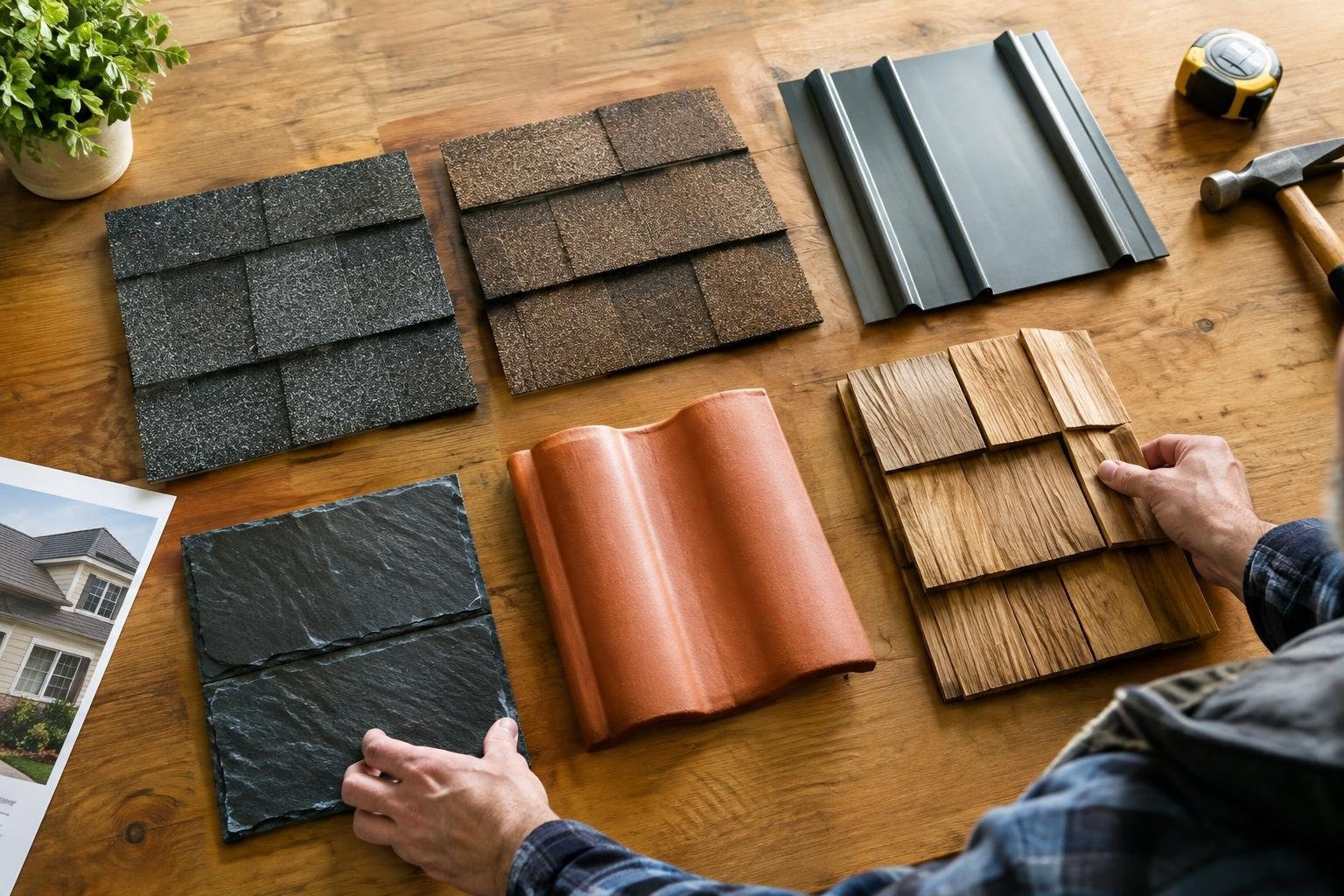
What makes a roofing material a good choice?
A roof is a major building decision, and the material affects more than curb appeal. You need to consider the roof's design, the look you want, the project budget, and how much attention you are prepared to give the material over time. A material described as long-lasting or low maintenance is not automatically right for every building or budget.
Golden Hammer Roofing & Chimney recommends architectural asphalt shingles for many New Jersey homes, while Exterior Point describes asphalt shingles as affordable and durable. Matute Roofing also discusses metal, synthetic roofing, and cedar shake; M&M Roofing lists membrane systems for flat roofs. Treat these recommendations as starting points, not a substitute for a provider evaluating your particular roof.
Think of “best” as the option that meets your priorities with a scope and installation plan you understand. Before choosing, ask what is included in each proposal and what product will actually be installed.
How to choose: a quick decision process
- Start with the roof design. Ask the provider to identify which systems are appropriate for the roof being assessed. Flat-roof membranes and pitched-roof materials are not interchangeable choices.
- Set priorities. Decide whether upfront cost, appearance, maintenance, longevity, or a particular performance quality matters most.
- Compare actual products. Broad labels such as “metal” or “synthetic” do not identify a product or its specifications. Ask for the product name and documentation.
- Compare complete proposals. Match the materials, work scope, and warranty terms before weighing price.
- Check local project requirements. Ask the provider which permits, credentials, and safety measures apply to your location and proposed work.
These steps help keep a recommendation grounded in your building and priorities instead of a generic claim that one material is always best.
What the roofing process includes
Roofing work typically begins with an assessment and a written proposal. The proposal should make the proposed material and project scope clear enough for you to compare it with alternatives. Ask the provider to explain any assumptions, exclusions, or additional work that could change the plan.
Before accepting a proposal, clarify who is responsible for obtaining any required approvals, how the work area will be managed, and what the crew will do if the schedule changes. Get answers in writing rather than relying on a brief verbal description.
At the end of the project, ask what product was installed, what care or maintenance the provider recommends, and how to contact them if you have a concern. Keep the proposal, product information, and warranty documents together for future reference.
Signs you may need roofing work
Possible signs that it is time to seek a professional opinion include a leak, visible damage, or concern about the roof's condition. These signs do not establish that a full replacement is needed. Ask the provider to assess the roof and explain the basis for recommending repair, replacement, or further investigation.
If you are already planning work, make the material choice part of that assessment. A new material will not resolve an unclear project scope. Ask the provider to describe the condition found, the work proposed, and any areas that are not included.
When comparing evaluations, look for explanations you can follow rather than pressure to commit immediately. If the recommendations differ, ask each provider to identify the specific observations that led to their conclusion.
Roofing costs and how to compare estimates
Installed prices vary with the roof, product, and scope, so request project-specific proposals rather than relying on a single price range. Jazz Construction Group describes metal roofing as having a higher upfront cost than shingles.
Ask providers to give written, itemized proposals. Compare like with like: the named product and grade, the areas covered, removal and installation work, any additional work described, and the warranty terms. Ask whether each quote includes the same scope and what could lead to an added charge.
When reviewing a higher initial price, consider the features you are paying for, the provider's stated maintenance expectations, and how the material suits your priorities. Do not treat a broad “lifetime” or “low-cost” statement as a complete cost comparison. Request product details and read the warranty documents.
A useful comparison table can make differences visible:
| Proposal detail | What to check |
|---|---|
| Material | Exact product, type, and included components |
| Work scope | Areas covered, removal, installation, and stated exclusions |
| Price | Itemized total and circumstances that could change it |
| Warranty | What is covered, by whom, and for how long |
Factors that affect the project and its price
Roof design, selected product, and the work required all shape a proposal, so a standard installation scope or price will not apply to every New Jersey project.
Ask providers to describe the roof area and system their proposal covers. Clarify whether they have included removal, installation, and any other work they say is needed. If proposals differ, identify whether the difference comes from the material, the amount of work, or an assumption about the building.
Your priorities also affect what counts as value. For example, metal has a higher upfront cost than shingles. Jazz Construction Group highlights its snow shedding, high-wind performance, and summer heat reflection. Compare those qualities against your project goals rather than assuming that a higher-priced option is automatically better.
Roofing material options and trade-offs
Architectural asphalt shingles: Exterior Point describes asphalt shingles as affordable and durable, and Golden Hammer Roofing & Chimney recommends architectural asphalt shingles for many New Jersey homes. They are a sensible option to include when seeking a familiar, cost-conscious proposal.
Metal roofing: Jazz Construction Group highlights snow shedding, high-wind performance, and reflection of summer heat. It also notes a higher upfront cost than shingles. Ask for the specific product and compare its proposal with a shingle system.
Synthetic roofing: Matute Roofing describes synthetic roofing as a premium-looking option associated with low maintenance and longevity, with styles that can suit modern or traditional designs. Ask which product is proposed and how its performance and care claims are documented.
Cedar shake: Matute Roofing describes cedar shake as offering a natural, distinctive appearance and insulation qualities. Compare its care requirements and product details with synthetic or composite alternatives before deciding.
Composite shake: Tri-State Roofing presents composite shake as a polymer alternative resembling shake and intended to resist moisture. Ask the provider to explain the exact product and substantiate claims about service life and maintenance.
Flat-roof membranes: M&M Roofing lists EPDM, TPO, and PVC as options for flat roofs, describes them as water-resistant, and notes potential uses such as rooftop gardens or solar panels. Confirm suitability for the roof and intended use with a provider.
What to expect, including timing
Roofing schedules and project duration vary, so request an estimate from the provider after the roof and scope have been assessed. Ask how weather or a change in the work plan might affect the schedule.
Before work begins, confirm the anticipated start, expected duration, access arrangements, and how the property will be protected if the work pauses. Ask who will update you if dates change and whether cleanup is part of the proposal.
After installation, request the product information and written warranty documents. Make sure you understand whom to contact about a concern and what maintenance the provider recommends. These details help set expectations without relying on an unsupported promise of a fixed completion date.
How to choose a qualified roofing provider
Choose a provider who can explain why the recommended system fits your roof and answer questions about the product and work scope. Ask for a written proposal with product details, included work, exclusions, price, schedule expectations, and warranty terms.
Check relevant qualifications and references, and ask who will carry out the work. Request an explanation of how the crew will manage access, protect the property, and handle cleanup. A provider should be able to describe the plan in plain language and give you time to review it.
Compare proposals for clarity as well as price. A low total is difficult to evaluate if it leaves out scope or product details. Ask for any promised changes or clarifications to be added to the written proposal before you agree.
Permits, qualifications, warranties, and safety
Permit and credential requirements can depend on the project and the place where the work occurs. Ask the provider what applies to your address and proposed scope, and confirm the answer with the relevant local authority when necessary.
Ask who is responsible for permits or other approvals, and make sure the proposal says so. Request proof of qualifications relevant to the work, and ask how the contractor addresses worker and property safety.
Review warranty documents rather than relying on a sales summary. Clarify whether coverage is provided by the product maker, the installer, or both; what conditions apply; and how to make a claim. Ask what maintenance or installation requirements could affect coverage.
Ways to reduce cost or save safely
Saving safely starts with making an informed comparison, not choosing the lowest number without checking what it covers. Ask for multiple proposals using the same product category and work scope, then compare inclusions and exclusions line by line.
- Ask whether a less expensive product can meet your priorities and suit the roof.
- Request an itemized proposal and written clarification of possible extra charges.
- Compare the upfront price with the provider's documented information about maintenance and product features.
- Ask whether any optional work can be separated from work the provider considers necessary, and request the reason for each recommendation.
- Take time to read warranty terms before accepting a proposal.
Do not make a decision based only on a discount or a promised long-term saving. Compare the actual products, scope, and documented maintenance expectations for your project.
Common mistakes and a pre-contract checklist
Material comparisons can go wrong when broad claims replace product details. “Metal,” “synthetic,” or “shingle” alone may not tell you the exact system or work included. Ask for a product name and a written scope.
- Do not compare unlike estimates. Confirm each proposal covers the same areas and type of work.
- Do not assume a roof needs full replacement. Ask the provider to explain the condition observed and why the proposed work is appropriate.
- Do not treat a marketing claim as a warranty. Read the actual coverage terms and ask who stands behind them.
- Do not ignore approvals or safety. Ask who handles requirements that apply to the project and how work will be managed safely.
- Do not rush under pressure. Get changes, promises, and exclusions in writing and review them before signing.
Pause if a provider will not explain the product, leaves the scope vague, or pressures you to accept an unclear proposal. A clear comparison is more useful than a fast promise.
Frequently asked questions
What is the best roofing material for a New Jersey home?
Architectural asphalt shingles are a strong starting point for many New Jersey homes because they are widely used and described by local roofing sources as a practical, affordable choice. Metal may suit projects prioritizing snow shedding, wind performance, or summer heat reflection, but it has a higher upfront cost than shingles. The right choice depends on the building and your priorities.
Is metal roofing more expensive than shingles?
Metal roofing has a higher upfront cost than shingles, according to Jazz Construction Group, but exact prices depend on the project and location. Ask providers for written, itemized proposals that use the same scope and specify the material, removal, installation, and warranty terms so you can compare fairly.
Are synthetic roof materials worth considering?
Synthetic roofing may be worth comparing if you want a premium appearance, low maintenance, and longevity. Cedar shake offers a natural look and insulation qualities, while composite shake is presented as an alternative with a similar appearance and resistance to moisture. Ask providers to explain the exact product and its care requirements.
What roofing materials are used on flat roofs?
Common flat-roof options include EPDM, TPO, and PVC membranes. They are described as water-resistant options for flat roofs, which may also be planned for uses such as rooftop gardens or solar panels. Have a qualified provider evaluate the roof and intended use before choosing a system.
How long does a roof replacement take?
Project duration varies with the roof and scope. Ask each provider for a proposed start date, estimated work duration, weather contingencies, and how they will protect the building if work pauses. Get the schedule and cleanup plan in writing.
How do I choose a roofing contractor in New Jersey?
Compare at least a few written proposals that specify the same material type, product, project scope, and warranty coverage. Ask who will perform the work, how the provider will handle safety and cleanup, and whether local permit requirements apply. Check references and credentials that are relevant to the proposed work.
People Also Ask
What roofing material works best in New Jersey weather?
Architectural asphalt shingles are a popular option and are described as affordable and durable for New Jersey conditions. Metal is another option to compare, particularly if snow shedding, wind performance, or heat reflection matters to you. No material is best for every roof.
What are the advantages of metal roofing in New Jersey?
Jazz Construction Group describes metal roofing as shedding snow, performing well in high wind, and reflecting summer heat. Those benefits come with a higher upfront cost than shingles, so consider whether the features justify the price for your project.
Is cedar shake a good choice for a New Jersey roof?
Cedar shake offers a natural, distinctive appearance and insulation qualities. Compare it with synthetic or composite alternatives by asking about maintenance, moisture performance, product specifications, and the full installed price.
What is the best material for a flat roof?
Common flat-roof membrane options include EPDM, TPO, and PVC. A provider should assess the roof and its intended use before recommending a system, especially if you plan to use the roof for another purpose.
Should I repair my roof or replace it?
A roof showing a leak or other damage may need professional assessment, but the right response depends on the roof's condition and scope of work. Ask a provider to explain whether a repair or replacement is proposed and why, then compare the written scope with another assessment if needed.
What should a roofing estimate include?
Compare written proposals that describe the same roof area, material, installation scope, and warranty terms. Ask who handles permits and safety, what happens if the schedule changes, and how the provider will protect and clean the work area.
There is no single best roofing material for every New Jersey home. Architectural asphalt shingles are a practical starting point for many projects, while metal, synthetic roofing, cedar shake, and flat-roof membranes may better suit particular designs, priorities, and budgets. Compare complete, written proposals for the same scope, and weigh upfront cost against appearance, maintenance, and the performance qualities you value. When you are ready to compare options, explore your options and find providers at Estimate.org.
Your next step
Explore your options and find providers at Estimate.org.
Search Qualified providersWant our help with selecting a provider
Reviewed and maintained by the Staff at Estimate.org.
Last reviewed and updated November 2, 2026 by the Estimate.org Editorial Team.
Sources
- What Are The Best Roofing Materials For New Jersey? | Exterior Point | NJ Roofing, Siding, and Windows Company
- Best Roofing Materials for New Jersey’s Climate | Matute Roofing
- What Is The Best Roofing Material for NJ Homes?
- Roofing Materials Guide: Asphalt, Metal, Slate & More for New Jersey Homes – Jazz Construction Group
- Best Roofing Materials for New Jersey Homes: 2026 Comparison Guide
- Best Roofing Materials for New Jersey Homes: Comparing Your Options
- What's the Best Roofing Material for a New Jersey Home?
- What Is The Best Roofing for New Jersey Homes?
