

A brown ceiling mark or a drip after rain can make a roof leak seem obvious. The tricky part is that the water may enter somewhere else, travel along framing or pipes, and only become visible indoors at a lower point. In a New Jersey home, winter condensation can also resemble a leak, so the first wet spot is a clue, not a diagnosis. This guide explains how to investigate safely, what a professional may check, and how to compare next steps without guessing at a repair.
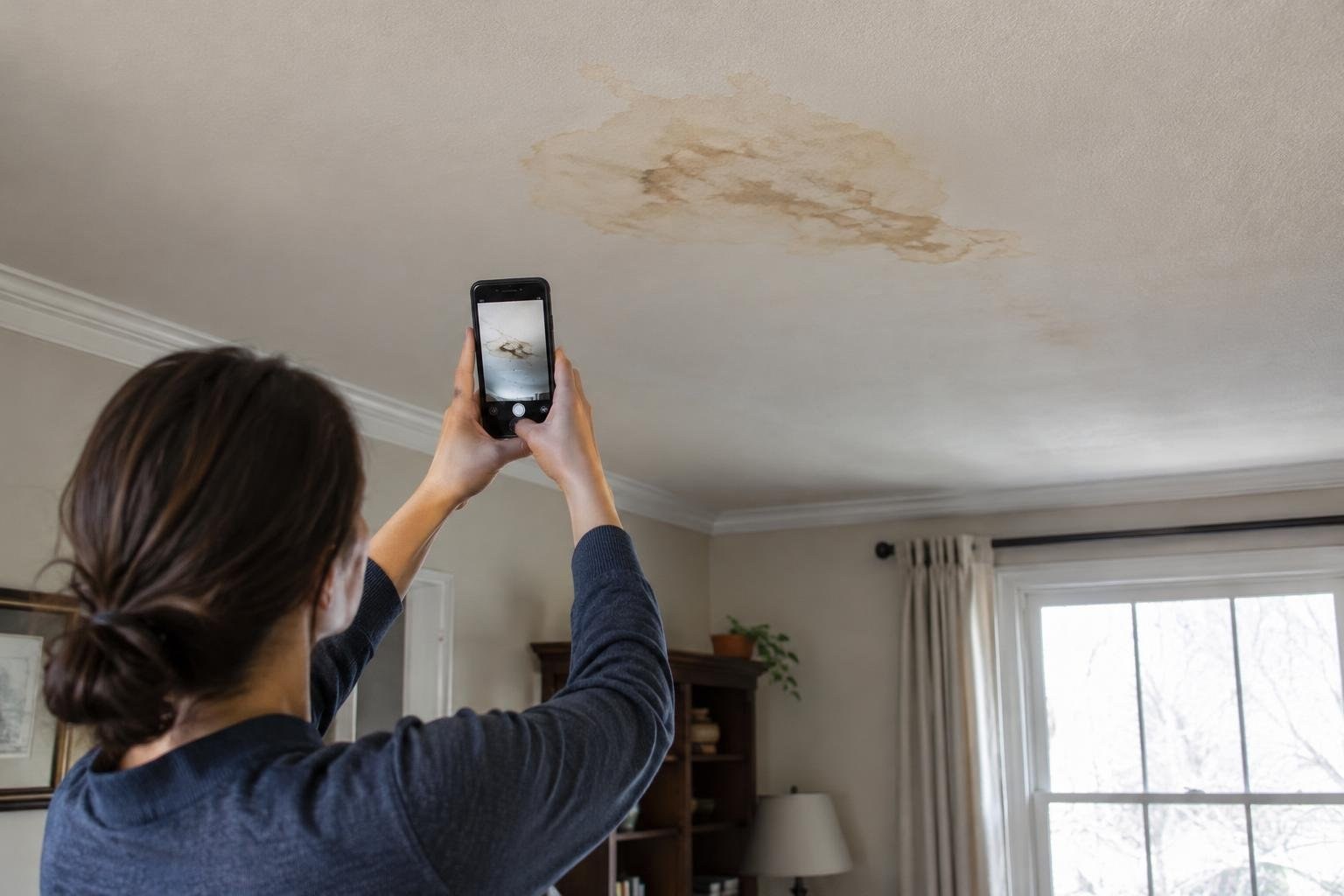
What a roof leak inspection includes
A leak investigation is about following evidence from the indoor symptom back toward the point where water or moisture is entering. It is not just a search for a wet patch on the ceiling. Water may move along beams or pipes before dripping, which is why a ceiling stain can be some distance from the actual roof opening.
A professional assessment may include looking for indoor water marks, checking accessible attic areas, examining the roof surface and details, and determining whether the evidence points to roof intrusion or another moisture problem. If the source remains unclear, a roofer may use a moisture meter or controlled water testing, working on a small area at a time.
The goal is to identify the cause before anyone covers the symptom with paint or sealant. A cosmetic patch without locating the source can leave the underlying problem in place.
Signs a roof leak may need attention
Pay attention to new or recurring ceiling discoloration, a damp area, or a ceiling that appears to sag. These signs can indicate moisture, but they do not reveal exactly where it started. Note when the mark appears or changes, such as after rain or during cold weather, and take a photo to help explain what you observe.
If you can enter the attic safely, look from a stable area for damp or compressed insulation, water staining on the underside of the roof deck, or visible daylight through boards. Do not step on ceiling materials or move around an unfamiliar attic if the footing is uncertain.
From the ground, you may notice missing shingles, damaged flashing, or gutters that overflow. A pipe boot can also be cracked even when it looks intact from below, so a ground-level check cannot rule out a roof defect.
Water near electrical fixtures, a growing ceiling bulge, or an actively worsening leak calls for caution. Avoid touching wet electrical components and get appropriate professional help.
Consider winter condensation before assuming the roof is leaking
In winter, water or frost in an attic does not automatically prove that rain or snow entered through the roof. Warm, moist indoor air can rise into a cold attic, reach the underside of cold roof sheathing, and condense. The resulting droplets or frost can later look like a roof leak.
Record the timing and conditions: does the moisture appear during a cold stretch, after precipitation, or both? That detail can help a roofer distinguish a possible roof opening from a condensation issue. The latter may point to air-sealing or ventilation concerns rather than a damaged shingle.
Do not apply sealant to a suspected roof spot based on timing alone. Condensation and roof leaks can be difficult to distinguish without a proper inspection, and treating the wrong cause may leave the moisture problem unresolved.
How to trace water without relying on the ceiling stain
The location of an indoor stain is a starting clue, not a map of the roof defect. Water can follow beams or pipes before dripping, and damp trails on attic wood may lead toward an entry point that is not immediately above the room.
Start indoors by noting the stain’s location and checking nearby accessible spaces. In an attic, look for water marks on the underside of the roof deck, wet or compressed insulation, and visible daylight. Do not pull apart materials or walk across an unstable area to improve your view.
If the likely source is still hidden, a professional can combine a roof-surface inspection with attic observations. Moisture readings can identify damp areas that are hard to see. Controlled water testing may help isolate a location, but it should be performed carefully and systematically rather than by spraying the whole roof at once.
Roof areas a professional may compare
Several roof details can help a professional narrow the search. Missing or damaged shingles, flashing around roof openings, pipe boots, and valleys are useful places to inspect. Overflowing gutters can also point to a drainage-related concern. These are possibilities to examine, not proof that any one part caused the water inside.
Pipe boots deserve attention because a crack may be difficult to see from the ground. A close inspection from the roof surface can reveal damage that is not visible from below. Flashing and other roof details also need a safe, close assessment.
Ask the provider to connect the observed condition to the indoor moisture evidence. A useful explanation should identify what was inspected, what appears damaged or wet, and why that finding matches the leak pattern. If the source is not confirmed, ask what additional inspection would help clarify it before approving a repair.
Cost and estimate considerations
There is no single supported price that applies to every roof leak investigation or repair. The scope depends on what the inspection finds. A visible, localized defect may call for a different repair plan than a source that remains hidden or moisture that has affected interior materials.
Request a written estimate that separates the inspection, the proposed roof repair, and any interior work. Ask the provider to describe the suspected source, the evidence supporting that diagnosis, what materials or areas are included, and what could change the price if more damage is found.
Compare estimates by scope, not just by the total. One proposal may address a specific roof detail while another includes additional work. Confirm whether follow-up inspection or interior restoration is included or priced separately. Avoid treating an exact quote as meaningful if it does not say what problem the work is meant to solve.
Factors that affect the inspection and repair
Several conditions can affect how much investigation a leak requires. The source may be visible, or it may be concealed by roofing materials or appear only as a damp trail inside. A professional may need to inspect both the attic and roof details to connect the evidence.
- Location and access: The suspected area may be difficult to view safely or closely.
- Unclear moisture path: Water can travel before it appears indoors.
- Multiple possible causes: Roof defects and winter condensation can produce similar signs.
- Extent of moisture: A leak may involve insulation, roof decking, or interior surfaces as well as the roof covering.
Ask the roofer to explain which conditions affect the proposed scope. If the diagnosis is uncertain, ask what information or testing would resolve that uncertainty before agreeing to work beyond the confirmed need.
Inspection and repair options to compare
There are different ways to investigate, and they are not interchangeable. A visual check from indoors can document symptoms. An attic inspection can reveal damp insulation, staining, or moisture trails. A roof-surface inspection can assess shingles and details that are hard to evaluate from the ground. A moisture meter can help identify damp wood that is not visibly wet, while controlled water testing can help narrow a hidden entry point.
For a confirmed, limited defect, a targeted repair may be appropriate. If the source is unclear, a diagnosis should come before choosing a repair. If winter moisture points toward condensation, sealing a roof detail may not address the underlying issue.
When comparing providers, compare their inspection approach and proposed scope as well as price. Ask what they will check, how they will distinguish likely causes, and what they will do if the first suspected location is not confirmed.
What to expect and how timing is determined
Expect the process to begin with questions about where water appears and when you noticed it. Share photos, whether the mark is changing, and whether it seems linked to precipitation or cold weather. The more clearly you describe the pattern, the easier it is for the provider to plan an inspection.
A roofer may then check accessible attic areas and the roof surface. If visual clues do not settle the question, moisture readings or controlled water testing may be considered. The time required depends on access and how quickly the source can be identified, so it is better to ask the provider for a project-specific schedule than to rely on a fixed timeline.
Before work starts, confirm the diagnosis, the repair scope, how temporary protection will be handled if needed, and when the provider expects to report findings. After the work, ask what was repaired and what signs should prompt a follow-up call.
How to choose a qualified roofer
Choose a provider who can explain the inspection in plain language and tie the recommended repair to evidence. A clear process matters when a leak is hidden or when condensation may be part of the problem.
- Ask whether the inspection includes accessible attic areas as well as the roof surface.
- Ask how the provider will look for moisture paths and rule out likely alternatives.
- Request photos or a clear description of the suspected source.
- Get a written estimate describing the work and any exclusions.
- Ask who to contact if the stain returns or the source remains uncertain.
Compare at least two proposals when practical, making sure they address the same suspected issue. A lower total is not automatically the better value if the scope does not identify the cause. Be cautious of a recommendation to cover or paint an indoor stain without investigating the moisture source.
Safety, credentials, permits, and warranties
Roof inspection and repair can involve working at height, so do not climb onto the roof to confirm a suspected leak. A wet or damaged roof can create a serious fall risk. An attic can also be unsafe if the walking surface is unclear or damaged. Limit your own checks to areas you can access safely from stable footing.
If safe and practical, move belongings away from dripping water and use a temporary cover to limit further water entry while arranging professional help. A temporary measure is not a diagnosis or a permanent repair. Do not enter an area where water is near electrical equipment.
Ask providers what qualifications, insurance, permits, and warranties apply to the specific work, and request the details in writing. Requirements can depend on the project and location, so confirm applicable rules with the appropriate local authority rather than assuming that every roof repair follows the same process.
Ways to manage costs without taking unsafe shortcuts
The safest way to control cost is to spend effort on accurate diagnosis, not a risky do-it-yourself roof repair. Record the location and timing of moisture, take photos, and share those details when requesting an inspection. This can help the provider focus on the evidence you have observed.
Ask for an itemized scope and compare estimates that address the same suspected source. Find out whether the price includes only roof work or also interior repairs, and ask what additional findings could change the proposal. Addressing an active leak promptly can help limit further water intrusion, but do not attempt work at height to avoid a service call.
Do not let a temporary cover become the entire plan. It may reduce exposure while you arrange help, but the underlying source still needs to be identified and addressed.
Mistakes to avoid and a practical checklist
Use this checklist before approving a repair:
- Document where and when the moisture appears.
- Check only accessible indoor areas, and stay off the roof.
- Ask whether the evidence points to roof intrusion, condensation, or an unresolved cause.
- Request a description or photos of the suspected defect.
- Confirm that the estimate states the repair scope and exclusions.
- Ask whether attic moisture, insulation, decking, or interior work is included.
- Get warranty and follow-up details in writing.
Common mistakes include assuming the ceiling stain marks the roof opening, painting before finding the source, and treating every winter drip as rainwater intrusion. Another risky shortcut is attempting a close roof inspection from a ladder or walking on a roof without the right training and equipment.
Be cautious if a provider cannot explain what evidence supports the repair, pressures you to approve work before describing the scope, or proposes a cosmetic fix without checking for continued moisture.
Frequently asked questions
Is a roof leak directly above a ceiling stain?
Not necessarily. Water can travel along roof framing or pipes before it drips onto a ceiling. An attic inspection may reveal damp trails that lead back toward the entry point.
How can I check for a roof leak from inside?
Look for staining, damp or compressed insulation, water trails on the underside of the roof deck, and daylight through the boards. Do not enter an unsafe attic or step onto the roof.
Can condensation look like a roof leak in winter?
Yes. In cold weather, warm indoor air can reach cold roof sheathing and condense into frost or droplets that resemble a leak. A professional can help distinguish condensation from roof water intrusion.
How much does it cost to find and fix a roof leak?
There is no supported universal price for leak detection or repair. Ask for an inspection and an itemized estimate that explains the suspected source, repair scope, and any additional work.
What does a roofer do to find a leak?
A roofer may inspect the attic and roof surface, check areas such as flashing and pipe boots, and use moisture readings or controlled water testing if the source remains unclear.
What should I do while waiting for a roof leak inspection?
Avoid climbing onto a wet or damaged roof. If safe, protect belongings and use a temporary cover to limit further water entry while arranging a professional assessment.
People Also Ask
How do you trace a roof leak to its source?
Start with visible indoor signs, then inspect accessible attic areas for damp insulation, water trails, or staining on the roof deck. The wet spot may be away from the roof entry point. Leave roof access and uncertain diagnoses to a professional.
Why is a roof leak not directly above the water stain?
Water may run along roof framing or pipes before dripping, so the location of the ceiling mark can be misleading. An attic inspection can help reveal the path.
What are common places for a roof to leak?
Common clues include missing shingles, damaged flashing, overflowing gutters, and cracked pipe boots. Some defects are difficult to see from the ground, so a professional roof inspection may be needed.
Can a roof leak be caused by condensation?
It can. Warm, moist indoor air may condense on cold roof sheathing and form droplets or frost. Have the source checked rather than assuming every winter drip means roof damage.
How do you temporarily stop a roof leak?
Avoid climbing onto the roof. If you can do so safely, place a temporary cover over the affected area to limit water entry, protect belongings, and arrange a professional assessment.
How do professionals locate hidden roof leaks?
A professional may check the attic and roof surface, inspect areas such as flashing and pipe boots, and use moisture readings or controlled water testing when the entry point is not clear.
A ceiling stain can point you toward a roof leak, but it does not identify the entry point by itself. Trace the moisture safely, consider whether condensation could be the cause, and have a qualified roofer inspect the roof when the source is unclear or the area is unsafe. Finding the cause before making a cosmetic repair can help prevent the same damage from returning.
Your next step
Explore your options and find providers at Estimate.org.
Search Qualified providersWant our help with selecting a provider
Reviewed and maintained by the Staff at Estimate.org.
Last reviewed and updated October 22, 2026 by the Estimate.org Editorial Team.
Sources
- How to find a roofing leak, New Jersey? – Apex East Roofing
- Water Stain on Ceiling: How to Trace the Roof Leak (NJ 2026) | R&E Roofing
- How to Find Source of Roof Leak (Step-by-Step Guide)
- Simple Tips for Locating Roof Leaks from Your Local Roofer in New Jersey
- Common Roof Leaks and Fixes for New Jersey Homes
- Where Do Roof Leaks Come From in NJ? | Warrior Construction – WARRIOR CONSTRUCTION
- How to Find a Roof Leak (and Why It's Rarely Where You Think) | Capitol Roofing
- How to Find a Roof Leak in NJ: Signs & Causes
