

Before scheduling roof work, New Jersey homeowners face an important question: does this particular project require a permit? Online answers do not always agree. Some sources describe many basic roof-material replacements as exempt, while others say full replacements commonly require permits. The distinction may depend on what is being changed and on the municipality handling the project. Instead of relying on a blanket yes or no, confirm your exact work scope with your local building or permitting office. Then put permit responsibility, fees, and any required inspections in writing with your roofing provider.
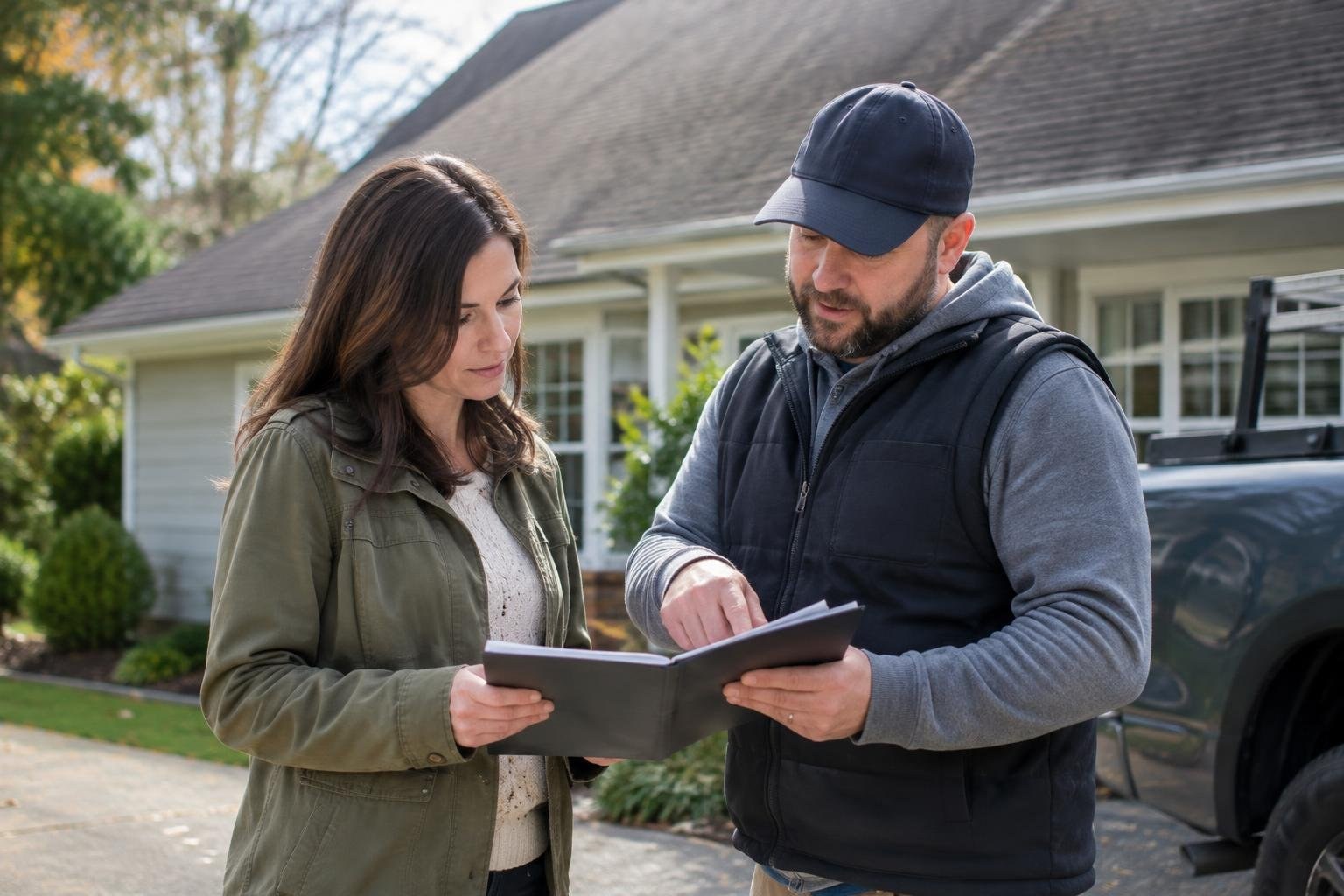
1. Start with the exact roof work, not a general yes or no
A roofing permit is a municipal approval process that may apply to some roof projects. New Jersey roofing sources do not give a consistent answer on whether one is required: some describe many basic replacements as exempt, while others characterize full replacements as commonly requiring permits. That is why the useful question is not simply “Do roofs need permits?” but “Does my town require one for this exact work on this property?”
Before signing or scheduling, prepare a written scope. State whether the work replaces roofing material only, removes existing layers, replaces decking, changes underlayment, or alters framing or load-bearing components. Share the same description with the contractor and municipal office so both are evaluating the same job.
Ask the municipality to identify any application steps, required documents, fees, and inspections. Keep its response with your contract and project records. If the scope changes after the roof is opened, pause to check whether that change affects the original answer.
2. Recognize when a repair may turn into a permit question
Roofing problems can lead homeowners to consider anything from a small repair to a full replacement. A leak, damaged shingles, or visible deterioration may prompt a contractor visit, but the symptom alone does not determine the permit category. What matters for the permit question is the proposed work, not merely the reason you called.
When requesting an estimate, ask the provider to separate the recommended repair from any broader replacement proposal. Have the written scope identify whether the job includes only a limited, non-structural repair or goes further. Then check the local rule for that specific scope.
This step is particularly useful when an initial repair estimate changes after inspection. If the provider finds damaged decking or proposes changes to the roof structure, send the revised scope to the municipal office before authorizing that additional work.
3. Ask about permit fees before comparing project prices
Do not rely on a single statewide permit price for every New Jersey roof project. Do not rely on an amount quoted for a different municipality or assume that a project classified as exempt in one place will have the same treatment elsewhere.
Ask your local office whether a permit applies and request its current fee information for the work you described. If a permit is required, find out whether the fee is due with the application and whether other review or inspection charges apply. Ask the contractor to show any permit-related amounts separately in the estimate so you can compare quotes on a like-for-like basis.
A useful written estimate should clarify whether the provider is handling paperwork and whether you are responsible for paying municipal charges. Treat an unexplained permit line, a promise that fees are included without detail, or a request to skip the local check as a reason to ask follow-up questions. Confirm the municipal process yourself rather than guessing at the total.
4. Factors that affect the project
Several project details can affect the answer you receive. Make sure the municipality knows whether the work is a material-only replacement, a tear-off, a decking repair, or a change to the roof framing or load-bearing capacity. Sources differ on the treatment of a basic replacement, but they specifically identify structural work and decking changes as details that should not be overlooked.
- Materials only: Describe what roofing material will be removed and installed, and whether the underlying roof assembly remains unchanged.
- Decking or underlayment: Say whether any of these layers are being replaced or repaired.
- Structure: Identify changes to framing or load-bearing capacity rather than describing the job only as “a new roof.”
- Repair versus replacement: Explain whether the work is a small, non-structural repair or a broader project.
Ask the contractor to alert you before expanding the work. A scope change is a good reason to revisit the permit answer, not to assume that the original decision covers everything discovered during construction.
5. Compare material-only replacement, repairs, and structural work
Think in terms of three project categories, while treating them as starting points for a municipal question rather than guaranteed legal outcomes:
| Work description | What the guidance says | What to do |
|---|---|---|
| Basic replacement of roofing material | Some sources say many basic replacements on one- and two-family homes may not need a permit; other sources say full replacements commonly do. | Ask your municipality whether the exemption applies to your property and exact scope. |
| Minor, non-structural repair | Some guidance describes limited repairs as ordinary maintenance, with local requirements varying. | Describe the repair and verify whether it is exempt locally. |
| Decking, framing, or load-bearing changes | Sources identify these as important permit triggers or say structural work requires approval. | Contact the building office before authorizing the change. |
The practical tradeoff is between moving quickly on an assumption and taking time to confirm. A call or written inquiry may clarify whether your project needs paperwork before materials and labor are scheduled. Do not select an interpretation just because it appears simpler or matches a different town’s project.
6. What to expect and how to plan the timing
Build permit verification into the schedule before the start date. Do not plan around a timeline borrowed from another project.
- Get a written project scope and estimate.
- Send the scope to the local building or permitting office and ask whether an application is required.
- If required, ask what documents, fees, and inspection steps apply.
- Confirm who will submit the application and provide you with proof of approval.
- Agree that work will not proceed until any required approvals are in place.
- If the work changes, check whether the permit decision or application needs to change too.
For a clearer schedule, ask the provider to distinguish the time needed for municipal steps from the construction schedule. This helps avoid treating an estimated work date as confirmation that all administrative requirements have been met.
7. How to choose a provider who handles permit questions clearly
Choose a provider who can explain the work in plain language and respond constructively when you ask about permits. Local familiarity can be useful, but it should not replace confirmation from the municipal office. A roofer’s general statement about what “usually” happens is not the same as an answer for your address and scope.
Before hiring, ask each provider:
- Can you give me a written scope that separates roofing material replacement from decking or structural work?
- Who will contact the building office and handle any application?
- Will you give me copies of the application, approval, and inspection records?
- How will you notify me if the scope changes after work starts?
- Does the estimate identify permit-related charges separately?
Compare the answers along with the proposed work, schedule, payment terms, and written warranty details. Do not treat a confident verbal answer about permit exemptions as proof that your project is exempt. The local office is the place to verify the rule.
8. Permits, credentials, warranties, and safety records
Permit status, contractor qualifications, and warranty promises are separate issues to check.
Ask the provider to identify any relevant credentials and explain what each covers. Request warranty terms in writing, including who provides the coverage, what work or materials it applies to, and what conditions or exclusions matter. Keep the contract, product information, municipal correspondence, approvals, and inspection records together.
Sources describe the role of permits as supporting compliance with construction standards and identify fire resistance, wind load, and proper installation among safety concerns. If your municipality says a permit or inspection is required, do not bypass it to save time. Ask what must be completed and retain the resulting documentation.
9. How to manage costs without taking shortcuts
The safest way to control permit-related costs is to get the classification and fee information directly from the municipality before signing. Ask whether the project is exempt, whether an application fee applies, and whether inspections or other charges are part of the process. Then have the contractor explain any permit-related amount in the estimate.
- Provide one complete scope to the municipality and each provider so quotes are based on the same work.
- Ask whether the contractor or property owner will submit any required paperwork.
- Request itemized estimates that make permit charges and other project costs easy to distinguish.
- Confirm whether a proposed change to decking or structure needs a new municipal check before approving it.
Avoid “savings” based on skipping a required application, withholding project details, or accepting undocumented assurances.
10. Mistakes to avoid: a pre-project permit checklist
Because New Jersey sources do not give one consistent answer for every basic roof replacement, avoid these common missteps:
- Assuming every town follows the same practice: Call the office that handles permits for the property.
- Calling all work a “roof replacement”: List material removal, decking, underlayment, and structural changes separately.
- Using a contractor’s general answer as final approval: Ask the municipality to confirm its treatment of your project.
- Ignoring a scope change: Recheck requirements if the work expands after inspection or tear-off.
- Starting before required steps are complete: Confirm any application and inspection instructions first.
- Leaving responsibility vague: Put the permit process, fees, and record-sharing expectations in writing.
Before work begins, check off each item:
- I have a written description of the entire proposed scope.
- I have asked the local office about that exact scope and saved its response.
- I understand any application, fee, or inspection steps the office identified.
- My contract says who handles paperwork and shares records.
- I know what happens if decking or structural work is added.
If any item is unresolved, get an answer before scheduling the work.
11. Why location matters in New Jersey
Municipal differences are central to this question. Some New Jersey roofing guidance describes Jersey City as stricter, while also noting that suburban and rural towns may follow more relaxed interpretations. Those descriptions are not a substitute for current instructions from the office responsible for your address.
When you contact that office, ask which department handles the project and whether the answer applies to your property type and the exact work planned. If the first response is unclear, restate the scope in writing and request clarification. Keep a dated copy of what you receive so you can share it with the provider.
Do not infer a rule for one municipality from an article about another location. This is especially important when the scope includes decking or structural changes, because sources treat those details differently from a basic material replacement.
Frequently asked questions
Do I need a permit to replace my roof in New Jersey?
Permit requirements depend on the work and municipality. Some sources say a basic roof-material replacement on a one- or two-family home may not need a permit under the state code, while other sources describe permits as commonly required. Ask your local building office about your exact scope before work starts.
Who should I contact to confirm a New Jersey roofing permit?
Ask the building or permitting office with jurisdiction over the property. Describe whether the work is a material-only replacement, tear-off, decking repair, or structural change, and request the decision and any instructions in writing.
Do roof repairs need permits in New Jersey?
Do not assume that a repair and a replacement are treated alike. Some guidance describes minor, non-structural repairs as ordinary maintenance, but local requirements can differ. Explain the repair to your municipal office and ask whether it is exempt.
How much does a roof replacement permit cost in New Jersey?
Ask your municipality for its current fee schedule and whether any application, review, or inspection fees apply to your project. The amount and process should be confirmed locally rather than assumed from another town’s information.
Does the roofing contractor apply for the permit?
Clarify in the written contract who will check local requirements, submit any application, pay applicable fees, and share approval or inspection records. Do not rely on a verbal assurance that no permit is needed.
Does replacing roof decking require a permit in New Jersey?
Tell the local office if the work involves replacing or repairing roof decking, changing framing, or affecting load-bearing capacity. Those details can change the permit answer, so get specific guidance before authorizing the added work.
People Also Ask
Are roof replacement permits required in every New Jersey town?
Permit requirements and interpretations can vary by municipality. Ask your local building office whether a material-only replacement on your type of home is exempt, and describe any tear-off, decking, or structural work.
Does a roof tear-off change whether I need a permit?
It can matter. Some guidance distinguishes replacing roofing material from work that changes decking or roof structure. Tell the municipality exactly what will be removed and rebuilt before assuming the same rule applies.
Will my roof replacement need an inspection?
Ask the building office whether the project needs a permit and, if so, which inspections or records apply. Do not assume the contractor’s usual process matches your municipality’s requirements.
Can I replace roof shingles without a permit in New Jersey?
Not necessarily. Guidance differs on basic roof-material replacement, so ask your local office about the home type and work scope. Structural changes, framing, or load-bearing work should be specifically raised.
Did New Jersey change its roof replacement permit rules?
Some sources report that New Jersey code changes exempt many basic replacements on one- and two-family homes, while others characterize full replacements as commonly requiring permits. Verify current local treatment directly with your municipal office.
What details should I give the town when asking about a roofing permit?
Ask for a written scope that identifies whether the project includes only roofing material or also decking, underlayment, framing, or other structural work. Share that scope with the municipality and provider before authorizing the work.
New Jersey roof permit advice can seem contradictory because sources describe different project types and local practices. The safest first step is to give your municipality a precise scope of work and get its answer before scheduling the job. Confirm who will handle any required application, how fees and inspections work, and what documentation you will receive. A clear written plan helps you compare providers without relying on assumptions.
Your next step
Explore your options and find providers at Estimate.org.
Search Qualified providersWant our help with selecting a provider
Reviewed and maintained by the Staff at Estimate.org.
Last reviewed and updated November 2, 2026 by the Estimate.org Editorial Team.
Sources
- Do I Need a Permit for a Roof Replacement in New Jersey?
- Do You Need a Permit to Replace a Roof in NJ? | OCNJ Daily
- Do I Need a Permit to Replace My Roof in New Jersey? – Dream Home Roofing
- r/homeowners on Reddit: Permit required to replace roof in New Jersey?
- Navigating New Jersey Roofing Permits and Regulations: What Homeowners Need to Know – Jersey Eco Roofing
- Navigating Roofing Permit Requirements in New Jersey
- Do I Need a Permit to Replace My Roof in New Jersey? – NJ Roofing | Roof Repair & Flat Roofing in New Jersey
- Do You Need a Permit to Replace Your Roof in NJ? (2026 Guide) | R&E Roofing | R&E Roofing
