

A leak or a few cracked slates can make a roof feel like an all-or-nothing problem. But slate is a long-lasting material, and the trouble may come from a repairable detail around it rather than from every slate on the roof. In New Jersey, the useful comparison is not simply repair versus replacement. It is targeted work versus broader system work, based on what an inspection finds. This guide explains the signs to look for, what a proposal should cover, and how to compare providers without assuming that a costly replacement is the only answer.
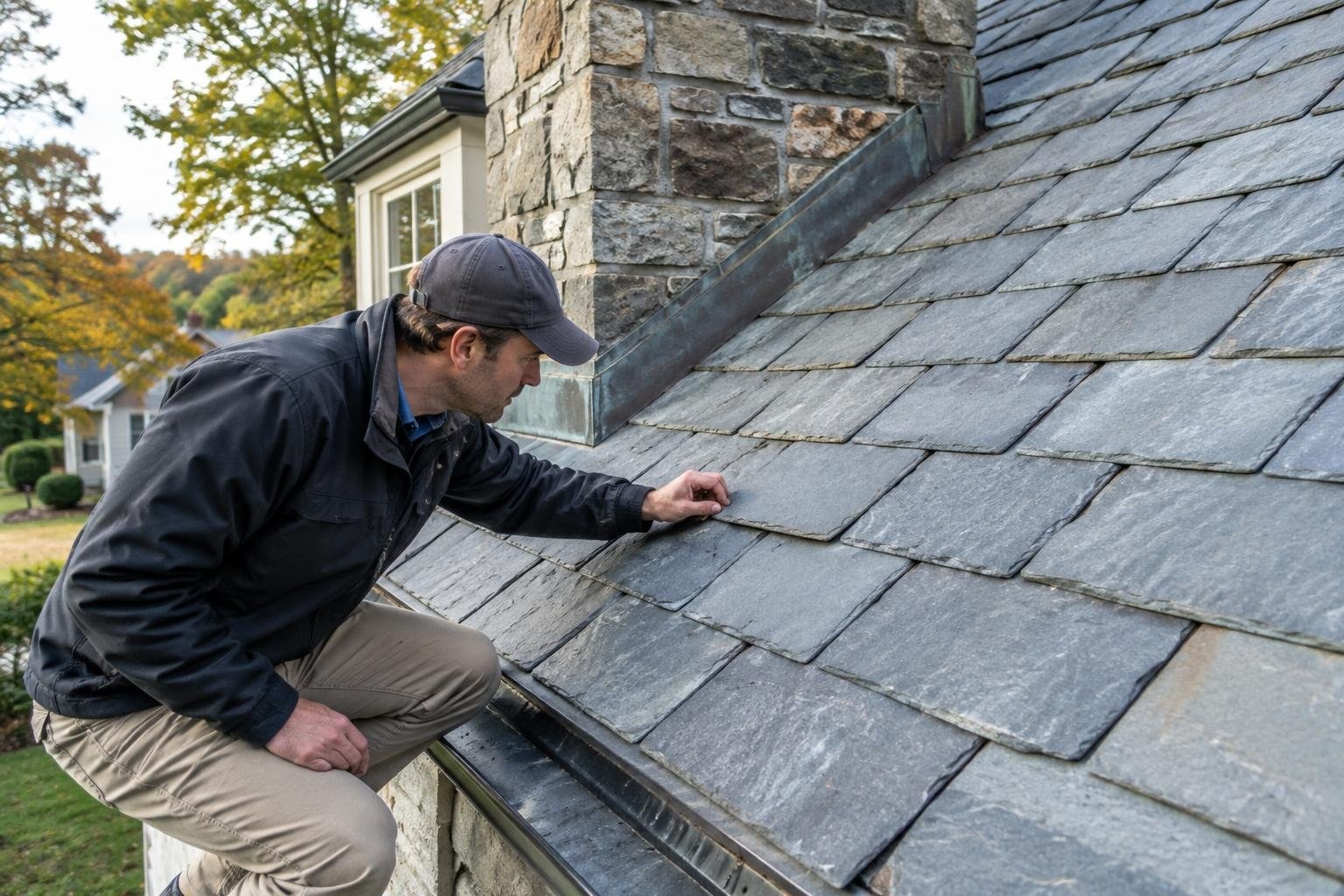
Why the repair-versus-replacement decision matters
Slate is valued for its durability and long service life. FB Roofing & Siding describes slate roofing as lasting at least a century, but that broad figure does not establish the condition or remaining life of a particular roof. A roof is a system: water management depends on the slate as well as details around it.
That distinction matters when you get a leak or notice damage. Replacing sound slate unnecessarily may expand the project, while ignoring failed components can leave the cause of a leak unresolved. A useful decision begins with a diagnosis, not a sales label.
For New Jersey readers, choose a provider who can explain the observed condition and proposed work in terms you can verify. Ask what is damaged, how much of the roof is affected, and why the recommended scope addresses the source of the problem.
What slate roof repair or replacement can include
A slate roof service may mean inspecting the roof, replacing a limited number of broken slates, repairing related details, carrying out partial replacement, or replacing the roof more broadly. The right scope depends on what the inspection finds. A proposal should distinguish these tasks rather than group every activity under a vague heading such as “roof repair.”
The New Jersey Roof Authority notes that matching slate may involve thickness, color band, and quarry origin. Ask the provider to describe how replacement slate will be chosen and whether the match is practical for the existing roof.
Broader replacement is different from blending a small amount of new material into an older roof. Matute Roofing describes replacement as removing the existing roof down to the decking and rebuilding the protective layers. Ask the contractor to state exactly what will be removed, retained, inspected, and rebuilt in your project.
Signs your slate roof may need attention
Arrange an inspection when you see broken or missing slate, notice water entering the building, or have reason to suspect a problem with a roof detail. Do not assume that the visible slate is the only possible cause. Failures can occur around the slate, including at flashing, mortar joints, ridge caps, valleys, and fasteners.
A useful inspection connects visible symptoms to a specific diagnosis. Ask the provider to identify the location of damage and describe whether the slate itself, a surrounding component, or both need attention. If a leak is present, request an explanation of how the proposed work addresses its likely entry point rather than merely covering the visible symptom.
Do not climb onto the roof to investigate or move slate yourself. Slate is a specialized roofing material that requires careful handling, and a qualified provider can assess it without asking you to take unnecessary risks. Keep notes about when and where you noticed a problem to share during the inspection.
Cost and estimate considerations
Costs depend on the project scope: replacing a few individual slates is a different job from rebuilding a roof system. Without a documented scope, a low total may exclude important work, while a higher total may reflect a much broader project.
Ask each provider for a written, itemized proposal that identifies the areas being addressed, the work on slate and related components, material assumptions, and exclusions. If replacement is proposed, ask what removal and rebuilding involve. If repair is proposed, ask how the contractor will handle the cause of the damage and how replacement slate will be matched.
Compare like with like. Request clarification when estimates describe different work or use broad terms without defining them. You can ask a provider to separate recommended work from optional work, explain what could happen if a proposed repair is deferred, and identify what is not included. This makes the decision about scope more useful than choosing by total alone.
Factors that affect the project scope
Several project details can change the scope and the estimate. The first is how much of the slate is damaged. A small, localized repair is not the same job as widespread damage or a full roof replacement. The second is whether related components are involved: flashing, mortar joints, ridge caps, valleys, and fasteners can also be failure points.
Material compatibility is another consideration. Matching slate may involve thickness, color band, and quarry origin, so ask whether the proposal assumes a close match or a particular source. A provider should explain any limits rather than promise a perfect match without describing the material.
Finally, the type of work matters. A proposal that removes the roof to the decking and rebuilds protective layers is a different project from replacing individual slates. Ask what observations led to the recommended scope and whether the estimate accounts for the full work described. Do not treat a general roof-age claim as a substitute for evidence about your roof.
Repair, partial replacement, or full replacement?
There are three broad approaches to compare: targeted repair, partial replacement, and full replacement. Targeted repair may address individual broken slates or a specific failed detail. Partial replacement covers a larger defined area. Full replacement is a broader system project that removes existing roofing and rebuilds protective layers.
| Approach | May fit when | Ask the provider |
|---|---|---|
| Targeted repair | The issue is limited and the roof’s other areas are not identified as needing broader work | What caused the problem, and what will the repair cover? |
| Partial replacement | A defined area needs more than isolated slate replacement | How were the boundaries chosen, and how will new slate be matched? |
| Full replacement | The inspection supports replacing the existing roof system | What will be removed, rebuilt, and included in the price? |
These are comparison prompts, not a diagnosis. Even though slate is described as a long-lasting material, a general lifespan claim cannot prove that a particular roof is suitable for repair. Base the decision on documented condition and a clearly defined scope.
What to expect and how to discuss timing
Project timing depends on what you approve and how much work the provider identifies. A small slate repair, work across a section, and a full system replacement are different scopes, so a responsible estimate should not treat them as interchangeable.
Before scheduling, ask for the expected start window, an estimated duration, and what could change the schedule. Confirm how the provider will communicate if the scope changes after work begins. If a proposal includes inspection, material sourcing, or broader replacement, ask how those steps fit into the schedule.
For any work, clarify what access the crew needs, how slate and removed materials will be handled, and who your contact will be during the project. These questions help set expectations without relying on a generic timeline that may not fit your roof or the approved scope.
How to choose a qualified slate roofing provider
Look for a provider who specifically handles natural slate, not only general roofing. The New Jersey sources describe slate work as requiring specialized care and careful material handling. Ask how often the provider works on slate and who will carry out the work on your roof.
Request a written diagnosis that distinguishes slate damage from problems with flashing, valleys, ridge caps, mortar joints, or fasteners. Ask for photos or another clear record of the areas discussed, and invite the provider to explain why repair, partial replacement, or full replacement is appropriate.
Use the same questions with each bidder: What is included? What is excluded? How will replacement slate be selected? What related details will be repaired? What happens if the observed condition differs from the estimate? A clear, specific answer is more useful than an unsupported assurance that the roof needs the most extensive option.
Compare the detail in the proposals as well as the totals. A good estimate makes it possible to understand the recommendation and discuss alternatives. If you cannot tell what work is being offered, ask for clarification before deciding.
Permits, credentials, warranties, and safety questions
Before approving work, ask the provider whether local permits or approvals apply to the exact project and who is responsible for confirming them.
Ask what credentials the provider holds and how to verify them, but do not assume a particular license or certification from a marketing claim. Request written warranty terms and ask which portions of the work or materials they cover, how long coverage lasts, and what conditions apply. Do not assume a particular warranty applies unless its terms are stated in writing.
Slate requires careful handling. Keep people away from active work areas and ask how the crew plans to protect the building and manage materials. Confirm who is responsible for cleanup and how any change in scope will be approved before extra work proceeds.
Ways to manage cost without cutting corners
The safest way to control spending is to choose the right scope, not to skip work that addresses the cause of damage. If a provider recommends full replacement, ask what evidence shows that targeted repair or partial replacement would not solve the problem. If repair is proposed, ask which adjacent components have been checked.
Get more than one written proposal when practical, and make sure each describes the same work. Ask whether replacement slate can be selected to match the existing roof and what differences may remain. Clarify whether related flashing or other details are included, so you can compare the full scope instead of a stripped-down figure.
Do not save money by attempting roof work yourself or asking an unqualified person to handle slate. The material calls for careful handling, and an incomplete repair can leave the original cause unresolved. Instead, reduce uncertainty with documentation, clear exclusions, and a written process for approving any additional work.
Common mistakes, red flags, and a decision checklist
Watch for proposals that recommend replacement without documenting the condition of the slate and related components, or that promise a repair without identifying the source of a leak. A vague estimate can make it difficult to tell whether a provider is addressing the roof’s actual needs.
Before signing, use this checklist:
- Does the inspection describe where the damage is and what component failed?
- Does the proposal distinguish targeted repair, partial replacement, and full replacement?
- Does it explain how new slate will be selected and matched?
- Are related work, exclusions, and any possible additional charges stated clearly?
- Have you asked about permits or approvals, credentials, safety, and written warranty terms?
- Do you know who will perform the work and how scope changes will be approved?
Be cautious about pressure to approve an undefined scope quickly. A provider should be able to explain why the recommended work is necessary and what alternatives were considered. If the answer is unclear, ask follow-up questions or seek another documented assessment before committing.
Frequently asked questions
Does a slate roof leak mean it needs to be replaced?
Not necessarily. A leak or a few broken slates may be repairable, and failures in details such as flashing, valleys, ridge caps, mortar joints, or fasteners can sometimes be addressed without replacing the entire roof. Ask for an inspection that identifies the cause and extent of the problem.
What should a slate roof inspection include?
A slate specialist should examine the slates and the surrounding roof components, including flashing, valleys, ridge details, mortar joints, and fasteners. Ask the provider to document damaged areas and explain whether the proposed work is targeted or part of a broader replacement.
Can individual slate tiles be replaced?
Slate repairs may involve replacing individual slates, while broader work can include partial replacement or a full roof replacement. The right scope depends on the roof’s condition and the extent of the problem, so request a written explanation of the options.
How much does slate roof repair cost in New Jersey?
Costs depend on the scope, from replacing a few slates to broader roof work. Request itemized estimates that identify the work area, materials, flashing or other related work, access needs, and exclusions, then compare proposals with the same scope.
How long does a slate roof last?
FB Roofing & Siding describes slate roofing as lasting at least a century, but that is not a guarantee for every roof. The condition of the specific roof and the other components that protect it still need inspection.
How do I choose a slate roof repair contractor?
Ask for experience with natural slate, a written diagnosis, a detailed scope, and an explanation of how replacement slate will be selected. Confirm who will perform the work, how the provider will handle materials, and what warranties apply to the specific proposal.
People Also Ask
Can a slate roof leak without the slate being the problem?
Not necessarily. Slate itself may remain serviceable while flashing, valleys, ridge caps, mortar joints, or fasteners fail. An inspection can help identify which part of the roof needs attention.
What questions should I ask a slate roofing contractor?
A provider should inspect the slate and related roof details, document what is damaged, and explain whether a targeted repair or larger replacement is appropriate. Ask for a written scope and clarification of exclusions.
When should I replace a slate roof instead of repairing it?
The decision depends on the condition and extent of the damage. Individual slate replacement may suit limited damage, while widespread problems can call for a broader assessment and replacement proposal.
Does replacement slate need to match the existing roof?
Ask the provider to explain how proposed slate matches the existing material, including thickness, color band, and quarry origin where relevant. The provider can also explain whether the available slate is compatible with the existing roof.
What should a slate roof estimate include?
Do not rely on a single total. Compare written estimates with clearly described work areas, materials, related roof details, and exclusions.
Is slate roofing worth repairing?
Slate roofs have a reputation for a long service life, but a general lifespan claim cannot determine the condition of an individual roof. Inspection of both slate and surrounding components is important.
For a slate roof in New Jersey, the key question is whether the problem is limited to a few slates or involves widespread deterioration of the roof system. A careful inspection should explain the condition of the slate, flashing, valleys, fasteners, and other details before you compare repair with replacement. Request written, itemized scopes and ask how the proposed work preserves compatible materials and addresses the underlying cause.
Your next step
Explore your options and find providers at Estimate.org.
Search Qualified providersWant our help with selecting a provider
Reviewed and maintained by the Staff at Estimate.org.
Last reviewed and updated November 2, 2026 by the Estimate.org Editorial Team.
Sources
- Roof Repair vs. Replacement in NJ | Matute Blog | Matute Roofing
- Slate Roofing in New Jersey | London Roofing NJ
- Slate and Tile Roofing in New Jersey: Historic and Modern Applications | New Jersey Roof Authority
- Slate Roof Repair & Replacement in PA & NJ | 100-Year Slate | Union Roofing
- Slate Roof Repair Near Me | NJ Slate Roofing Contractors
- Roof Replacement vs Repair: When NJ Homeowners Need Each
- ➡️ SLATE ROOF REPAIR IN NEW JERSEY | M & M Roofing Corp ®
- Slate Roof Repair vs. Replacement: A Philadelphia Homeowner's Guide
