

A storm-damaged roof does not automatically need full replacement. The right choice depends on what was damaged, how extensive it is, and whether a targeted repair can restore the roof’s weather protection. After a nor’easter, hurricane, hailstorm, or other severe weather, document what you can see safely, prevent further exposure where practical, and get a written assessment before authorizing permanent work. This guide explains how to compare repair with replacement, understand New Jersey cost ranges, and evaluate a provider’s recommendation.
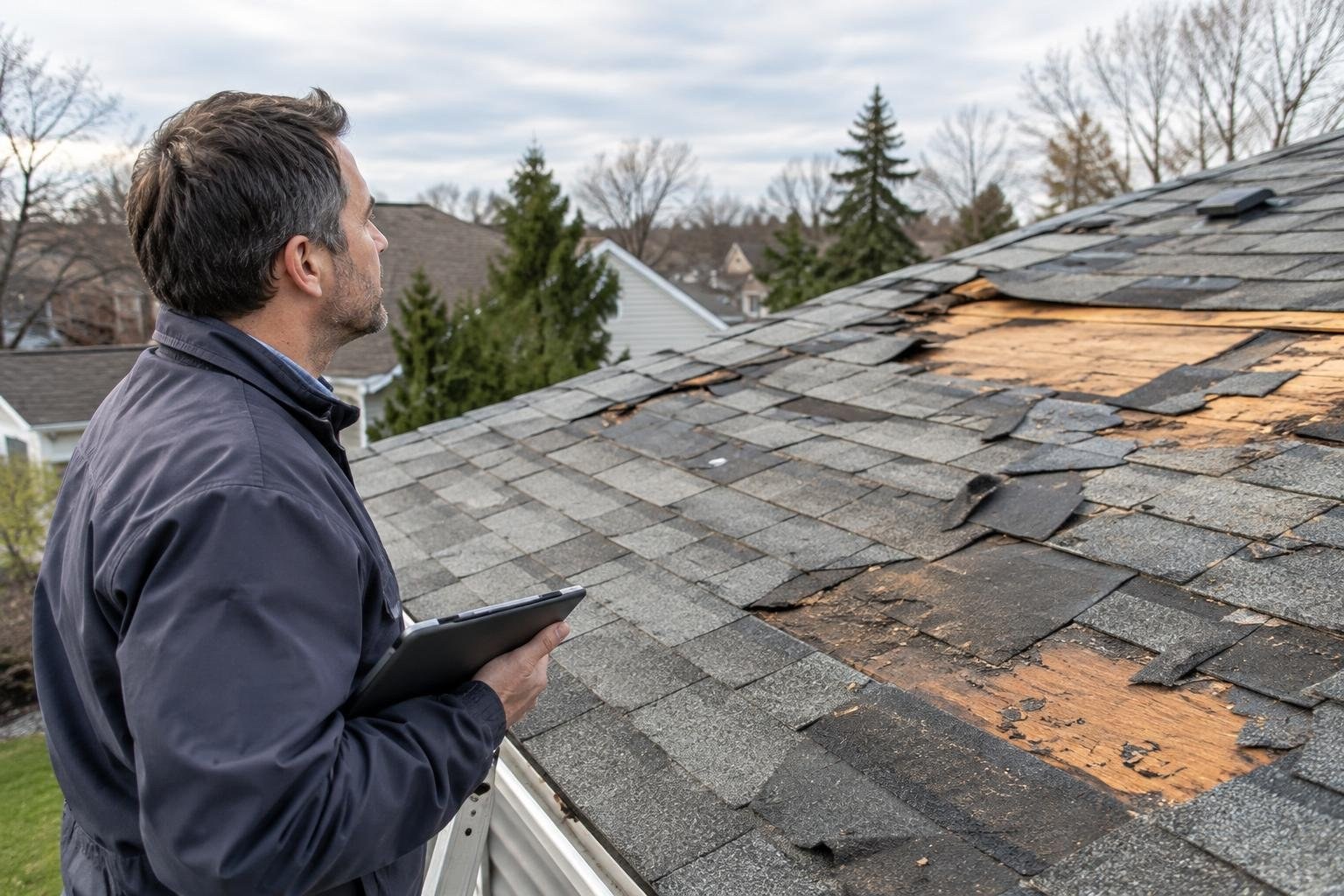
What storm-damage roof service includes
Storm-related roof work can include assessing visible conditions, documenting damage, and carrying out repairs or replacement when weather has affected the roof’s integrity or ability to keep out water. A useful assessment should connect the observed damage to a proposed scope, rather than jump straight to a large job.
Ask the provider to distinguish any temporary measures intended to limit further exposure from permanent work. Get the findings, recommended work, and relevant photos in writing. If you may make an insurance claim, keep that documentation and ask your insurer what it needs. The assessment helps you compare the repair and replacement paths on the same facts.
Signs a roof assessment may be needed
After severe weather, look for signs from the ground and inside the building. Missing or displaced shingles, visible damage around roof edges or flashing, and water appearing indoors are reasons to seek an assessment. A leak can show up away from the point where water enters, so the visible interior spot alone may not identify the source.
Do not use a quick visual check as proof that the whole roof is undamaged. Some areas may not be safely accessible, and a ground-level view cannot show every roof condition. Note what you observe, when you noticed it, and whether it changes after rain. Arrange professional help if you see active water entry or visible damage that needs attention.
New Jersey roof storm damage repair costs
R&E Roofing’s New Jersey cost guide lists these ranges for storm-related work:
| Reported scope | Reference range |
|---|---|
| Minor repairs, such as missing shingles or a small leak | $300–$1,500 |
| Moderate repairs, such as larger sections, flashing failure, or multiple leaks | $1,500–$8,000 |
| Major damage involving partial or full replacement | The guide gives no complete replacement range |
These figures are published estimates, not a guaranteed price or a substitute for a current written quote. Do not assume that every job in a category will cost the same. Ask what the estimate includes, what conditions could change the scope, and whether temporary protection, cleanup, or other work is included. Compare proposals by their actual work descriptions, not by the bottom-line number alone.
If you are considering insurance, do not assume a claim will cover the full project. Review your policy and ask your insurer about coverage, documentation, and the process before making financial decisions based on expected reimbursement.
Factors that affect the project
A quote can vary because the damage and recommended work vary. A small, localized repair is not the same scope as work across a large roof area or a replacement. R&E Roofing’s New Jersey cost guide groups examples by minor, moderate, and major work, including missing shingles, flashing failure, multiple leaks, and partial or full replacement.
When comparing estimates, check whether each provider has described the same affected areas and type of work. Ask about access to the damaged area, materials proposed, temporary measures, and any conditions that may require a revised scope. A clear quote should make it possible to see what is included and what is not, rather than leaving key work open-ended.
Get an explanation if a provider’s proposed scope differs sharply from another assessment. It may reflect different findings, but you need to understand the reason before comparing costs.
Repair or replace: compare the options
Repair and replacement solve different scopes of problem. A repair addresses identified damage while leaving the rest of the roof in place. Replacement means removing and installing roofing over some or all of the affected roof area. The appropriate choice should follow the assessment, not a sales preference.
- Consider repair when the provider identifies a limited area of damage and explains how the proposed work restores weather protection.
- Consider replacement when the assessment documents broader damage or explains why a repair cannot restore the roof’s integrity or weather resistance.
- Ask for another assessment if the evidence does not seem to support the size of the proposed job or the explanation is unclear.
Ask the provider to explain the tradeoffs in writing: what the repair addresses, what it does not address, and why replacement is or is not recommended. A recommendation should account for the condition of accessible areas and visible storm-related conditions, not rely on a vague claim that every storm requires a new roof.
What to expect: assessment, documentation, and timing
After a storm, begin with safety and documentation rather than roof access. Photograph visible conditions from the ground or another safe location. If water is entering, note where and when you see it, and protect belongings if you can do so without putting yourself at risk. Avoid attempting a roof repair yourself.
Next, arrange an assessment of accessible areas and visible conditions. Ask for photographs, a description of the damage, and a written recommendation. If you are considering an insurance claim, contact your insurer about its process and the records it requests. Then compare the assessment and written scopes before approving permanent work.
Timing depends on the specific scope and circumstances. Ask the provider when an inspection can occur, what temporary steps may be appropriate, when permanent work could begin, and how the schedule could change. Request updates if the work or conditions change.
How to choose a qualified roofing provider
Choose a provider who can show what was inspected, explain what was found, and connect the evidence to the proposed scope. A local service page may confirm that a business offers storm-damage work in New Jersey, but a service listing alone does not prove that a specific recommendation is right for your roof.
Before deciding, ask:
- Which areas were inspected, and which could not be accessed?
- Can you provide photos and explain how each supports the recommendation?
- What exactly will the crew repair or replace?
- What is excluded, and what conditions could change the price?
- Who will perform the work and supervise the project?
- What written warranty terms apply to materials and workmanship?
- Can I review the written agreement before authorizing work?
Compare the completeness and clarity of the answers, not just the speed of a quote. If the provider recommends replacement, ask why a repair is not adequate. If you still cannot follow the reasoning, consider another assessment before committing.
Permits, credentials, warranties, and safety
Do not assume that one set of permit, licensing, or insurance requirements applies to every roof project in New Jersey. Before work starts, ask the local building department what approvals apply and ask the provider to explain which party will handle any required paperwork.
Ask the provider for relevant business, insurance, and credential information and verify it through the appropriate source. Request warranty terms in writing, including what work or materials are covered and how to make a claim. Clarify who is responsible for site safety and how the crew will protect people and property during the job.
Never climb onto a storm-damaged roof to inspect it. Use ground-level photos and let a provider assess roof areas using suitable access and safety practices.
Ways to reduce cost or save safely
Saving money should mean choosing a suitable scope and avoiding surprises, not skipping needed work. Ask for more than one written assessment when practical, especially if estimates recommend very different solutions. Give each provider the same information and compare the areas, materials, and tasks included.
- Ask whether a targeted repair can address the documented damage and what risk remains if it does not.
- Get exclusions and possible additional charges in writing before approving the job.
- Keep photos, estimates, and claim communications organized so you can answer follow-up questions.
- Discuss temporary protection separately from permanent work, so you understand the purpose and cost of each.
- Do not authorize work based on a promise that an insurer will pay; confirm claim details with the insurer.
A lower price is not a saving if it omits work needed to restore weather protection or leaves you unable to tell what the provider agreed to do.
Red flags and a before-you-sign checklist
Be cautious if someone pressures you to sign immediately, insists replacement is necessary without showing the damage, or offers a vague scope with no written details. A storm-chasing approach that focuses on urgency rather than documented findings is a reason to slow down and verify the provider. Do not hand over a large payment or sign an agreement you have not had time to understand.
Use this short checklist before authorizing work:
- Document visible damage from a safe location.
- Obtain a written assessment and photos.
- Confirm the proposed work addresses the documented conditions.
- Compare scope, exclusions, and price with another estimate when practical.
- Ask your insurer about the claim process if relevant.
- Check local approval requirements and get warranty terms in writing.
- Keep a copy of the signed agreement and all project communications.
A provider should be able to explain the work in plain language and give you time to review the proposal.
New Jersey weather and roof damage considerations
New Jersey storm-damage guidance identifies nor’easters, hurricanes, hail, and tornadoes among the severe weather events relevant to roof assessment and repair. The visible result can vary by roof and by event, so do not assume that one storm type always produces one kind of damage.
Focus on the conditions actually observed on your property. Record when you noticed them, photograph visible evidence safely, and ask the provider to explain how the assessment supports the scope. This evidence-based approach is more useful than relying on a broad claim about what a particular storm must have done.
Frequently asked questions
Does storm damage mean I need a new roof?
Not necessarily. The decision depends on the extent and location of the damage and whether the roof can be restored to effective weather protection. Ask for an inspection, photos, and a written explanation of why repair or replacement is recommended.
How much does storm damage roof repair cost in New Jersey?
R&E Roofing’s New Jersey cost guide lists minor repairs such as missing shingles or small leaks at $300 to $1,500, and moderate repairs such as larger sections, flashing failure, or multiple leaks at $1,500 to $8,000. These are reference ranges, not a quote; project scope and current local pricing can differ.
What should I do first after a storm damages my roof?
Start with photos or video from the ground and document visible interior water damage. Avoid climbing onto a wet or damaged roof. Contact your insurer if you plan to ask about coverage, and arrange a qualified roof assessment to document visible conditions and recommended work.
How can I tell whether a roofer's replacement recommendation is justified?
Ask the provider to explain the damage, show supporting photos, and give a written scope separating temporary protection from permanent repairs. If replacement is proposed, request a clear explanation of why a repair would not address the problem.
Will homeowners insurance cover storm damage to my roof?
Do not assume that a storm-related repair or replacement is automatically covered. Review your policy and contact your insurer to ask about the claim process, documentation, coverage, and deductible before relying on insurance to pay for work.
People Also Ask
When should a storm-damaged roof be repaired instead of replaced?
A focused repair may be suitable when the damage is limited and the provider can explain how the proposed work restores weather protection. A replacement may be considered when the damage is broader or the roof’s integrity cannot be restored with a repair. Ask for photos and a written comparison of the options.
What are signs of roof storm damage?
Look for visible signs such as missing or displaced shingles, leaks, or damage to flashing, but do not treat a ground-level look as a complete assessment. Some roof areas may not be safely accessible. Have a provider inspect accessible areas and document the conditions before deciding on work.
Does the New Jersey storm repair cost guide give a roof replacement price?
No. R&E Roofing’s guide lists ranges for minor and moderate repairs but gives no complete range for partial or full roof replacement. Ask providers for a written quote that describes the scope, included work, and exclusions.
How do I document roof storm damage for insurance?
Record the date and visible effects of the storm, take photos from safe locations, and keep copies of estimates and communications. If considering an insurance claim, ask your insurer what documentation it needs and follow its process.
What questions should I ask a roof repair contractor?
Ask for the provider’s inspection findings, supporting photos, an itemized or clearly described scope, and the reason for repair or replacement. Check who will perform the work, how safety and temporary protection will be handled, and what written warranty terms apply.
Is it safe to inspect a storm-damaged roof yourself?
Do not climb onto a roof to inspect it, especially after severe weather or when surfaces may be wet or unstable. Photograph visible damage from the ground or another safe location and arrange an inspection by a qualified provider.
After a New Jersey storm, the right answer is not always a new roof. A careful inspection and written scope can help distinguish damage that can be repaired from damage that may require replacement. Document what you can safely see, prevent further water intrusion without climbing onto the roof, and compare clear proposals before approving permanent work. When you are ready, explore your options and find providers at Estimate.org.
Your next step
Explore your options and find providers at Estimate.org.
Search Qualified providersWant our help with selecting a provider
Reviewed and maintained by the Staff at Estimate.org.
Last reviewed and updated November 2, 2026 by the Estimate.org Editorial Team.
Sources
- Storm Damage Roof Repair in New Jersey 2026 | RoofVista
- Storm Damage Roof Repair Services in New Jersey
- Storm Damage Repairs in New Jersey | Lightning Construction
- Storm Damage Roof Repair | AJecks Roofing
- Storm Damage Roofing in New Jersey: What to Do After a Severe Weather Event | New Jersey Roof Authority
- Storm Damage Roof Repair in NJ: Costs, Insurance & What to Do Now (2026) | R&E Roofing
- New Jersey Roof & Storm Damage Repair | Warren Thompson
- Storm Damage Roof Repair | Jersey Eco Roofing
- How to Find the Source of a Roof Leak in a New Jersey Home
