

Attic insulation can affect comfort, energy use, and how a roof system performs through New Jersey’s cold winters and humid summers. But adding material is not always the right first move. Moisture, gaps that let air move between the home and attic, and ventilation all matter. Start by understanding what is already there, what problem you are trying to solve, and what a proposed project will include. This guide explains the inspection, options, pricing factors, and provider questions that can help you make a more informed decision.
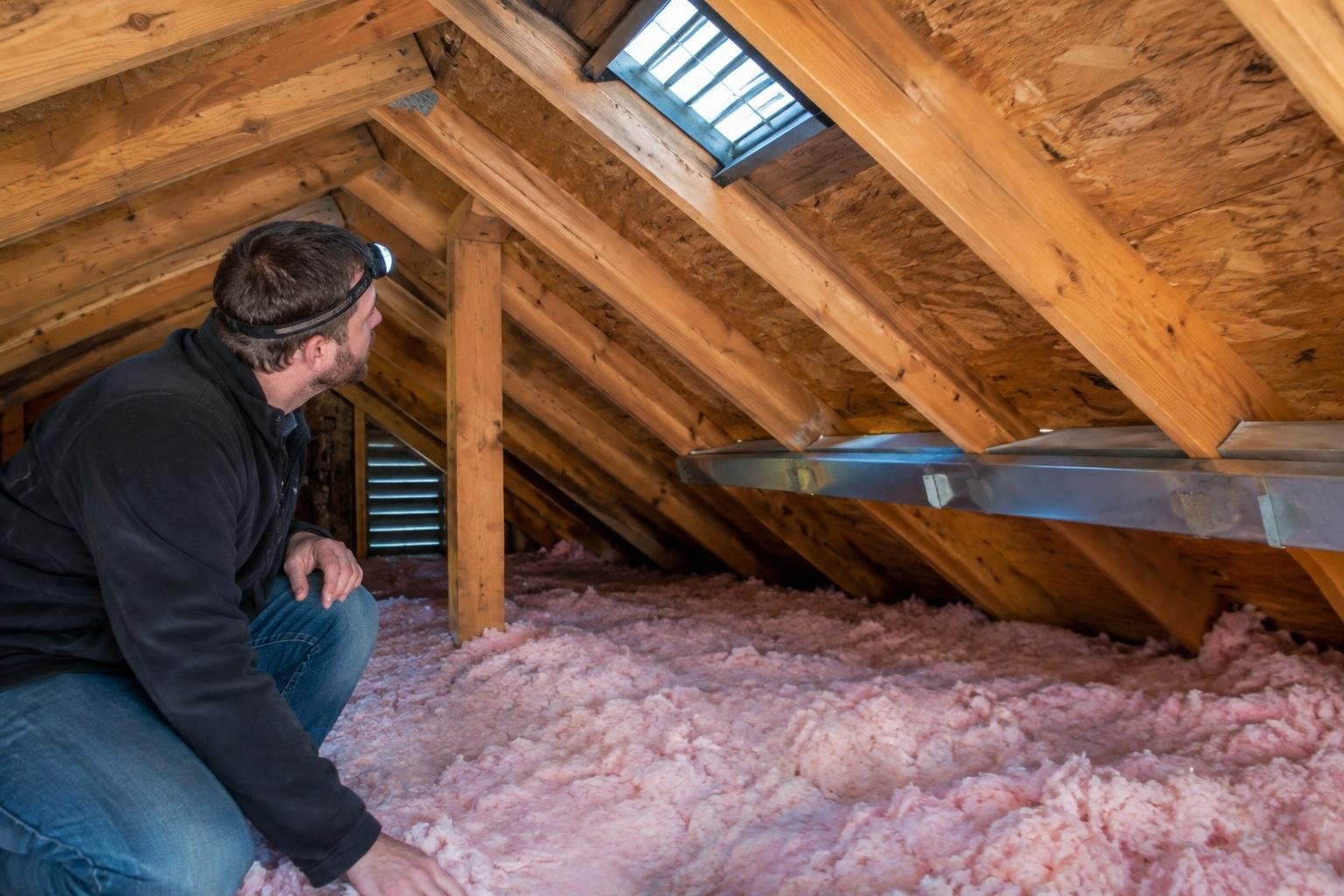
Why attic insulation and roof performance are connected
Attic insulation slows heat transfer between the home and the attic. Air sealing addresses gaps that allow air to move, while ventilation supports airflow through the attic. They are related, but they are not interchangeable: more insulation alone does not correct a roof leak or resolve a ventilation concern.
That distinction matters in New Jersey. Cold winters can allow heat to escape through a poorly insulated ceiling, while summer heat at the roof can increase heat entering living areas. Humid conditions also make moisture management important. A useful project plan considers the attic as a system, not just a space to fill with material.
Allstate Roofing and Chimney describes R-38 to R-60 as a typical range for New Jersey attic spaces. Treat that range as context, not a universal prescription: ask a provider to explain the target for your home and verify current applicable requirements. Winter conditions also differ between northern and southern parts of the state.
What to ask a provider about attic insulation services
Ask the provider to document what is in the attic now and explain what the proposed project is meant to improve. The provider may consider the home’s age, roof design, and heating and cooling system when evaluating the work. Ask how each recommendation addresses a condition they observed.
- Review existing conditions. Discuss insulation coverage, visible gaps, moisture concerns, and the attic’s ventilation.
- Define the work. Clarify whether the quote includes insulation, air sealing, ventilation-related work, or some combination.
- Agree on the target. Request the proposed R-value and an explanation of why it suits the home and location.
- Document the details. Get the materials, work areas, price, schedule, and cleanup expectations in writing.
Ask the provider whether its written scope includes coverage, air sealing, or code-related work, and request details for each item. Do not treat a general service description as a substitute for a written project scope.
Signs your attic may need attention
Consider an assessment if rooms under the roof feel difficult to keep comfortable, or if you want to understand why energy use or indoor comfort differs across seasons. These experiences are reasons to investigate, not proof that insulation is the only cause. Air leakage, ventilation, and moisture can also affect attic performance.
Visible evidence deserves closer attention. Look for wet or compressed insulation, water marks, a suspected roof leak, or moisture near pipes and appliances. Improperly vented appliances, small roof leaks, and dripping water pipes are identified as possible sources of excess attic moisture. Find and address the source before deciding whether affected insulation should be repaired or replaced.
Do not assume a single symptom points to a single fix. Ask the assessor to connect each recommendation to an observed condition and explain whether the issue is insulation, air sealing, ventilation, moisture, or a separate roof or plumbing concern.
Cost and pricing considerations
Attic insulation costs vary with attic size, insulation type, existing conditions, and whether you plan to do the work yourself or hire a professional. A provider may also consider the home’s age, roof design, and heating and cooling system when assessing the project.
Instead of comparing a headline price alone, request itemized quotes that identify:
- Insulation material and proposed R-value.
- Areas covered and any removal or treatment of existing material.
- Air sealing and ventilation work, if included.
- How moisture or visible roof concerns will be handled.
- Labor, cleanup, schedule, and written warranty terms, if offered.
Ask whether the estimate is based on an attic inspection and what could change the final price. A low quote may exclude work another provider includes, so compare equivalent scopes before judging value.
Factors that can change the project
Price and scope depend on more than square footage. Attic size and insulation type affect the estimate, while existing moisture, the roof design, the home’s age, and the heating and cooling setup can affect what a provider recommends. The condition of current insulation and whether air sealing or ventilation work is included also change what you are comparing.
Location within New Jersey is relevant to the insulation target. Winter conditions differ between the north and south, and northern homes may call for a somewhat higher R-value. Allstate Roofing and Chimney describes R-38 to R-60 as a typical range for New Jersey attic spaces; use it only as broad context. Ask for the proposed value and its current basis rather than applying a general figure to your home.
Moisture changes the decision. If water is coming from a roof leak, pipe, or appliance vent, the source should be identified. A bid that simply adds material without explaining how a known moisture problem will be addressed deserves clarification.
Options and tradeoffs: insulation, air sealing, and ventilation
Compare project approaches by the problems they address, not by product labels alone. Insulation resists heat transfer. Air sealing limits air movement through gaps. Ventilation supports attic airflow. A thorough proposal should make clear which of these are included and why.
Attic Fanatics describes closed-cell spray foam as having an R-value of around R-6 to R-7 per inch and acting as both an air and vapor barrier. That does not make it the right choice for every attic. Ask how the proposed material fits the roof assembly, moisture conditions, ventilation plan, and project budget.
Use a simple comparison when reviewing bids:
- Insulation only: What existing conditions make this sufficient?
- Insulation plus air sealing: Which gaps will be addressed, and how will coverage be documented?
- Broader attic work: What ventilation or moisture concerns are included, and what is outside the scope?
Ask providers to explain tradeoffs in plain language. The best comparison is between clear, equivalent scopes, not between a material’s advertised feature and a project that includes additional work.
What to expect, including timing
Start with an inspection and written estimate, then confirm the work area, material, target R-value, included air sealing or ventilation tasks, and any preparation needed. Before work begins, agree on how the crew will handle existing insulation and what will happen if they uncover moisture or other conditions outside the estimate.
Project duration depends on the home and quoted scope. Ask each provider for an expected start date and completion timeframe, whether access to the home is needed, and when the crew will review the completed work with you.
At completion, request a walk-through or other clear confirmation of what was installed and where. Compare the finished work with the written scope, and ask how any excluded or newly discovered issues should be handled. Keep the estimate and project documents together for future reference.
How to choose a qualified provider
Choose a provider who can explain the attic conditions and show how the proposed work addresses them. A useful estimate should be specific enough that you can compare it with another provider’s proposal without guessing what each price includes.
- Ask what the inspection covered and what conditions were observed.
- Request the proposed R-value, insulation type, coverage plan, and reason for the recommendation.
- Ask whether air sealing, ventilation assessment, moisture work, and cleanup are included or excluded.
- Request a written price and schedule, with a process for handling work beyond the original scope.
- Ask what warranty applies, what it covers, and how to raise a concern after installation.
- Ask the provider to explain how the work will address current applicable code requirements.
Do not rely only on a general promise of energy savings or comfort. Ask what the provider can document about the scope and what results depend on other parts of the home. Compare clarity, not just price.
Permits, credentials, warranties, and safety
DJG Insulation’s article refers to the 2021 New Jersey Residential Code and gives different attic R-value figures for southern and northern climate zones. Because that is a dated reference, do not treat it as confirmation of the requirements currently in force for your property. Ask the provider to identify the applicable current rule and confirm with the relevant local authority when needed.
Likewise, ask for credentials, insurance information, and warranty terms in writing rather than assuming they are included. Confirm who is performing the work, what safety measures apply to the access route and work area, and how the crew will protect the home. If a proposal involves a material or method you do not understand, request its product information and an explanation of how it fits the attic conditions.
A provider should be willing to distinguish code-related work from optional recommendations and to state which parts of the project are covered by any warranty. Avoid treating a broad claim of “code-compliant” work as a substitute for a clear, verifiable scope.
Ways to reduce cost without cutting corners
The safest way to manage cost is to compare complete scopes and avoid paying for work that does not address a documented need. Get more than one written estimate where practical, and ask each provider to price the same coverage, material, air sealing, and ventilation tasks. A lower total is not a saving if it leaves out a moisture problem or a key part of the agreed work.
DIY versus professional installation is one factor to weigh, but it does not establish that DIY is right for every attic. Compare the material and project requirements with the cost and scope of professional installation. If you cannot identify the source of moisture or understand how insulation, air sealing, and ventilation interact, seek an assessment before proceeding.
Another practical step is to ask providers to separate essential repairs from optional upgrades. That makes it easier to prioritize a roof leak or dripping pipe before investing in insulation that could be affected by the unresolved condition.
Mistakes, red flags, and a pre-project checklist
Avoid these common missteps:
- Adding insulation over moisture. First investigate leaks, dripping pipes, or appliance venting concerns.
- Treating R-value as the whole plan. Ask about air sealing and ventilation as well as insulation.
- Using one statewide number as a universal target. Request a home- and location-specific recommendation, then verify current requirements.
- Comparing totals without comparing work. Identify what each quote includes and excludes.
- Accepting vague promises. Get materials, coverage, schedule, price, and warranty details in writing.
- Assuming a dated code reference is current. Ask the provider to explain which current requirements apply.
Pause if a provider cannot explain why the recommended scope fits the observed attic conditions, dismisses visible moisture without investigation, or will not clarify exclusions. These are reasons to ask for more detail or seek another assessment.
Before approving work: confirm the target R-value; identify moisture sources; review insulation, air sealing, and ventilation tasks; compare written bids; verify current requirements; and understand the schedule, price, and warranty.
New Jersey conditions: climate, location, and current requirements
New Jersey homes face both cold winters and humid summers, so attic decisions should account for heating-season heat loss, summer heat, and moisture rather than focusing on one season. Winter conditions vary between northern and southern parts of the state, which can affect the appropriate insulation target.
In coastal areas, humidity may be a consideration. Closed-cell foam is described as having air- and vapor-barrier properties, but that is a product-specific observation, not a blanket recommendation for coastal homes. Have the attic and roof conditions assessed, and ask how the chosen insulation, air sealing, and ventilation plan addresses moisture risk.
The code figures discussed above refer to the 2021 New Jersey Residential Code and may not establish current local requirements for every property. Confirm applicable rules with the provider or local authority; do not rely on a general statewide article to determine a specific home’s compliance.
Frequently asked questions
How does attic insulation affect roof performance?
Insulation slows heat transfer between the living space and attic. Air sealing limits air movement through gaps, while ventilation supports attic airflow. Together, these measures can help address comfort and energy concerns, but the right scope depends on the attic’s existing condition and any moisture or roof issues.
What R-value should attic insulation have in New Jersey?
There is no single R-value that applies to every New Jersey home. Allstate Roofing and Chimney describes R-38 to R-60 as a typical range for attic spaces. Atticare USA notes that northern New Jersey homes may call for slightly higher R-values than southern homes. Treat these as general context: ask a provider to explain the target for your location and verify applicable current requirements.
How much does attic insulation cost in New Jersey?
Insulation costs depend on factors such as attic size, insulation type, existing conditions, and whether the work is DIY or professionally installed. Ask for an itemized quote based on an inspection rather than relying on a statewide figure.
What are signs that attic insulation needs attention?
Look for wet or compressed insulation, water stains, a roof leak, or moisture associated with improperly vented appliances or dripping pipes. These signs call for investigating and correcting the moisture source, not simply covering the affected insulation.
What should I ask an attic insulation contractor?
Ask for a clear inspection-based scope that explains the planned insulation coverage, air sealing, ventilation assessment, moisture handling, materials, and cleanup. Request the proposed R-value, written price, schedule, and any warranty or code-compliance details, and compare those items across providers.
People Also Ask
Does attic insulation help keep a home comfortable year-round?
Insulation can slow heat moving through the ceiling into the attic in winter and reduce heat transfer in warmer weather. Air sealing and ventilation are separate parts of the attic’s overall performance and should be considered alongside insulation.
Is attic insulation different in northern and southern New Jersey?
It can be relevant, but the appropriate target depends on location and the home’s conditions. Ask a provider to document the proposed R-value and explain how it relates to your part of New Jersey and current requirements.
Can new insulation be installed over damp attic insulation?
Not necessarily. If moisture comes from a roof leak, a plumbing drip, or an improperly vented appliance, the source needs attention. Covering damp insulation without investigating the cause can leave the underlying issue unresolved.
What is the difference between attic insulation and ventilation?
They do different jobs. Insulation resists heat transfer, air sealing addresses air movement through gaps, and ventilation supports airflow through the attic. A project assessment should consider how these elements work together.
How do I get an accurate attic insulation estimate?
Ask the provider to inspect the attic and consider the home’s age, roof design, heating and cooling system, existing insulation, and possible moisture concerns. Request a written scope and compare the same project details across quotes.
What should be included in an attic insulation quote?
Compare more than the total price. Check the proposed material and R-value, coverage, air sealing, ventilation assessment, treatment of existing moisture or damage, cleanup, schedule, and written terms.
Attic insulation is part of a roof system, not a stand-alone fix. In New Jersey, a sound plan starts with checking existing insulation, air leakage, moisture, and ventilation, then matching the work to the home and its location. Compare written scopes and verify current requirements before authorizing work. When you are ready to compare your next steps, explore your options and find providers at Estimate.org.
Your next step
Explore your options and find providers at Estimate.org.
Search Qualified providersWant our help with selecting a provider
Reviewed and maintained by the Staff at Estimate.org.
Last reviewed and updated November 2, 2026 by the Estimate.org Editorial Team.
Sources
- New Jersey Insulation Installers: Energy Efficient Insulation | High Point Roofing & Remodeling
- Choosing The Right Attic Insulation For Your Home
- Attic Insulation NJ: R-Value Requirements for Energy Savings
- Attic Insulation in New Jersey: Costs, R-Values, Materials, and Benefits – Rescreening Masters
- Attic Insulation in New Jersey (A Simple Guide for Savings)
- How Attic Insulation and Ventilation Work Together in NJ
- Attic Insulation & Ventilation in NJ: Maximize Comfort, Efficiency & Roof Life – Splendor Roofing & Chimney
- Attic Insulation Types: Pros and Cons for Your New Jersey Home – Attic Fanatics
- How to Find the Source of a Roof Leak in a New Jersey Home
