

Bathtub replacement cost can range widely because “replacement” may mean anything from removing one tub and installing another to updating the plumbing connections and repairing surrounding finishes. Published estimates range from $600 to $10,000; one source reports an average of $2,100 including removal, while another reports a range of $2,100 to $9,738. Those figures use different scopes, so they are useful for early planning, not a guaranteed price for your bathroom. Your estimate depends on the tub, labor, removal and disposal, access, and any additional work uncovered during the project. Before choosing a product or provider, define what work you want, compare itemized estimates with matching scopes, and ask how changes will be handled if the bathroom needs repairs beyond the original plan.
What bathtub replacement includes
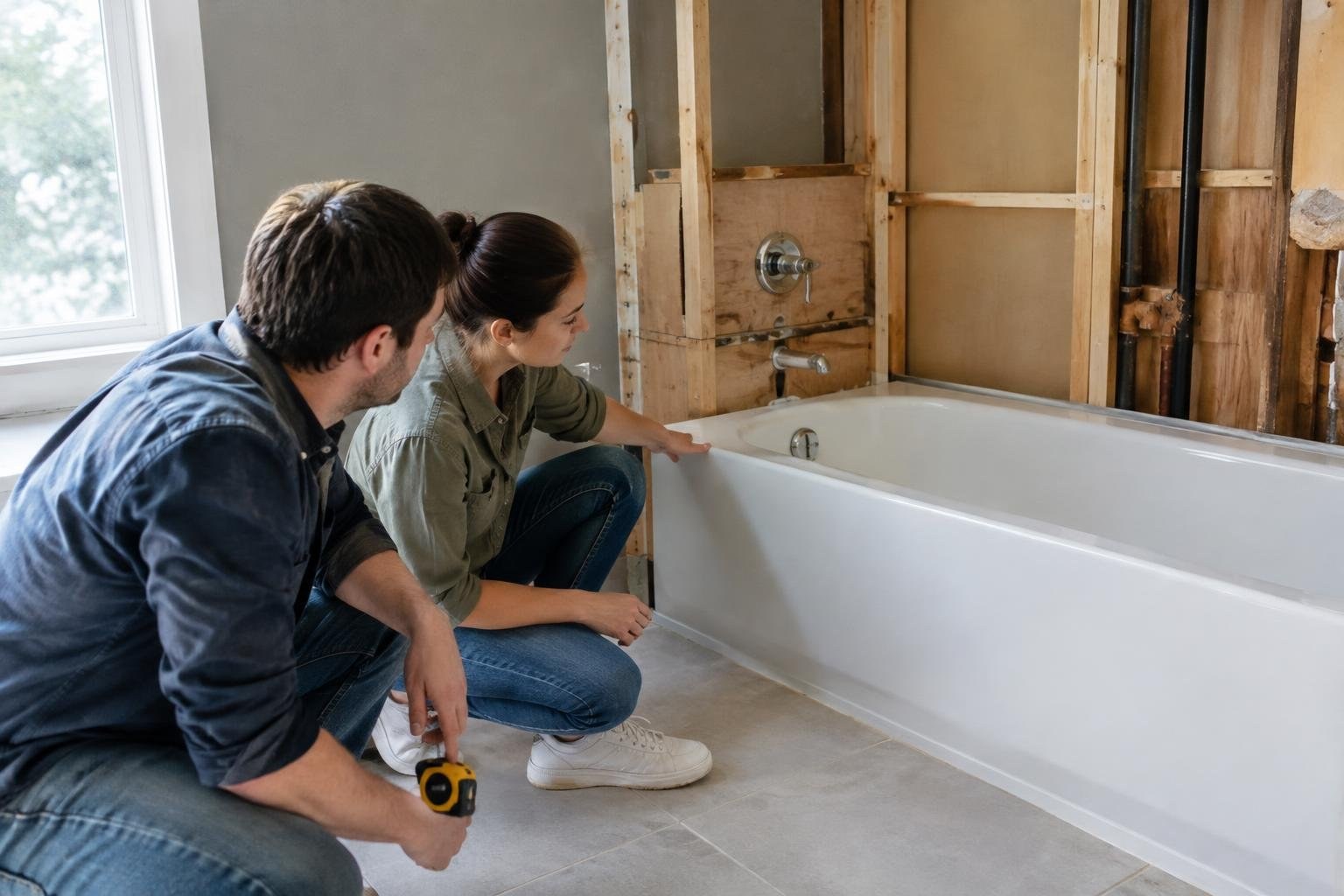
A bathtub replacement removes an existing tub and installs a new one. Depending on the project, the work may also involve disconnecting and reconnecting plumbing, removing nearby finishes, and repairing or replacing materials around the tub. A tub swap is not automatically a full bathroom remodel; the estimate should spell out exactly what is and is not included.
Start by deciding what problem you want to solve. A damaged or difficult-to-use tub may call for a different product than a tub being replaced mainly to refresh the room. That purpose helps you compare options and avoid paying for work you do not need.
Signs you may need a replacement
Replacement is worth exploring when the tub itself is damaged, no longer suits how the household uses the bathroom, or is part of a planned renovation. Before assuming the fixture is the cause of a leak or other problem, ask a qualified provider to inspect the tub and surrounding area and explain what they find.
- Look for visible damage or areas that concern you, and describe when the problem occurs.
- Note whether the issue appears to involve the tub, its drain, the faucet, or nearby finishes.
- Ask whether a repair is reasonable and what it would address.
- Do not treat a cosmetic update as proof that any underlying issue has been resolved.
These are prompts for an inspection, not a diagnosis. Ask the provider to identify the suspected cause and include the proposed remedy in writing.
Bathtub replacement cost and how to read estimates
Published prices are not directly interchangeable: estimates can count different products and tasks. Published estimates include a broad reported range of $600 to $10,000, a $2,100 average that includes removal, and a separate reported range of $2,100 to $9,738. One published estimate gives a San Diego range of $5,500 to $7,500. These figures offer context only; they do not establish what a particular project should cost today.
| Published estimate | How to use it |
|---|---|
| $600–$10,000 | A broad reported range; confirm what the endpoints include. |
| $2,100 average, including removal | A reported average, not a guaranteed price. |
| $2,100–$9,738 | A separate range based on a different estimate set. |
| $5,500–$7,500 in San Diego | A location-specific published estimate, not a national benchmark. |
Get at least two written estimates that specify the tub, removal, installation, and finish work. A number without a scope is not a meaningful comparison.
Factors that affect the project
Tub material, style, and project scope can affect price, while published estimates vary widely. Ask providers to state how each part of your project is priced:
- Tub selection: Identify the model, material, dimensions, style, and any allowance for choosing a product later.
- Removal and disposal: Confirm whether taking out and disposing of the old tub is included.
- Access: Ask how the estimate accounts for removing the old fixture and bringing in the new one.
- Plumbing and fixtures: Clarify whether drain, faucet, or other connection work is included.
- Surrounding finishes: Separate tub installation from repairs or replacement of nearby surfaces.
- Uncovered work: Agree on how additional work will be priced and approved if the scope changes.
- Location and project detail: Compare local estimates with matching scopes instead of relying on one published figure.
Published figures use different estimates and project scopes, so they cannot establish what a particular replacement should cost. Request itemized estimates based on the tub and work you actually want.
Bathtub options and tradeoffs
Choose a tub by how it will be used, how it fits the bathroom, and what surrounding work it requires. Common choices include a standard alcove tub, a freestanding tub, and a walk-in style. Product availability and installation requirements vary, so request a quote for a specific model rather than relying on a generic tub allowance.
| Option | Questions to consider | Tradeoff to discuss |
|---|---|---|
| Alcove tub | Will it fit the existing space and surround? | Whether keeping the existing arrangement limits finish changes. |
| Freestanding tub | Does the room and planned layout accommodate it? | Whether the layout or plumbing scope changes. |
| Walk-in style | Does the entry and intended use meet your needs? | Whether it requires changes beyond a straightforward swap. |
Ask providers to price the same model, or clearly describe the allowance used for each option. Published estimates indicate that tub style and material can affect price, but broad figures do not provide a consistent, like-for-like price ranking for these options.
Materials, quality, and product selection
Compare the actual product specifications and installation plan, not just material labels. Ask what the quoted tub is made of, what care the manufacturer recommends, what the product warranty covers, and whether the model suits your intended use. Also check that the selected tub fits the planned space and that the estimate identifies any surrounding finish work.
Broad material categories alone are not enough to compare expected durability, maintenance, or installation expense. Review the specific product information and ask providers to price the model you are considering.
Repair or replace the bathtub?
Repair may make sense when the concern is limited and the tub remains suitable for your needs. Replacement becomes a stronger option to investigate when the tub itself is damaged, a repair would not address the underlying issue, or you already plan to update the bathroom. Get a clear diagnosis before comparing costs.
Ask the provider to write down the repair option, the replacement option, what each includes, and any assumptions. Compare the total scopes rather than a small repair price against a replacement quote that includes new fixtures or finish work. Published replacement estimates span a wide range, so they do not establish a universal point at which replacement is more economical.
What to expect from the project
Ask each provider for a schedule based on your bathroom and selected tub. Request an explanation of the stages and what could change the completion date.
- Inspection: Review the existing tub, access, and requested work.
- Written scope: Confirm the product, removal, installation, and finish work.
- Preparation: Agree on access, protection of the work area, and any arrangements for using the bathroom.
- Removal and installation: Ask who performs each task and how changes are approved.
- Completion: Walk through the work, review care instructions and warranty documents, and resolve listed items.
Before work starts, ask how the provider will notify you about delays or additional work and whether an updated schedule and price must be approved.
How to choose a qualified provider
Choose a provider who can explain the proposed work in plain language and give you a written estimate. Verify credentials and insurance that apply to the work in your area, and ask for references or examples of similar projects. Do not assume that a product quote and a labor quote cover the same tasks.
Use these questions when comparing providers:
- What exactly is included in the price?
- Which tub model or product allowance is quoted?
- Is removal and disposal of the old tub included?
- What plumbing or fixture work is included?
- What surrounding finish work is included or excluded?
- Who will perform the work?
- What credentials and insurance can you document?
- Who checks whether permits or approvals apply?
- How do you price and approve additional work?
- What payment schedule is proposed?
- What warranty applies to the product and workmanship?
- How will the work area be protected and cleaned?
- What is the expected schedule, and what could change it?
Permits, credentials, warranties, and safety
Confirm local requirements with the relevant building department or a qualified provider before work begins; requirements depend on the project and jurisdiction. Ask who is responsible for checking permits, inspections, and any building or property approvals that may apply. Do not treat a verbal assurance as a substitute for a written answer about the job.
Ask for product warranty terms and any workmanship warranty in writing. Review what is covered, how to submit a claim, whether registration or specific care is required, and what exclusions apply. Keep the contract, product details, receipts, and completion records together.
Agree on safe access and work-area arrangements before the project begins. If the proposed scope changes, ask for the change and its price to be documented and approved before proceeding.
Ways to manage cost without cutting corners
Cost control starts with a clear scope, not simply choosing the lowest bid. You can make estimates easier to compare by selecting the tub before requesting final pricing, asking for itemized removal and finish work, and describing the bathroom accurately. Ask providers to identify exclusions and to explain how they will handle conditions that could not be confirmed before removal.
- Compare estimates with the same product or a clearly stated allowance.
- Keep the existing layout if it suits your needs, and ask what work that avoids.
- Separate essential repairs from optional upgrades in the estimate.
- Ask whether you may supply the tub and how that affects labor, delivery, and warranty responsibilities.
- Do not skip necessary work or approvals to make the initial price lower.
Published prices differ by scope and location, so a lower headline figure is not proof of savings. Compare the complete written price and what it delivers.
Common mistakes and contractor red flags
Common planning mistakes can lead to mismatched expectations. Avoid these before signing:
- Comparing total prices without comparing the work included.
- Choosing a tub before confirming it fits the intended space and project plan.
- Assuming removal, disposal, fixtures, or finish repairs are included.
- Accepting a vague product allowance without a model or selection deadline.
- Relying on verbal promises about added work, timing, or warranty coverage.
- Failing to agree on how unexpected conditions are priced and approved.
- Choosing a provider without checking applicable credentials and insurance.
- Paying without understanding the written payment schedule and scope.
- Starting without checking whether permits or approvals apply.
- Treating a visible symptom without asking what caused it.
If an estimate is unusually low or unclear, ask the provider to explain the difference in writing before making a decision.
Related bathroom projects to evaluate
Consider related work while reviewing the bathtub scope. Coordinating projects may reduce repeat disruption, but combining work does not automatically lower the total price. Ask providers to separate each item so you can compare bundled and individual estimates.
- Tub surround and wall finishes: Evaluate them when choosing the tub. Decide whether existing finishes can remain or whether the renovation should include them. Establish which work must happen first in the written plan.
- Drain, faucet, and plumbing work: Review these alongside the replacement because the estimate may include connection or fixture work. Ask the provider to state the sequence and whether a fixture change expands the scope.
- Flooring and trim: Consider them if the project plan includes changes near the tub. Compare the disruption of coordinating work with the cost of a separate visit.
- Broader bathroom updates: If you are already planning more than a tub swap, request separate prices for the tub and other planned work. Decide the sequence with the providers responsible for each part.
Is bathtub replacement worth it?
A replacement can be worthwhile when the existing tub no longer meets your needs and the proposed work addresses the issue within a budget you can accept. It may be less compelling if the tub is serviceable and the desired change can be achieved through a smaller, clearly defined repair. Ask for both options when repair is plausible.
Balance appearance and convenience against total scope, disruption, and the chance that further work may be needed. Published estimates range widely and do not prove a particular project will add resale value or save money over time. Make the decision based on your bathroom, your intended use, and comparable written estimates rather than a guaranteed return.
Final homeowner checklist
- Write down the reason for the project and ask for an inspection of the underlying concern.
- Compare repair and replacement scopes where both are reasonable.
- Select a tub and confirm it fits the planned space.
- Get itemized written estimates using comparable products and tasks.
- Confirm removal, disposal, installation, plumbing, finish work, and cleanup.
- Ask how hidden conditions and change orders will be handled.
- Verify relevant credentials, insurance, and any permits or approvals.
- Review payment terms, schedule, product warranty, and workmanship warranty.
- Coordinate related bathroom work and confirm the order of tasks.
- Walk through completed work and retain project documents.
Frequently asked questions
How much does bathtub replacement cost?
Published estimates vary because they may include different tubs, labor, removal, and surrounding renovation work. Figures include a range of $600 to $10,000, a $2,100 average that includes removal, and another reported range of $2,100 to $9,738. Treat these as planning references, not a quote; compare written estimates with matching scopes.
What is usually included in a bathtub replacement estimate?
It depends on what the contractor includes. Ask whether the quote covers removing and disposing of the old tub, the replacement tub, installation, drain and faucet work, surrounding finishes, cleanup, and any anticipated repairs. A price for a basic tub swap is not directly comparable to a bathroom renovation estimate.
Can I replace a bathtub without remodeling the whole bathroom?
A replacement may be possible without changing the bathroom layout, but the contractor needs to inspect the tub, access route, plumbing connections, and surrounding finishes before confirming the scope. Ask whether the old tub can be removed through the existing doorway and what would change the estimate if removal or access proves difficult.
Is the cheapest bathtub replacement estimate the best choice?
Not necessarily. A lower bid can reflect a simpler scope, a different tub, or work that another estimate includes. Compare product details, removal, installation, finish repairs, cleanup, and the process for approving additional work. Ask each provider to list exclusions and explain how unexpected conditions will be priced.
Should I repair or replace my bathtub?
It may be a candidate for repair if the problem is limited and the tub remains serviceable. Replacement is worth evaluating when the tub itself is damaged or when repeated repairs do not address the problem. Ask a qualified provider to identify the cause, explain repair and replacement scopes, and compare written costs before deciding.
Does bathtub material affect replacement cost?
Tub material and style can affect the product price and project scope. Compare options by fit, appearance, cleaning preferences, intended use, and the installation work required. Ask providers to quote the specific model you are considering so the comparison reflects the actual product and not a generic allowance.
How long does it take to replace a bathtub?
The schedule depends on your bathroom, selected tub, and the work involved. Ask the provider to separate scheduling, removal and installation, any additional repair work, and final completion in the written plan. Confirm how long the bathroom will be unavailable and how the provider will handle delays or unexpected conditions.
How do I choose a bathtub replacement contractor?
Ask for an itemized written estimate, proof of relevant credentials and insurance, references for similar projects, a clear payment schedule, and written warranty details. Also ask who performs the work, who obtains any needed approvals, what is excluded, and how changes or hidden damage are approved and billed.
People Also Ask
What is the difference between tub replacement and a bathroom remodel?
A tub-only replacement may involve removing the existing fixture and installing a new one, while a renovation estimate can also include finish, plumbing, or layout work. Ask providers to itemize both scopes so you can compare like with like.
Why do bathtub replacement estimates vary so much?
Published estimates differ by location and project scope. Use them only as early context, then get written local estimates for your chosen tub and the work your bathroom needs.
What should I confirm about a bathtub warranty?
Ask for the product warranty and any workmanship warranty in writing. Confirm what each covers, how to submit a claim, whether registration or specific care is required, and what exclusions apply. Keep the warranty documents with your contract and project records.
Is replacing a bathtub a major renovation?
A tub swap may be simpler to price than a project that changes the layout or surrounding finishes. Still, a provider must assess your bathroom and confirm the product, access, and work scope before you can rely on an estimate.
How can I compare bathtub replacement estimates?
Get more than one written estimate and compare the same tub or a clearly stated product allowance, the same removal and installation tasks, and the same finish work. Ask providers to explain differences rather than choosing by total price alone.
A bathtub replacement can be a contained fixture swap or part of a larger bathroom renovation. The right budget depends on the tub you choose, the work needed to remove the old one, and whether the surrounding plumbing or finishes also need attention. Compare estimates by scope, confirm what happens if hidden damage is found, and choose a provider who explains the work clearly.
Your next step
Explore services and find providers at Estimate.org.
Reviewed and maintained by the Staff at Estimate.org.
Last reviewed and updated November 2, 2026 by the Estimate.org Editorial Team.
Sources
- Cost of a Bathtub Replacement (2026)
- How Much Does Bathtub Installation Cost? (2026 Pricing)
- What is the Cost of Replacing a Bathtub in 2026? | Badeloft
- How Much Does It Cost to Replace a Bathtub? [2025 Data]
- Cost to Replace Bathtub – 2026 Cost Calculator (Customizable)
- Bathtub Replacement Cost in 2026: How Much Does It Really Cost? – MonBlari
- How Much Does a Bathtub Replacement Cost? | 2023 Costs | Modernize
- Bathtub Replacement Guide: Costs, Options, and What to Expect
