

A roof problem is not always obvious from the ground. In New Jersey, missing or damaged shingles, stains on ceilings or walls, sagging areas, and heavy granule loss can all warrant a closer look. These signs do not automatically prove that the whole roof needs replacement. They do mean it is worth documenting what you see and asking a qualified professional to assess the roof before a small concern becomes harder to manage.
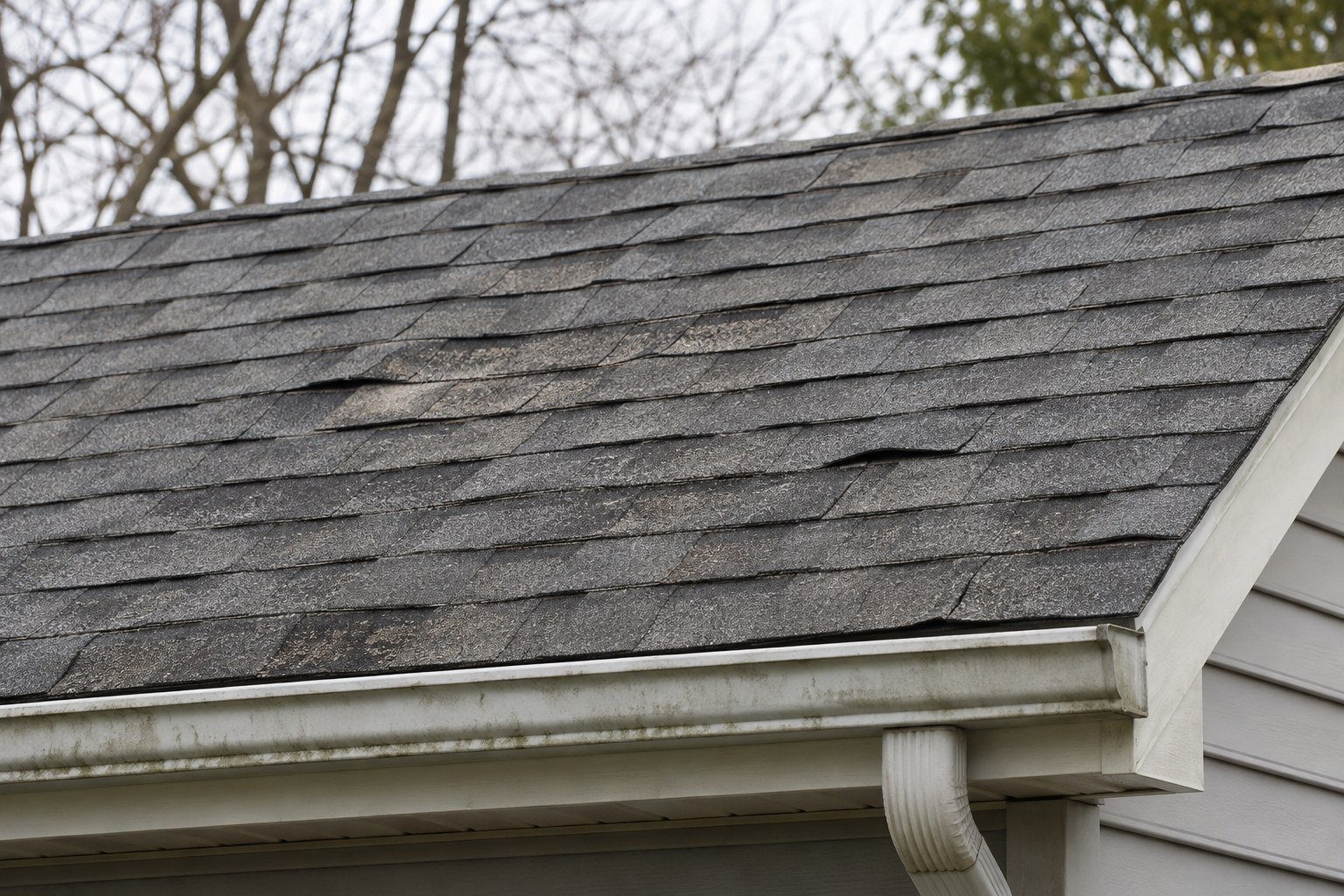
Why roof warning signs deserve attention
Start with what you can safely observe from the ground or inside your home. Note where you see damage, when you noticed it, and whether it changes after rain or a storm. A few visible symptoms can justify an inspection, but they do not establish the roof's full condition or the right scope of work.
Ask the assessor to connect each recommendation to a specific observation. The goal is not to diagnose the roof yourself. It is to provide useful details and get a clear explanation of whether the concern appears localized or widespread.
Signs your New Jersey roof may need attention
Watch for shingles that are missing, curling, buckling, or cracked. Damage can follow severe weather, including high winds or hail. If you notice a change after a storm, record it from a safe location and arrange an assessment rather than climbing onto the roof.
Look for water stains on ceilings or walls, particularly if they reappear or spread. Staining can indicate a leak, but it does not reveal the source or whether the roof needs repair or replacement. Heavy granule buildup in gutters is another clue to report; a small amount of granule loss can be normal.
Sagging or uneven roof lines deserve prompt attention. Also tell the assessor if you have a flat roof, since roof concerns can present differently across roof types.
How to tell a minor concern from a larger problem
One damaged shingle and widespread shingle deterioration are not the same problem. Note whether damage appears in one small area or across several parts of the roof. The pattern, severity, and condition of surrounding materials can help a professional evaluate the next step.
For a ceiling stain, write down its location and whether it changes. For granules, note whether you are seeing a little residue or a heavy accumulation. For a sagging line, describe its location from the ground. These details are more useful than guessing at a cause or deciding that replacement is necessary.
Arrange an assessment when you spot a significant change, repeated signs of moisture, or several warning signs together.
What a roof replacement assessment and scope should clarify
Roof replacement generally means more than choosing new shingles. Before agreeing to a project, ask the provider to put the full proposed scope in writing. It should describe the work being recommended, what is included, what is excluded, how unexpected conditions will be handled, and what cleanup and warranty terms apply.
Ask the provider to explain how the assessment led to the proposed scope. If the recommendation is replacement, request a clear account of why a repair is not sufficient. If a repair is proposed, ask what signs should prompt a follow-up assessment.
Roof conditions and project scopes vary, so use the written scope and a direct discussion with the provider to understand the work proposed for your specific roof.
Cost and pricing: compare scope, not just totals
Roof replacement prices vary with the roof and the proposed work, so a single statewide figure may not describe your project. Do not rely on a headline figure without checking that it describes a comparable roof and the same work. Instead, compare written estimates based on a consistent scope.
Ask each provider to identify the recommended work, any repair or replacement options, items not included, payment schedule, and warranty terms. Request an explanation of how the visible damage affects the proposal. If two estimates differ, compare what each includes rather than looking only at the total.
Keep a record of any assumptions or possible additional work noted in the estimate. A clear scope makes it easier to understand the price and avoid comparing unlike proposals.
Factors that can affect the project and estimate
A provider's recommendation and estimate may vary with what an assessment finds. The visible warning sign is only one part of the decision: a few damaged shingles may call for a different discussion from widespread curling or cracking, recurring stains, heavy granule loss, or a sagging area.
Roof type matters, too. If your home has a flat roof, tell the assessor and ask what condition or failure signs they observed and how the roof type affects the proposed work.
Do not accept a one-size-fits-all explanation. Ask which observations support the recommendation and what alternatives were considered.
Repair or replacement: compare the reasoning
When comparing repair with replacement, focus on the extent of the problem and the reasoning behind the proposed work. Ask whether the concern appears limited to a particular area or whether the assessor sees broader deterioration. Request the repair option and replacement option in writing when both are considered reasonable.
A repair may address a limited problem; a replacement recommendation may be made when warning signs point to wider roof deterioration. Those are questions for an assessment, not conclusions to draw from a single stain or missing shingle. Compare the scope, stated limits, and warranty terms for each option.
If your roof is flat, ask how the proposed approach accounts for that roof type rather than assuming shingle-related guidance applies.
Roof age is a clue, not a deadline
Roof age can be a useful prompt to pay closer attention, but it is not a replacement diagnosis. The New Jersey roofing article “5 Signs Your NJ Roof is Saying It's Time for a Replacement” gives 20 to 25 years as a general lifespan for asphalt shingles. Treat that as a broad reference, not a guarantee that every roof will last that long or must be replaced at a specific age.
Visible condition matters. Curling, buckling, cracking, leaks, and heavy granule loss are reasons to ask for an assessment, whether the roof is near that age range or not. If you know when the roof was installed, share that information, but ask the assessor to explain the condition they observe.
What to expect: assessment, scheduling, and communication
Roofing work timing depends on the agreed scope and the provider’s schedule. Ask for a schedule specific to your assessment and proposed work.
Before signing, ask when the provider expects to begin, what milestones to expect, how changes will be communicated, and whom to contact with questions. Ask what could affect the proposed schedule and how the provider will handle a change to the scope. Get the answers in writing along with the work description.
If you see active water staining or sagging, do not wait for a routine replacement timeline to discuss the condition. Contact a qualified provider promptly to ask what assessment is appropriate.
How to choose a qualified roofing provider
Choose a provider who can explain the recommendation in plain language and connect it to the conditions observed. Ask for a written assessment and scope, a clear estimate, references or examples relevant to the work, and written warranty terms. Compare more than one proposal when practical, making sure the scopes are comparable.
Ask who will perform the work, how questions and changes will be handled, and what happens if the assessment or project uncovers additional concerns. Verify the provider's applicable credentials and insurance directly rather than treating a sales explanation as proof.
Be cautious if you receive a replacement recommendation without a clear explanation of the visible problem, scope, and alternatives.
Permits, credentials, warranties, and safety
Do not assume that permit rules, required credentials, or warranty terms are identical across New Jersey communities or projects. Before work begins, ask the provider what local requirements apply and confirm them with the relevant local authority. Request any applicable credentials and insurance information, and read the warranty terms rather than relying on a verbal summary.
Safety matters during an assessment, too. Do not climb onto a roof to check for missing shingles, granules, or sagging. Observe from a safe location and let a professional assess areas that are not safely visible to you.
For a sagging roof line or other concerning structural appearance, contact a professional promptly and avoid approaching the affected area.
Ways to reduce cost or save safely
Reduce the risk of paying for work you do not need by asking the assessor to explain which observations support the recommendation and whether a repair is a reasonable alternative to replacement. A single warning sign does not prove that the whole roof needs replacing.
When comparing estimates, ask providers to price comparable scopes and spell out what is included, excluded, and subject to additional work. Review the payment and warranty terms, and ask questions about anything you do not understand before agreeing. Choosing the lowest total without comparing the work can leave you comparing different proposals.
Do not try to save money by climbing onto the roof or putting off an assessment when you see sagging, recurring water stains, or widespread damage. Record what you can observe safely and seek a professional assessment.
Common mistakes and a practical roof checklist
Use this short checklist before you request or compare estimates:
- Record where you see missing, curled, buckled, or cracked shingles.
- Note the location and any changes in ceiling or wall stains.
- Describe visible granule buildup or uneven roof lines from the ground.
- Share known roof age and any recent storm-related observations.
- Ask whether repair and replacement were both considered.
- Request a written scope, estimate, schedule, and warranty terms.
- Confirm applicable local requirements and provider information.
Avoid common mistakes: climbing onto the roof, treating one warning sign as proof of full replacement, relying on a general lifespan as a firm deadline, and comparing estimates with different scopes. Ask for clarification before committing if a proposal does not explain its reasoning.
New Jersey weather and local considerations
The New Jersey roofing article “Top 5 Signs You Need a Roof Replacement in New Jersey” describes exposure to heavy winter snowfall, summer heat, and storms. That makes it sensible to take visible changes seriously, particularly after severe weather. It does not mean every weather event requires replacement or that every roof has the same lifespan.
After a storm, look from a safe place for visible shingle damage and note any new interior stains. If you see damage or have concerns, arrange an assessment and ask the provider to document what they find. For rules, permits, and project requirements, confirm the details that apply to your community rather than relying on a general statewide assumption.
Frequently asked questions
How do I know if my New Jersey roof needs to be replaced?
No single sign proves that a full replacement is necessary. Leaks, widespread curling or cracking, heavy granule loss, missing shingles, and sagging are reasons to request an assessment. A professional should explain whether the problem is limited or affects the roof more broadly.
Do water stains always mean I need a new roof?
Water stains can indicate a roof leak, but the stain alone does not identify the source or show how much of the roof is affected. Arrange an assessment, especially if the stain returns or grows, and ask the provider to document the suspected cause.
Can a roof be repaired instead of replaced?
Not necessarily. A few damaged shingles may call for a limited repair, while widespread curling, cracking, or other signs may point to broader deterioration. Ask the provider to explain the repair and replacement options and the evidence behind each recommendation.
How long does an asphalt shingle roof last in New Jersey?
The New Jersey roofing article “5 Signs Your NJ Roof is Saying It's Time for a Replacement” gives 20 to 25 years as a typical lifespan for asphalt shingles, but that is not a guarantee for an individual roof. Condition, visible damage, and a professional assessment matter more than age alone.
What should I ask a roofing contractor before hiring them?
Ask for an on-site assessment, a written scope, an explanation of the recommended work, and clear terms for payment and warranty coverage. Verify applicable credentials, insurance, and local permit requirements rather than assuming they are the same everywhere.
People Also Ask
What should I do if I notice roof damage?
Record what you can see from a safe location, note where and when you noticed it, and arrange an assessment if the damage is significant or changes over time. Do not climb onto the roof to investigate.
Should I replace my roof if it leaks?
A leak or ceiling stain deserves attention, but it does not by itself establish whether the entire roof needs replacing. Have the source and extent of the problem assessed.
What should a roof replacement estimate include?
Ask for a written description of the recommended work, what is included and excluded, how unexpected conditions will be handled, and the cleanup and warranty terms. Request a schedule and clarification of any assumptions before agreeing.
What does it mean when roof granules are in the gutters?
Heavy granule loss that collects in gutters can indicate shingles are nearing the end of their useful life. A small amount of granule loss may be normal, so consider the amount and the roof's overall condition.
Is a sagging roof dangerous?
Sagging or uneven roof lines are a serious reason to seek prompt professional attention. Do not climb onto the roof to investigate; describe what you see and request an assessment.
Should I get my roof inspected after a storm?
After a storm, look for visible damage from the ground and arrange an inspection if shingles appear damaged or missing. Avoid climbing on a wet or damaged roof.
Which roof warning signs can I observe without climbing?
From a safe location, look for missing, curling, buckling, or cracked shingles, heavy granule buildup in gutters, and uneven or sagging roof lines. You can also note recurring ceiling or wall stains from inside. Do not climb onto the roof; arrange an assessment if you see concerning signs.
Leaks, sagging, widespread shingle damage, and heavy granule loss can all be reasons to arrange a roof assessment. A warning sign does not automatically mean the entire roof needs replacement, so use a qualified professional to distinguish a repairable problem from broader deterioration. Compare written scopes, ask how the recommendation was reached, and verify local requirements before work begins.
Your next step
Explore your options and find providers at Estimate.org.
Search Qualified providersWant our help with selecting a provider
Reviewed and maintained by the Staff at Estimate.org.
Last reviewed and updated November 2, 2026 by the Estimate.org Editorial Team.
Sources
- Signs You Need a New Roof in NJ | Warning Signs to Watch For
- 5 Signs Your New Jersey Home Needs a Roof Replacement – NextGen
- Top 5 Signs You Need a Roof Replacement in New Jersey – New Jersey Roof Repair and Replacement
- 5 Signs Your NJ Roof is Saying It's Time for a Replacement
- 8 Clear Signs You Need a New Roof and It's Time to Replace It
- 5 Warning Signs Your NJ Home Needs a New Roof | Independent Homes Improvement
- Top Signs You Need Roof Replacement in Hackensack, NJ
- 9 Signs Your NJ Home Needs a Roof Replacement (Don't Ignore #4)
- How to Find the Source of a Roof Leak in a New Jersey Home
